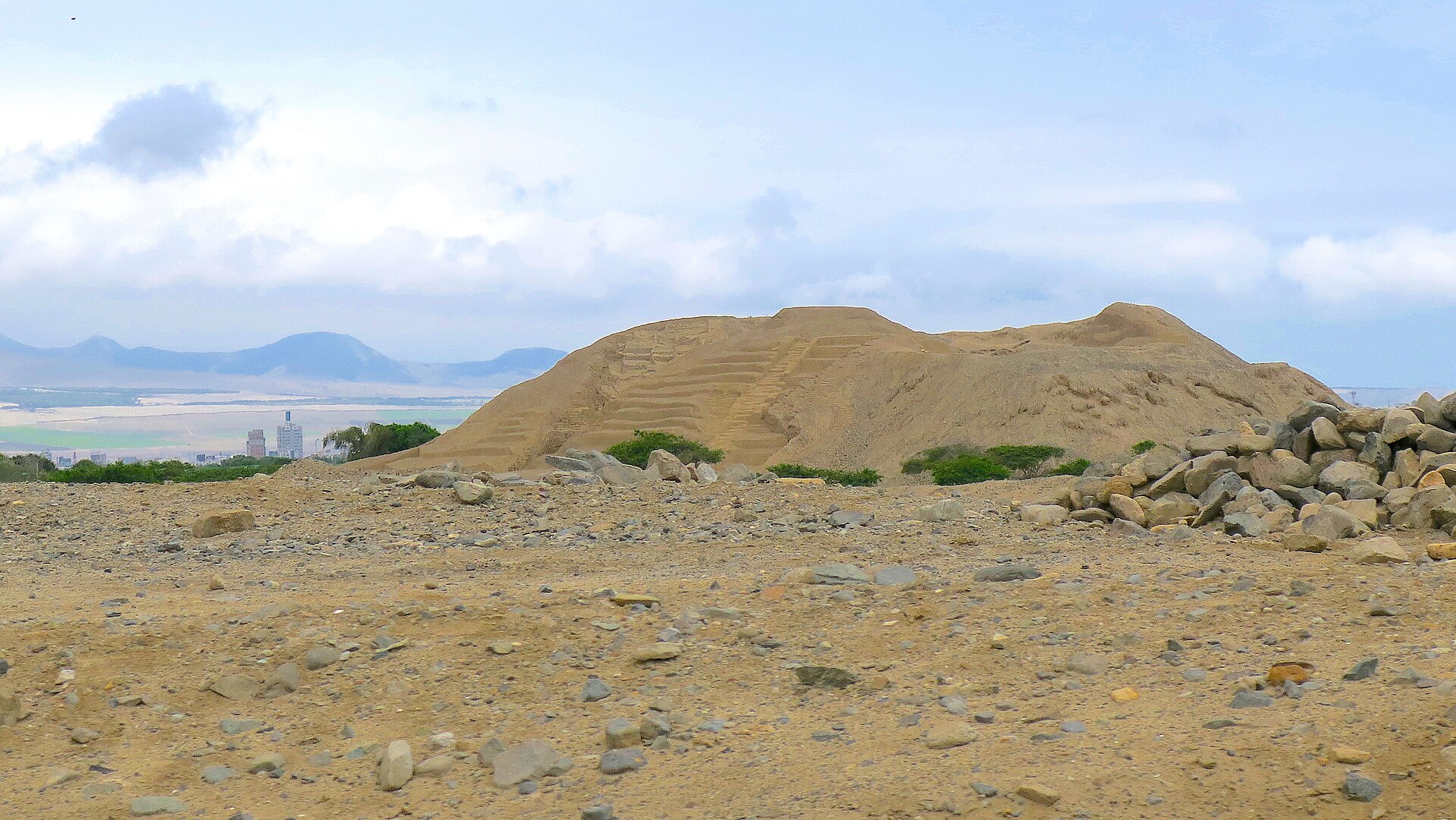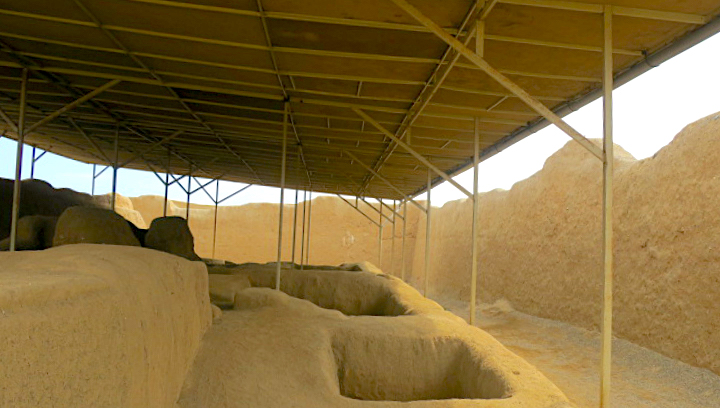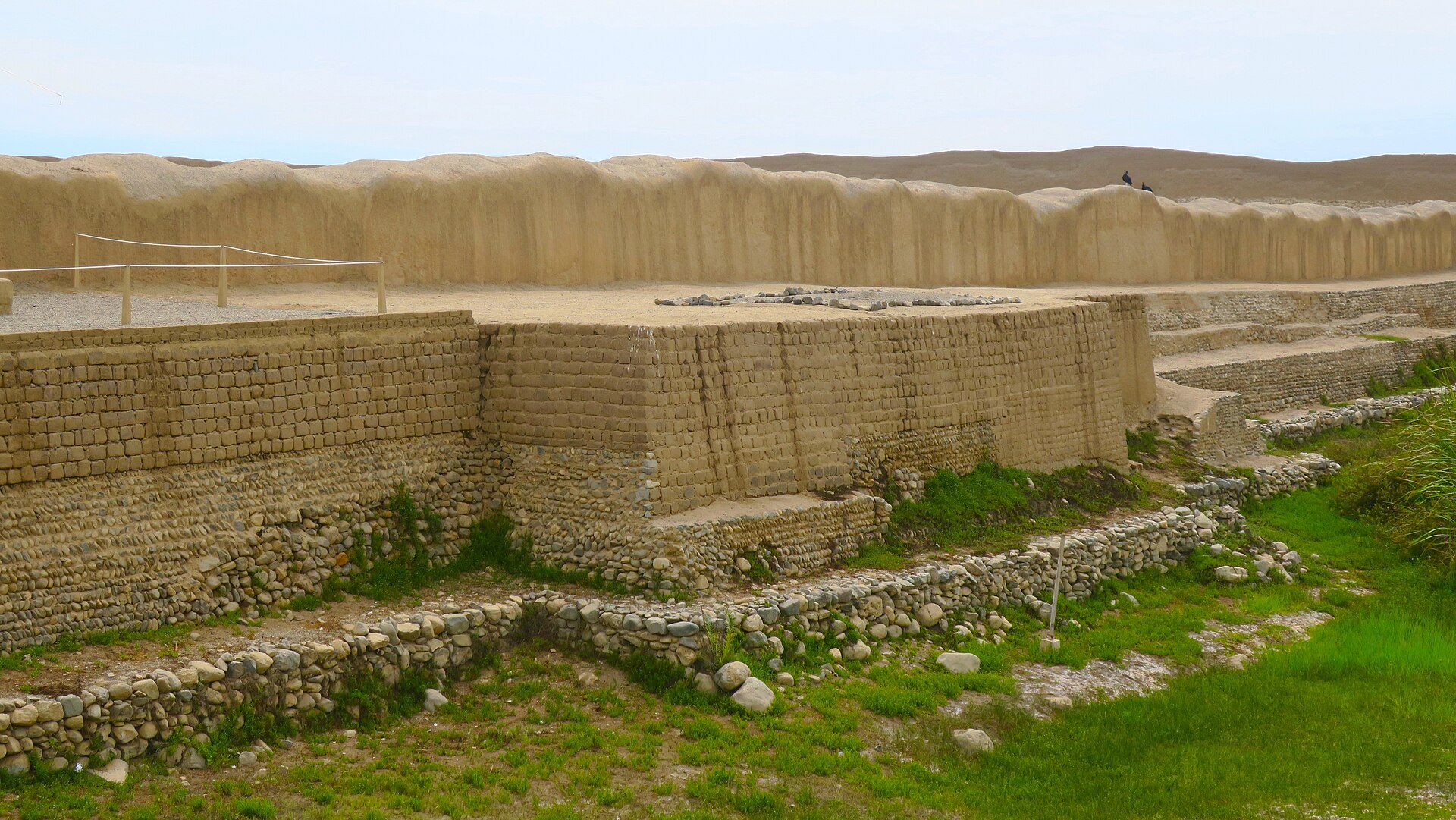
Near Trujillo on Peru’s northern coast, Chan Chan changes the scale of what an archaeological city can be. Its power is not expressed through mountain terraces or cut-stone temples, but through long earthen walls, enclosed courts and surfaces worked into patterned relief. Understanding that material is also the key to understanding the site’s vulnerability.
A coastal capital, not an Andean outpost
UNESCO’s account of Chan Chan identifies it as the capital of the Chimú kingdom, which reached its height in the fifteenth century before its incorporation into the Inca realm. The city once extended across roughly 20 square kilometres, with a monumental core of around six square kilometres. Those figures describe an urban landscape, not a single isolated ruin.
Its coastal position matters. This is a world of irrigation, workshops and connections between valley and sea. UNESCO describes a highly organised settlement in which large compounds contained ceremonial, administrative and residential functions, alongside storage and funerary spaces.
Travellers familiar with the stone monuments of the Andes should resist reading every Peruvian site through the same template. Our account of Tiwanaku in Bolivia offers another perspective on pre-Columbian urban and ceremonial landscapes; Chan Chan’s coastal location and earthen construction make it a markedly different encounter.

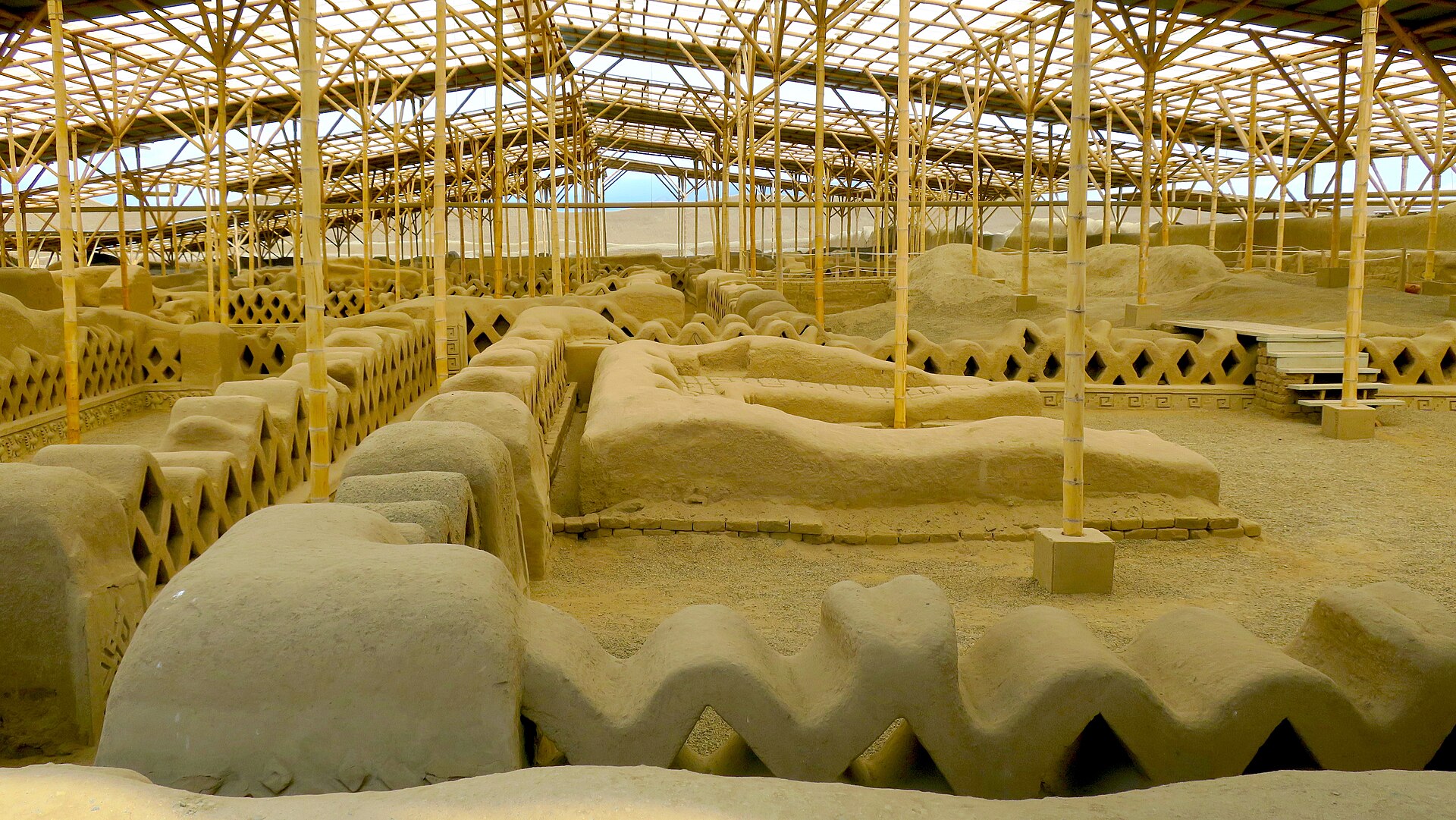

Walls that organised people and power
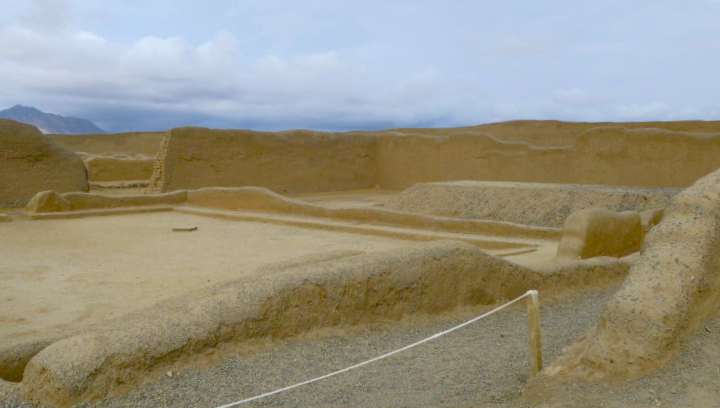
The surviving architecture suggests more than grandeur. Enclosures, controlled routes and the separation of spaces make hierarchy visible. Large compounds were set apart from areas associated with craft production and other parts of urban life. The distinctions help explain why simply walking past a long wall can reveal something about the organisation of the city.
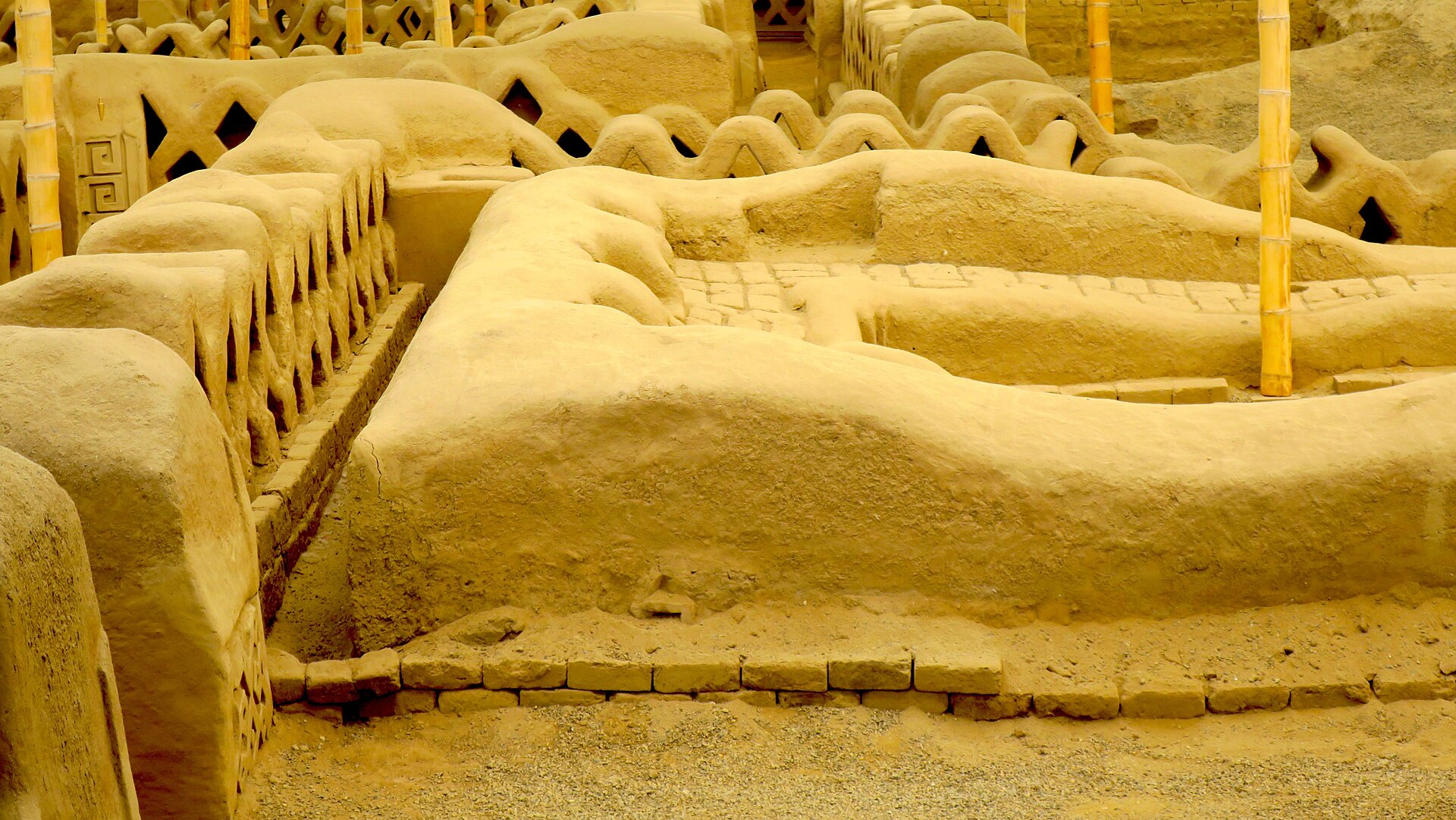
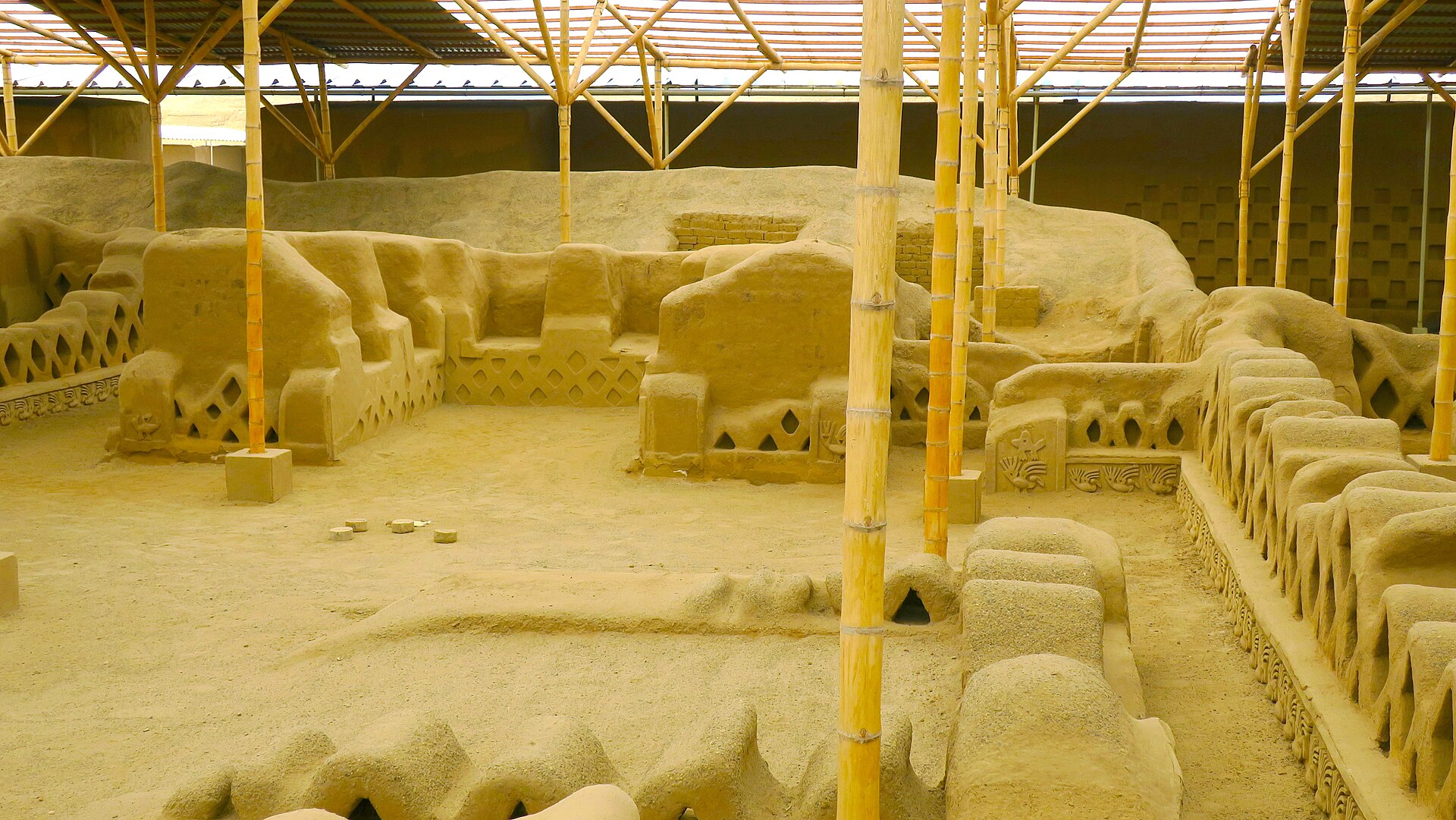
Relief decoration rewards slower looking. Abstract, human and animal forms turn wall surfaces into repeated visual rhythms. Those motifs belong to a built environment made of earth: their survival depends on the same material that makes them vulnerable.
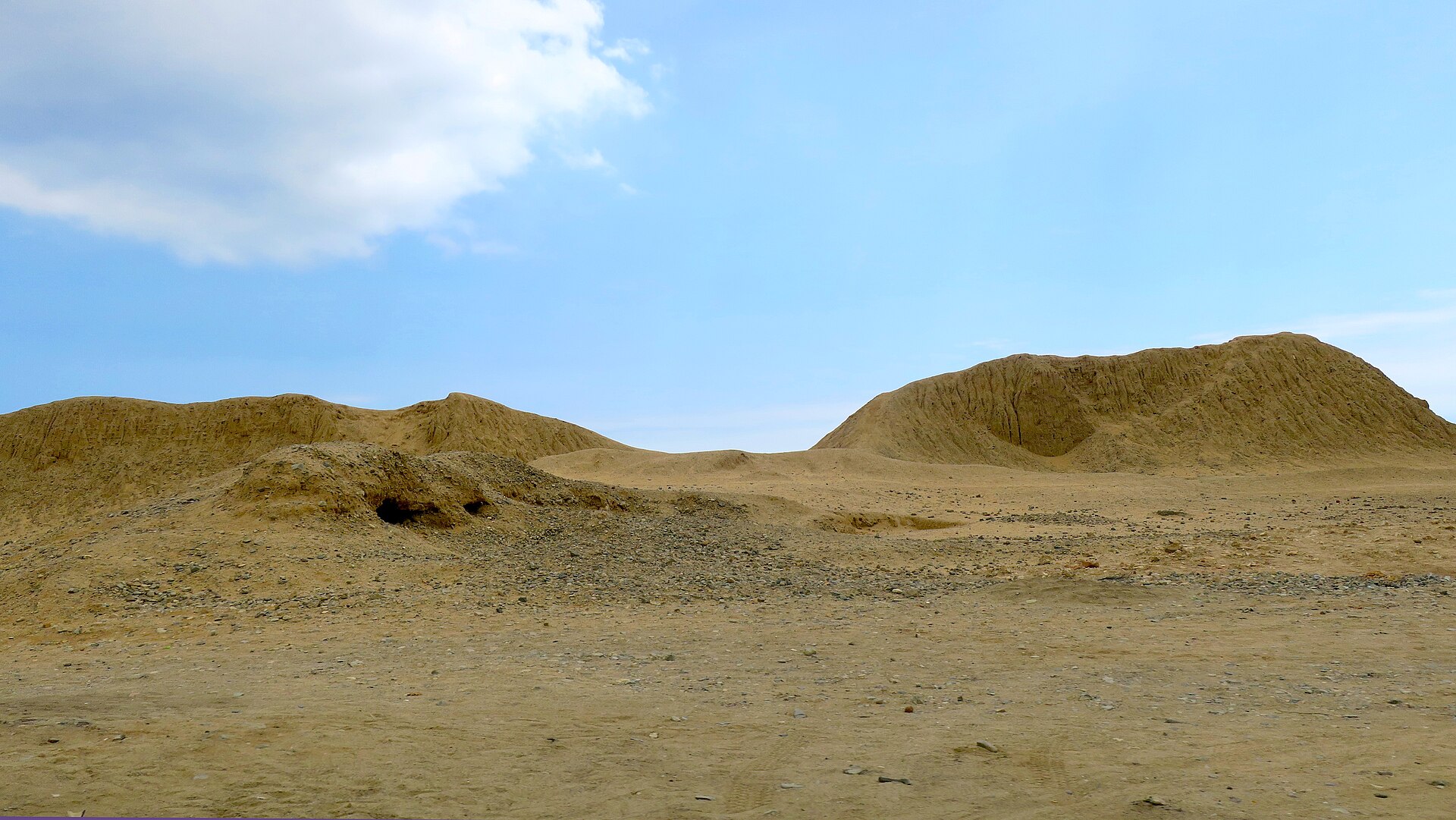
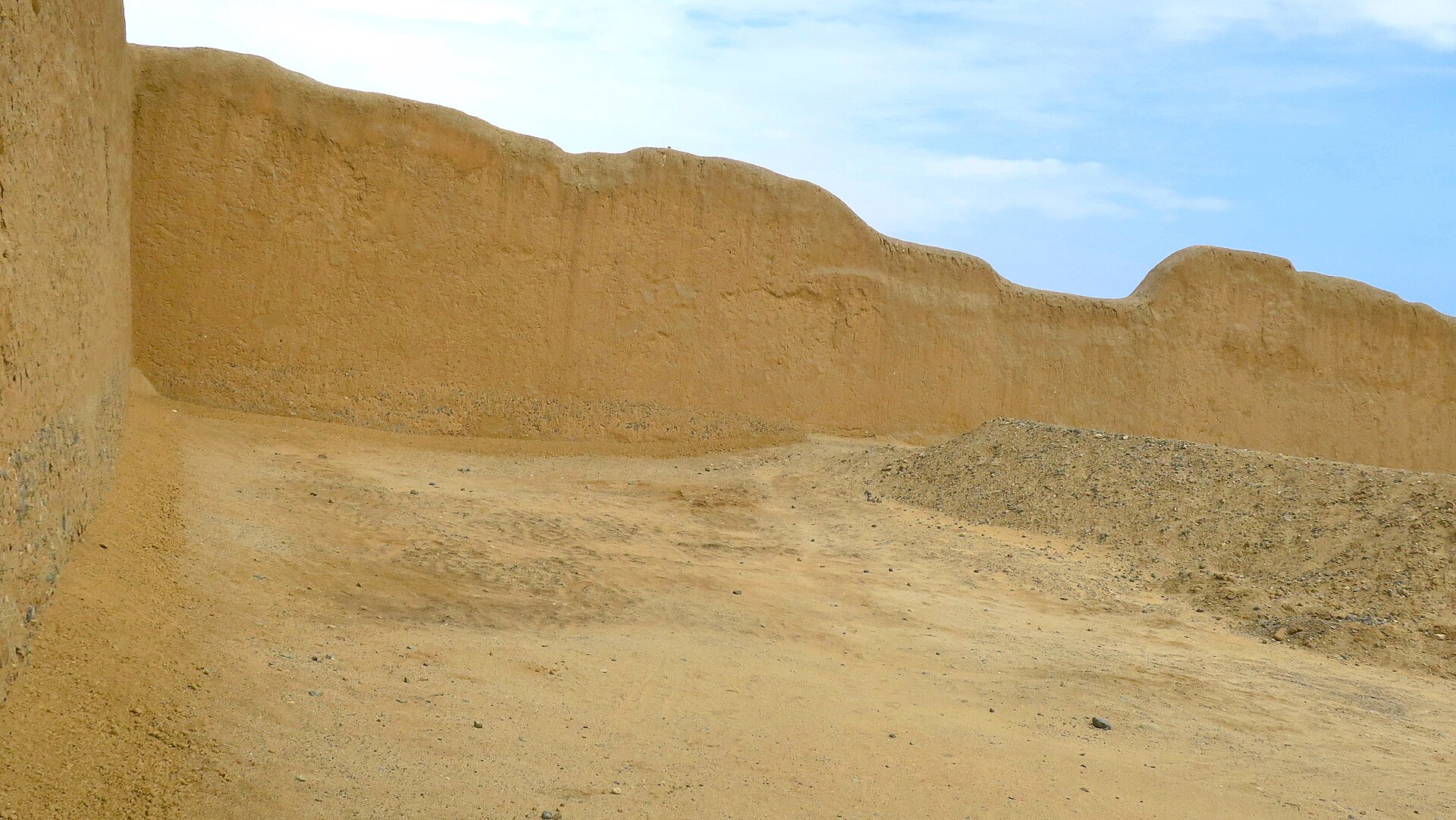
The visitor circuit reveals only a portion of a much larger archaeological landscape. Beyond it, mounds and enclosures continue across ground that is not simply an extension of the public route. That distinction between the accessible monument and the wider city is part of Chan Chan’s scale.


Why the protective roofs matter
Conservation is not a peripheral issue here. UNESCO’s conservation account describes damage associated with intense rainfall, rising groundwater and salt contamination. El Niño events can expose earthen structures to conditions very different from the dry-weather image travellers may carry of Peru’s coast.
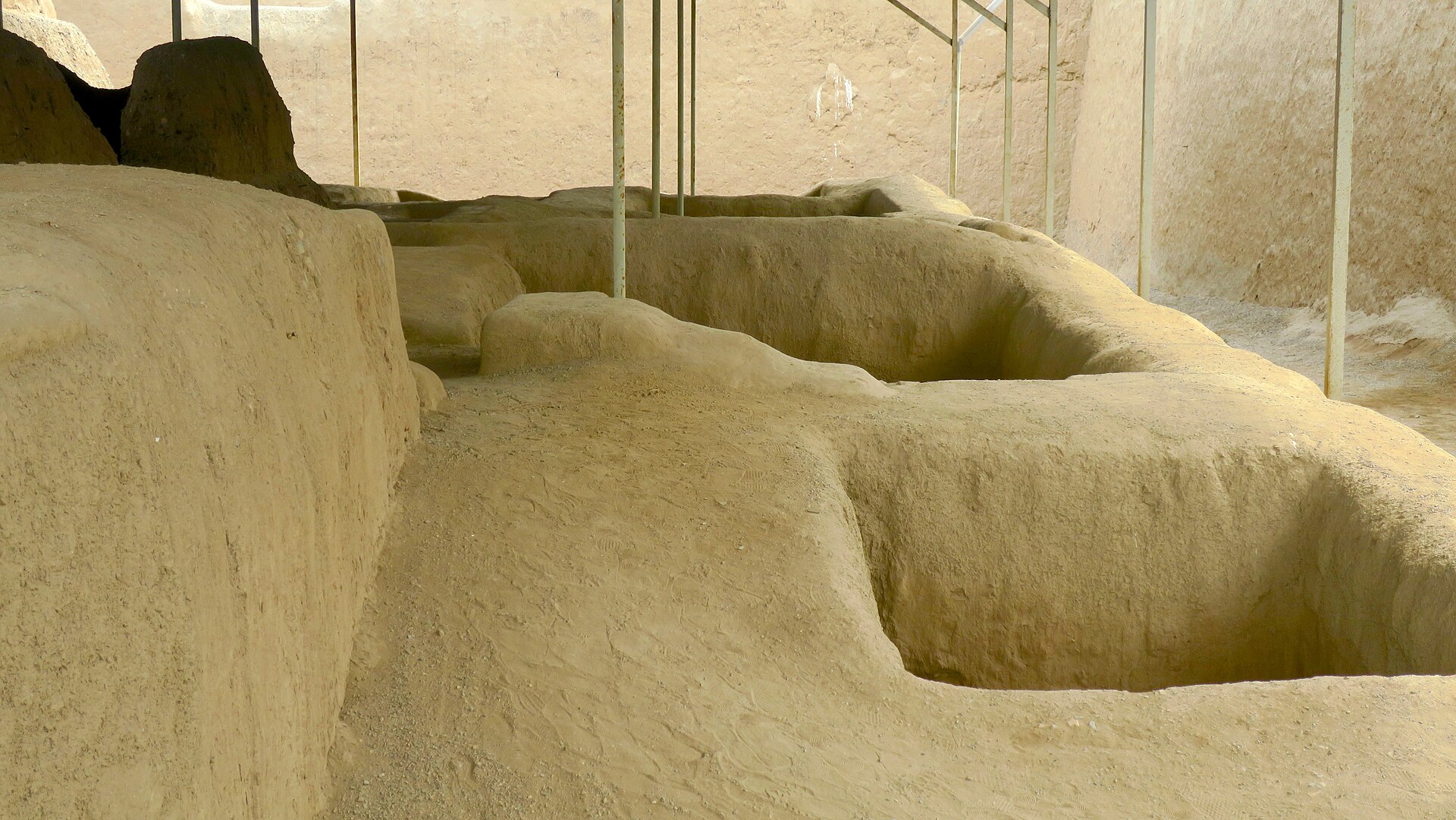
Protective roofs, drainage and stabilisation work are therefore part of the experience of seeing Chan Chan, not visual clutter that can be separated from the monument. Traditional materials and technical interventions work together to retain fragile walls and decorated surfaces.
The World Heritage Committee’s 2026 decision, 48 COM 7A.35, retained Chan Chan on the List of World Heritage in Danger while acknowledging conservation and planning work. The same decision noted emergency maintenance at several complexes and a new visitor access route: protection and public access remain closely connected.
Rain-related temporary closures in recent years underline the practical consequences of that fragility. Access is not independent of conservation: weather and the condition of earthen structures can reshape the visitor experience.


Objects, interpretation and the wider city
Peru’s official tourism information places the site near Trujillo and highlights the museum as part of the visit. Museum interpretation can help reconnect the exposed structures with the people, materials and objects that once animated them.
The official Chan Chan project documents the continuing work behind the visitor-facing monument. Its conservation and research activities are a reminder that this is an archaeological landscape still being studied, rather than a finished display of a distant civilisation.
The exposure of the site adds to the contrast between its impressive extent and delicate material. Protective barriers and sheltered passages mark places where the freedom of a modern visitor meets the limits imposed by conservation. The route through the ruins is also, inevitably, a route through decisions about what can safely remain visible.


A different way to travel through Peru
Chan Chan shifts the focus away from Peru’s most familiar southern circuit. Trujillo and the nearby coast give it a distinct regional setting: a northern story of valley agriculture, maritime connections and urban power.
The dry coast itself contains striking contrasts. Far to the south, the dunes around Huacachina produce another image of Peru’s desert margins. Across the Andes, the high-altitude Salar de Uyuni in Bolivia belongs to an entirely different environment. At Chan Chan, the defining feature of the dry landscape is what people built from its earth.
The lasting impression of Chan Chan is the tension between scale and fragility. A capital that once organised territory, production and power now depends on careful protection of individual surfaces. Visiting responsibly means recognising both parts of that story.