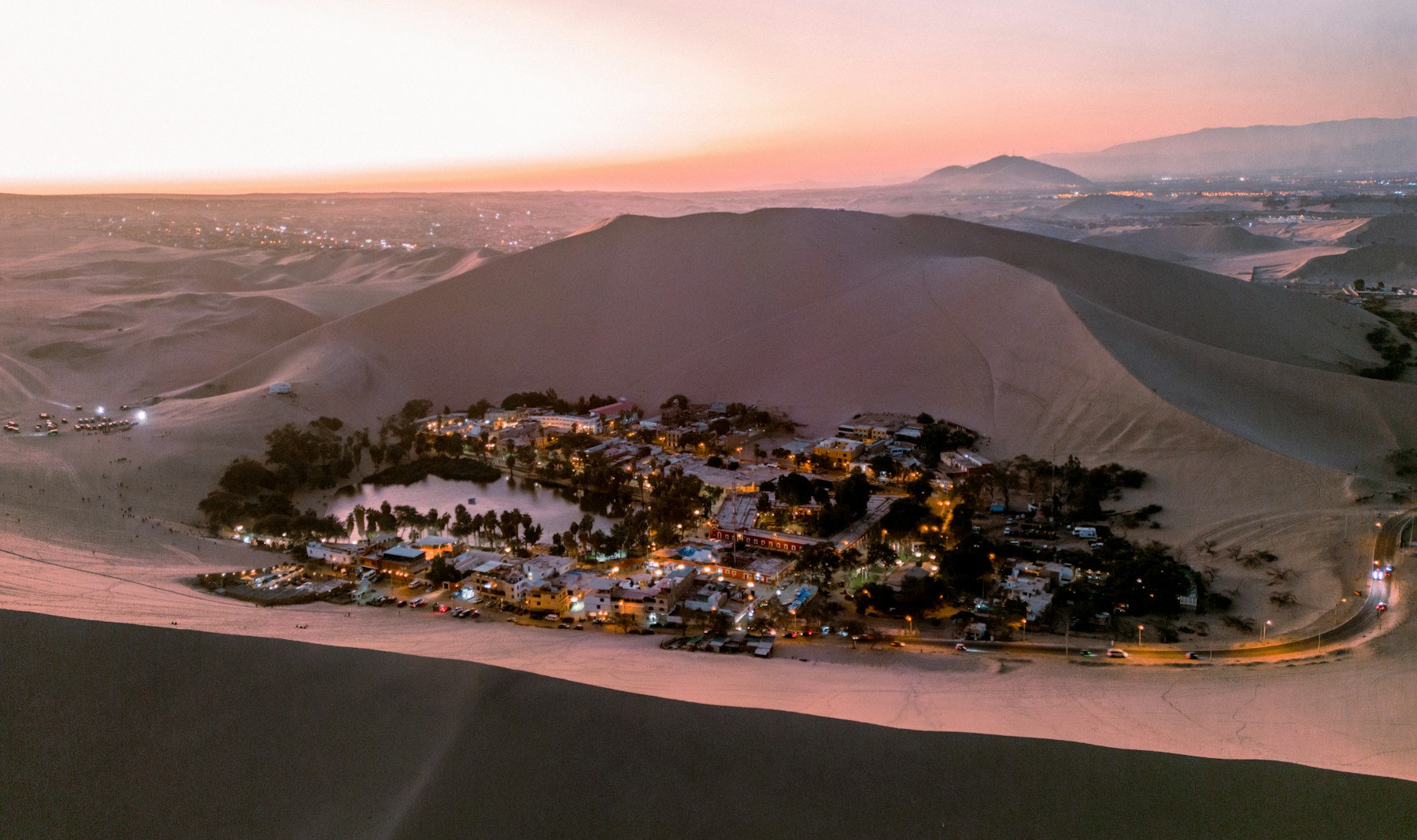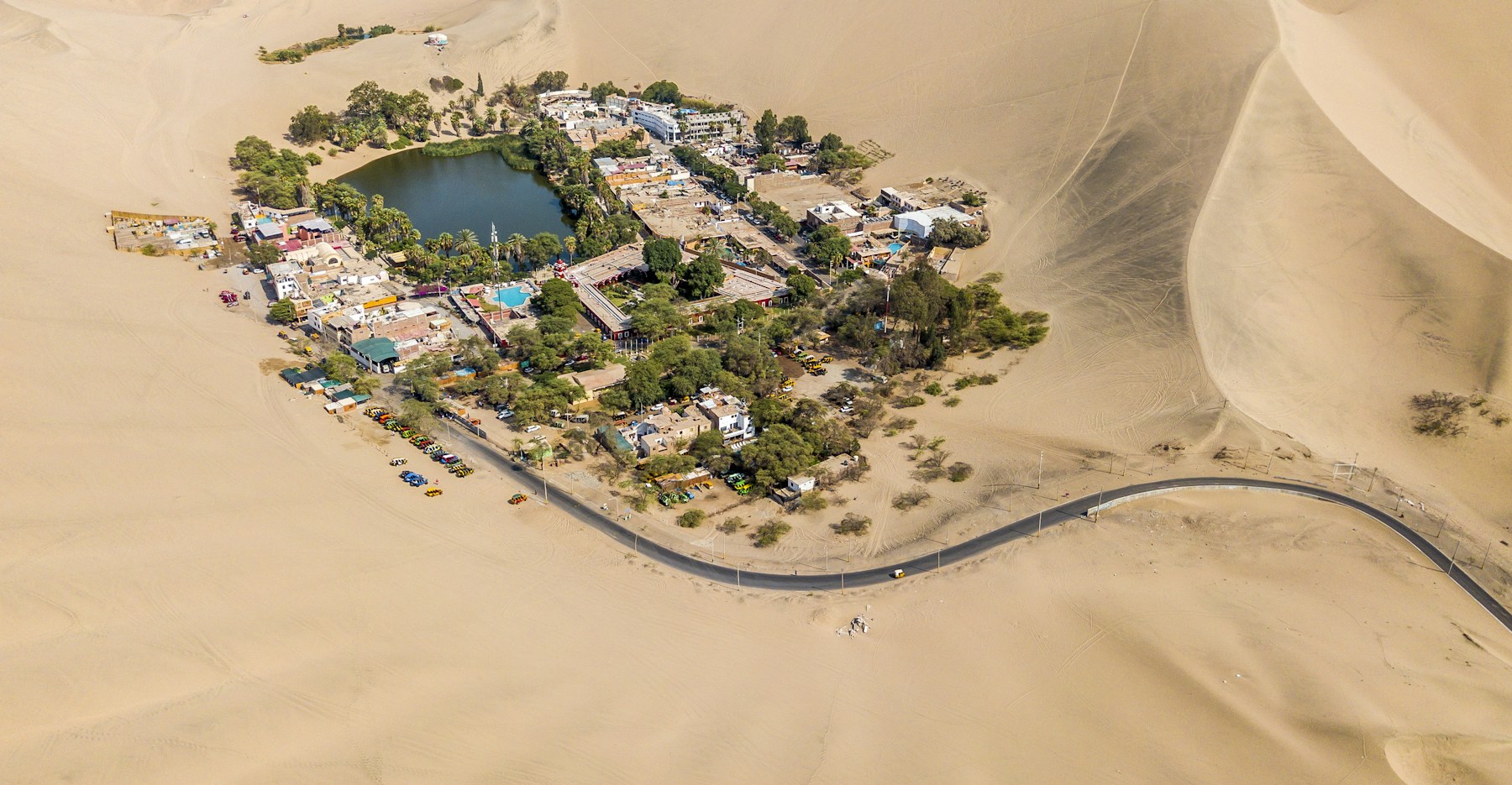
Huacachina is a small place with a startling change of scale. Around the lagoon, palms, paths and hotel terraces make a compact resort. Above them, sand ridges rise until the buildings look miniature. The most rewarding visit gives both landscapes time: a slow circuit of the water, then a carefully chosen viewpoint as the light softens.
This Huacachina oasis guide is for travellers who want the scenery without treating every advertised desert activity as essential. There is a significant safety distinction here: Peru’s tourism authority currently advises visitors against dune buggy services. The lagoon, the dunes and a well-paced overnight stop still offer plenty to enjoy.
Where Huacachina fits into a Peru journey
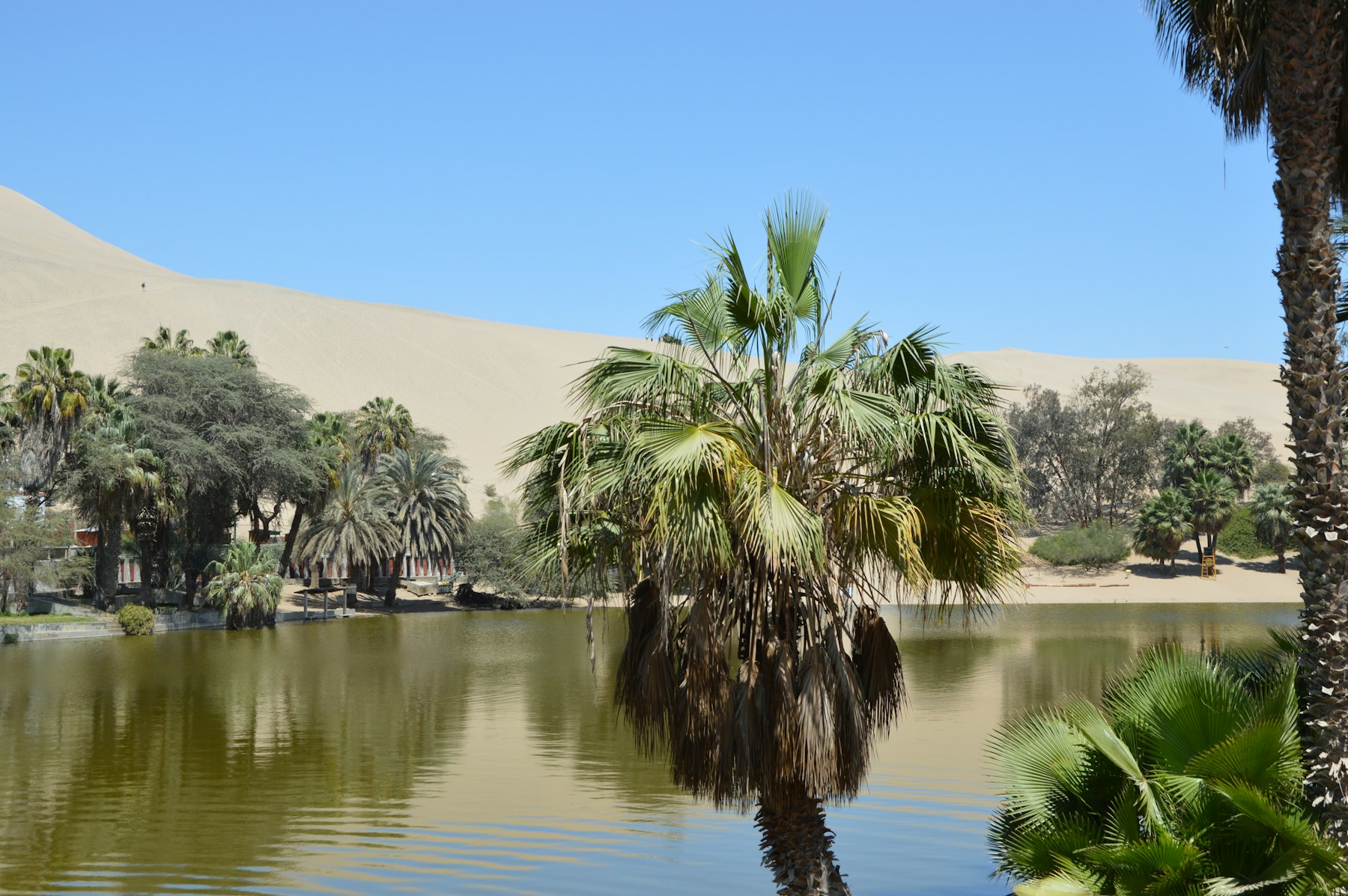
The oasis sits just outside Ica in Peru’s southern coastal desert. PROMPERÚ’s official destination guide gives approximately five hours overland from Lima to Ica, followed by about fifteen minutes to Huacachina. Treat those as planning estimates rather than guaranteed journey times; departure location, traffic and stops all matter.
One night is a sensible editorial recommendation if you want sunset without immediately facing the road back to Lima. A day visit from Ica is easier to keep relaxed than a rushed return from the capital. Before adding this stop, use our one-week Peru itinerary to check how much travel your wider schedule already contains.
Start beside the water
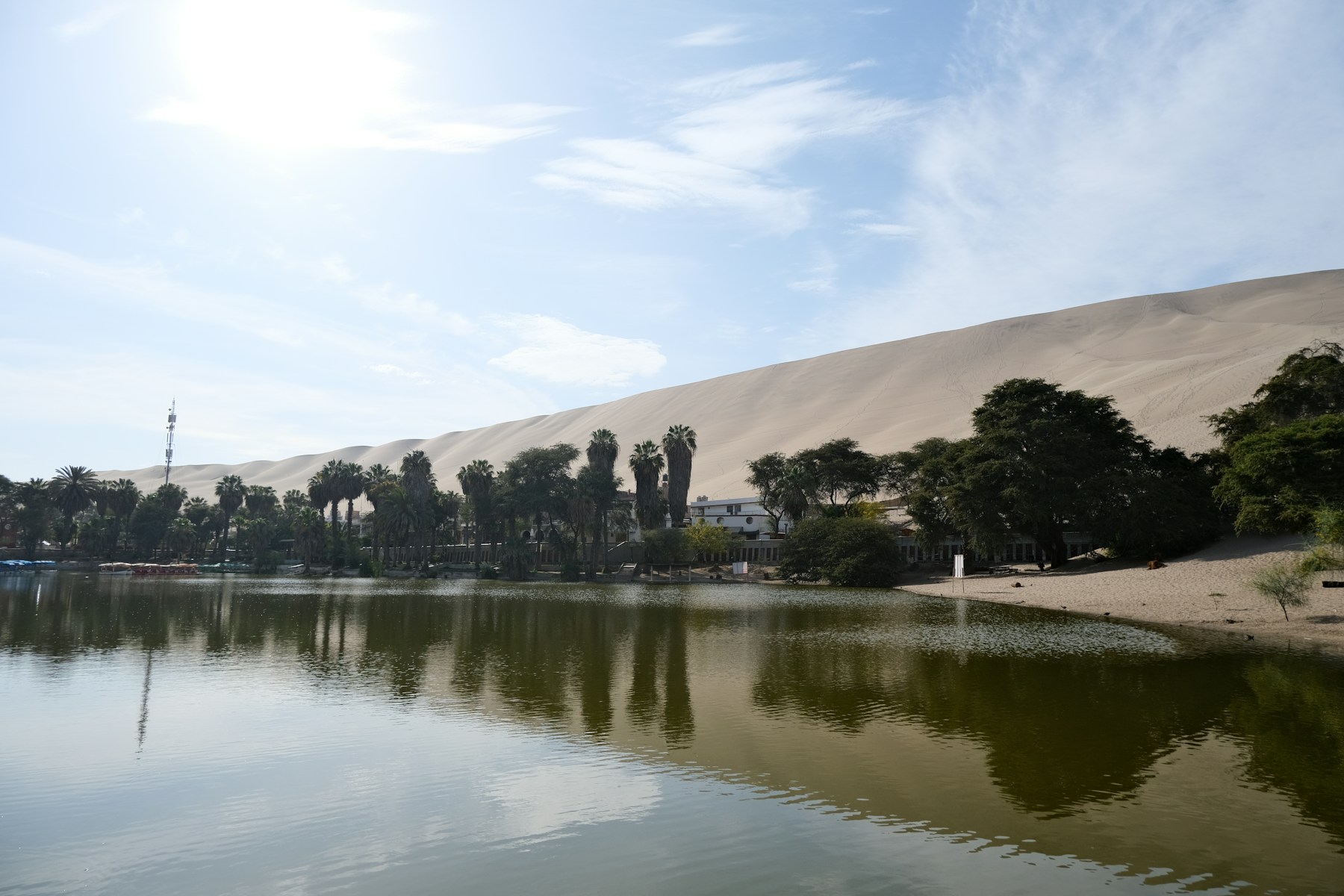
Begin with the lagoon rather than the highest ridge. Walk slowly, identify your return meeting point and take a break before deciding how far to climb. A waterside stop also makes the landscape legible: the green fringe is not simply decoration around a desert attraction.
The 2014 conservation decree established the regional protected area. Keep that status in mind when choosing where to walk or leave a picnic. Carry rubbish out, avoid disturbing vegetation and wildlife, and follow local access instructions rather than following footprints into an unfamiliar section of dunes.

Choose a manageable dune walk
Loose sand changes what an apparently short climb demands. Make the turnaround decision according to your energy, the heat and the time needed to return, not the distance on a map. Footwear with secure soles is a more useful starting point than a photograph of someone climbing barefoot. Bring water, sun protection and a light layer for later.
Ask locally which pedestrian route is currently suitable and keep clear of vehicle tracks. If mobility, balance or heat tolerance makes a climb unsuitable, stay beside the lagoon; the contrast between trees, water and dune walls remains visible without reaching a summit. Do not assume a hotel’s accessible room means the surrounding sand routes are accessible.
Take the buggy warning seriously
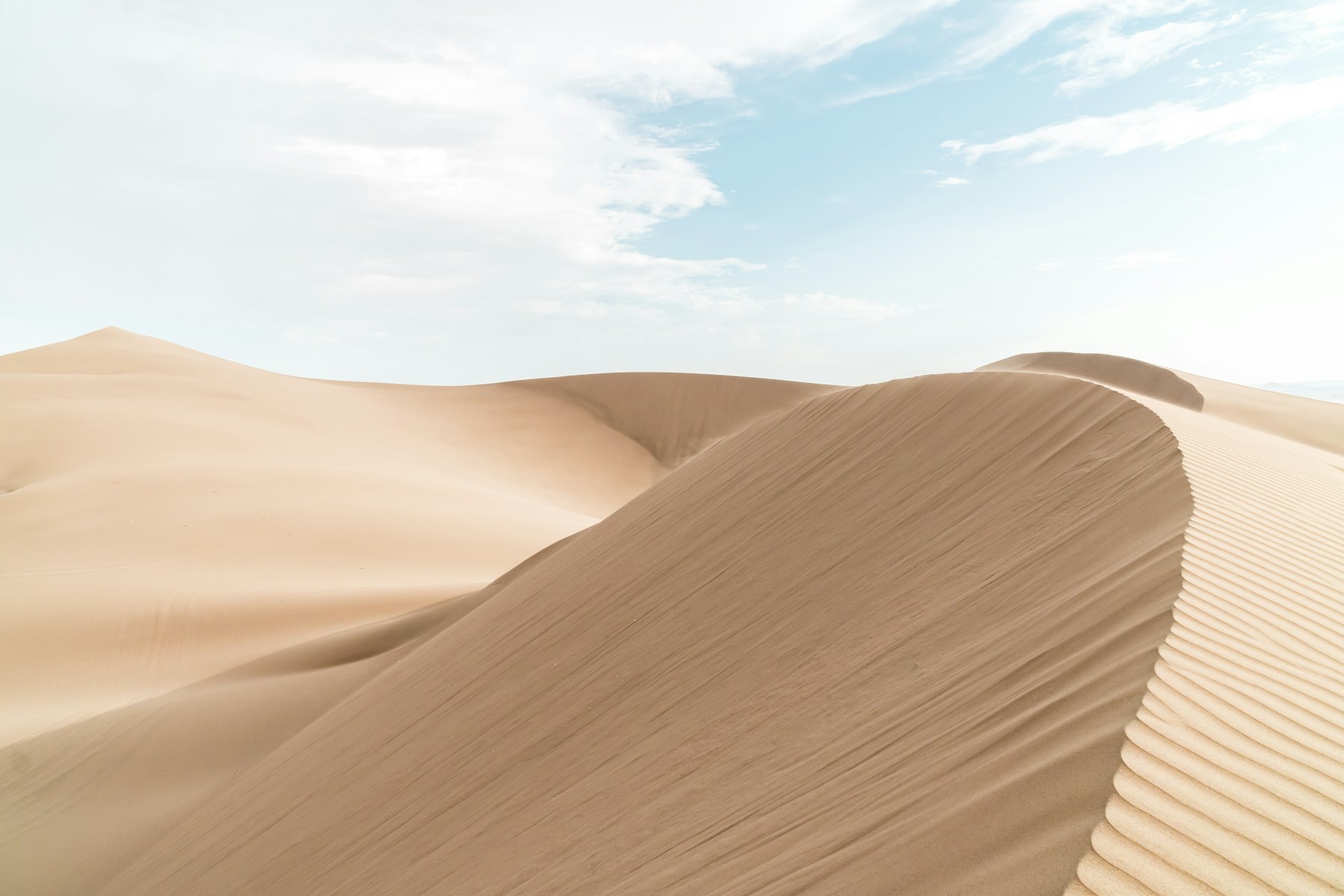
Huacachina is frequently marketed through high-speed rides, but that should not override official advice. PROMPERÚ’s visitor information explicitly recommends not using dune buggy services, citing the lack of regulation and official supervision. Plan a visit that does not depend on one.
The transport ministry’s guidance on municipal authorisation also makes clear that operators must meet formal requirements. A reassuring sales pitch, a helmet or a hotel referral is not proof of compliance. Check current official advice before travelling, because enforcement and permissions can change.
Plan sunset without losing the return route
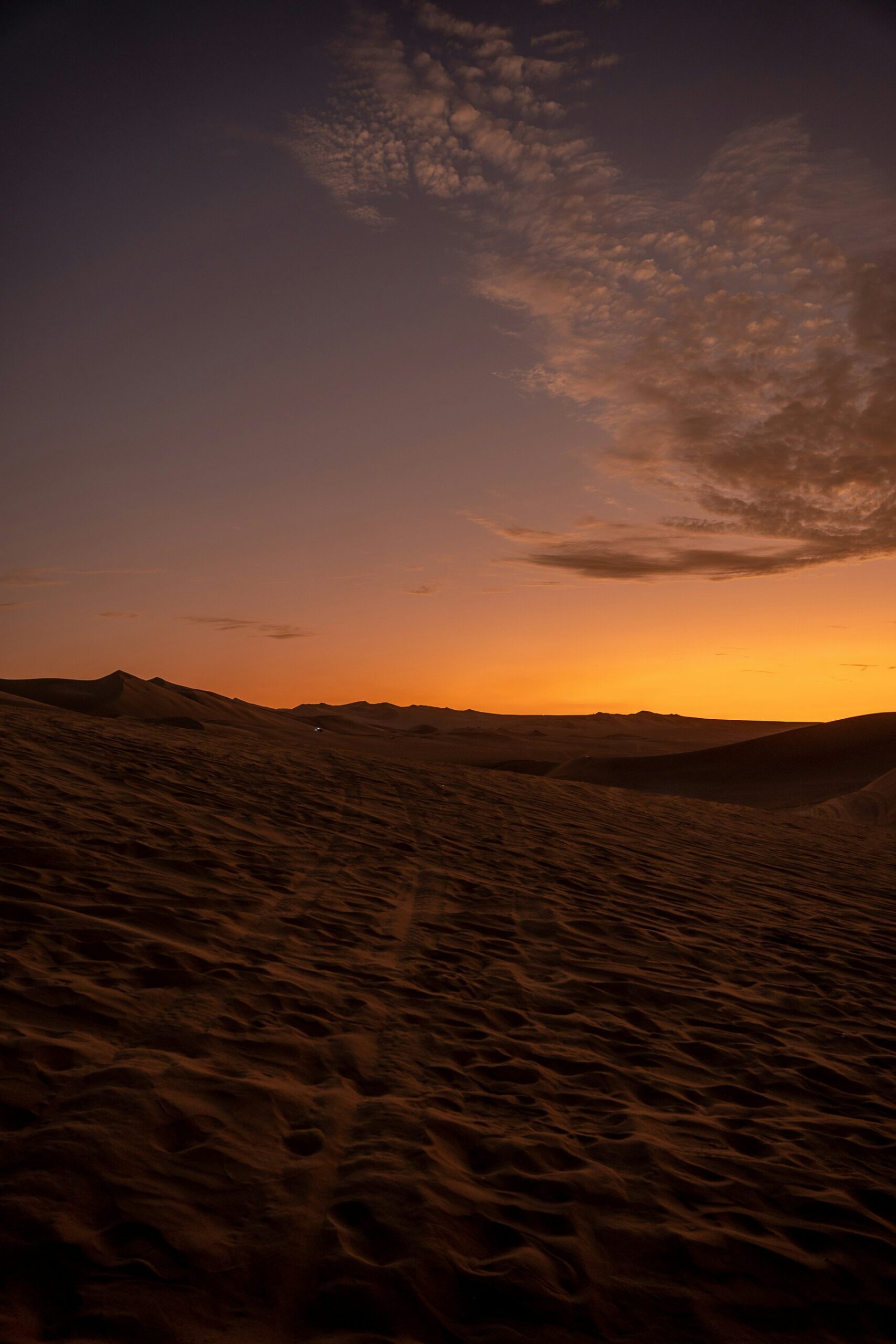
Late light brings out the dunes’ contours, but the best viewpoint is one you can reach and leave comfortably. Arrive with time to assess the route, keep the lagoon’s position in mind and agree a turnaround time before the light goes. Do not chase a distant ridge just because it appears empty in a photograph.
For photography, protect lenses and phones from blowing sand and avoid changing equipment unnecessarily in exposed wind. A lower position can give strong foreground textures; a higher one may reveal the lagoon’s shape. Neither requires walking beyond your limits.
Budget for access separately from activities
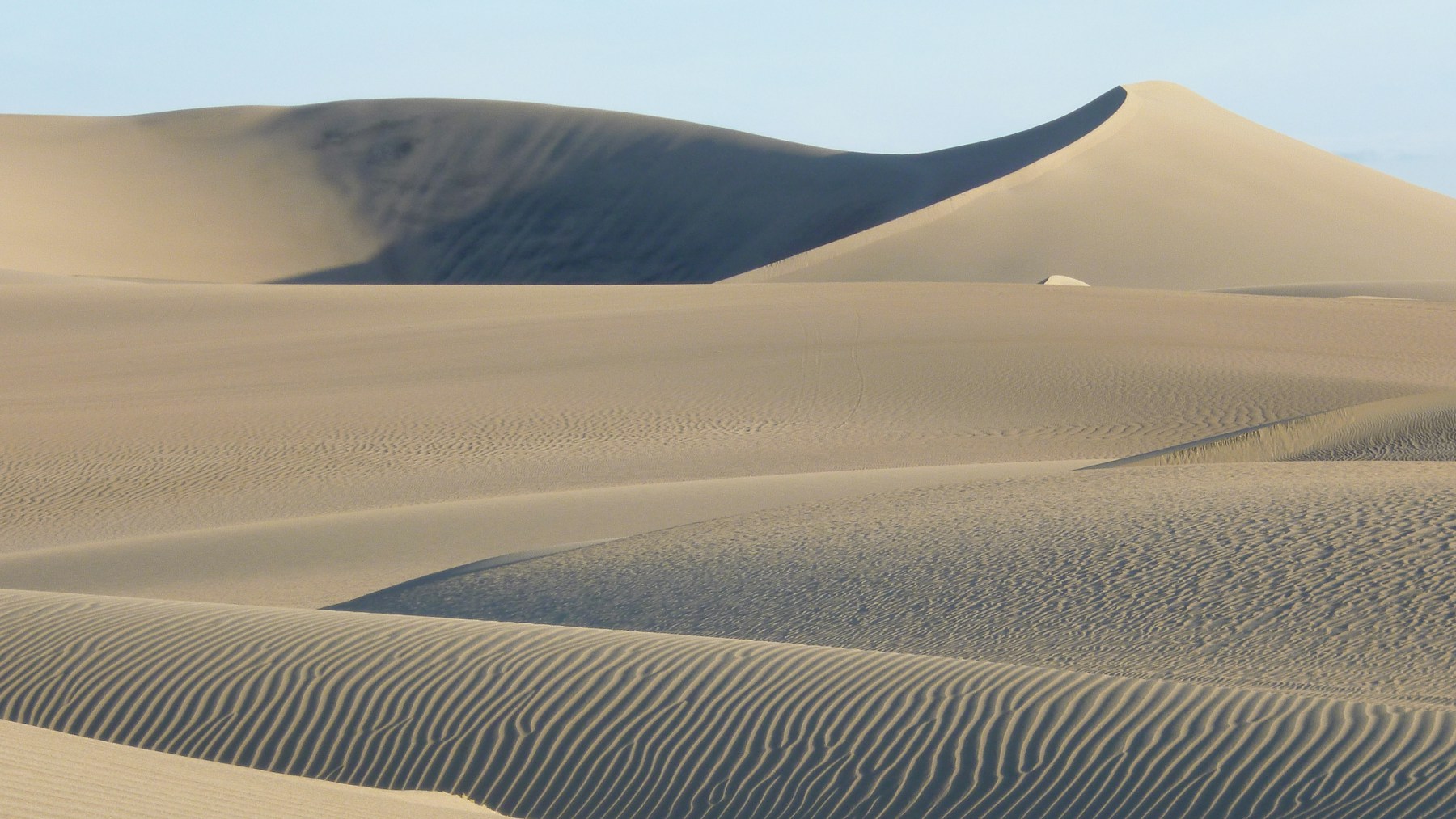
The regional ordinance published in August 2026 lists admission of S/8.10 for foreign visitors, S/4 for domestic visitors and S/2 for eligible local or preferential admission. Confirm the rate and eligibility at an authorised collection point and retain the ticket. Do not assume an excursion quote includes conservation-area admission, transport or equipment.
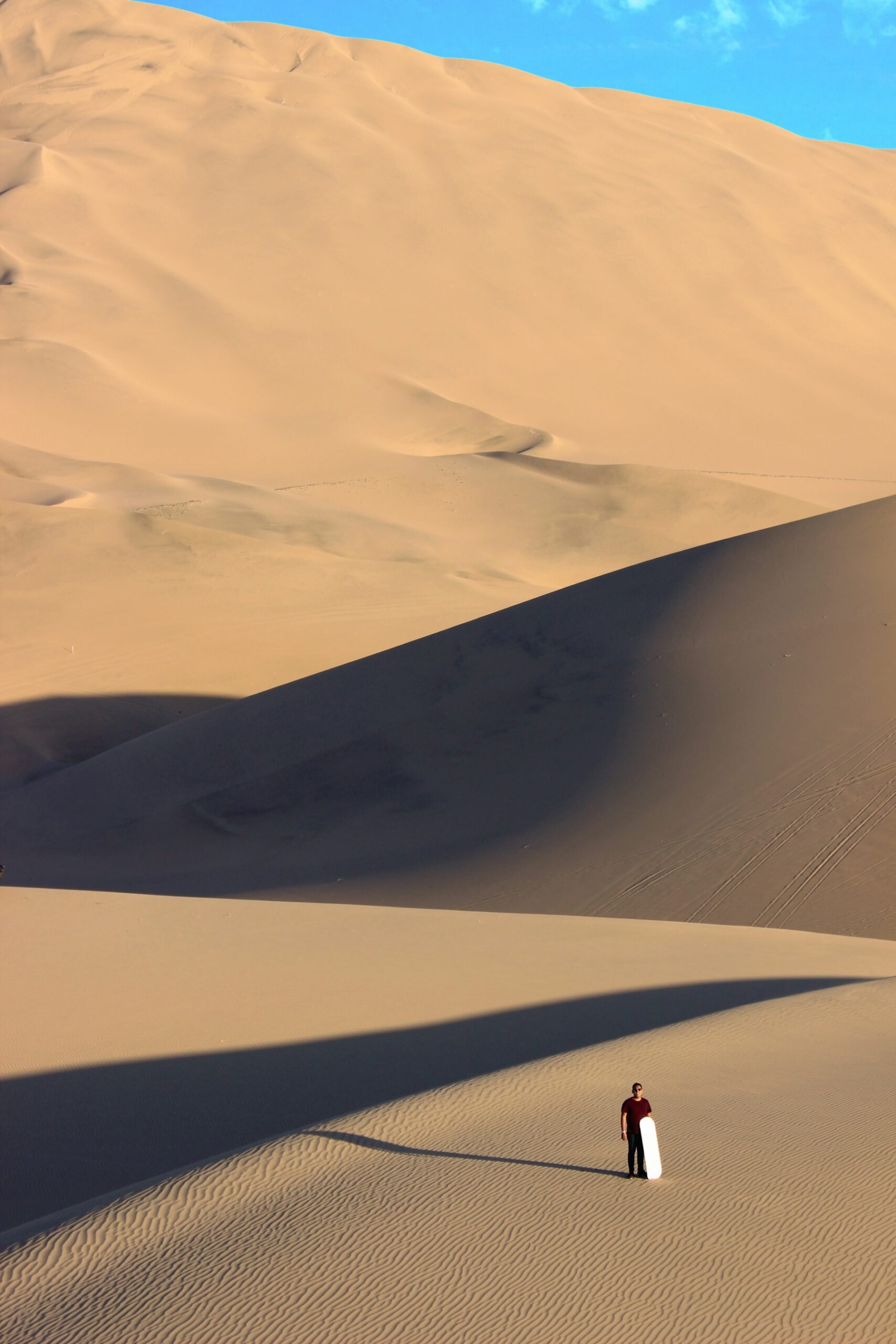
Choose accommodation according to the evening you want. Ask about music, room position, luggage storage and onward transport before booking. Staying close to the lagoon suits travellers prioritising the changing light; an Ica base can work if other regional visits matter more. Compare the stop with our broader places to visit in Peru, rather than adding it automatically.

Huacachina works best as a coastal contrast, not as a substitute for the Andes. If your journey continues inland, our Cusco and Sacred Valley guide helps frame that very different stage. Leave the oasis with sand in your shoes, time for the onward journey and no pressure to have done every activity on offer.