
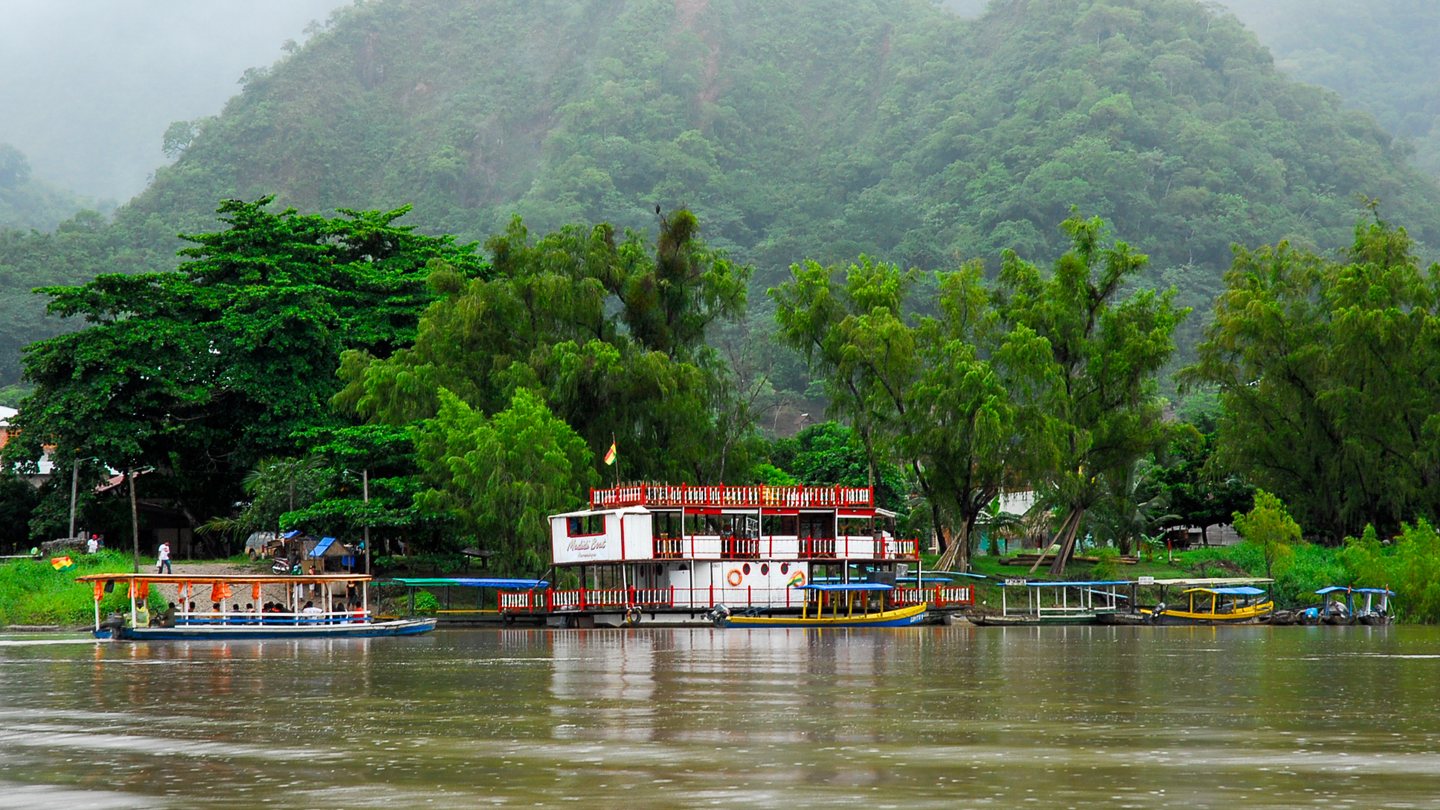
On the riverbank at Rurrenabaque, the boats that carry visitors into Madidi National Park are long, low and roofed with canvas. They leave in the morning, head upstream on the Beni and, a few hours later, turn into the Tuichi, the river that leads to the riverside lodges of San José de Uchupiamonas. By then the passengers are inside a protected area of almost 1.9 million hectares that Bolivia’s park service ranks among the most biodiverse places on the planet.
That boat ride is the shape of almost every visit. Nearly everyone comes through a lodge or an authorised operator, which sends a boat or a vehicle and a guide, and the days are built around the rivers, the trails and the hours when animals move. The decision that matters most is therefore which lodge, because each one sits in a different stretch of forest and sets a different pace.
Where Madidi begins and ends
The park was created in 1995 in the northwest of La Paz department and is managed by SERNAP, Bolivia’s national protected areas service. It runs from the snow peaks of the Cordillera de Apolobamba, above 5,000 metres, down to the Amazonian plains of the Heath River on the Peruvian border. Between those extremes lie high grasslands, cloud forest, Yungas valleys, savannas and lowland rainforest. Two sections carry national park status, and the zone between them is an integrated management area where 31 communities live and manage resources such as wild cacao, incense and honey.
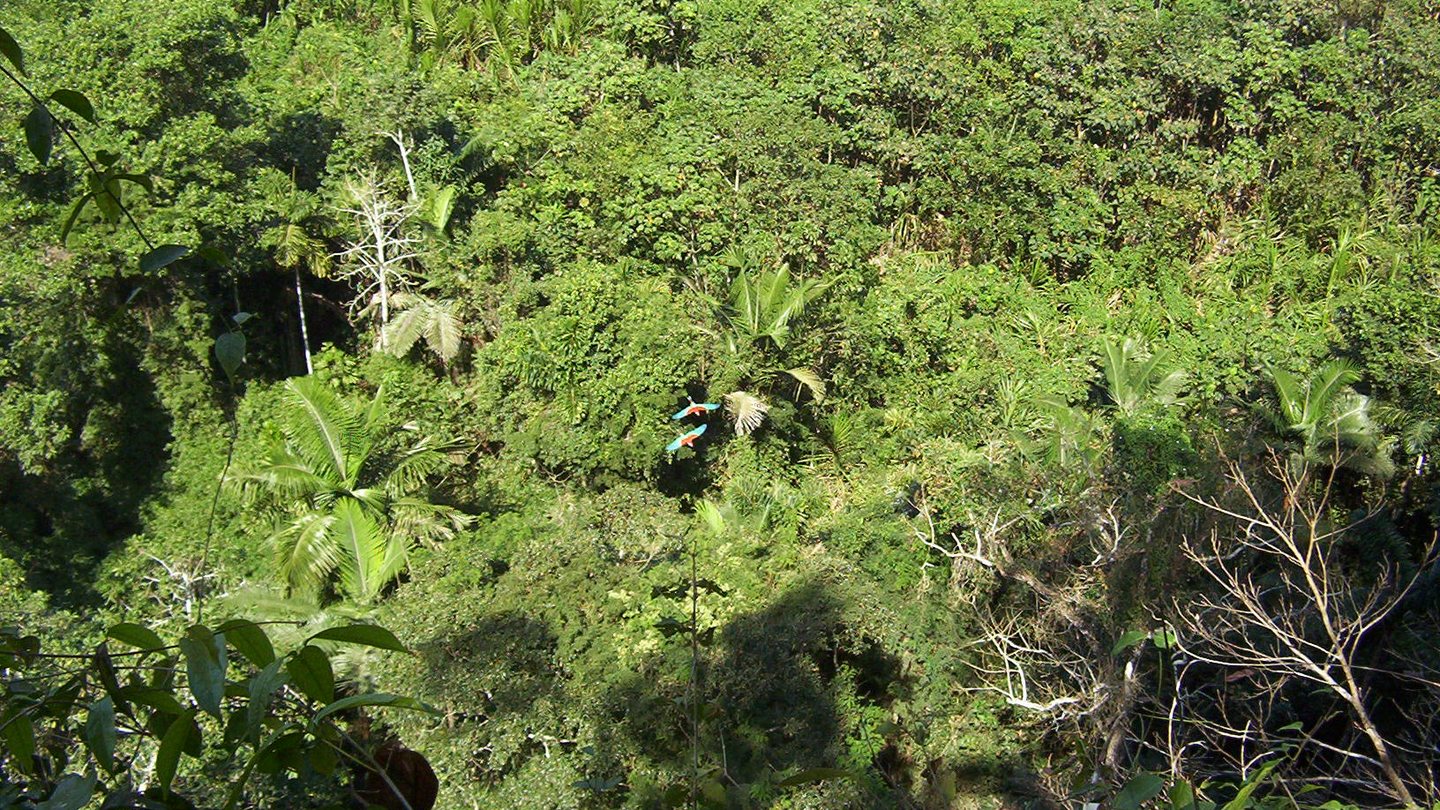
Most travellers see only the lowland corner closest to Rurrenabaque, and that is no compromise. Here the first ridges of the El Bala range rise out of the forest, and from the slopes above the Beni you look down on an unbroken canopy where macaws can be seen crossing below you. The highland side of Madidi, around Pelechuco and Apolo, is a separate journey from La Paz and is best planned as a trip of its own.
Reaching Rurrenabaque
EcoJet is the airline to check first. Both the Madidi Jungle Ecolodge and Sadiri Lodge point travellers to its La Paz to Rurrenabaque service on Mondays, Wednesdays and Fridays, a short morning flight from El Alto that swaps the cold of the Altiplano for lowland humidity. Madidi Jungle notes that its programmes can shift with the weather and with flight arrivals, so avoid booking an international departure from La Paz on the day you fly back. The days in La Paz are rarely wasted: a morning at the ancient Andean city of Tiwanaku fits neatly before or after the jungle.
The overland alternative leaves from the Villa Fátima district of La Paz. Lodges quote around 12 to 13 hours by bus and roughly nine to ten by shared car, on a road that falls from the high plateau through the Yungas before flattening out towards the Beni. If you would rather see the Yungas from a bike saddle, read our guide to cycling in Bolivia first, because acclimatisation and the choice of operator matter more than speed.
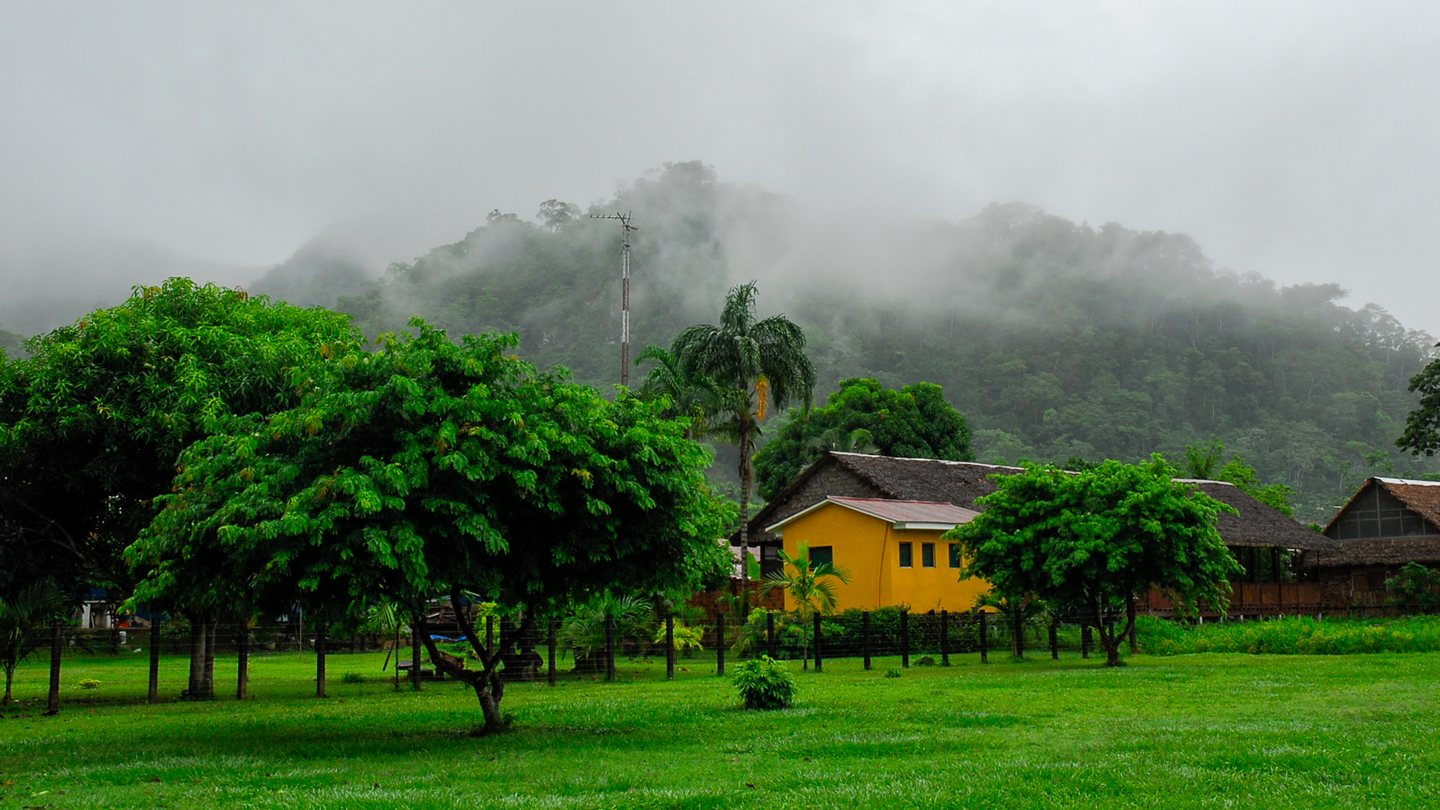
Rurrenabaque itself is a small river town facing San Buenaventura across the Beni, with forested hills on every side and cloud often sitting low on them. The Madidi Jungle Ecolodge keeps its office on Avenida Comercio, close to the main square, which makes it easy to confirm the next morning’s departure in person. Bring cash in bolivianos for the park entrance, which lodges list separately at 200 bolivianos for foreign visitors and 50 for Bolivians.
Leave slack in the whole itinerary. Bolivia has been under a State of Emergency during 2026, and the UK government’s travel advice warns against trying to cross roadblocks and recommends allowing extra time to reach your destination. If Madidi is part of a longer trip that also takes in Salar de Uyuni, put the jungle and the salt flat on either side of a buffer day in La Paz rather than chaining them back to back.
Choosing a lodge on the Tuichi and beyond
Chalalán Ecolodge
Chalalán Ecolodge is the name most closely tied to Madidi, and for good reason. It belongs to the Quechua-Tacana people of San José de Uchupiamonas, a community founded in 1616 in the Tuichi valley, who turned to ecotourism in the 1990s as a way to earn a living from their forest while prohibiting hunting and commercial logging around the lodge. Chalalán lies about 100 kilometres west of Rurrenabaque, and the trip up the Beni and Tuichi takes around five hours, so the journey in fills much of the first day.
The cabins follow traditional Tacana design, with polished mara-wood floors, and stand beside Laguna Chalalán, a lake enclosed by forest. Guests paddle canoes on the lake, walk a trail network the lodge puts at 50 kilometres, and climb to viewpoints over the canopy and the ridges of the park. Packages run from three days and two nights to six days and five nights, and given the hours spent on the river, the shortest one is a sensible minimum.
Madidi Jungle Ecolodge
The Madidi Jungle Ecolodge is a native-run operation whose local guides interpret both the forest and Uchupiamona and Tacana culture, and it is the one to choose if you want published prices and a shorter boat ride. Boats leave Rurrenabaque at 08:30 and take about three hours upstream and two coming back. The lodge has four cabins with private bathrooms and six rooms sharing facilities, takes 18 to 20 guests at most, and assigns one guide to every four or five visitors on 40 kilometres of trails.
Its 2026 rates run from 120 US dollars per person for a single day to 460 dollars for five days and four nights with a shared bathroom, with three days and two nights at 290 dollars. Park entry, flights and nights in Rurrenabaque are extra, and card payments carry a five per cent surcharge. The day trip exists, but with five hours on the river it leaves little time on foot; the longer programmes are where the forest starts to open up.
Sadiri Lodge
Sadiri Lodge takes a different approach. It is reached by road rather than by river, about three hours from Rurrenabaque, and stands in the hill forest where the El Tigre and El Bala ranges meet on the eastern side of the park, inside the territory of San José de Uchupiamonas. Its trails range between roughly 500 and 900 metres above sea level, and that span is the point: the lodge records more than 500 bird species, among them many that belong to the forest of the outlying Andean ridges. It is the obvious base for serious birders.
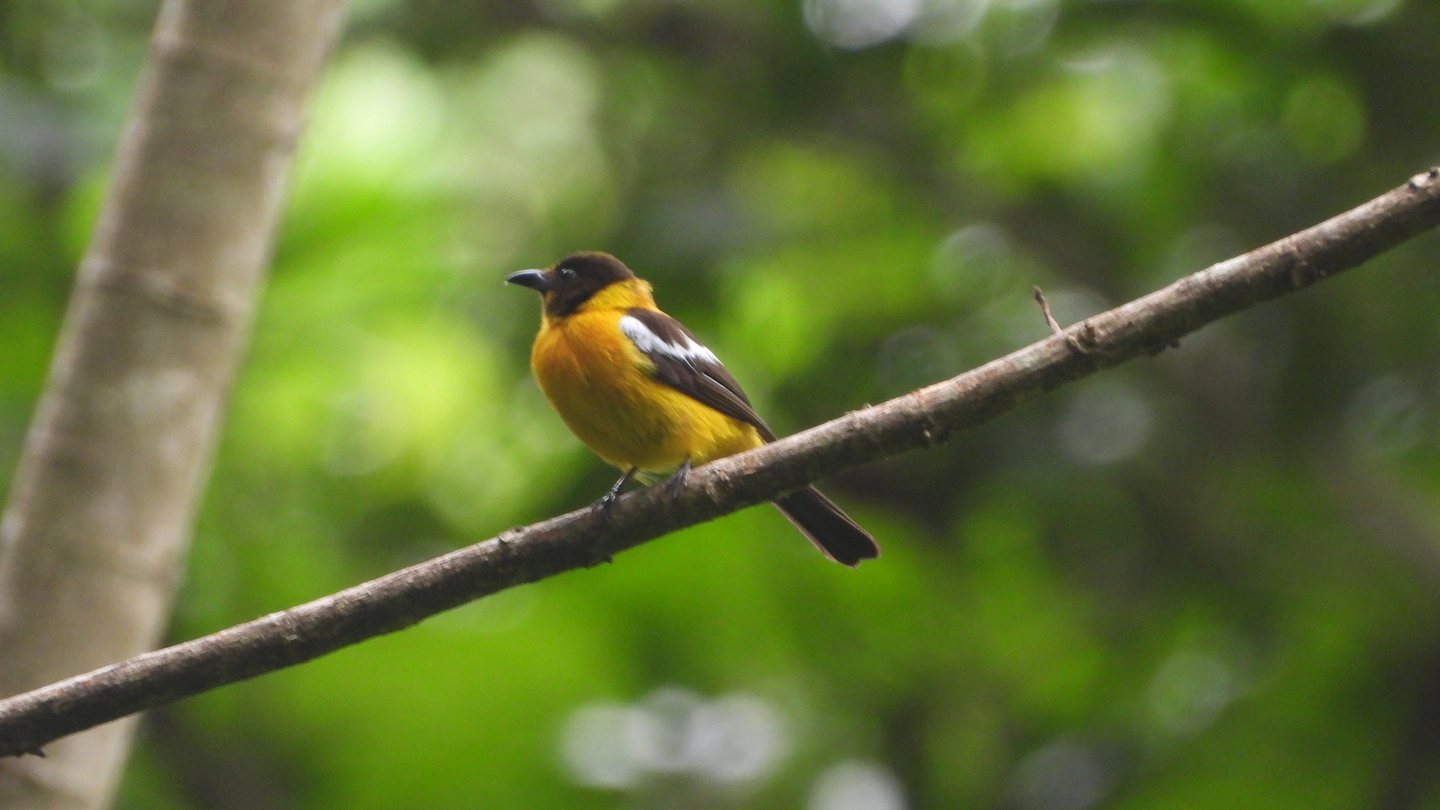
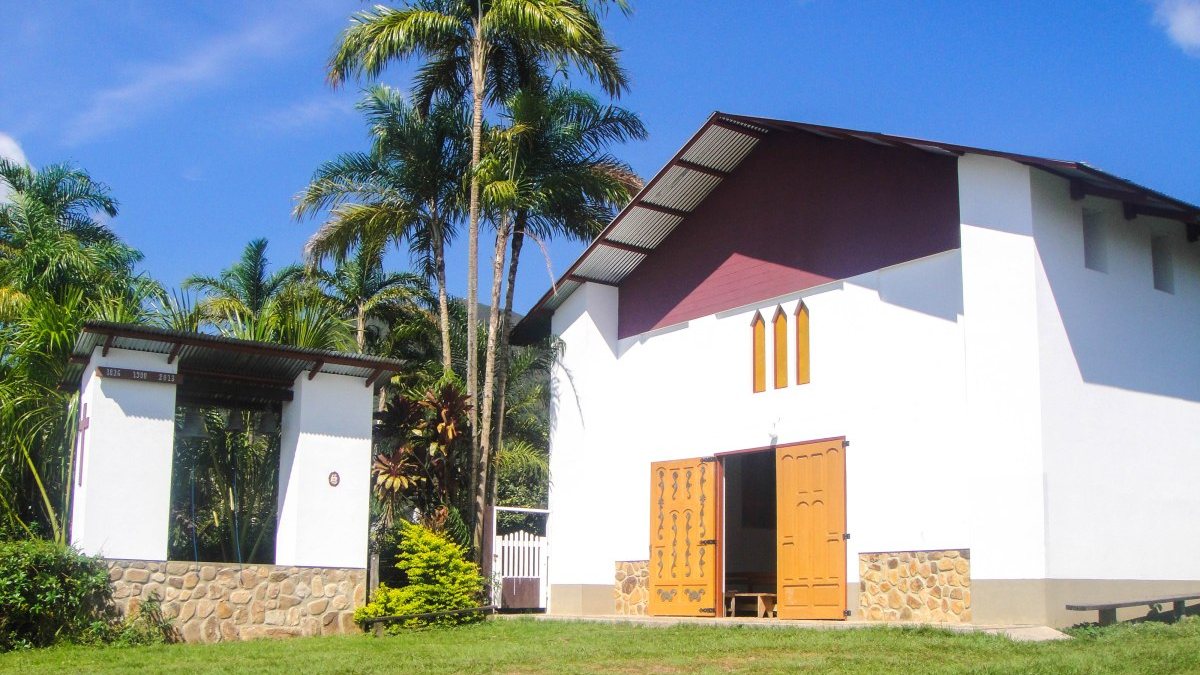
The land route to this side of Madidi runs through Tumupasa, a Tacana town on the edge of the forest. From there a track of about 30 kilometres leads to San José de Uchupiamonas, which can no longer be reached by river but is now accessible by land all year. The community has welcomed travellers since 1999 and now runs seven tourism initiatives, Sadiri among them, while dividends from the Chalalán company remain its main source of income, so a stay with either keeps money in the same valley.
What lives in the forest
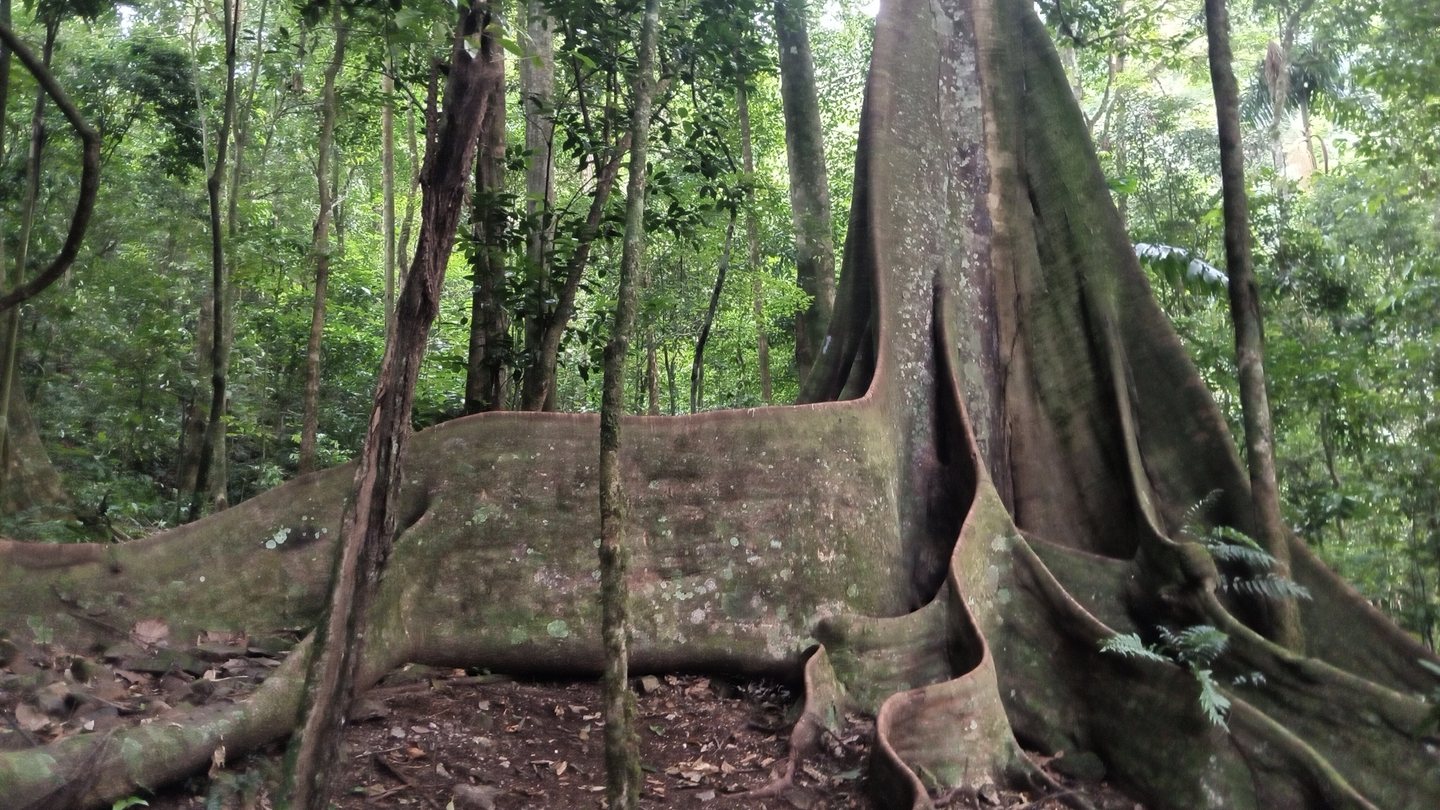
Walking in, the first thing to register is the scale of the trees rather than any animal. Buttress roots fan out at the base of the largest trunks, figs and lianas climb towards the canopy, and much of what a local guide explains concerns plants and the ways communities along the Tuichi have used them.
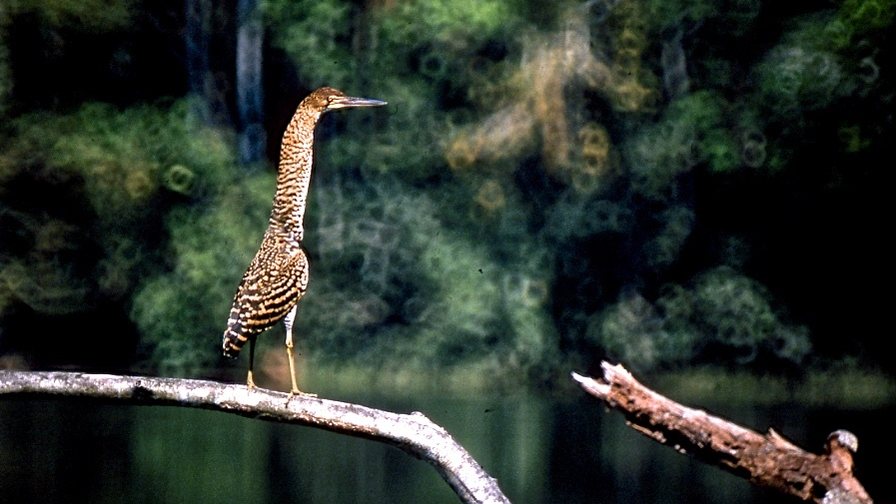
The numbers behind the park are extraordinary. SERNAP counts more than 1,000 bird species, close to a tenth of the world’s total, and more than 300 mammals, including the jaguar and the Andean bear. The Identidad Madidi expedition led by WCS Bolivia has catalogued 5,535 plant species and more than 1,800 vertebrates so far, and its overview of the park lists the giant otter, marsh deer, harpy eagle and black caiman among the threatened species protected here. Macaws and monkeys are realistic hopes on a stay of a few days; a jaguar or an Andean bear is a matter of luck rather than a promise.
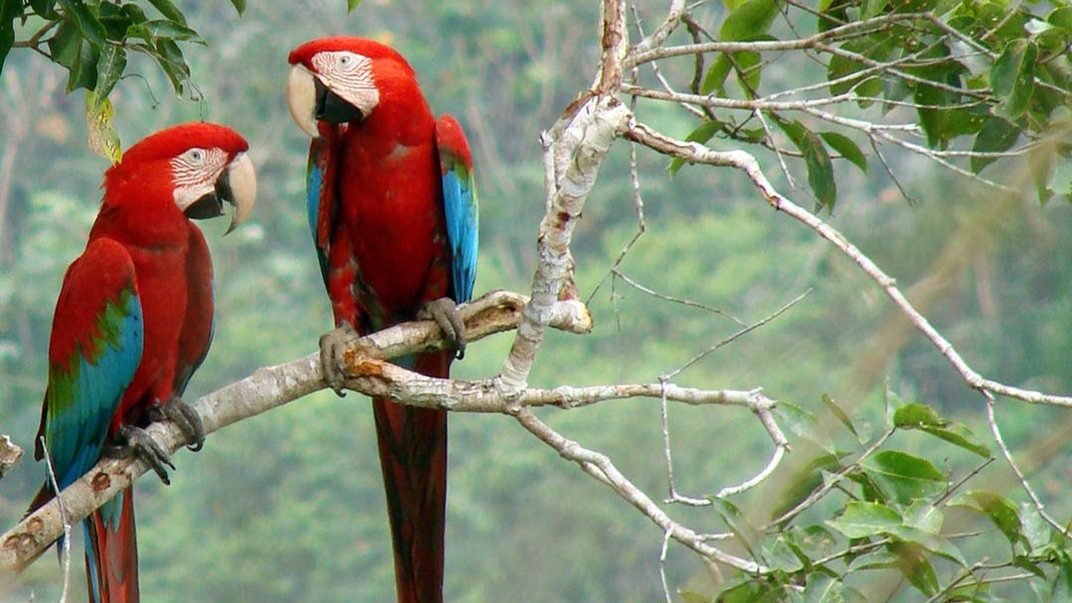
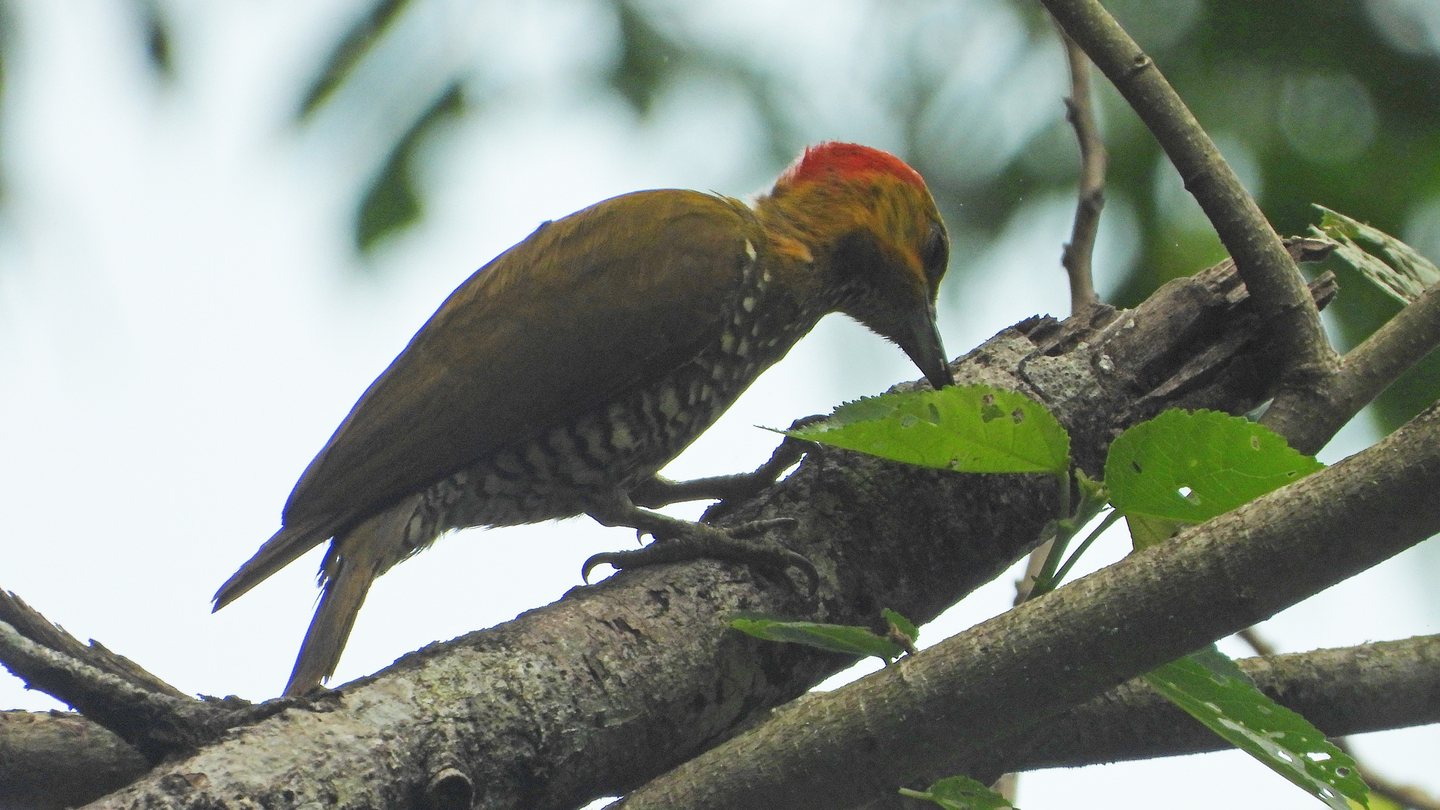
Birding works best in the first hours after dawn, when mixed flocks move through the mid-canopy and woodpeckers work the dead branches. A good guide will find most of them by ear long before you see them, so bring your own binoculars or ask at booking whether the lodge can lend a pair.
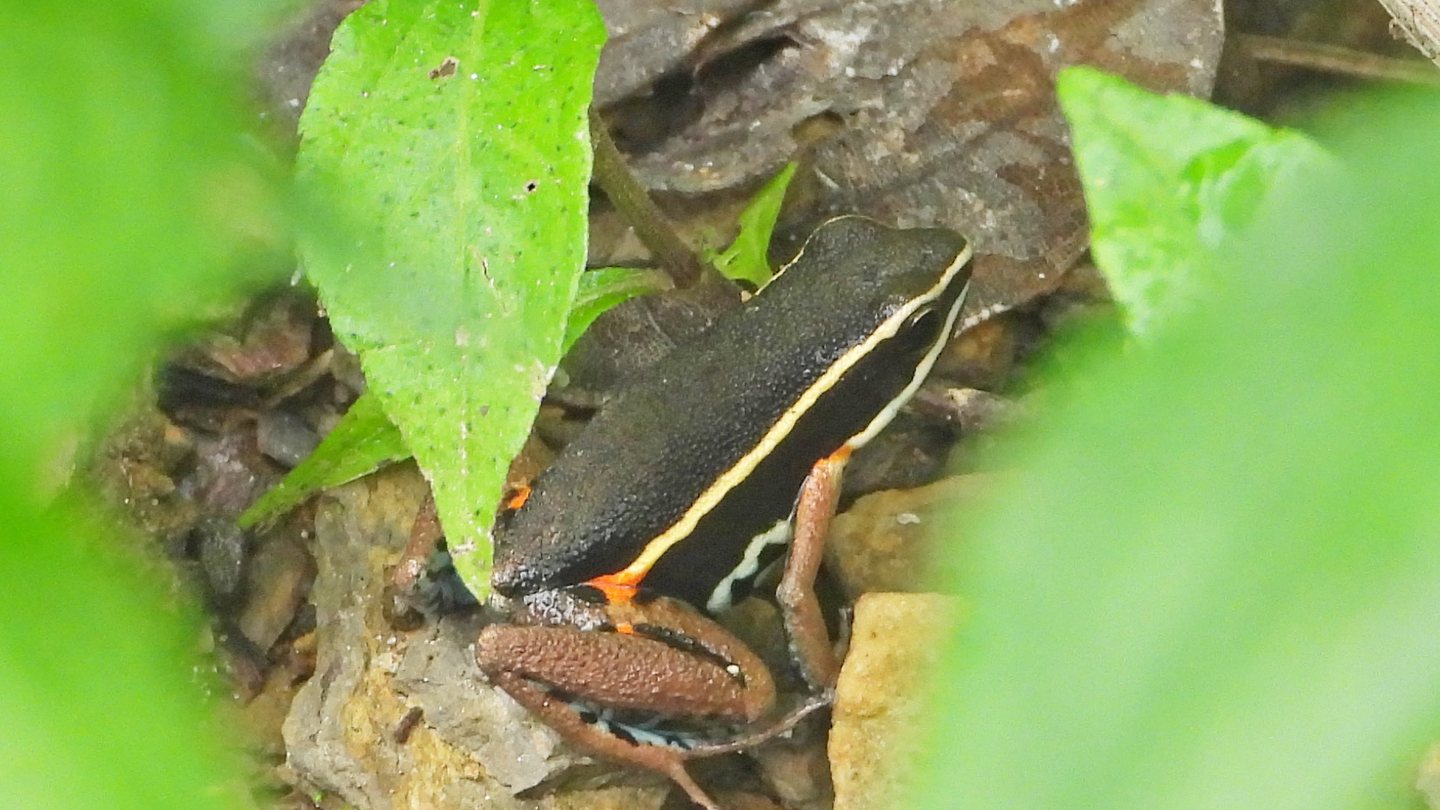
Look down as often as up. The forest floor holds small poison frogs and lizards that are easy to miss on a fast walk, which is where a small group, such as Madidi Jungle’s four or five visitors per guide, pays off. Madidi Jungle provides a rain poncho at the lodge; ask whichever lodge you choose whether it lends rubber boots, and pack quick-drying clothes rather than a heavy jacket.
When to go and how long to stay
Around San José de Uchupiamonas, the rains are heaviest from November to February and the dry season runs from May to October, with an average temperature of about 25°C. Between March and June, cold southern fronts known as surazos can push temperatures below 10°C and bring light rain for several days, so pack one warm layer whatever the forecast in La Paz says.
Three days and two nights is the shortest stay worth planning, and a fourth day gives a margin for a rained-out morning. If you are flying, build the trip around the EcoJet days: arrive on the Monday morning flight, take a four-day programme at Madidi Jungle or Chalalán, sleep the Thursday night in Rurrenabaque and fly back to La Paz on Friday, with the weekend as your buffer before the journey home.