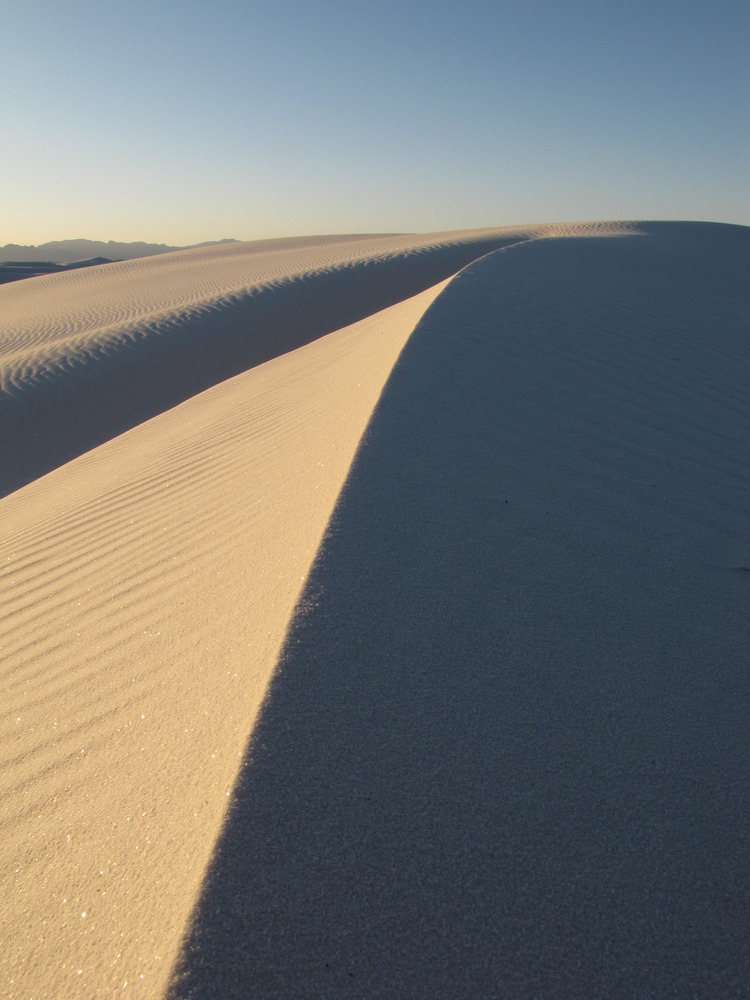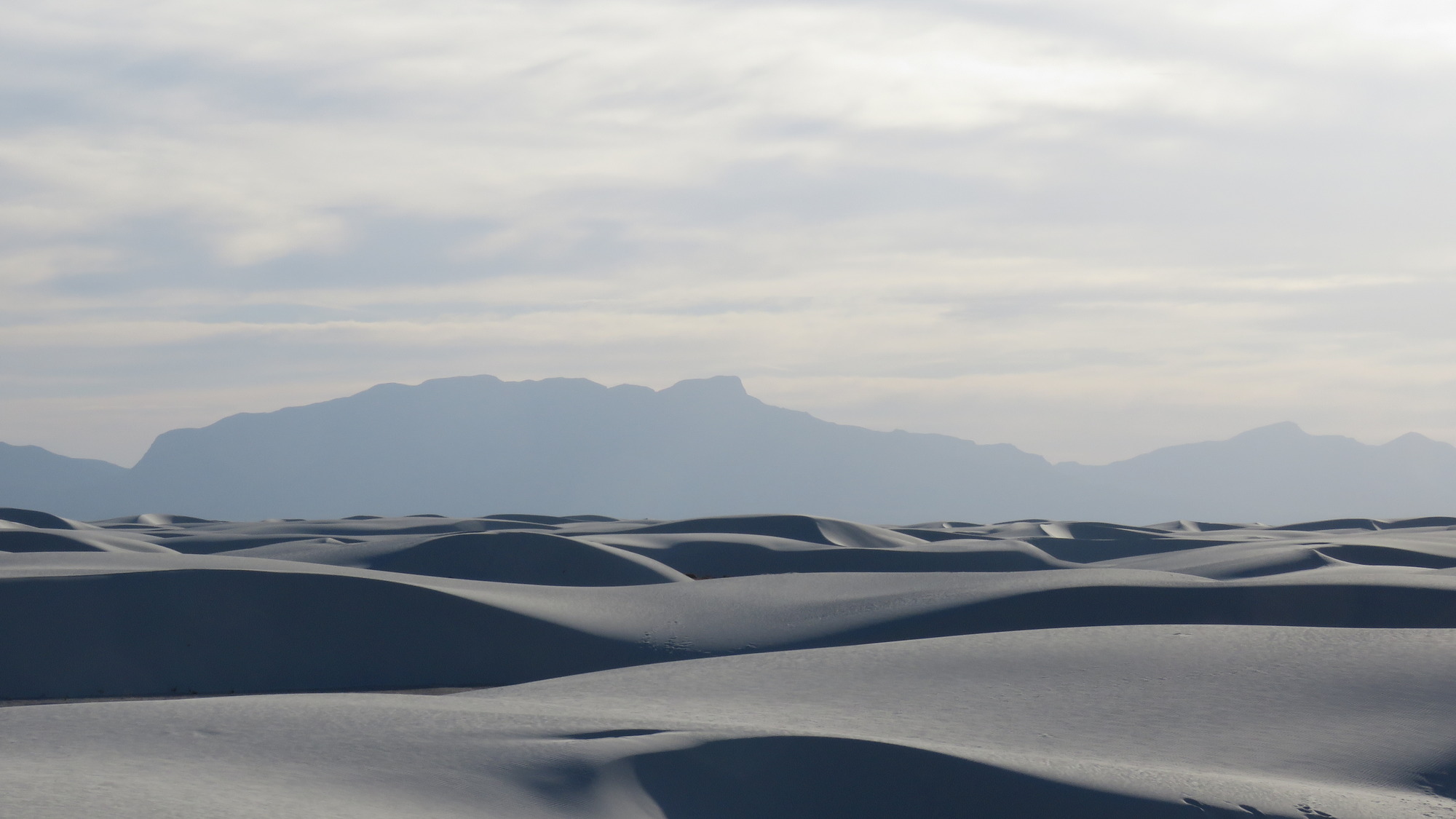
White Sands National Park is a desert that refuses to look like one. Across New Mexico’s Tularosa Basin, pale dunes rise against dark mountain ridges, their surfaces changing from sharp white to blue-grey and gold as the light moves. The colour is not a photographic trick. These are dunes of gypsum, a mineral whose unlikely journey from mountain rock to windblown sand has created one of the American Southwest’s most distinctive landscapes.
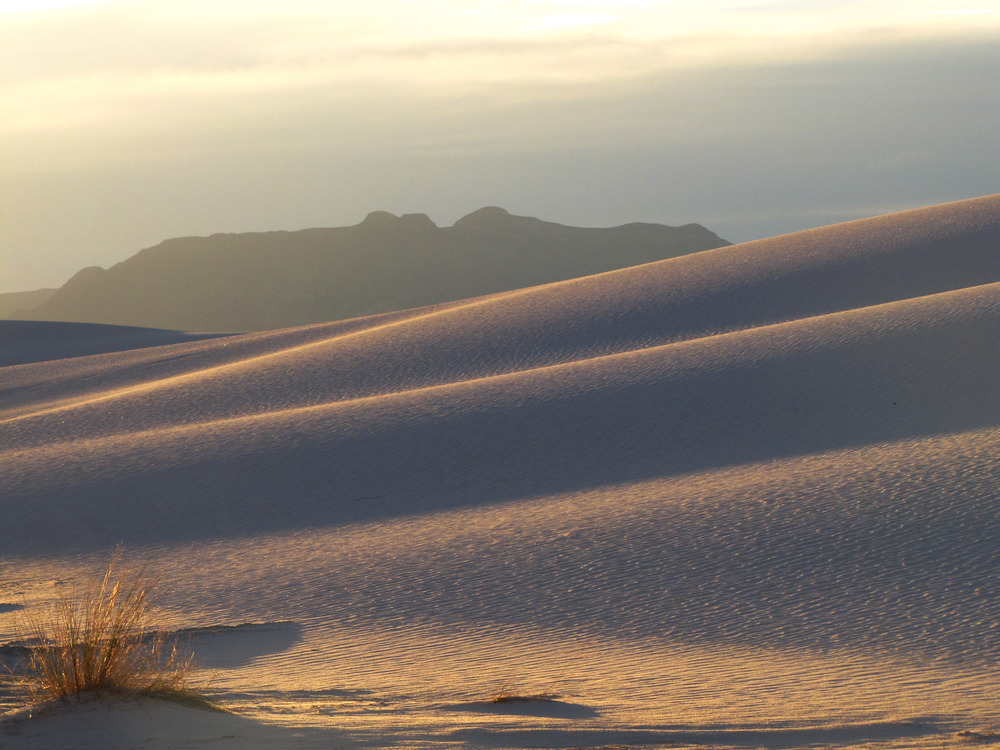
The photographs invite a quick stop. The place rewards a slower reading. Behind its clean lines lie a closed basin, water moving through the ground, plants resisting burial and traces of people who walked here during the last Ice Age. White Sands is not empty scenery. It is an active landscape, with a history much deeper than the dunes first suggest.
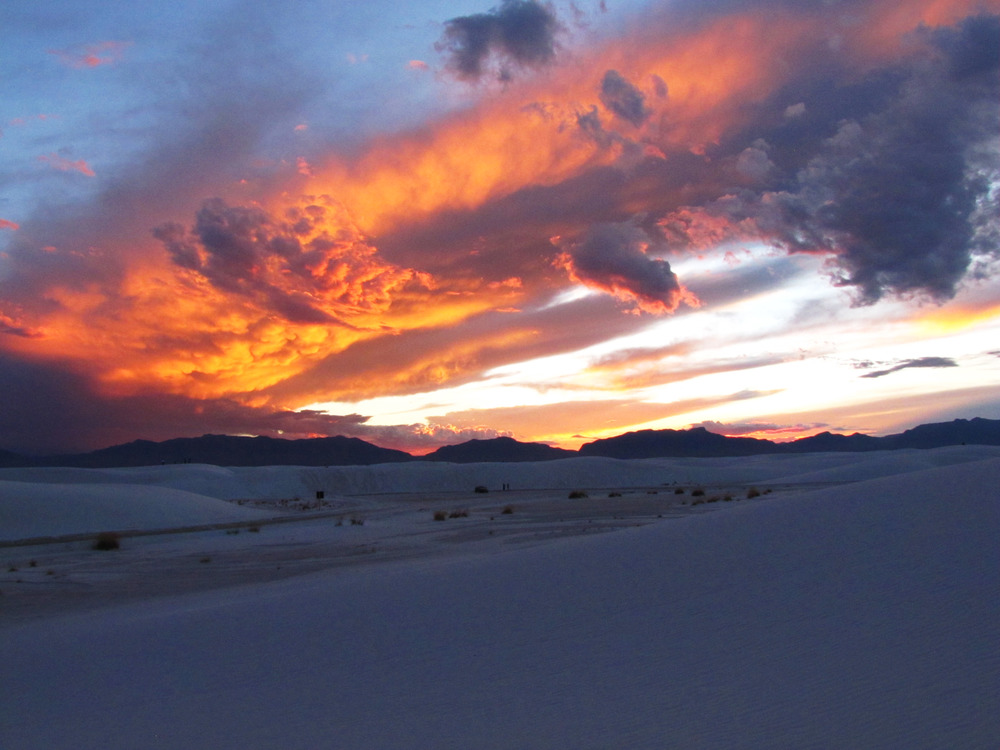
A white desert made by water
Water is the apparent contradiction at the heart of White Sands. According to the National Park Service’s account of gypsum, rainfall and snowmelt dissolve the mineral from surrounding mountains and carry it into the basin. With no outlet to the sea, that water gathers in low areas, including Lake Lucero. Evaporation leaves crystals behind.
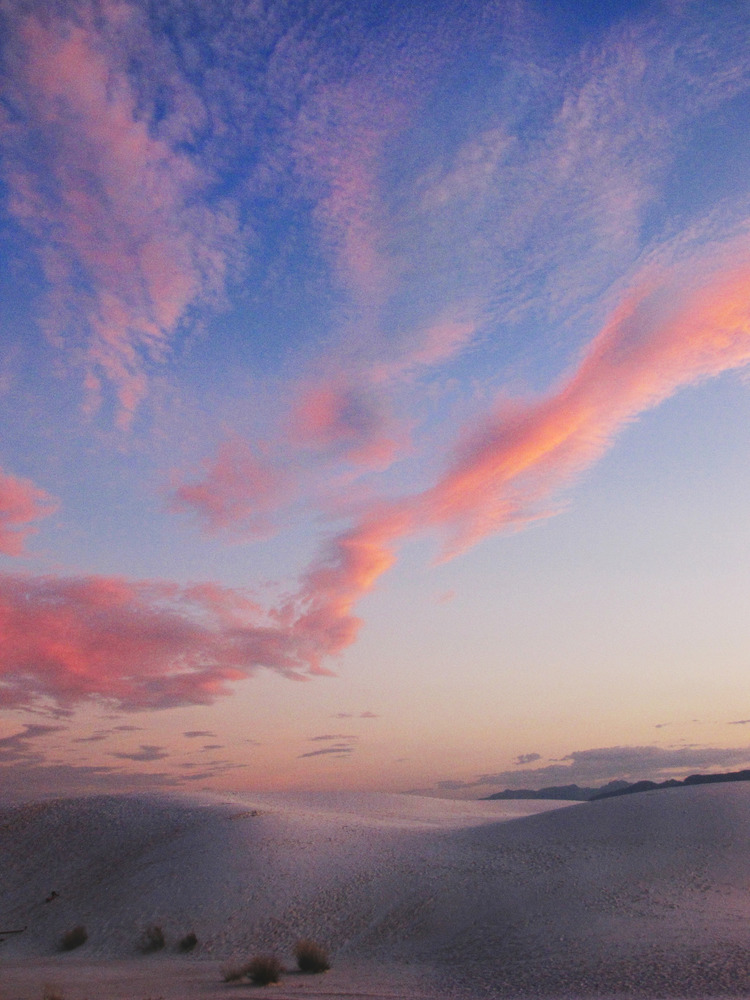
Wind and weather help turn the material into sand. The result is the world’s largest gypsum dunefield, although the national park protects only part of the wider system. Calling every white stretch “the park” overlooks that distinction. It also obscures how closely the scenery is tied to the surrounding basin rather than confined neatly to a visitor map.
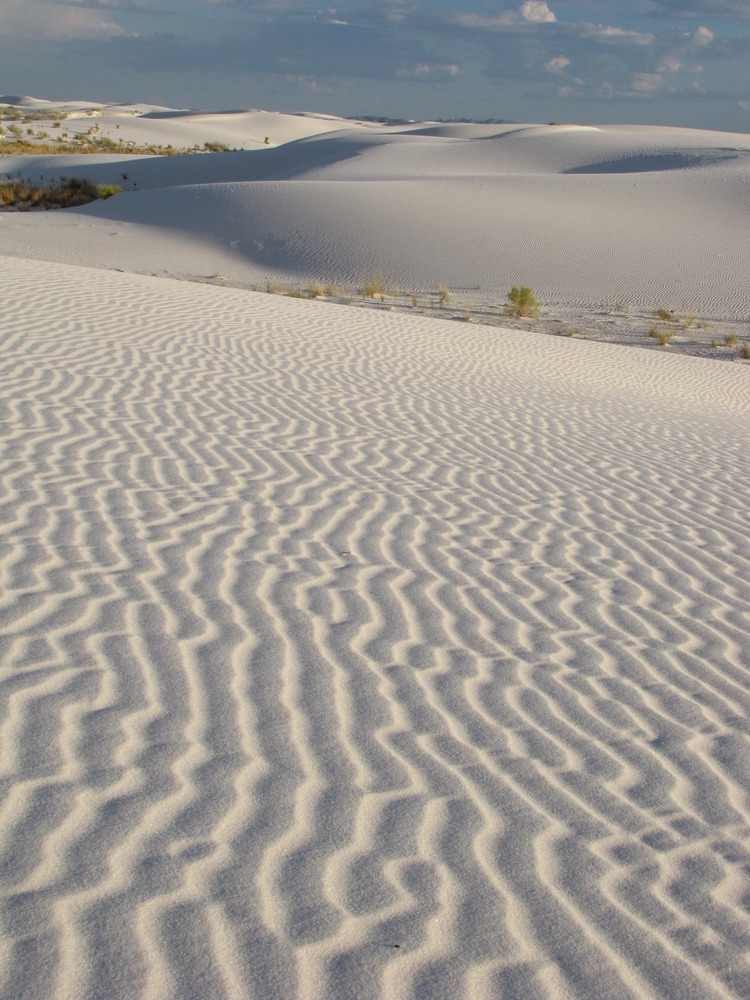
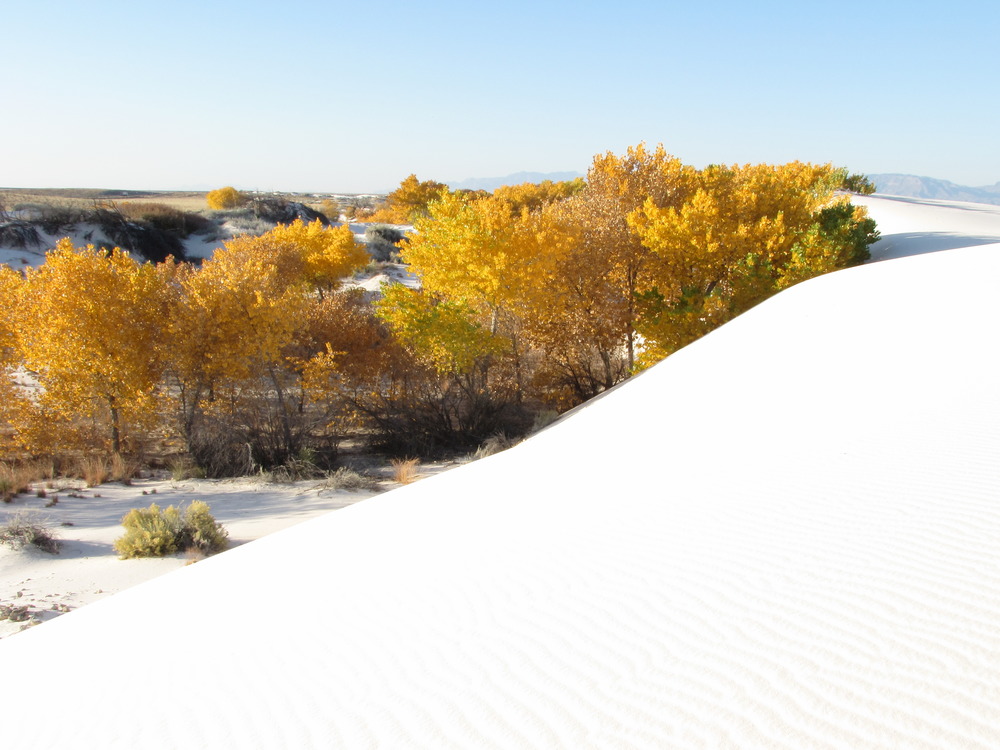
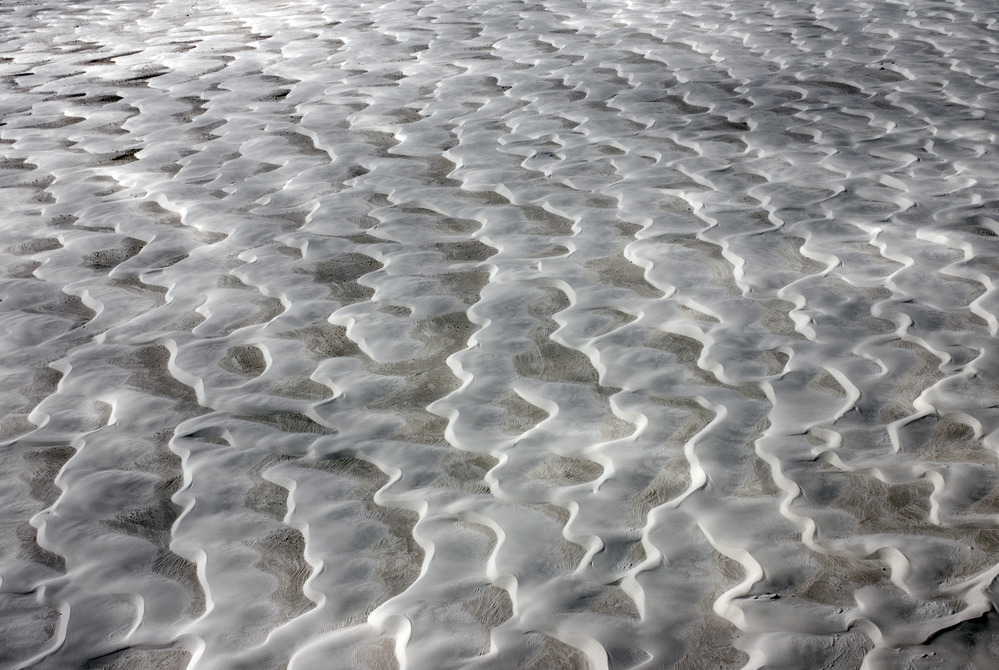
The curves are beautiful precisely because they are not fixed. Ridges, ripples and shadows record movement. From one viewpoint the dunes can resemble waves; from another, the eye catches small interruptions: a clump of vegetation, a darker hollow, a mountain appearing above the horizon.
Life against a moving background
The park’s plant life has to survive more than a lack of rain. The sand offers little nutrition, conditions are alkaline and the surface itself can shift. Vegetation is therefore part of the story, not an unwanted distraction from a clean photograph.
Animals have adapted too. The National Park Service describes several light-coloured species whose appearance helps them blend into the gypsum. White Sands challenges the familiar idea of a desert as a blank space between more interesting places. Its apparent simplicity is what makes its small signs of life worth noticing.
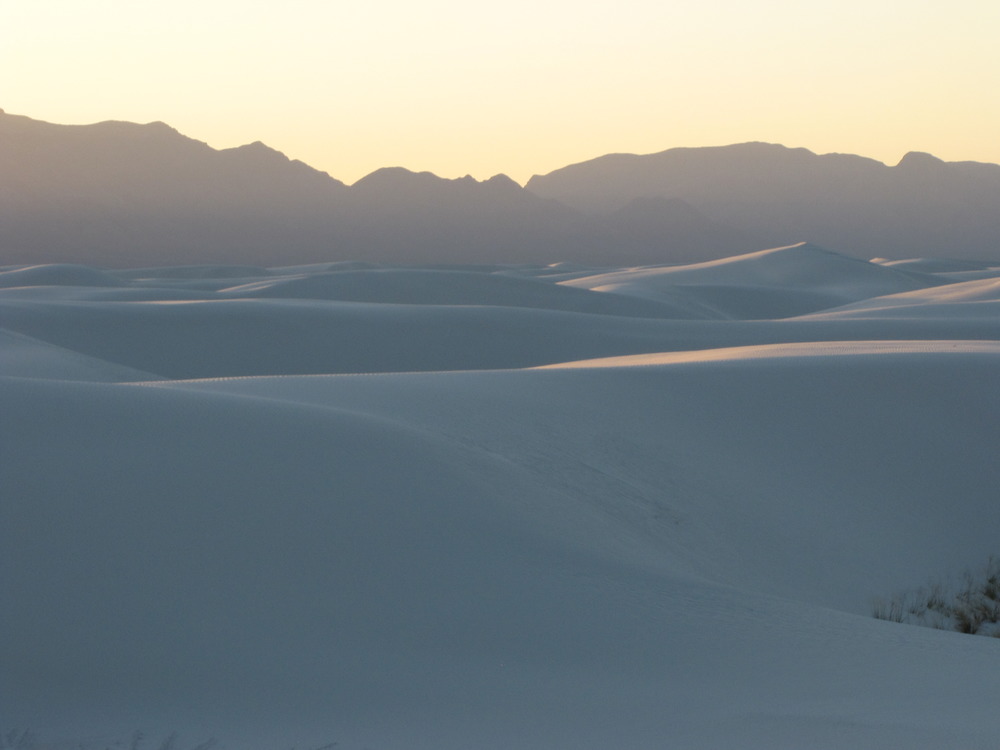
Footsteps older than the dunes’ postcard image
Another landscape survives beneath the modern view. Fossil human footprints in the White Sands area have placed people in this part of North America between about 23,000 and 21,000 years ago. A US Geological Survey fact sheet explains why the evidence changed the discussion about the continent’s earliest inhabitants.
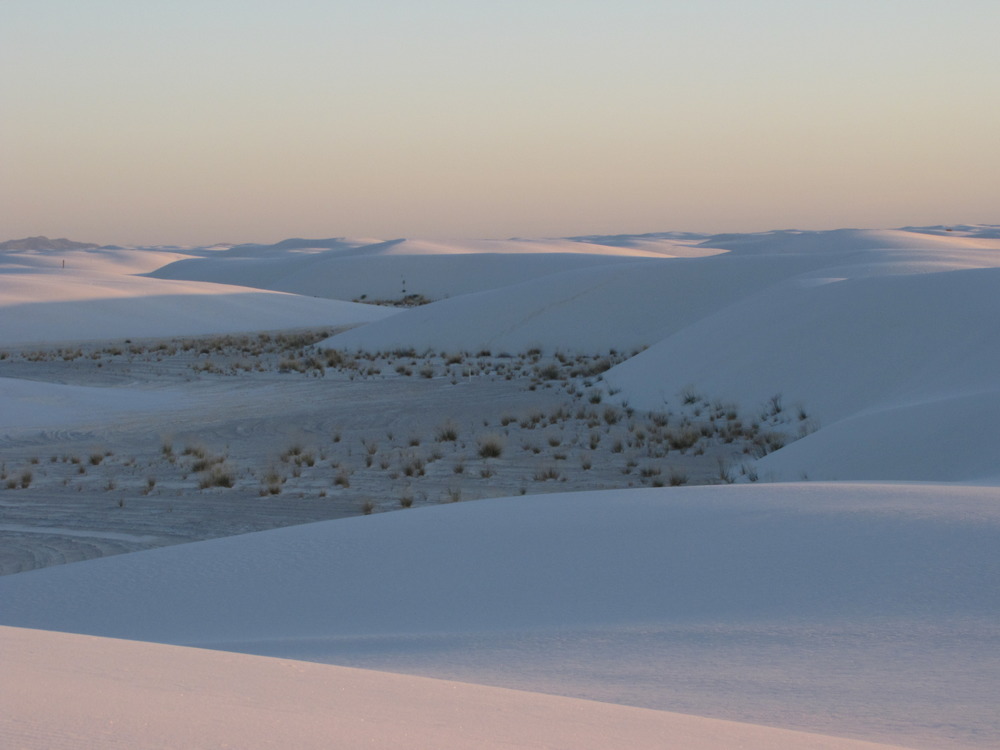
That research should not be confused with a promise of a walk-up attraction. The scientific importance of the footprints is a reason to understand and protect the landscape, not to search for exposed traces or leave established visitor areas in pursuit of them. The park’s explanation of the fossil record offers the context that a photograph of the dunes cannot convey.
For travellers drawn to that meeting of scenery and deep time, Arizona’s Petrified Forest National Park offers a different Southwest landscape shaped by geological history. The comparison is more interesting than treating either destination as another spectacular backdrop.
The visit has to follow the landscape
Dunes Drive carries visitors into the dunefield, but access should never be assumed. The current conditions page lists a safety corridor between miles three and five-and-a-half where stopping, parking and getting out of a vehicle are restricted. It also notes that missile testing can interrupt access, that backcountry camping is closed and that sledding is not permitted around the interdune boardwalk. These details can change, so check the official notice again before travelling.
The larger lesson is straightforward: a white surface is not an invitation to wander without preparation. The park’s safety guidance recommends carrying at least four litres of water per person, with refill water available only at the visitor centre. It advises against hiking when temperatures exceed 29°C and tells walkers to turn back if the next trail marker cannot be seen. A phone is not a dependable substitute for knowing the route.
There is no accommodation inside the park. An overnight plan belongs outside its boundaries rather than in an imagined desert camp. Travellers continuing through the state can explore our coverage of New Mexico’s hotel openings, checking operating details directly before booking. Those building a longer national-park journey can also read about Bryce Canyon’s contrasting landscape; it is a separate destination, not a nearby add-on.
White Sands leaves its strongest impression when the camera becomes only part of the visit. The changing light reveals the shape of a dune, but the water, wildlife and buried history explain why it is there. A place that first looks almost unreal becomes more remarkable once it is understood as real, fragile and continually in motion.