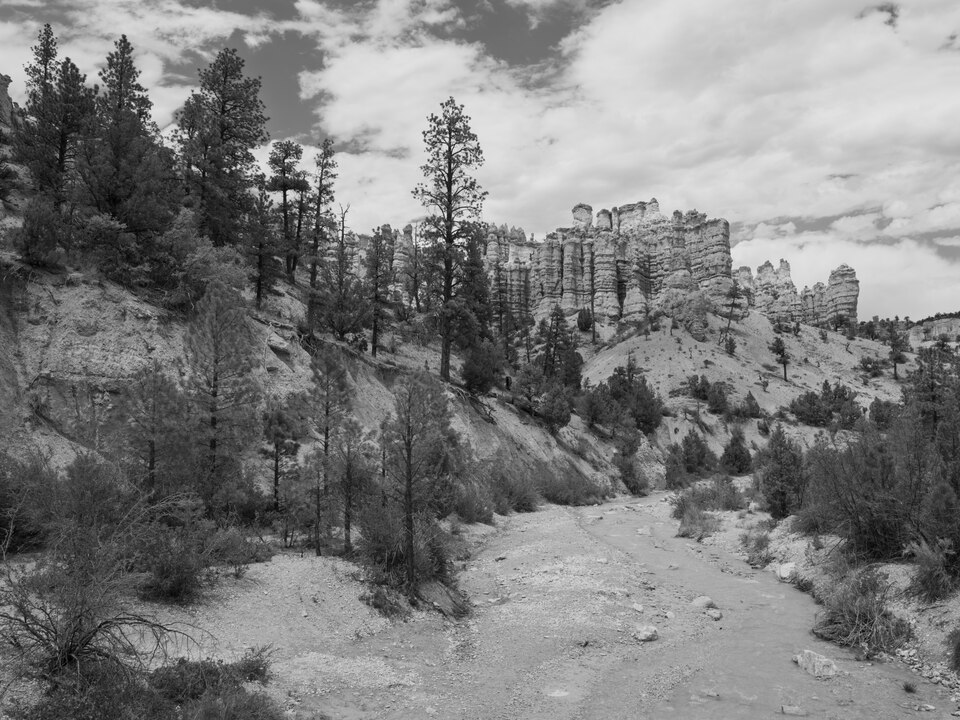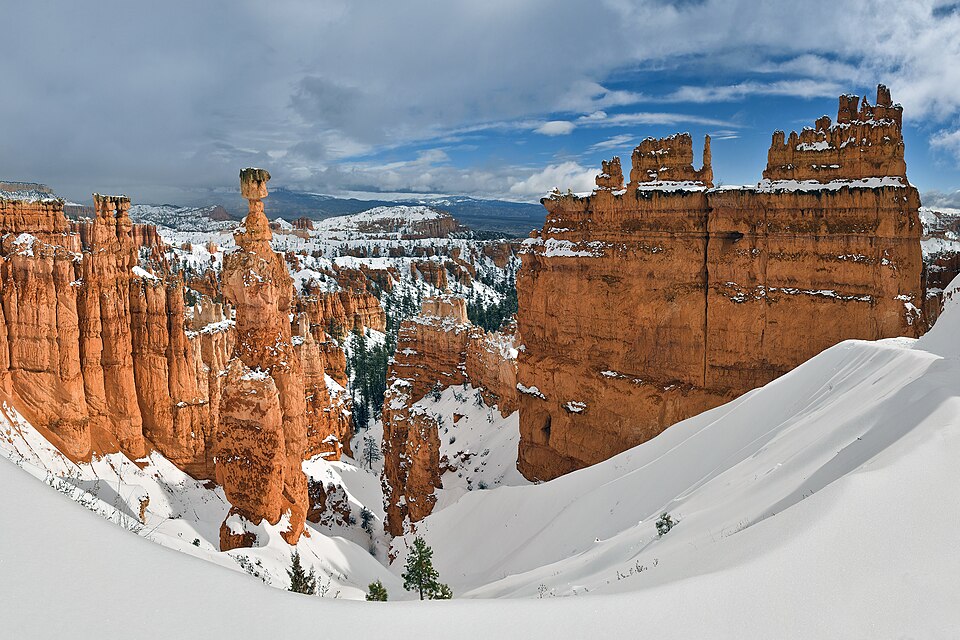
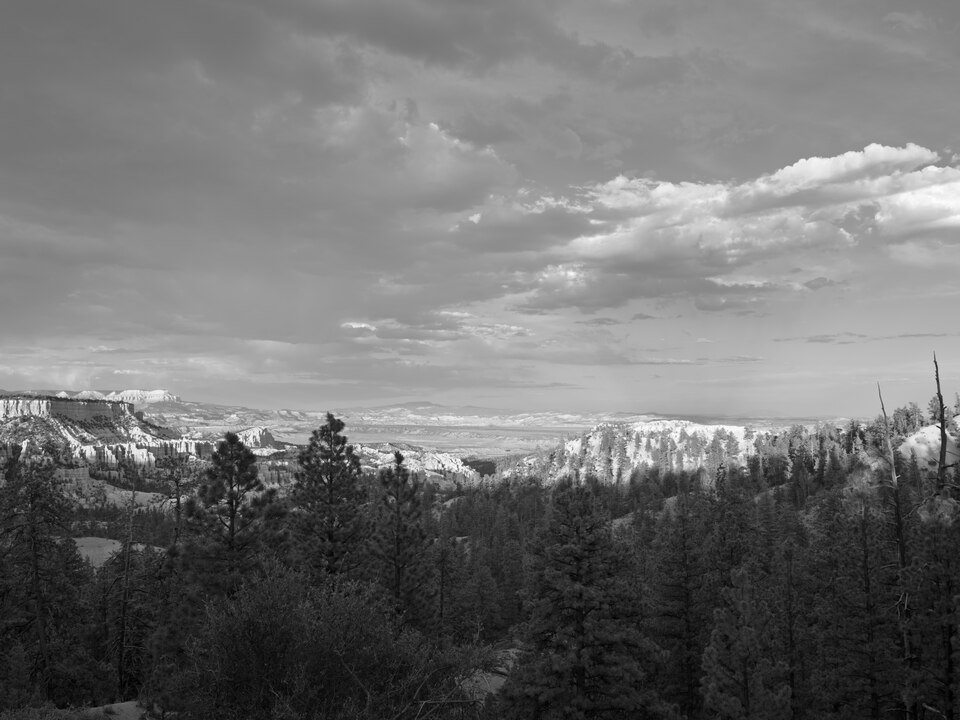
Bryce Canyon National Park rewards a visit built around one question: do you want to look across its rock formations, or walk among them? Both are worthwhile, but they require different amounts of time and energy. For a first visit, concentrate on the Bryce Amphitheater rather than trying to turn every viewpoint and trail into a single-day checklist.
This high-elevation landscape in Utah is particularly compelling when you slow down. A short section of rim can reveal changing layers of fins, windows and slender rock spires, while a descent below the edge changes their apparent scale completely.
Understand the hoodoos before choosing your route
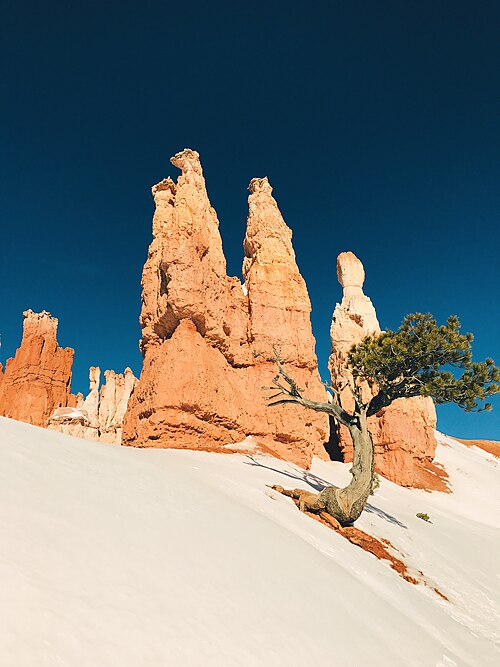
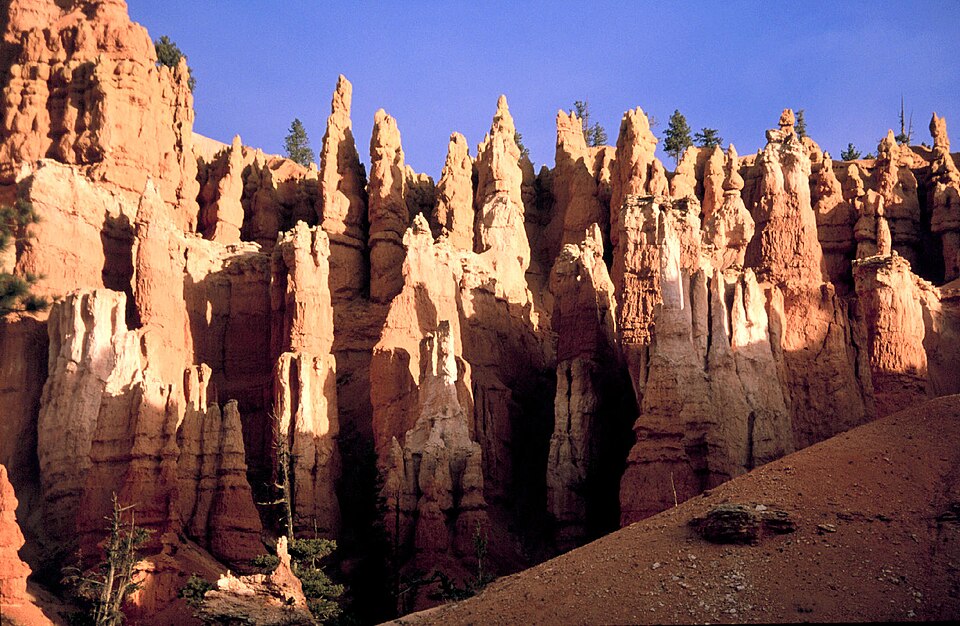
The distinctive spires are known as hoodoos. Their appearance is not simply the work of a river cutting a deep channel. The National Park Service’s geology explanation traces the landscape through the deposition of sediments, uplift and subsequent weathering and erosion. Water entering cracks can freeze and expand, helping break the rock apart. Rain also plays a role.
That process gives a rim walk more interest than a succession of photo stops. Look for rock walls that remain connected, openings within them and isolated columns. The landscape is still changing, which is also a good reason to remain on designated paths and keep away from unstable edges.
Start with the amphitheater, not the longest drive
Make the main amphitheater the anchor of a first day. Sunrise, Sunset, Inspiration and Bryce Points provide different perspectives rather than four interchangeable views. Choose a manageable combination, leaving time to stop between the headline overlooks instead of rushing straight back to the car.
For a short visit, a rim-based plan is more realistic than squeezing in a descent merely because a trail looks close on a map. For a longer stay, divide the visit into separate experiences: an overlook session, a carefully chosen hike and some unhurried time at the visitor center. This is an editorial suggestion, not an official timed itinerary.
Choose a hike by ascent, not just distance
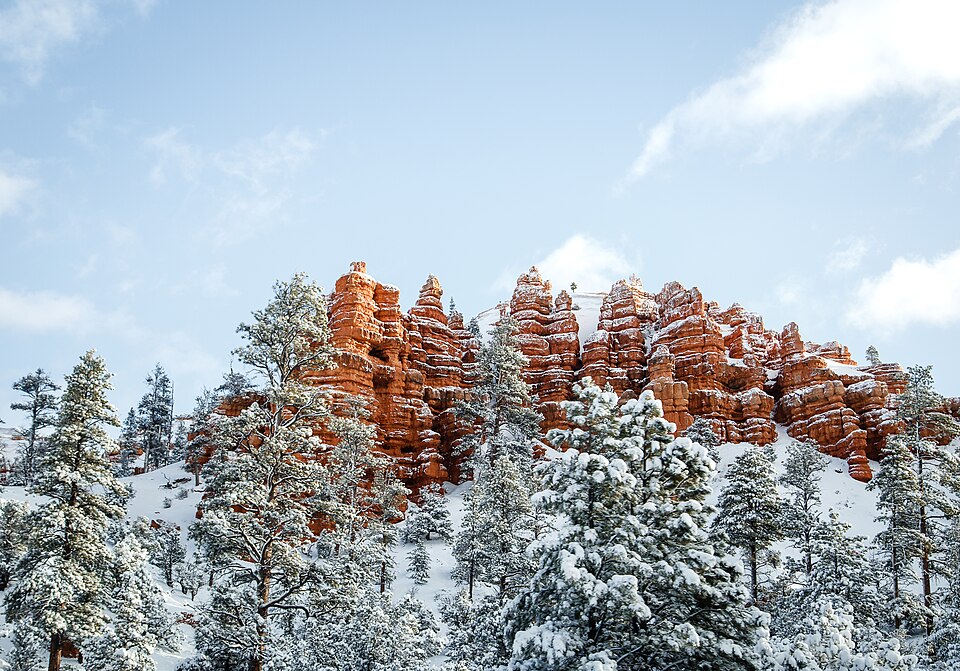
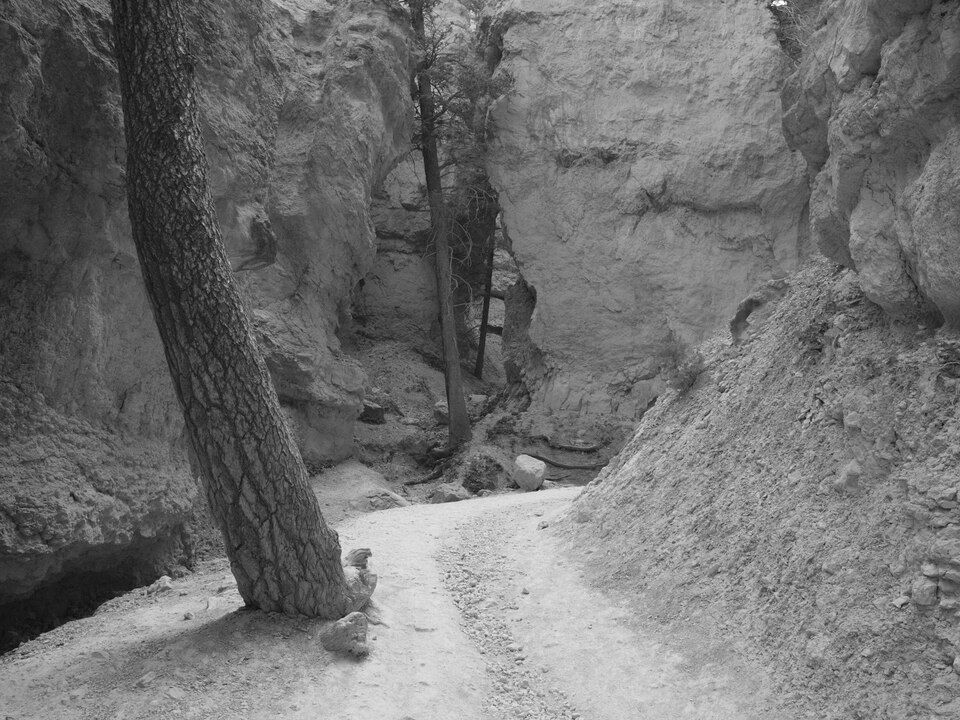
The park’s day-hiking guide is the place to compare route length, difficulty and elevation change. Most visitor hikes begin around the amphitheater. Trails that descend among the hoodoos also require a climb back out, so a short mileage figure should not be mistaken for an effortless walk.
Altitude matters here. The National Park Service warns that even modest exertion can be more demanding at Bryce’s elevations. Start conservatively, carry water and allow additional time. Do not choose a below-rim hike simply because it is the most frequently photographed option. Your group’s abilities, the weather and current trail conditions should decide the route.
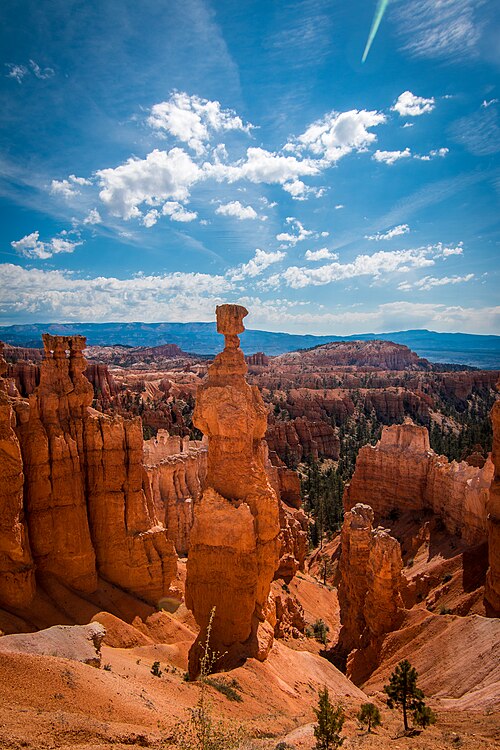
A rim-only visit is not a second-best version of Bryce. It is a different experience, with broad views and the freedom to adjust the day without committing to a descent. Visitors with mobility requirements should use the park’s accessibility information to compare surfaces, gradients, facilities and viewpoint access before travelling.
Use the shuttle when it is operating
The Bryce Canyon shuttle serves the main amphitheater area and is included with park admission. It is recommended rather than mandatory, and can simplify a one-way rim walk: leave the vehicle in an appropriate parking area, get off at one viewpoint and return from another.
It is not a year-round service. The published 2026 season ended on 18 October, so a November 2026 visit should not be planned around buses running. For future trips, check the season’s actual timetable rather than carrying the previous year’s dates forward. The shuttle also does not replace every journey along the park road.
Check conditions close to the visit
A landscape photograph cannot tell you whether a path is open today. Read the park’s current conditions and alerts before departure, then ask at the visitor center about the specific walk you intend to take. The official page directs visitors there for the latest trail information.
Weather can change the character of a visit, especially when cold, snow or ice affects access. Summer thunderstorms need attention too. Keep the plan flexible enough to replace an exposed walk with a shorter, safer alternative rather than treating the original route as a commitment.
Make room for the views
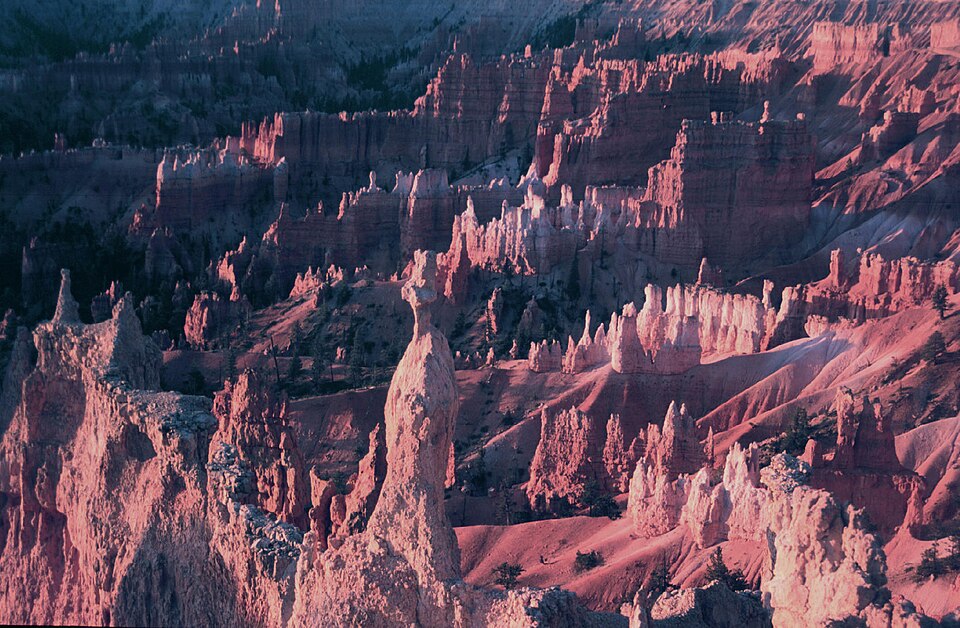
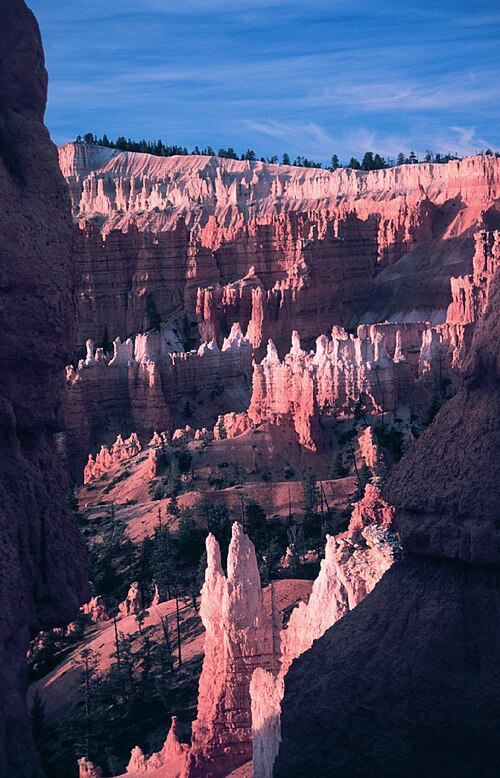
Leave a little time without a destination. Stand at a viewpoint long enough to separate the foreground spires from the distant formations; then walk a short distance and compare the perspective. A camera can record the colour, but the quieter detail is how many overlapping layers become visible as you change position.
Do not climb onto hoodoos or cut across slopes for a better angle. Fragile rock and unstable ground are not a photographic shortcut. Keep wildlife wild by observing without feeding, and leave natural objects where you find them.
A practical first-visit plan
- Before travelling: check conditions, select one main walk and identify an easier alternative.
- On arrival: confirm the route at the visitor center and make a parking or shuttle plan appropriate to the season.
- During the visit: give the amphitheater priority, with breaks rather than an ambitious sequence of stops.
- Before descending: consider the return climb, daylight and the slowest member of your party.
Where Bryce fits in a wider American trip
Bryce is a strong choice for travellers who enjoy landscape observation as much as distance covered. It should not be reduced to a quick detour between more famous names. If your American itinerary includes other regions, our Old Faithful and Upper Geyser Basin guide offers a different geological experience in Yellowstone, while our Golden Gate Bridge guide explores a contrasting outdoor visit in San Francisco.
For a city-focused extension rather than another park, see our New York City first-time route ideas. These destinations are separate trip components, not nearby additions to a Bryce day.
The best Bryce visit is the one you can enjoy at a comfortable pace. Choose the right level of walking, verify seasonal access, and give the amphitheater enough time to become more than a photograph.