
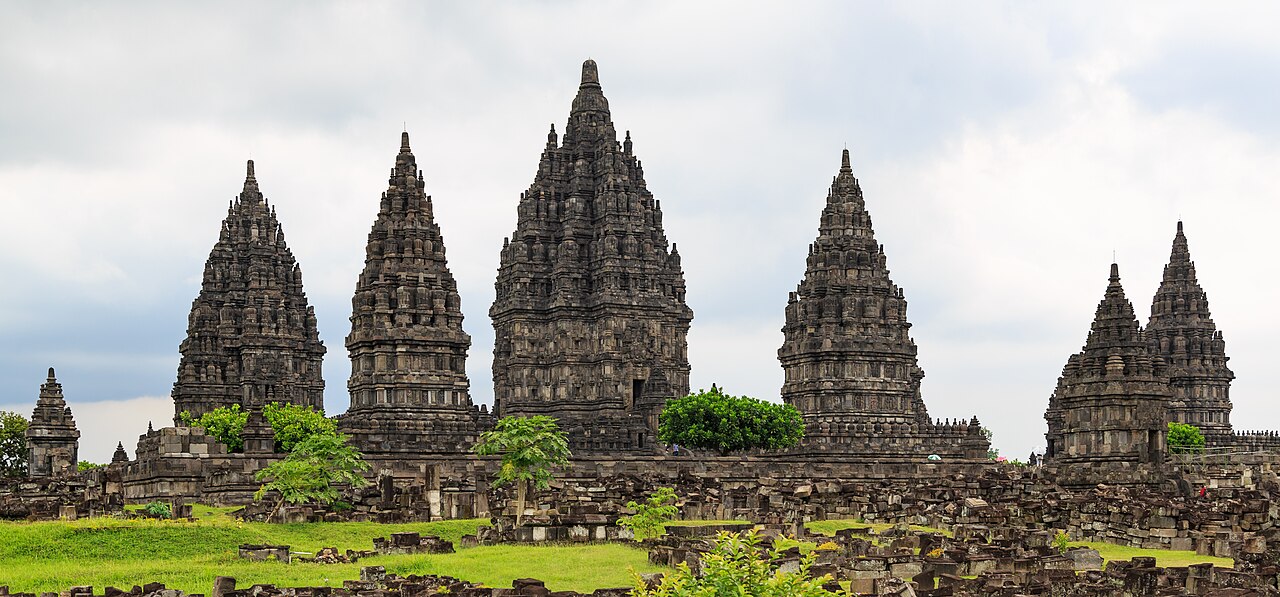

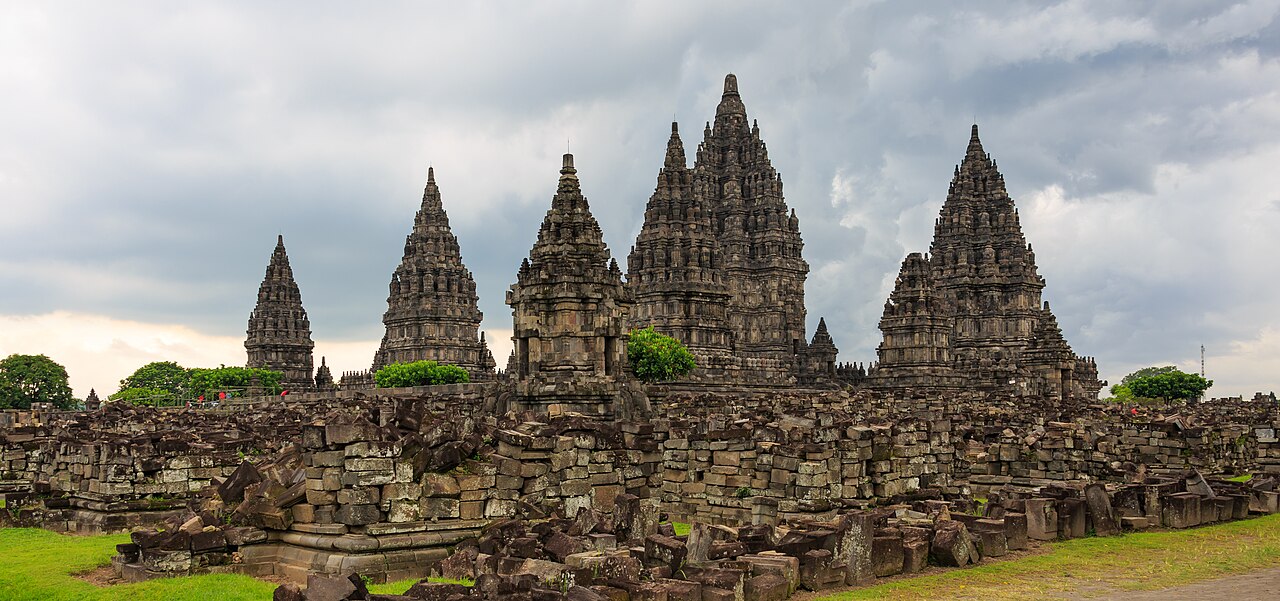
Prambanan does not rise as one mass of stone. It gathers into a skyline: steep towers, narrow terraces and repeated points that draw the eye towards the central shrine. On Java’s busy border between Yogyakarta and Central Java, the Hindu temple complex offers a different architectural argument from the broad, ascending platforms of Borobudur. Here, height matters. So does the space between the buildings.
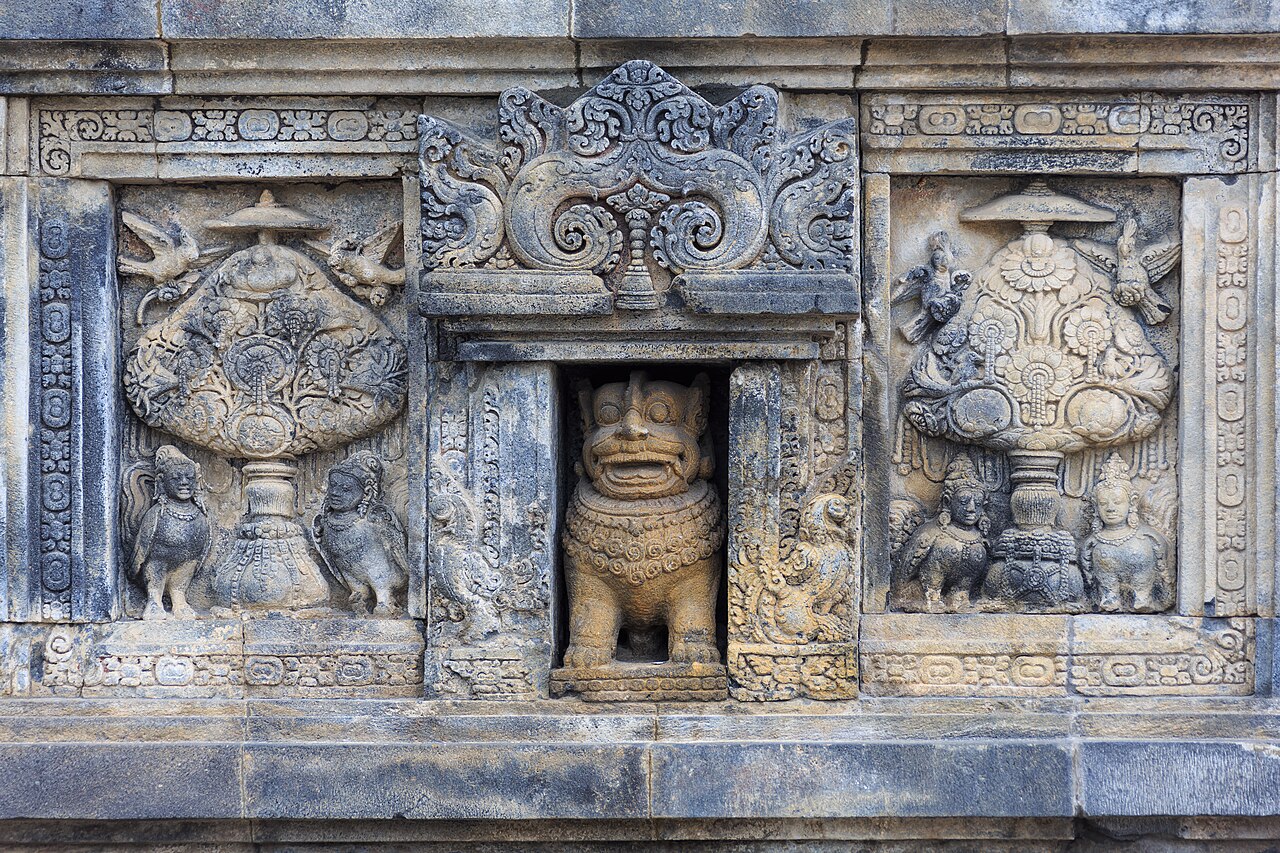

The familiar photograph catches the silhouette. A longer encounter brings out something less easily contained in a frame: a religious landscape shared by Hindu and Buddhist monuments, the stories carved around its shrines, and the continuing work required to keep those stones standing. Prambanan is not simply the second temple on a Yogyakarta itinerary. It is a place whose ambition survives in both its intact towers and its fragments.
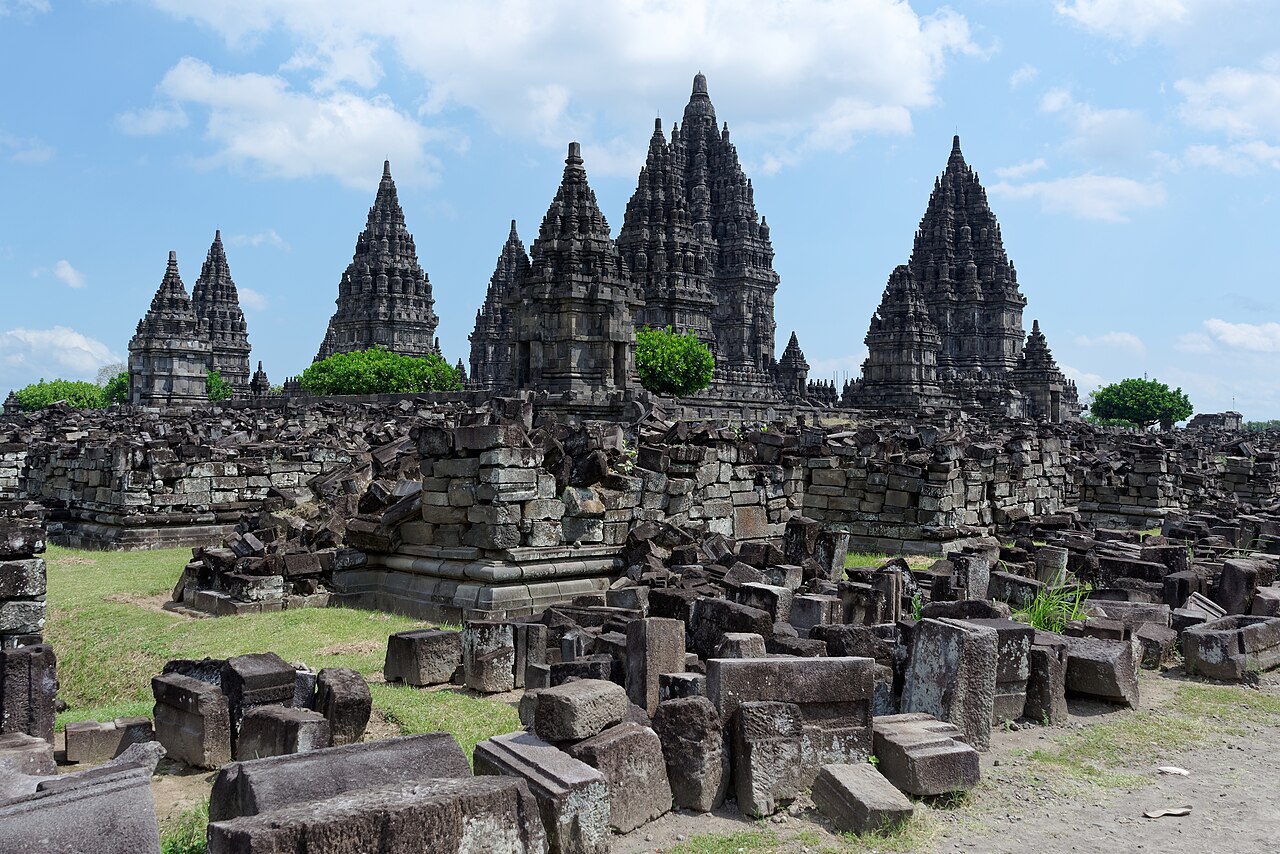

A skyline organised around Shiva
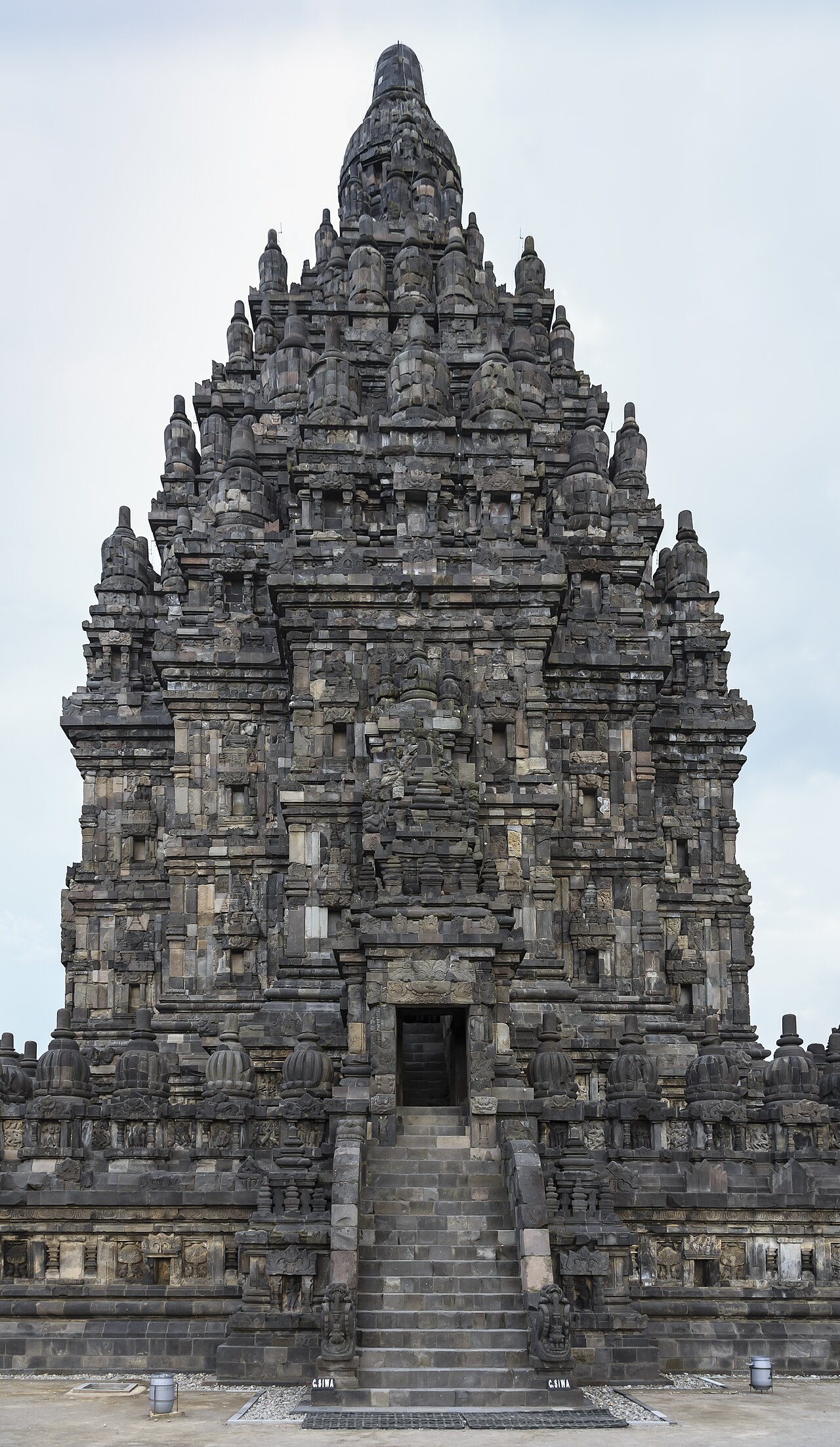
The central Shiva temple reaches 47 metres, according to Indonesia’s national tourism authority. Temples dedicated to Brahma and Vishnu stand beside it. Their arrangement gives the complex its immediate visual hierarchy: three great Hindu divinities expressed through buildings whose scale and placement are part of their meaning.
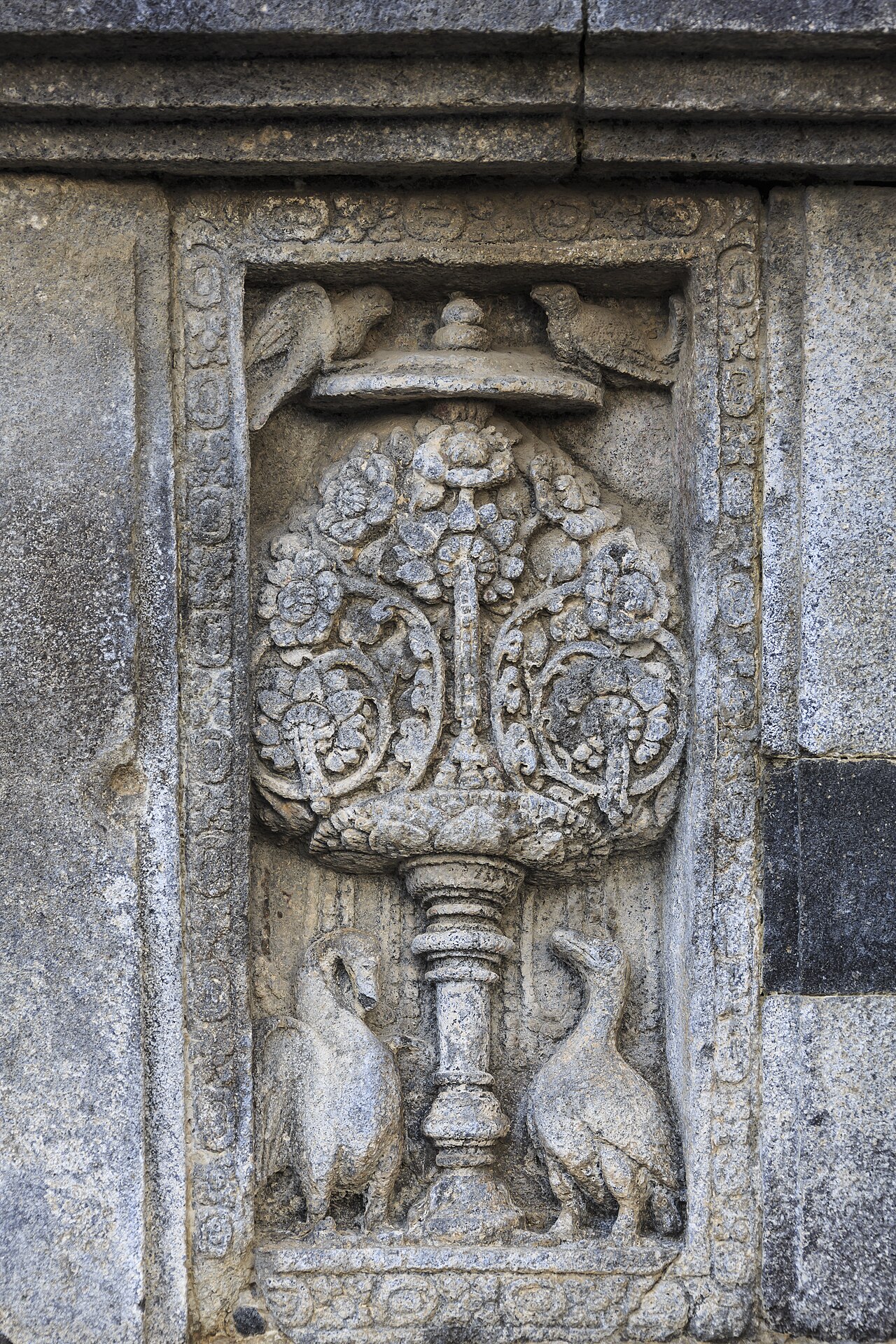

National tourism accounts associate the main complex with ninth-century Java. The different phases of the broader archaeological landscape are better understood as a history of building and rebuilding than as one neatly bounded construction event. Seen at ground level, the monument’s apparent unity breaks into individual decisions: the rise of a staircase, the projection of a carved figure, the way a smaller shrine answers a larger one.
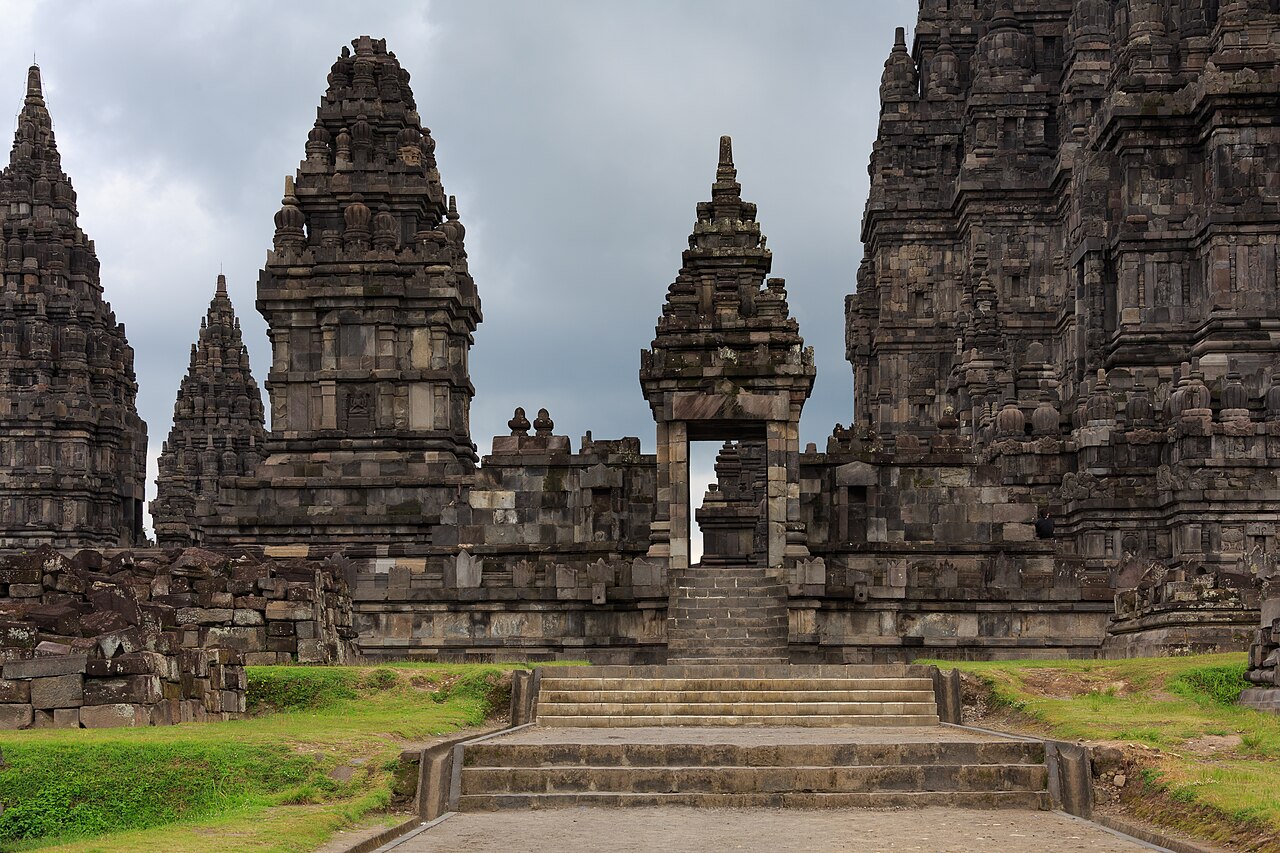

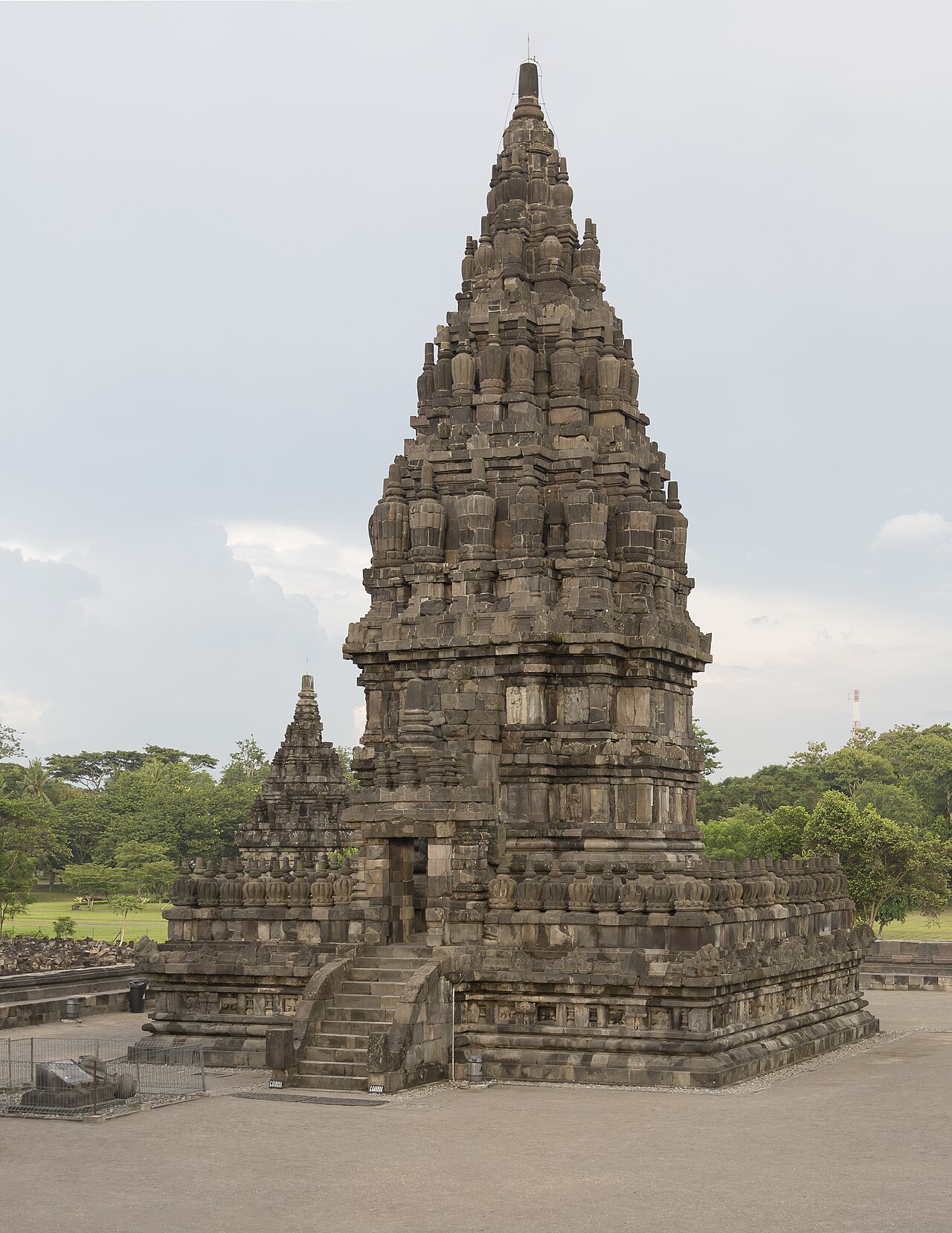
The site operator’s illustrated Prambanan brochure explains the relationship between the principal temples and the shrines associated with their divine vehicles. Nandi, the bull associated with Shiva, belongs to this architectural conversation. These are not decorative accessories to a central tower. They help make the temple court legible as a sacred arrangement.

The stories carried by the walls
Along the galleries, the monumental scale gives way to narrative. Reliefs tell episodes of the Ramayana, turning a circuit of the temple into a sequence of scenes rather than a single view. The Yogyakarta tourism authority draws attention to the story of Rama and Sinta, the Javanese form of Sita’s name, among the carvings.

That change of scale is one of Prambanan’s strongest experiences. From across the court, the towers dominate. Close to the reliefs, attention moves to gestures, figures and the space within a panel. Architecture holds a story, but it also controls how slowly that story can be read.

Another narrative attaches itself to the name Roro Jonggrang. In the local legend, a demand for an impossible number of temples becomes a contest of supernatural labour and deception. The story belongs to the site’s cultural afterlife, not to a literal account of its construction. Keeping that distinction matters: legend enriches the encounter without replacing archaeology.

Beyond the best-known temple court
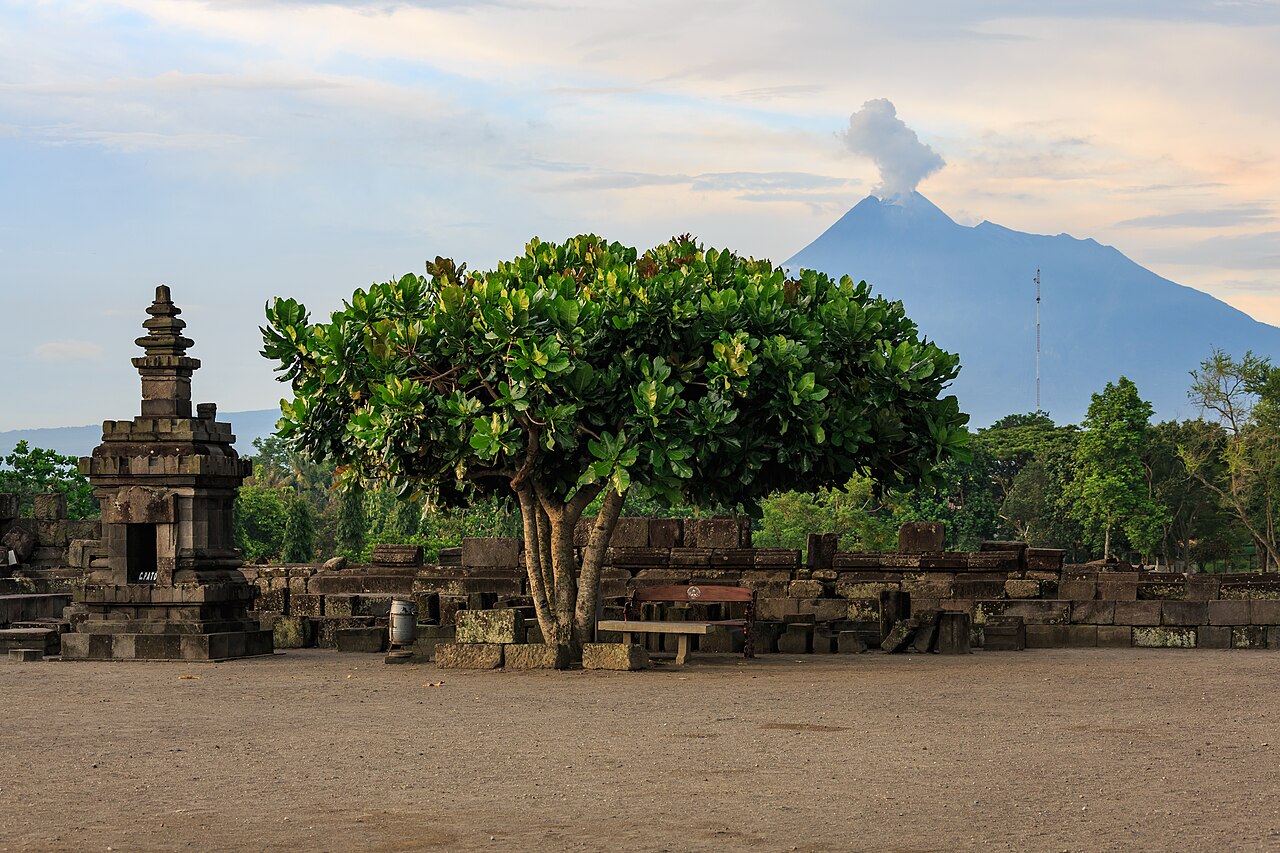
The UNESCO World Heritage property, inscribed in 1991, includes more than Prambanan’s principal Hindu group. Sewu, Bubrah and Lumbung are also part of the designation. The juxtaposition of Hindu and Buddhist architecture is fundamental to the importance of this landscape.
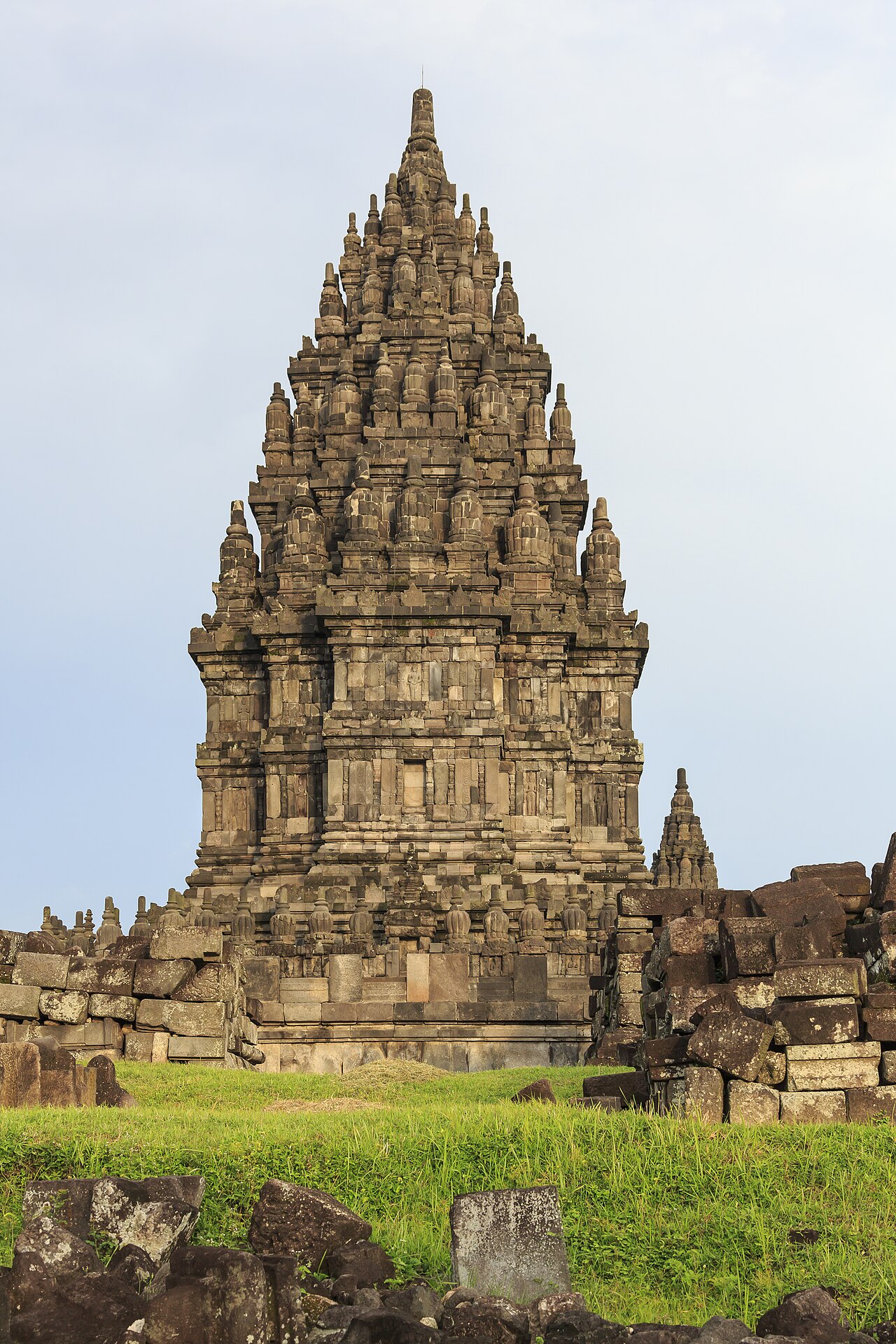

UNESCO records hundreds of temples across the compounds, some surviving as standing structures and others as ruins. That distinction is visible and significant. Empty spaces and loose stone are not incidental clutter around a finished attraction; they are evidence of the scale of the original undertaking and the limits of what has been recovered.
Restoration has had to contend with earthquakes as well as long histories of collapse and repair. UNESCO’s account identifies work after the 2006 earthquake as part of the continuing effort to protect the authenticity of the structures. It is a reminder that the apparent permanence of stone depends on patient, recurring intervention.
A monument still being cared for
The conservation story acquired a further chapter in July 2026. An official statement from India’s Prime Minister’s Office announced the launch of an Archaeological Survey of India conservation and restoration project at the complex, during a visit with Indonesia’s president. That announcement does not establish which parts of the visitor route are open on any particular day. It does underline that Prambanan remains an active heritage responsibility.
For travellers, the sensible response is to leave room for that responsibility. Follow signed routes and restrictions rather than treating every staircase or chamber as automatically accessible. Current admission arrangements should be checked through the official ticket service, rather than inferred from an old photograph or a previous traveller’s account.
When the carved epic becomes performance
The Ramayana also has a life beyond the temple reliefs. The Prambanan Ramayana Ballet translates the epic into dance and music. Its indoor and outdoor settings are not interchangeable promises: the operator publishes seasonal schedules and weather conditions, and a temple visit should not be assumed to include a performance ticket.
For a wider journey through Indonesia, Prambanan rewards time on its own terms. Pairing it with Borobudur reveals contrasting religious and architectural worlds; the comparison is richer when neither becomes a hurried photographic stop. Like the relationship between landscape and royal ambition at Sigiriya in Sri Lanka, the story here extends well beyond the landmark outline. At Prambanan, it continues in the carved surfaces, the intervals between shrines and the work of rebuilding that the distant skyline conceals.