
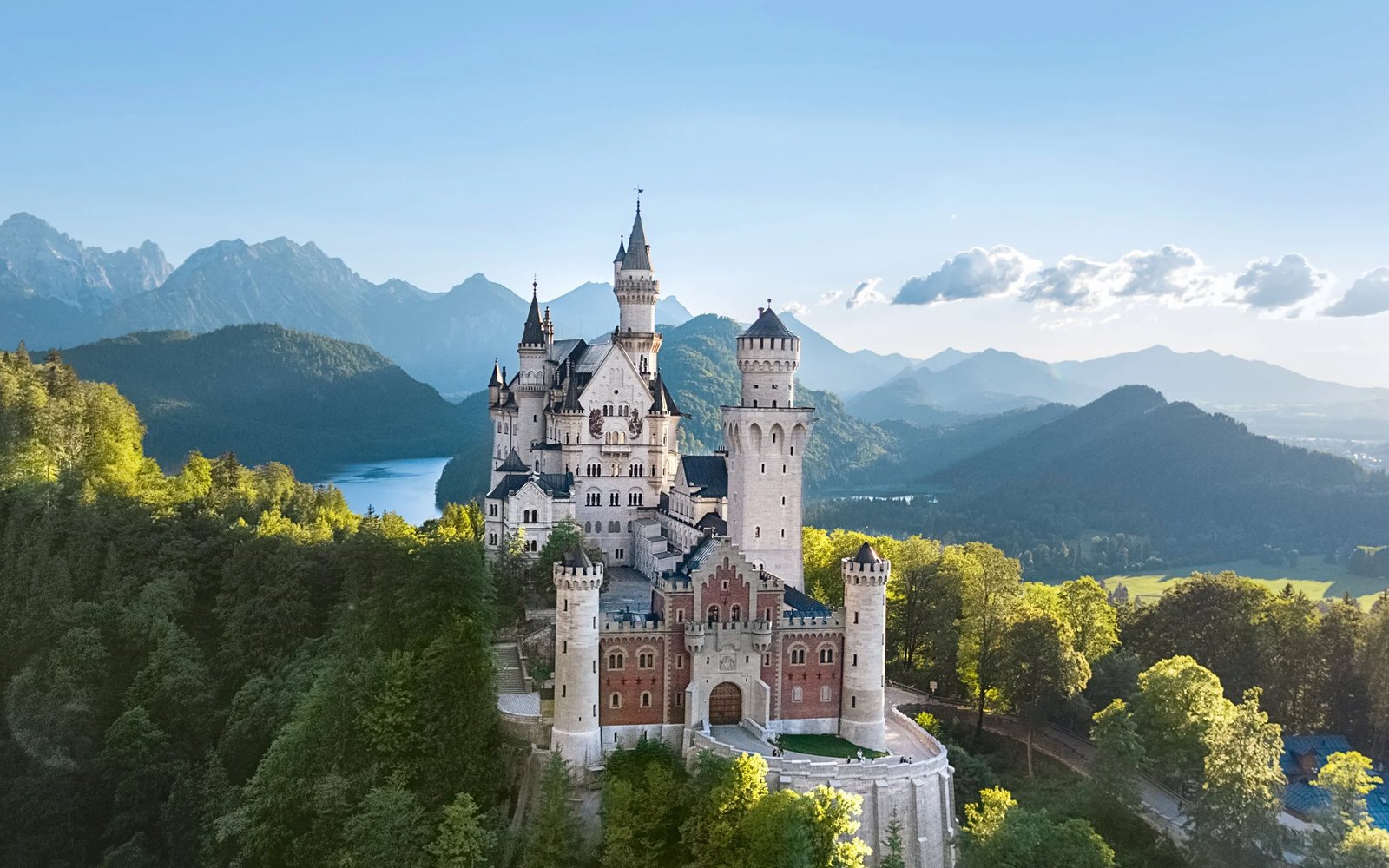
Every visit to Neuschwanstein starts in the valley. At the foot of the hill, the village of Hohenschwangau holds the car parks, the bus stop and the Ticket Center on Alpseestraße, and from there the castle is a 1.5-kilometre climb through the forest. King Ludwig II had it built on a rock ridge above the Pöllat Gorge from 1868, and since 2025 it has been part of a UNESCO World Heritage listing for his palaces. What decides your day is less the climb than the ticket in your pocket: a timed entry for a guided tour that starts on the minute.
This guide covers how Neuschwanstein Castle tickets work, what they cost in 2026, how to get from the village to the castle door and how to fill the hours around your tour slot. It also covers the winter months, when hours are shorter and the famous bridge above the castle can close at short notice.
How Neuschwanstein Castle tickets work
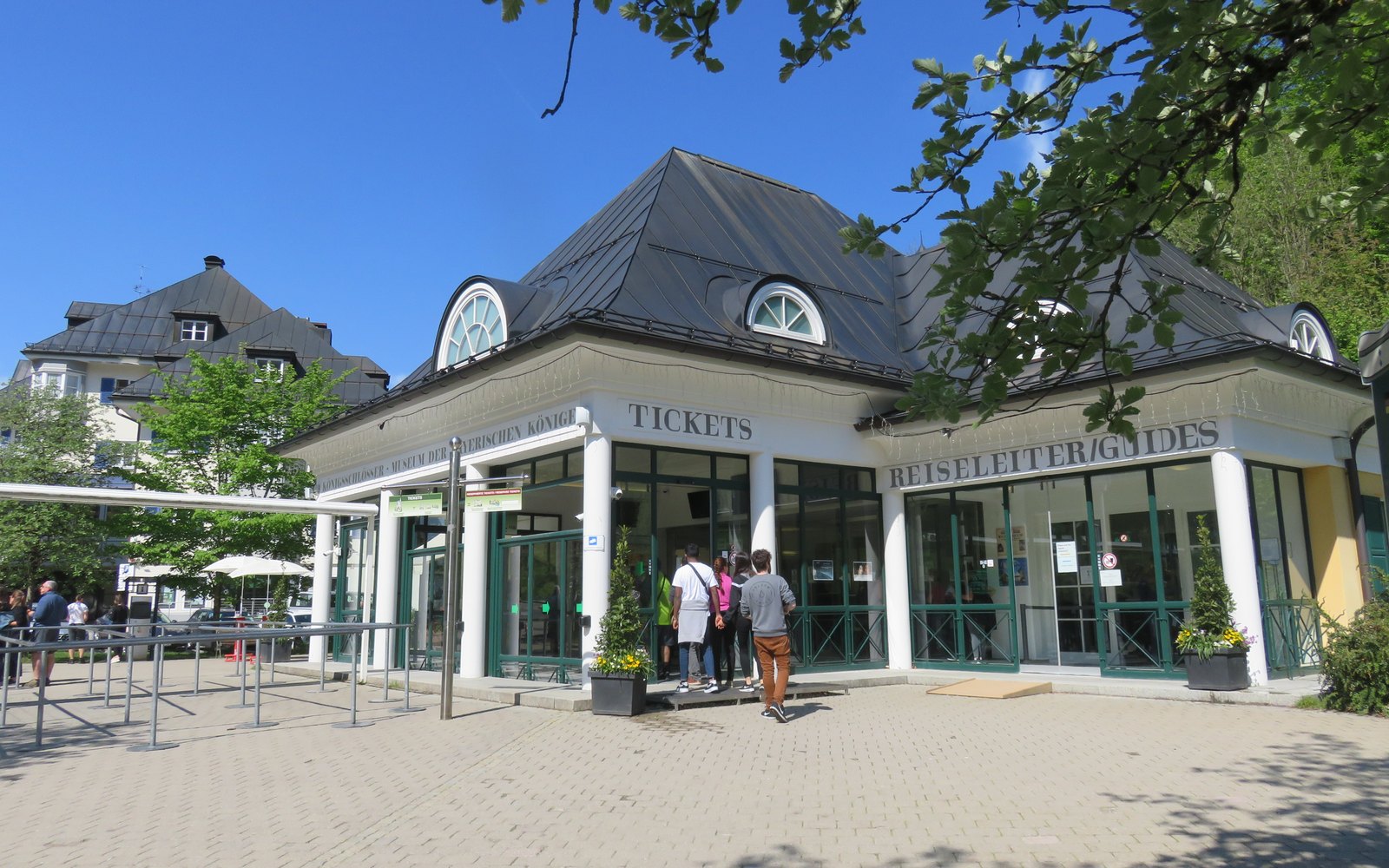
You can only see the interior on a guided tour, and every ticket carries a fixed entry time. Tickets are sold in the official online ticket shop of the Ticket Center Hohenschwangau, which handles Neuschwanstein for the Bavarian Palace Administration as well as nearby Hohenschwangau Castle and the Museum of the Bavarian Kings. The Ticket Center warns about unofficial websites that resell tickets at inflated prices or sell fake ones, so check the web address before you pay.
The 2026 admission fee is €21 for adults and €20 for the reduced rate, which covers visitors aged 65 and over, students, disabled visitors and holders of a local guest card, with proof. Children and teenagers under 18 go in free, but they still need their own ticket, and online every ticket, including a free one, carries a €2.50 booking fee. Tickets cannot be exchanged or cancelled, so fix your travel day before you book.
If the online shop shows nothing for your date, there is a second chance on the day. A limited number of extra tickets goes on sale at the Ticket Center at Alpseestraße 12 from 8 am, valid only for that same day and sold on a first come, first served basis. In busy periods they can be gone by late morning, and the official advice is to be at the door for opening. You cannot buy tickets at the castle itself.
Combining sights on one ticket can save a little money if you plan to stay all day. The combination tickets start with the Prince-Ticket, which pairs Neuschwanstein with the Museum of the Bavarian Kings for €33.50. The Kings-Ticket adds Hohenschwangau Castle instead for €43.50, and the Swan-Ticket covers all three for €56. Online, these carry a service fee of €5, or €7.50 for the Swan-Ticket, and they are valid for one date only.
Opening hours and winter visits
The opening hours follow two seasons. In the 2026 summer season, from 28 March to 15 October, tours ran from 9 am to 6 pm. Winter hours apply from 16 October 2026, with tours from 10 am to 4 pm, while the Ticket Center counter opens from 8 am to 3.30 pm. The castle closes on 24, 25 and 31 December and on 1 January.
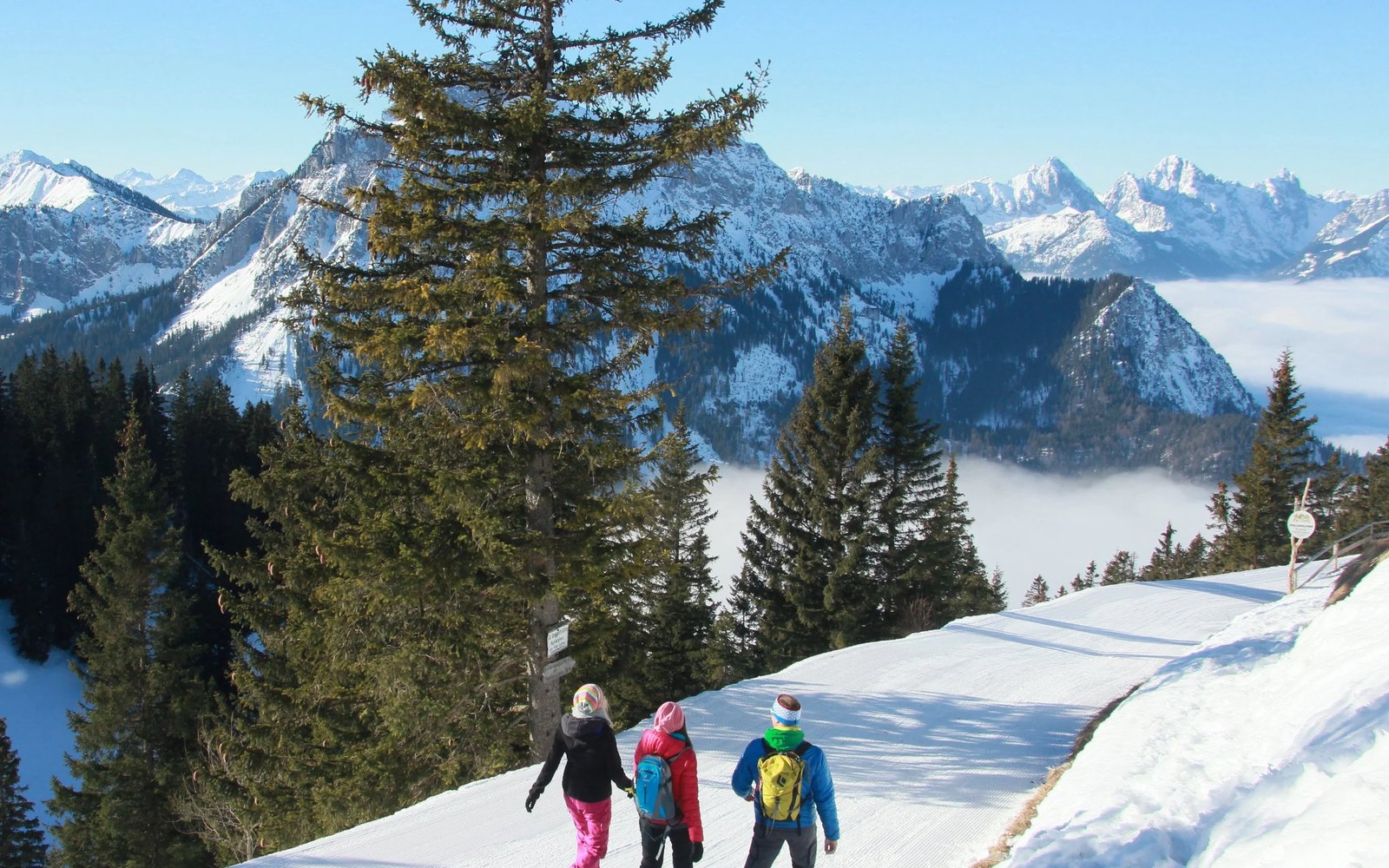
The tour itself is the same 30-minute route in January as in July. What changes in winter is the way up. The shuttle bus only runs when the road is free of snow and ice, the carriages to Hohenschwangau Castle stop for the winter, and the walk up becomes the only sure option on a cold morning.
Whatever the season, give yourself time. The Ticket Center recommends arriving in the village at least one and a half to two hours before a Neuschwanstein tour. Tours start punctually and latecomers cannot join, and there can be a security check at the entrance. Rucksacks, prams, child carriers and similar bulky items are not allowed inside, so leave them in the car or travel light.
Walking, bus or carriage up to the castle
Cars are not allowed on the road to the castle, and every visitor starts in the village. Hohenschwangau has four car parks, P1 to P4, where a car costs €12 for up to six hours. From the Ticket Center, the walk to Neuschwanstein is about 1.5 kilometres on a steep asphalt road and takes 30 to 40 minutes.
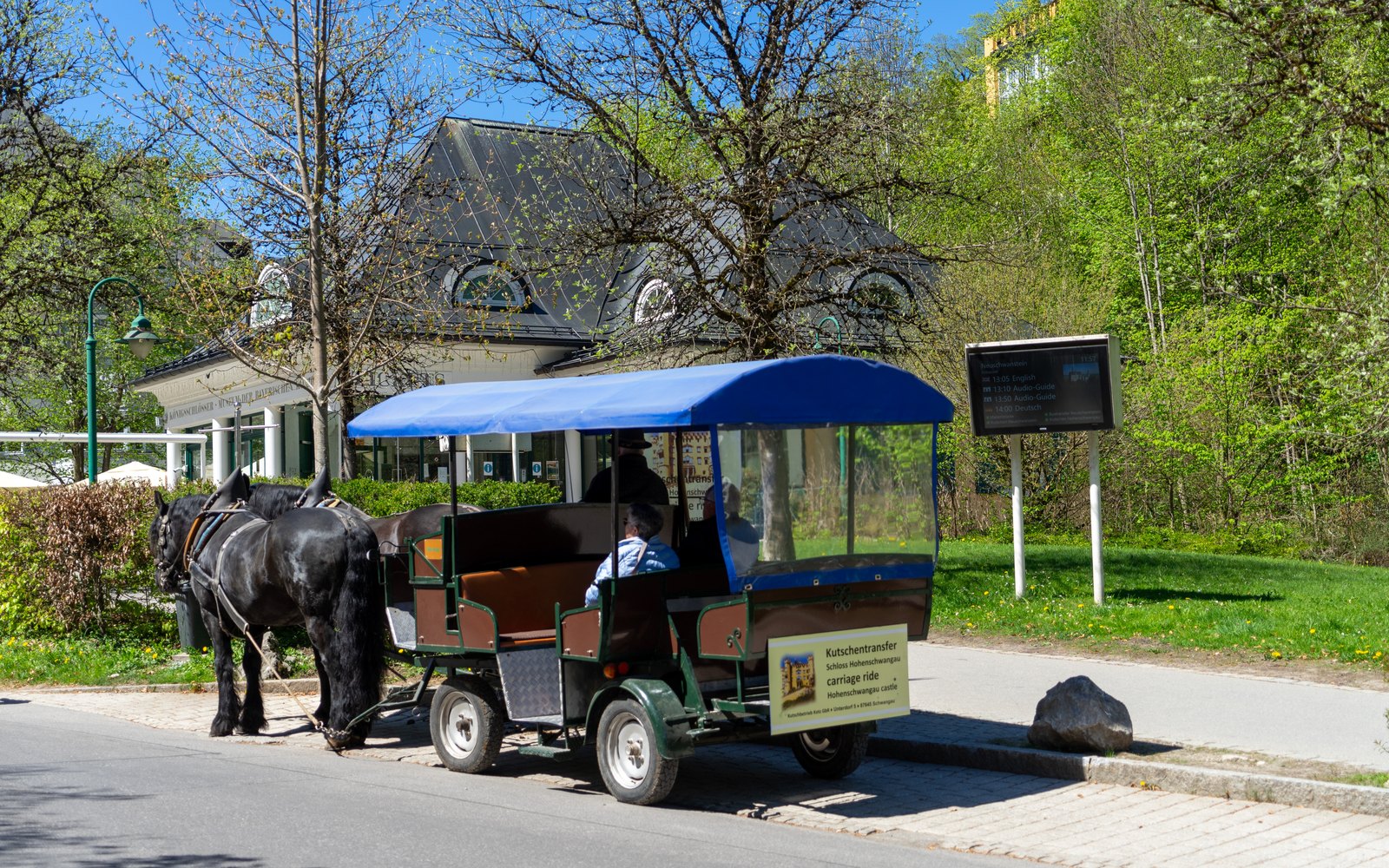
The two motorised alternatives both leave you short of the door, as the official transport page explains. Horse-drawn carriages leave from across the road from Hotel Müller, cost €8 uphill and €4 downhill, take about 20 minutes and drop you below the castle, roughly 15 minutes’ walk from the entrance. They run all year, on demand and without a timetable or reservations.
The shuttle bus starts at car park P4 below Hohenschwangau Castle and costs €3.50 each way or €5 return, paid at the counter by the stop or in cash to the driver, with lower fares for children aged 7 to 12. It does not go to the castle either. It climbs to the Jugend viewpoint near the Marienbrücke, from where a path of about 500 metres drops steeply to the entrance. In winter the first bus goes up at 9 am and the last at 3.30 pm, weather permitting. The Deutschland-Ticket and the Bayern-Ticket are not valid on this bus.
Marienbrücke and the classic view
The best-known view of the castle is from the Marienbrücke, the iron footbridge high above the Pöllat Gorge. Ludwig’s father, Maximilian II, first had a bridge built here in the 1840s as a gift for Queen Marie, who loved walking in these mountains. From the deck, the white towers of the castle stand against the plain and the Forggensee lake beyond.
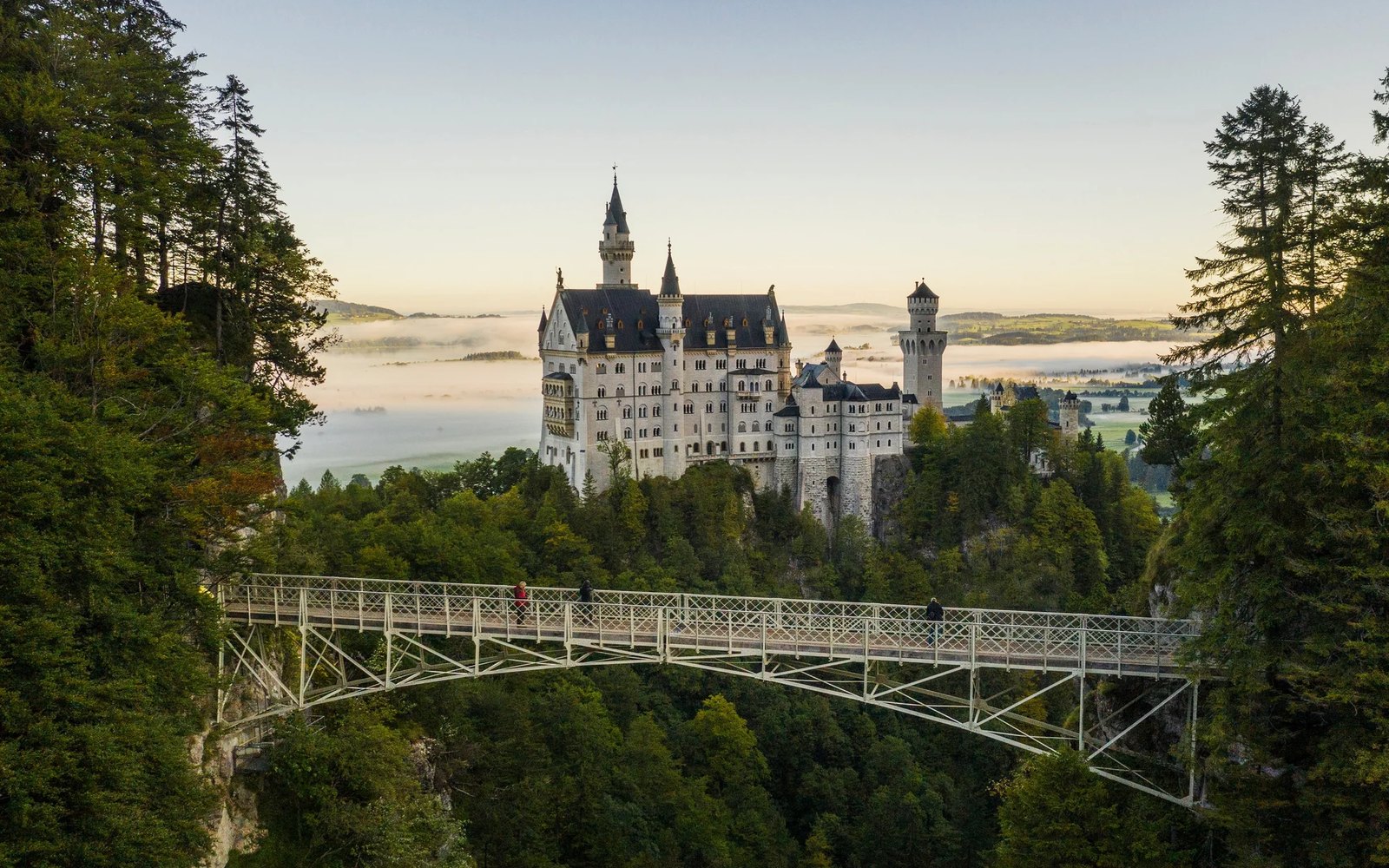
The bridge is free to visit, but it has its own rules. In winter it may close because of ice and snow, and the Ticket Center posts each day on its homepage whether it is open. Castle tours carry on regardless. If you plan to see the bridge and the interior on the same day, buy your castle ticket before you board the bus to the bridge, otherwise you face a trip back down to the valley. Without a ticket you can walk around the outside of the castle, but not into the courtyard.
Inside the 30-minute tour
The tour begins after you pass through the Gateway Building, the first part of the castle to be finished. Work started in 1868, and the foundation stone was laid on 5 September 1869. Ludwig used the upper floor of the Gateway Building as provisional quarters on his visits to the site, but he only ever saw Neuschwanstein as a building site. He died in 1886, and the Bower and the Square Tower were not completed until 1892.
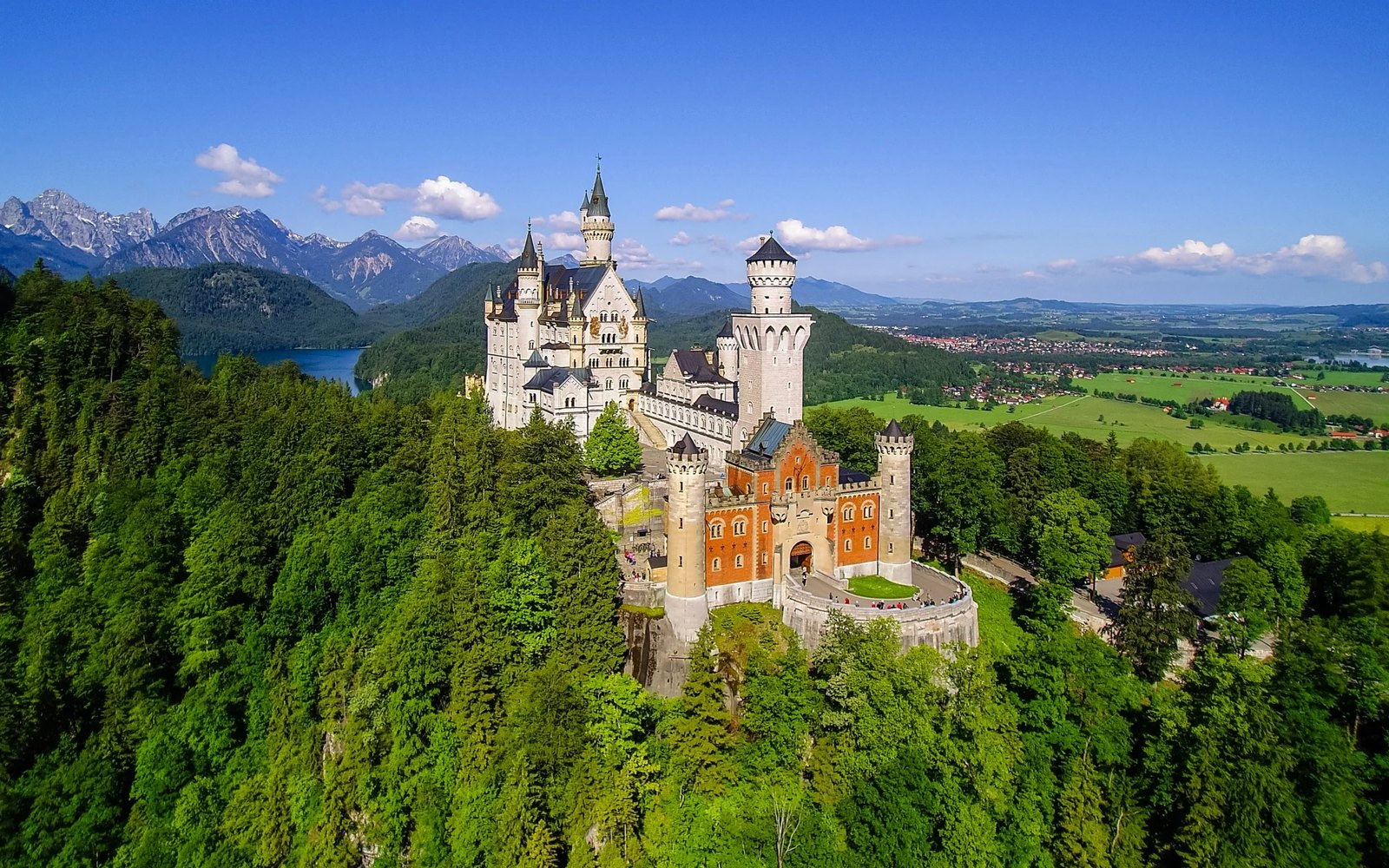
Inside, the tour route covers the king’s apartments and state rooms on the third and fourth floors of the Palas. The route takes in the Throne Hall, the Singers’ Hall, the king’s bedroom, a small artificial grotto and the study. The wall paintings draw on the medieval legends behind Richard Wagner’s operas, to whom Ludwig dedicated the castle, with Tannhäuser, Lohengrin and Parzival as the central figures and the swan repeated throughout.
Behind the medieval look, the building was technically modern for its day. The official description of the interior lists hot-air central heating, running water on every floor, toilets with automatic flushing, an electric bell system for servants and telephones on the third and fourth floors. Even the Throne Hall, which Ludwig requested late in the planning, was built around an encased steel frame.
Guides lead tours in German and English, and audio-guided tours are available in 17 other languages, including Dutch, Japanese and Korean. Photography and filming are not allowed inside. The tour ends on the second floor, where there is a café and bistro and a free multimedia show on Ludwig and his castles, and you can still see the historic kitchen on the ground floor on your way out. Visitors with reduced mobility can use a lift if they book in advance, although only one wheelchair or walker user can join per hour.
Hohenschwangau Castle and the Museum of the Bavarian Kings
The yellow castle on the lower hill is where Ludwig grew up. Crown Prince Maximilian bought the ruin of Schwanstein and had it rebuilt between 1833 and 1837 as a summer and hunting residence for the royal family, with more than 90 wall paintings of scenes from medieval legend and poetry. Hohenschwangau Castle tours last about 45 minutes and cost €23.50 for adults, €12 for children aged 7 to 17 and nothing for children under seven.
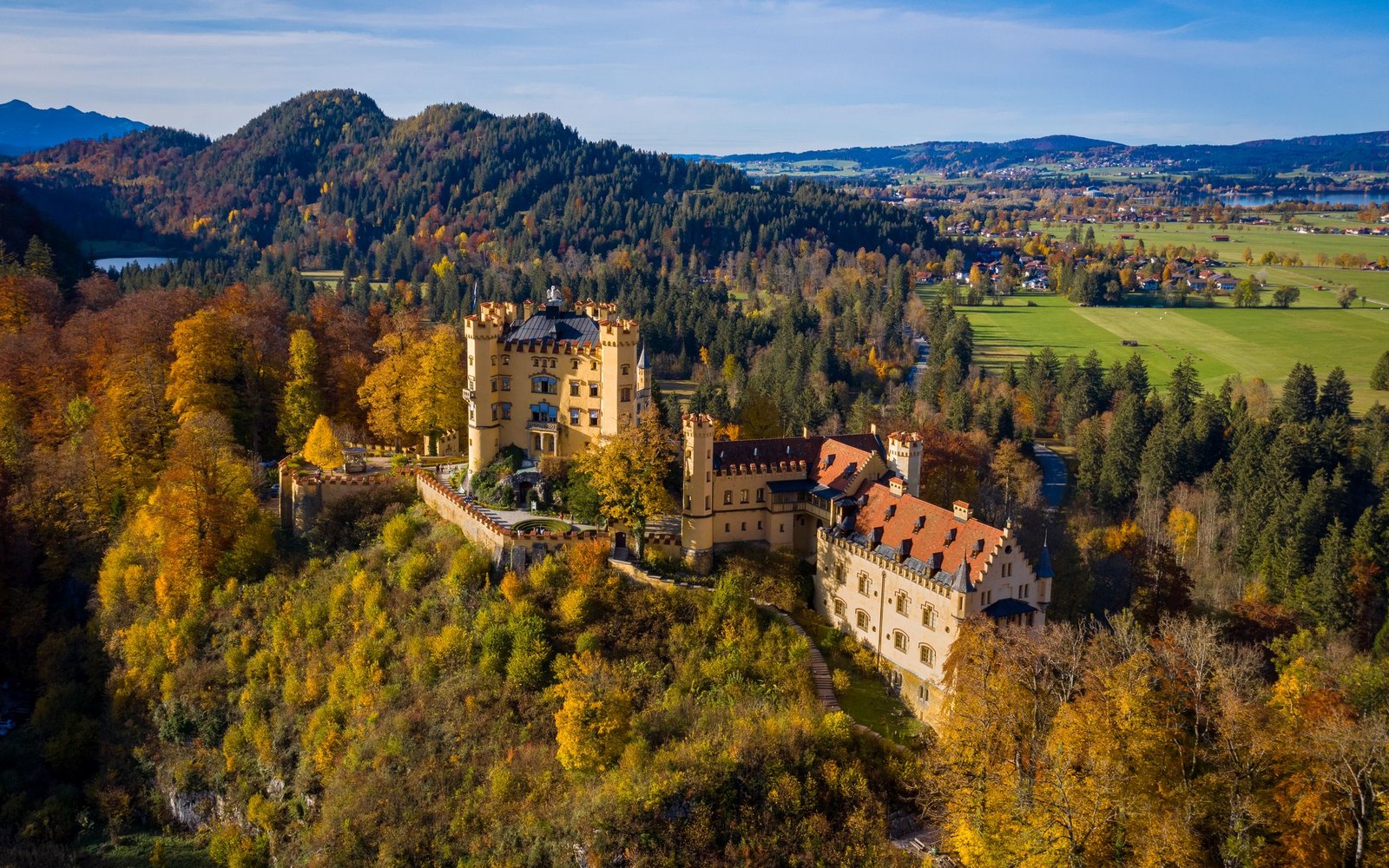
There is no lift in Hohenschwangau Castle, and the tour involves about 90 steps up and 90 down. The walk from the Ticket Center takes 20 to 30 minutes, and in winter that walk is the only way up, since the carriages do not run. The castle belongs to the Wittelsbacher Ausgleichsfonds, not the Bavarian Palace Administration, which is why annual Bavarian palace passes are not valid there.
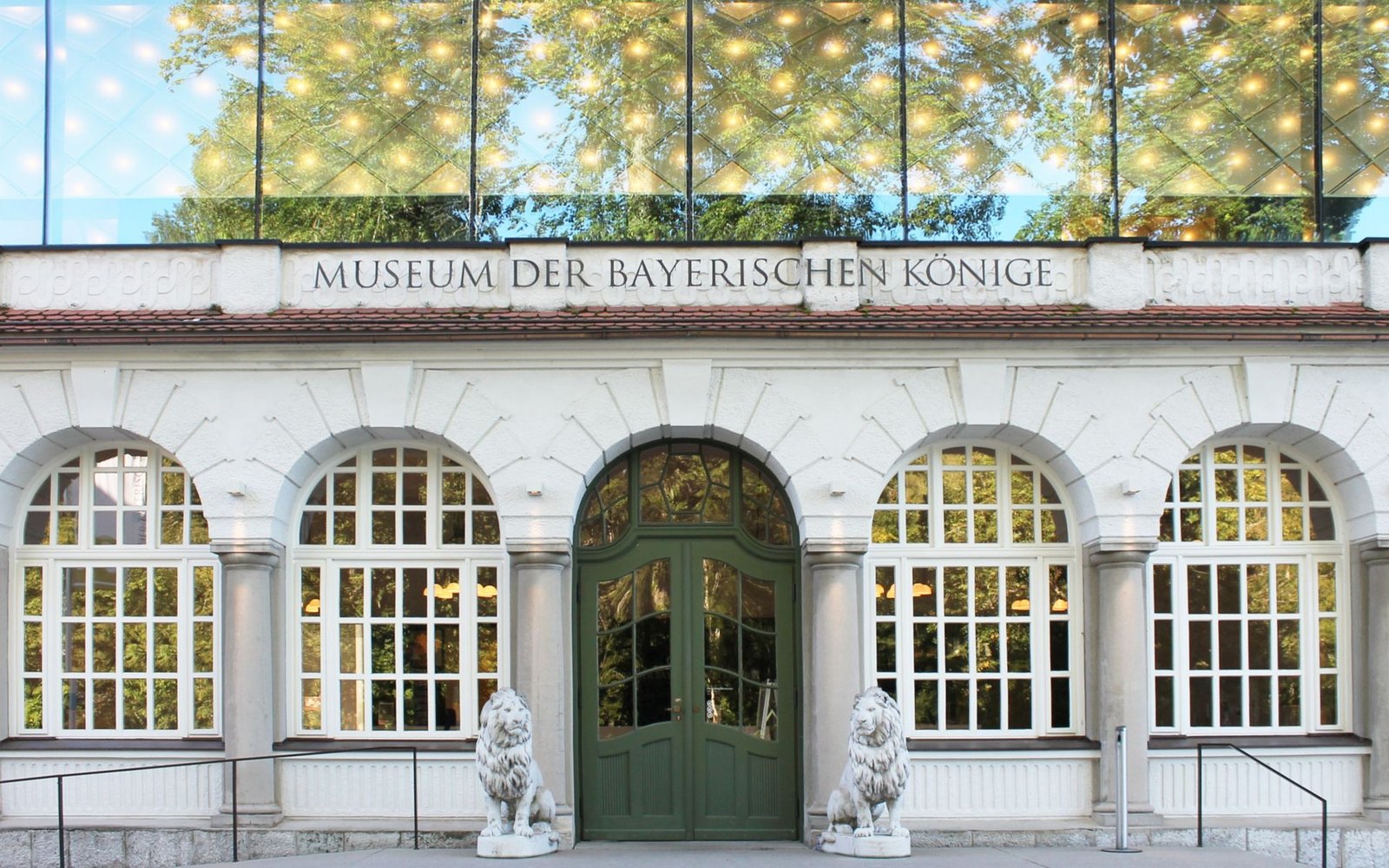
Down by the lake, the Museum of the Bavarian Kings tells the story of the Wittelsbach dynasty, with Maximilian II and Ludwig II at its centre. It opened in 2011, does not run on time slots and includes an audio guide in ten languages in the €14.50 adult ticket. Visitors under 18 accompanied by an adult enter free. Last admission is at 4.30 pm, and it suits the waiting time before or after a castle tour.
Planning the rest of the day
The museum stands by the Alpsee, and the paths and viewpoints go back to Maximilian II, who had them built to enjoy the scenery. With a morning tour of Neuschwanstein, you can combine the museum and a walk along the lakeshore in the afternoon without rushing. A two-castle day is easier in summer, when the carriages run to both castles and daylight lasts longer.
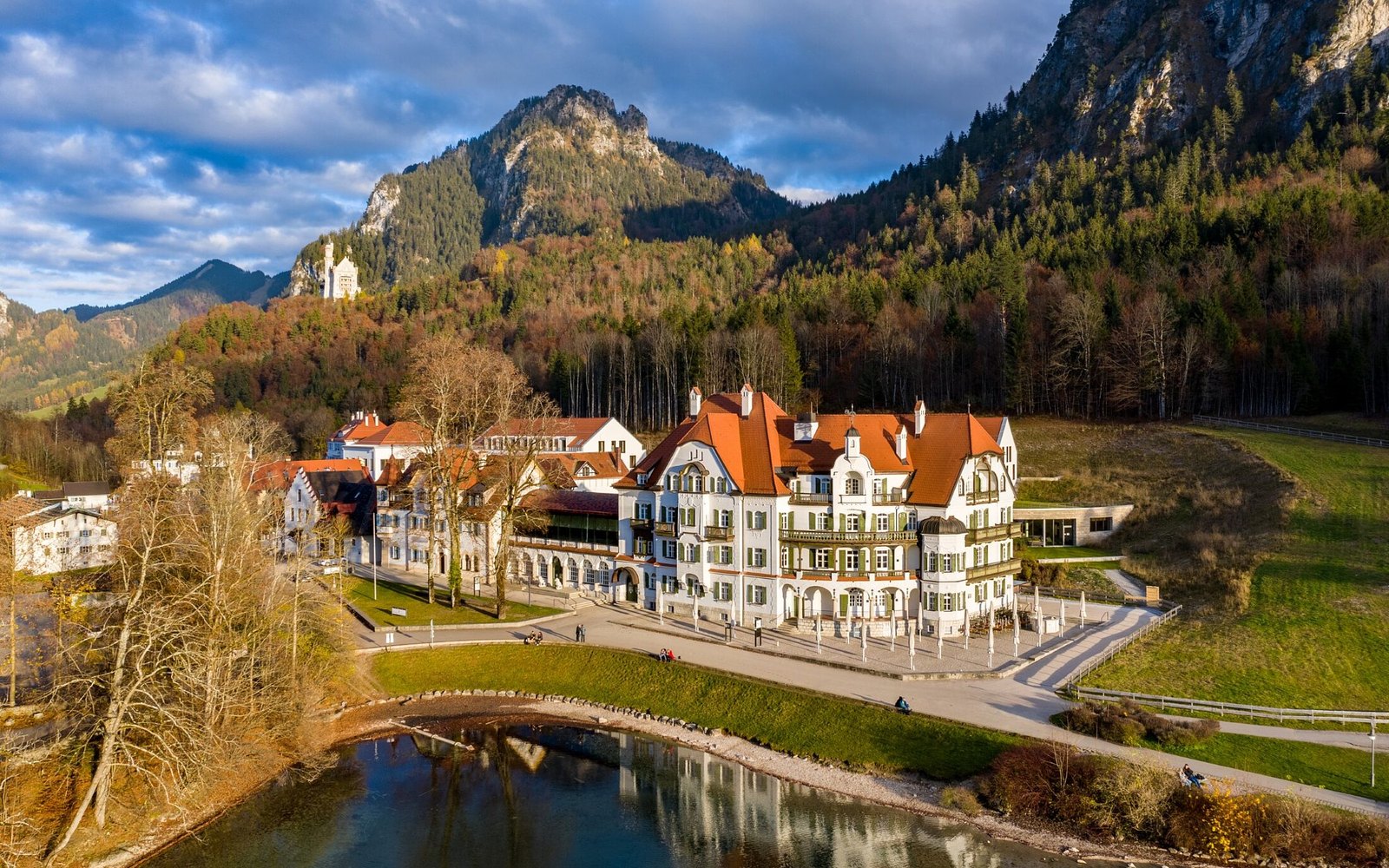
Neuschwanstein is also part of a larger set. UNESCO inscribed the palaces of King Ludwig II as a single World Heritage property in 2025, together with Linderhof, the King’s House on Schachen and Herrenchiemsee. If the Neuschwanstein tour leaves you curious about Ludwig, those three are the obvious next stops on a longer Bavarian trip.
Getting there from Munich and Füssen
The nearest railway station is Füssen, about 5 kilometres from Hohenschwangau. Regional trains from Munich take around two hours, and the Deutsche Bahn journey planner shows current times and fares. From Füssen station, buses 73 and 78 reach the Hohenschwangau stop on Alpseestraße in about 15 minutes. If you sleep in Füssen or Schwangau, the local guest card covers these buses, as the Füssen tourist office explains.
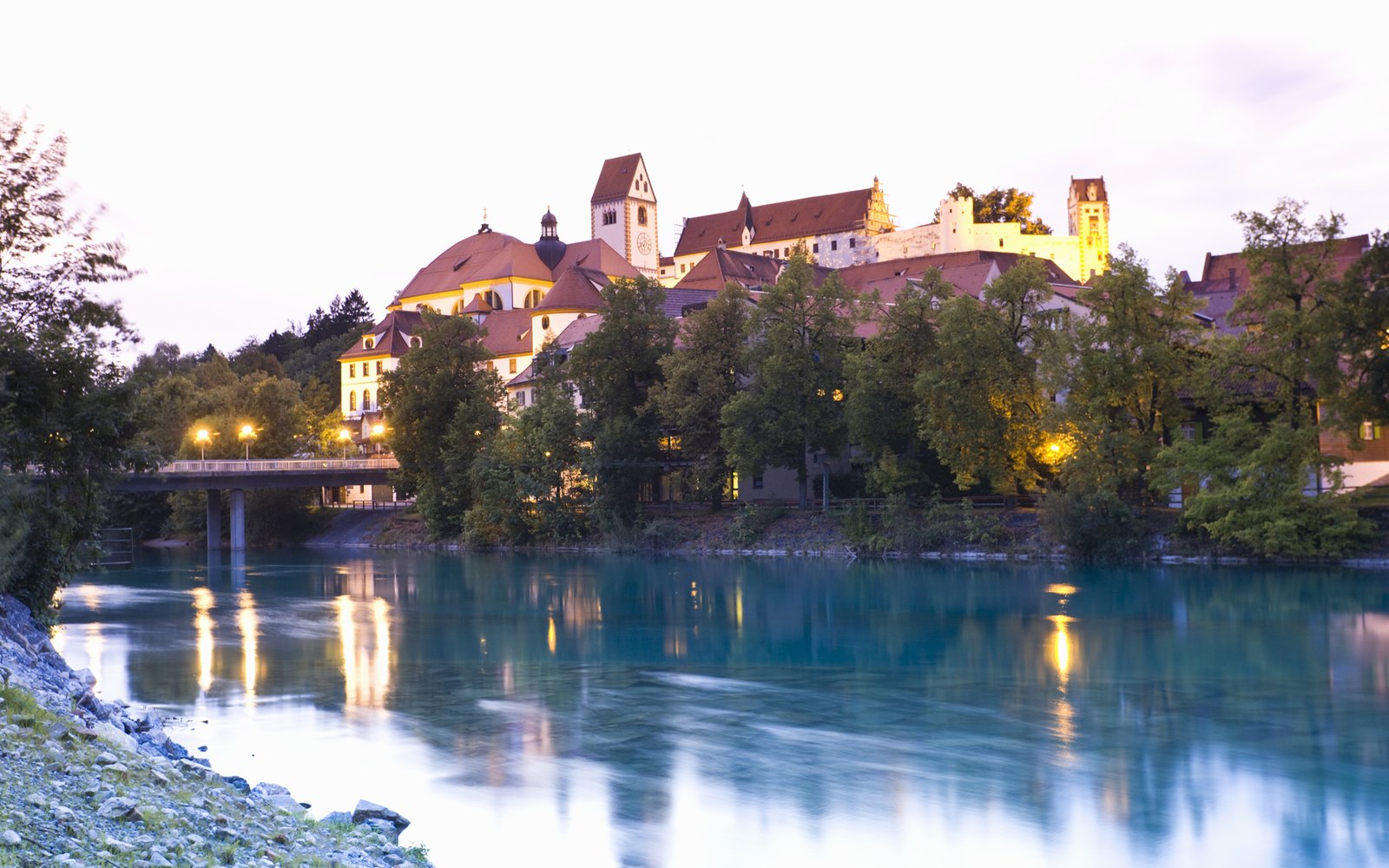
If you are based in Munich, Neuschwanstein works as a long day trip, and a free day in the city pairs well with our guide to the Deutsches Museum. Drivers should check current road works first. The B17 through Schwangau is closed for renovation until about 18 December 2026, with a signposted detour through Hohenschwangau, so allow extra time to reach the car parks.
Füssen is also the southern end of the Romantic Road, the 460-kilometre holiday route that links 29 towns from Würzburg. Driving it north to south turns the castle into the finale. On the way, Augsburg has the Fuggerei and its Renaissance streets, and the town walls of Rothenburg ob der Tauber tell a different story of how a Bavarian landmark came to look the way it does.
For the castle itself, the sequence is simple. Book the tour online as soon as your date is fixed, spend the night before in Füssen or Schwangau, and be in Hohenschwangau with time to spare. Then choose how to climb: walk if the weather allows, and save the bus for the descent.