
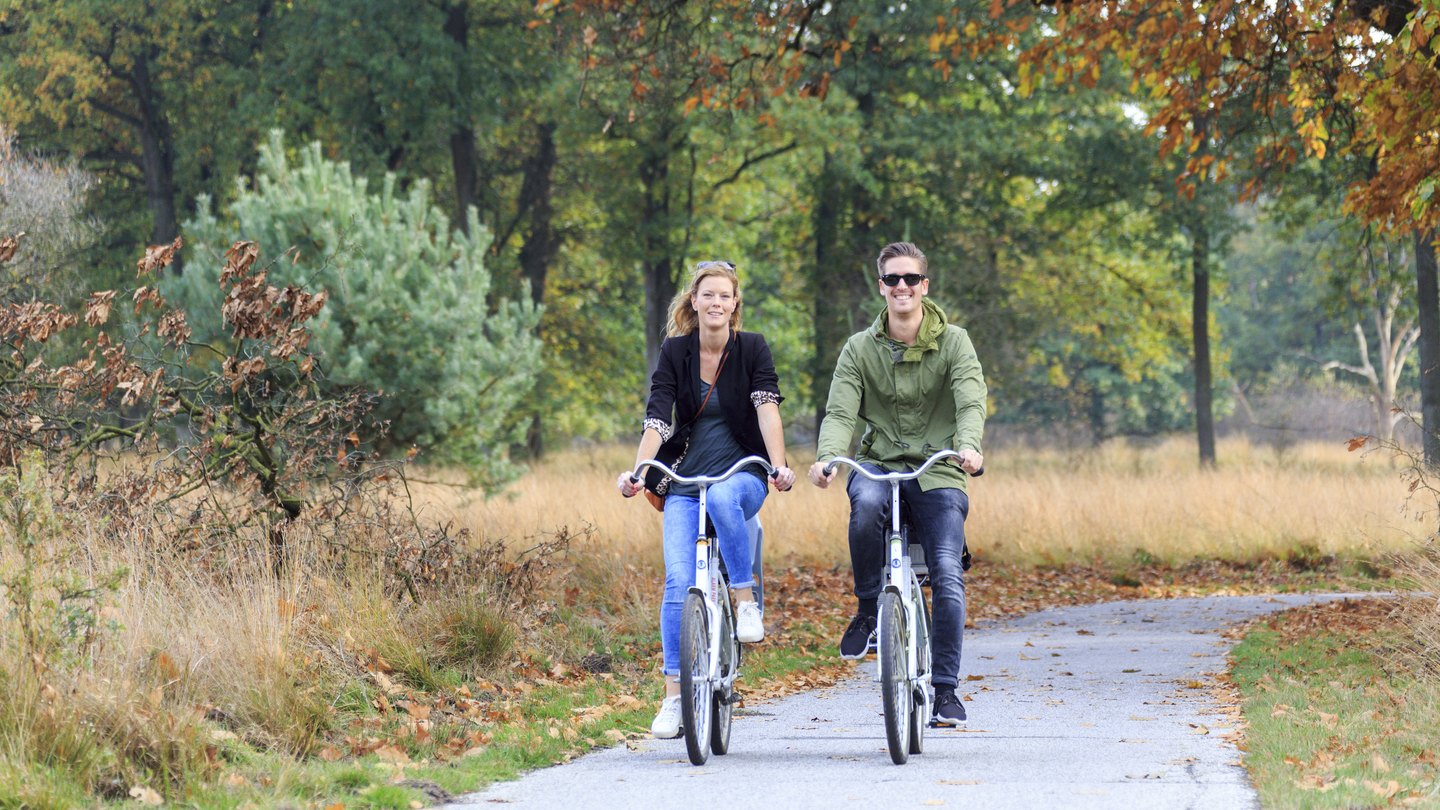
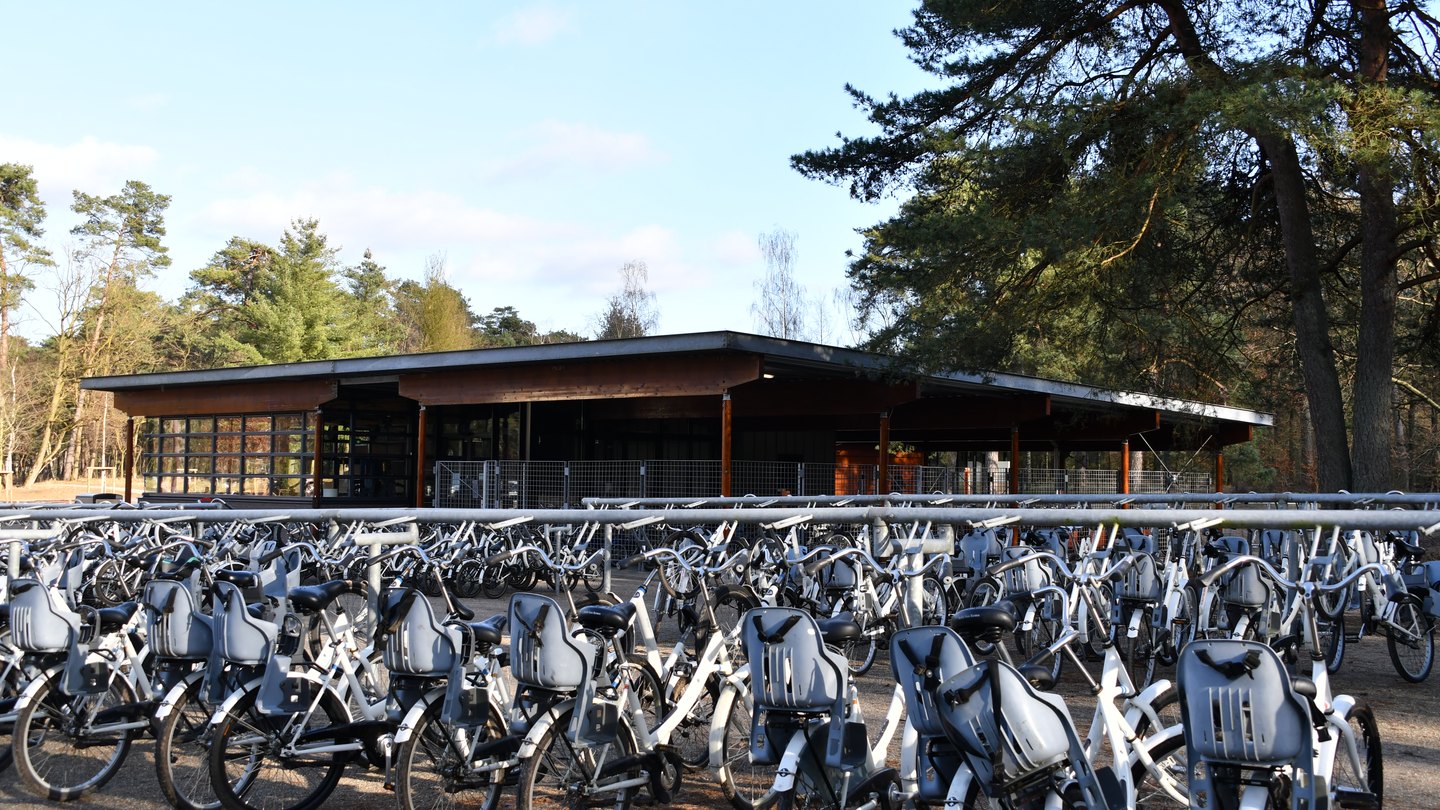
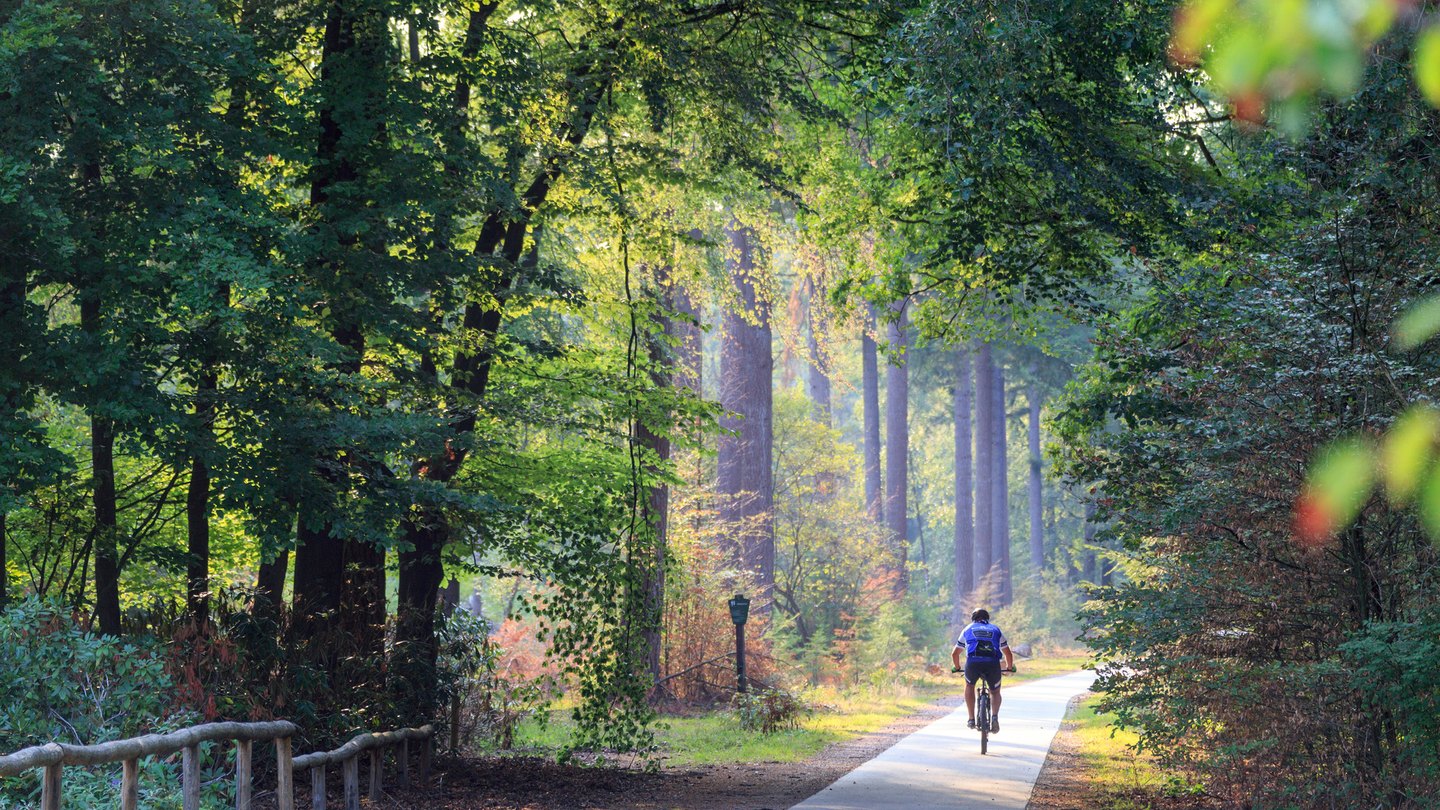
At the bike racks among the pines in De Hoge Veluwe National Park, the White Bikes hang ready for the next rider. You take one, leave it in the next storage rack, and move on through a fenced park of 5,400 hectares of woodland, heath, drift sand and peat bog, set between Arnhem, Ede and Apeldoorn.
That free bicycle is one of the easiest ways to see the park, but De Hoge Veluwe is only the ticketed heart of a much larger region. The Veluwe runs from the hills above Arnhem to the IJssel and the old Zuiderzee towns, and the useful way to cycle it is to give each day a different landscape: a paid day on the White Bikes, a hill day on the Veluwezoom, and a longer ride on the numbered junction network towards a palace, a sand drift or a Hanseatic harbour.
Where the Veluwe sits and how the park is entered
De Hoge Veluwe is a privately run foundation on the former Kröller-Müller estate, and the park is entirely fenced. Its public gates are at Hoenderloo, Otterlo and Schaarsbergen. Otterlo is the busiest, so the park recommends arriving at Schaarsbergen or Hoenderloo when you can. Historic side gates still stand in the woods around Hoenderloo, but the working entrances are the ones with the ticket desks, and that is where a visit actually starts.
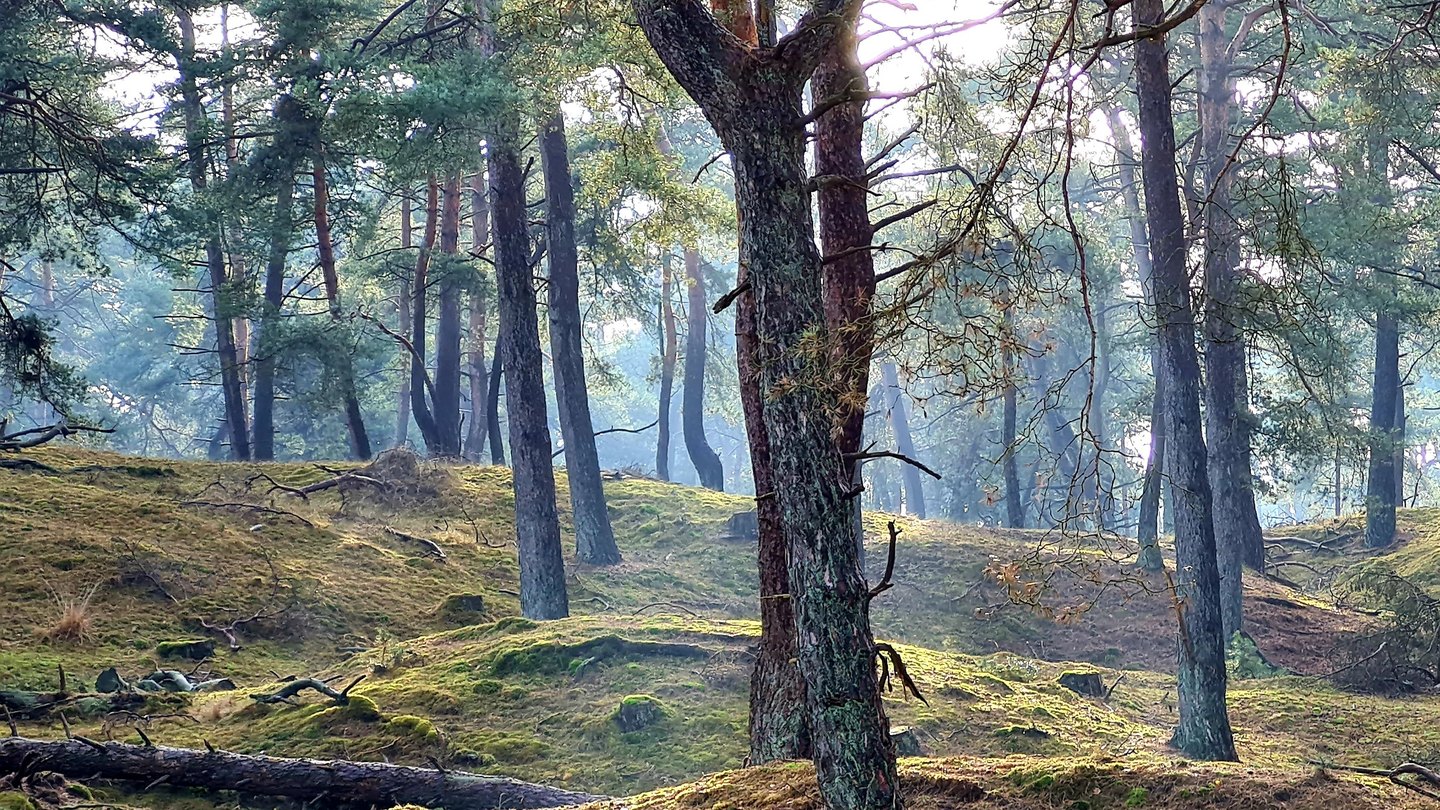
From 16 November 2026 the Schaarsbergen entrance is closed to cars for road works, first until 18 December, then with exit-only car traffic from 19 December until the gate reopens in early January. Walkers and cyclists can still use it throughout. If you are arriving by car in that period, plan on Otterlo or Hoenderloo instead.
A day on the White Bikes
Cycling in De Hoge Veluwe National Park is how most visitors cover the ground. The park’s walking, cycling and driving map, sold for €2 at the entrances, the Museonder information desk and the Park Shop, shows the cycle paths through deciduous, coniferous and mixed forest, wet and dry heath and drifting sand. If you prefer not to buy a map, ANWB waymarks run through the park as well.
The White Bikes are free with your admission ticket. The park keeps 2,000 of them at the Marchantplein, the Kröller-Müller Museum, Jachthuis Sint Hubertus and the entrances, including children’s bikes and bikes with rear child seats. They cannot be reserved or locked: as soon as one is returned to a rack, the next visitor may take it. For a bicycle you can lock and keep all day, the Bicycle Repair Shop next to the visitor centre rents Blue Bikes, electric bikes, tandems, cargo bikes and adapted bikes, daily from 9:00 to 17:00; reservations go through the park ticket shop or the Museonder. Bringing your own bicycle costs nothing beyond the park ticket.
Adult admission for 2026 is €13.85, with children aged 6 to 12 at €6.95 and under-sixes free. A car, motorhome or motorcycle is another €9.80. The ticket does not include the Kröller-Müller Museum. Entrances take card payments only. The park can be entered until one hour before closing, and the opening hours shift with the season: 9:00 to 18:00 from November to March, with earlier openings and later closings from April to October. The longest days are in June and July, when the gates stay open until 22:00.
The museum, the hunting lodge and the bus from Ede
A combined day ticket for the park and the Kröller-Müller Museum is €27.75 for adults in 2026. The museum, at Houtkampweg 6 in Otterlo, is open Tuesday to Sunday and on public holidays from 10:00 to 17:00, and also on Mondays from 7 July to 29 August; it is closed on 1 January. From Ede, bus 106 runs into the centre of the park and stops at the Otterlo entrance and at the museum, and park tickets can be bought on the bus.
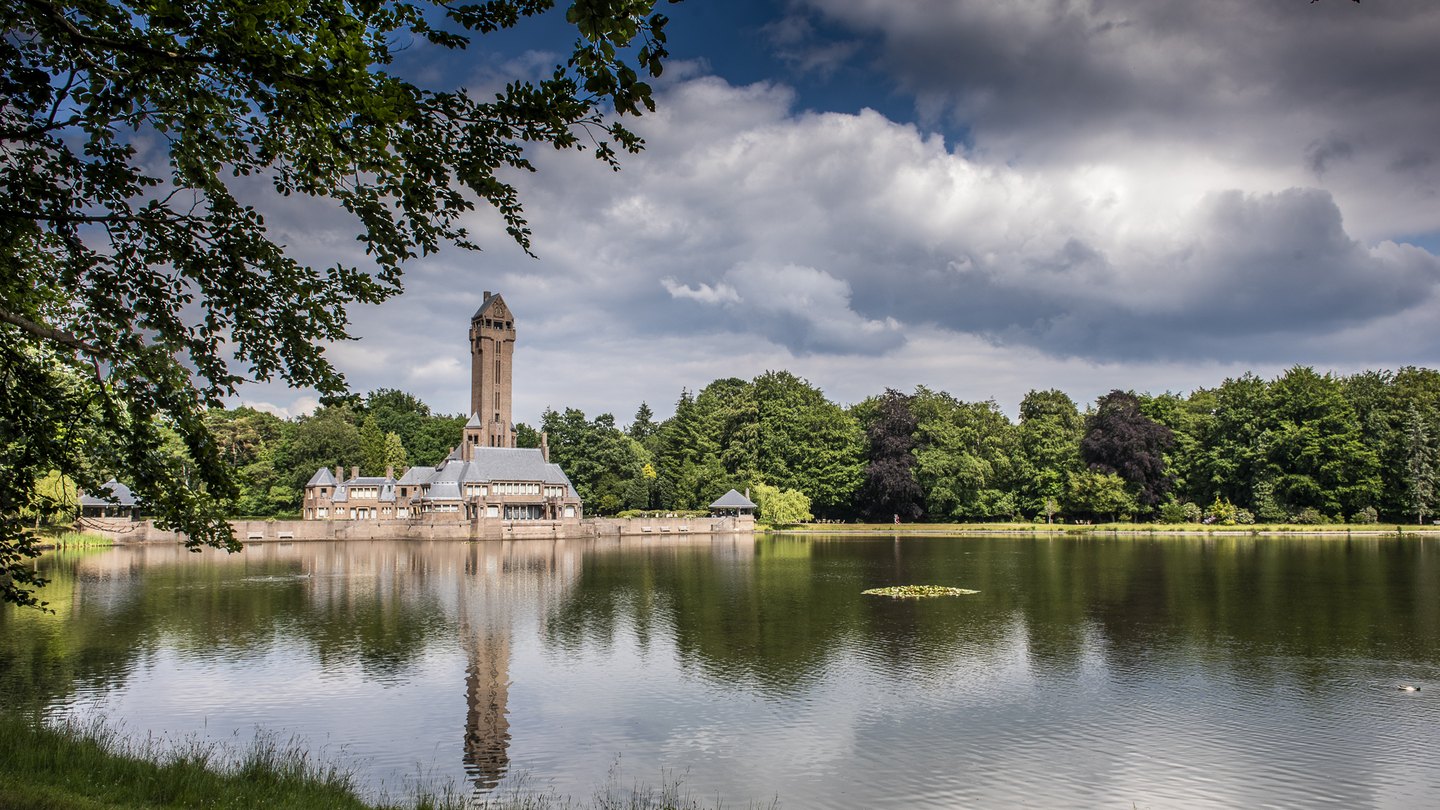
A different ride heads to Jachthuis Sint Hubertus, the lakeside hunting lodge designed for the Kröller-Müllers, where White Bikes are also parked. The Theekoepel tea house there is open from 11:00 to 17:00 between April and October, and until 16:00 from November to March. Leave time to get back to your entrance, because last admission is an hour before the park closes.
The spring game counts inside the fence are modest and specific: about 160 red deer, 150 roe deer, 50 wild boar and 30 mouflon, before the year’s young are born. Seeing them is a matter of quiet and luck, not a promise attached to the ticket.
Junctions for the rest of the Veluwe
Outside the fence you ride a different system. The Netherlands is covered by regional cycle junction networks, 46 of them in the 2025 figures from Fietsplatform, with 10,558 numbered junctions and 36,632 kilometres of waymarked route. You plan a day by stringing junction numbers and following the green-and-white signs from one post to the next. On the Veluwe that network is managed by Routebureau Veluwe, which looks after about 2,500 kilometres, from Wageningen and the southern hills to Hattem and Nijkerk in the north.
Visit Veluwe and Nederland Fietsland’s Veluwe routes both publish ready-made junction rides as well as a planner, so a day can be a short loop around a village or a longer crossing from Arnhem towards Apeldoorn. Around Otterlo the forest gives way to fields and farm lanes, which makes a useful contrast if you have already spent a day inside the park fence.
The hills of the Veluwezoom
If you want height, start on the southern edge. Nationaal Park Veluwezoom, more than 5,000 hectares of forest, heath, sand and estates, is the hilliest stretch of the Veluwe. Natuurmonumenten, which manages it, puts the visitor centre at Heuvenseweg 5a in Rheden, a short ride or walk from Rheden station. Unlike De Hoge Veluwe, this is not a fenced estate with a paid gate: you arrive at the centre or by the cycle paths and ride in.
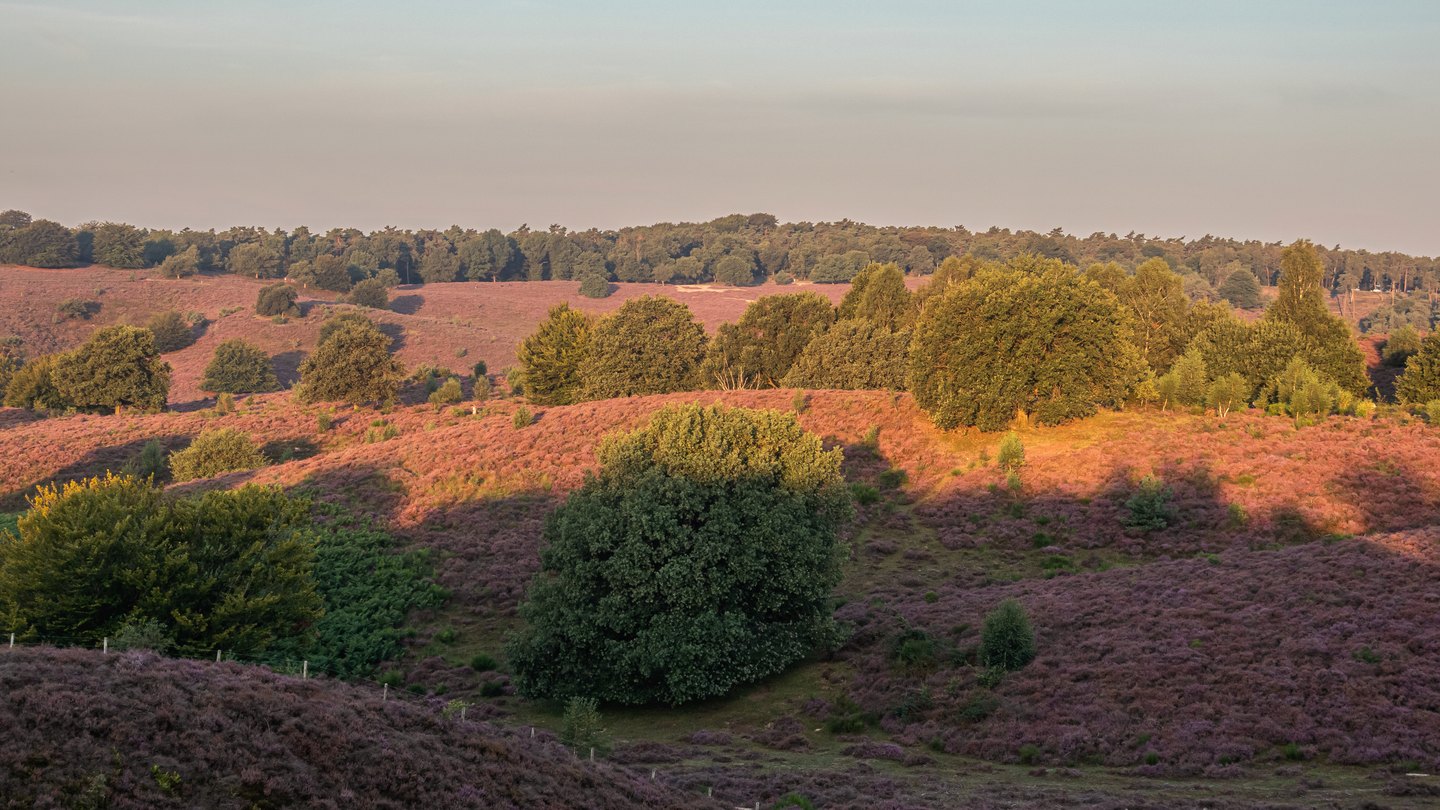
The Posbank and the Herikhuizerveld heath sit just beyond the centre, and this is where the ridges open into long views. Since 1 July 2024 the through-road over the Posbank has been partly closed to cars and motorcycles, and parking nearby is reduced, so arriving by bicycle or train is the cleaner plan. Nederland Fietsland’s Veluwezoom junction route covers 39 kilometres from the wooded hills down to the river landscape. Temporary path works can close a published loop, so check with Natuurmonumenten before you set out. In May and June the rhododendrons are in flower; autumn brings a different colour, and in the rutting season you may hear red deer.
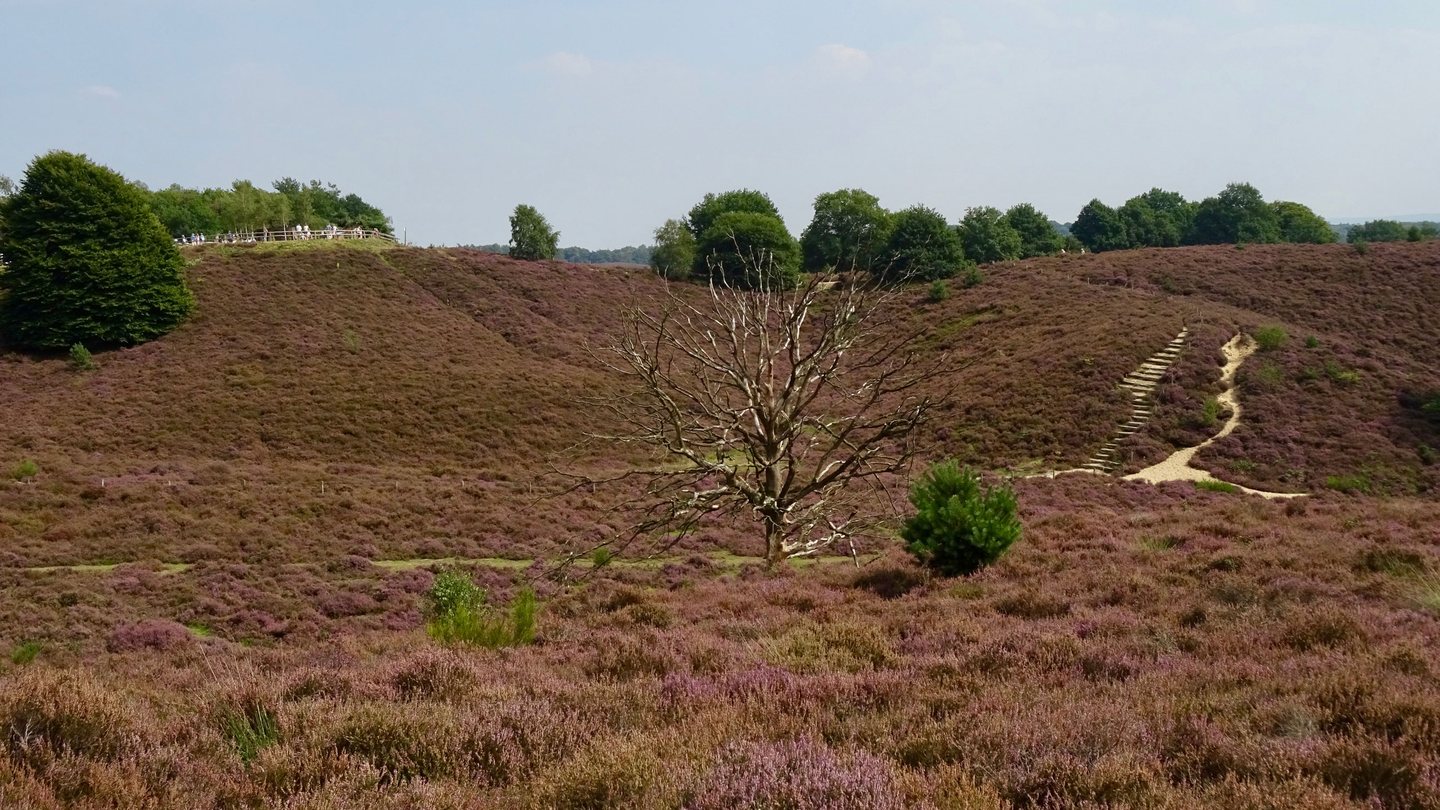
The brick Posbank monument at the top is a natural place to get off the saddle, look back over the heath and decide whether to drop towards Rheden, Rozendaal or Arnhem. The distances are short once you are on the ridge, but the slopes are real, and an e-bike helps if you are not used to climbing in a country that is otherwise so flat.
Sand, a palace and the IJssel
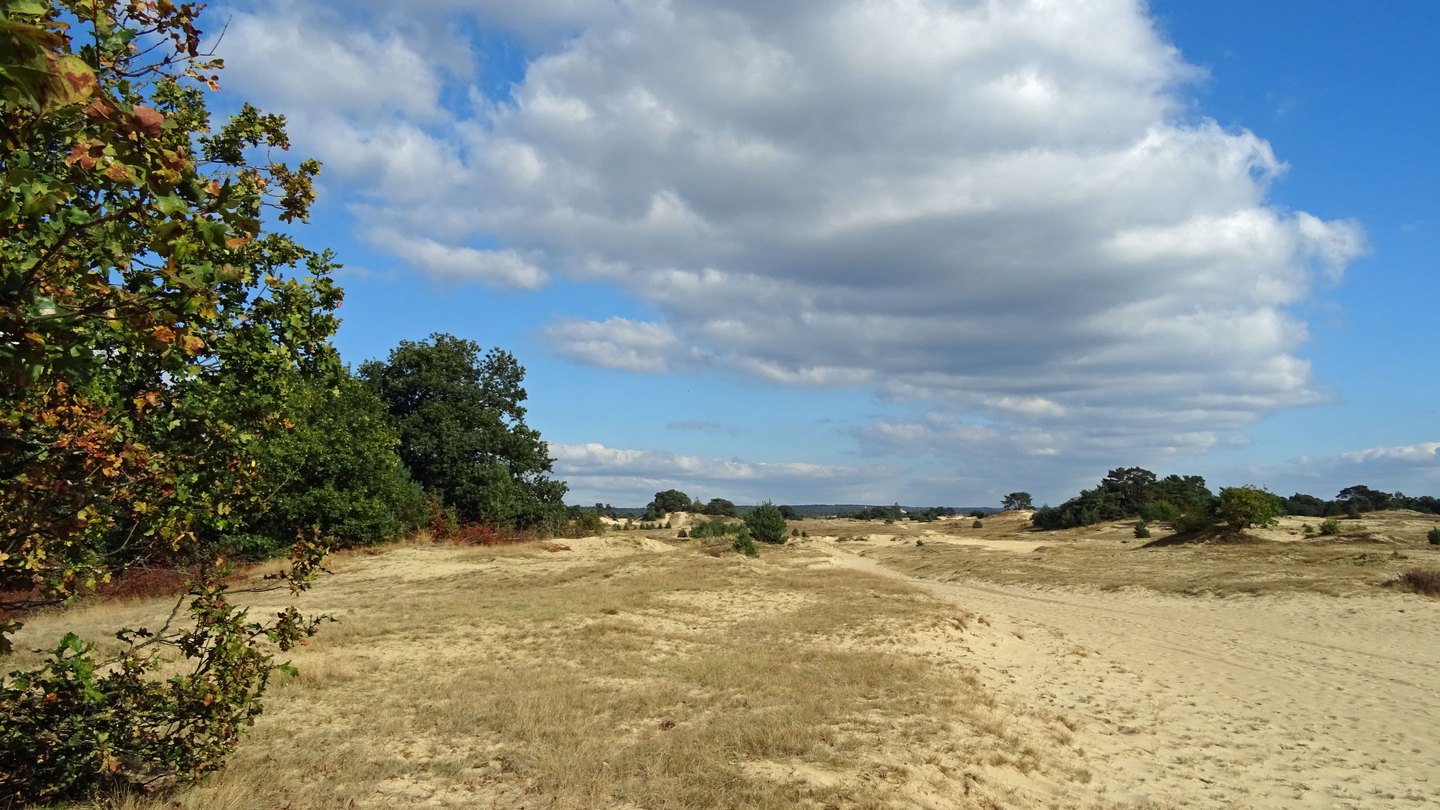
West of Apeldoorn the forest opens into the drift sand of Kootwijkerzand, a landscape of bare dunes and pines that you reach on the same junction network. It is a good half-day if you want a contrast with the heath, and it sits close enough to Apeldoorn to combine with a visit to Paleis Het Loo.
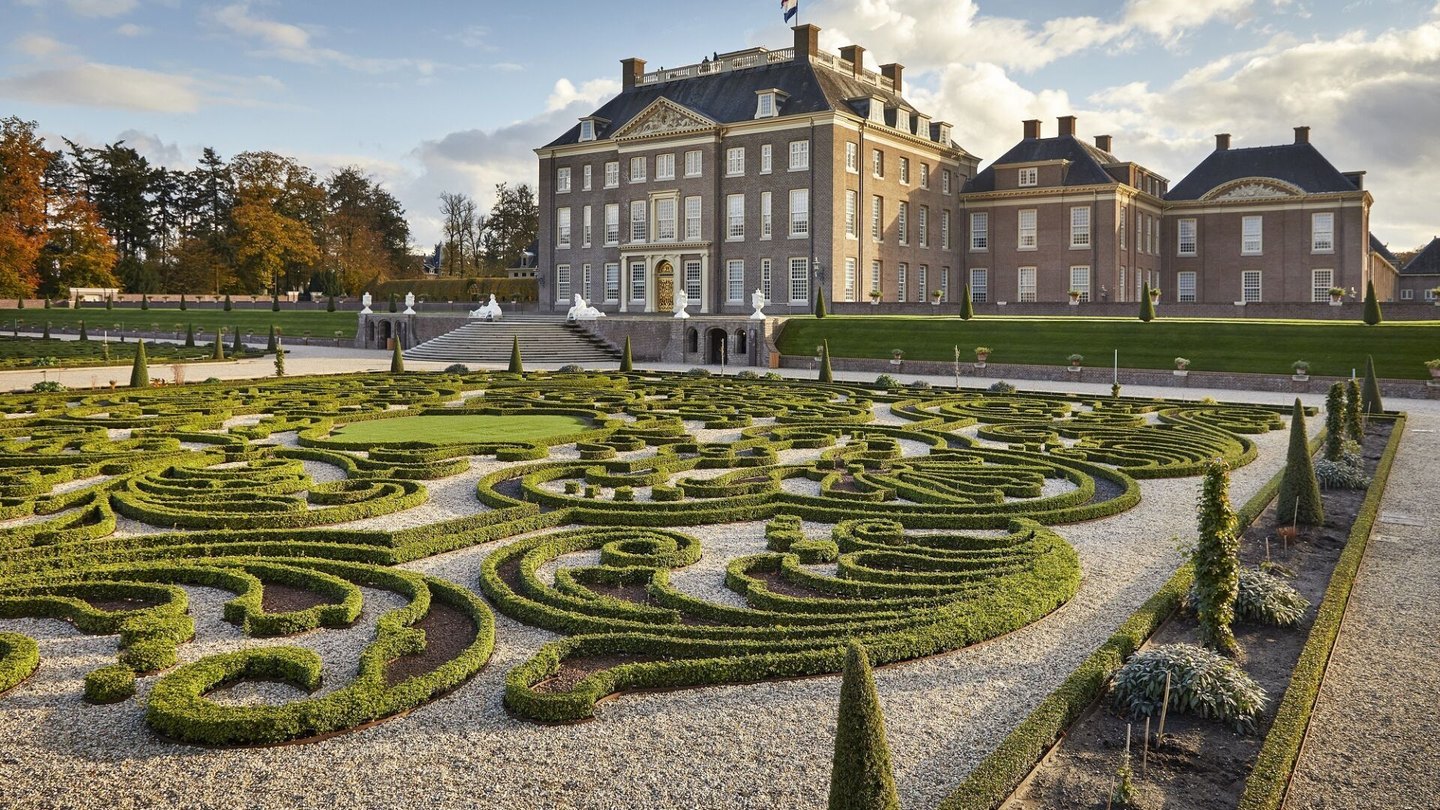
The palace, at Koninklijk Park 16, is open Tuesday to Sunday from 10:00 to 17:00, with extra Mondays in school holidays and on public holidays. An adult ticket for the palace, exhibitions, stables, gardens and Orange trail is €21; ages 4 to 17 pay €9.50. There is bicycle parking, and electric bikes can be charged. If you only want the ride past the grounds, you can plan the junction numbers around Apeldoorn without buying a palace ticket.
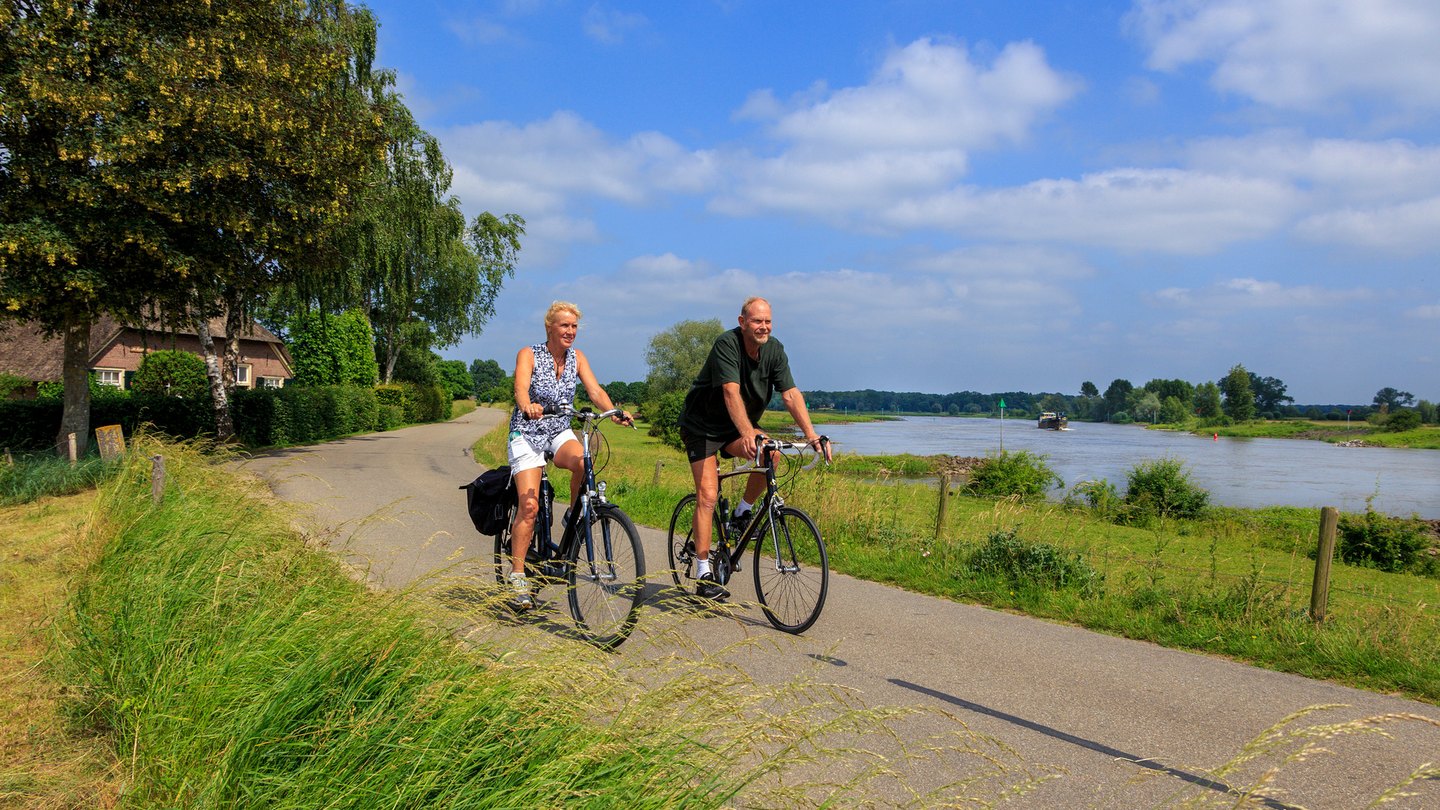
On the northern and eastern edge the land drops towards the IJssel and the old Zuiderzee. The LF Zuiderzeeroute, a 447-kilometre loop around the IJsselmeer, passes this side of the Veluwe, including the stretch towards Elburg. A night on that edge, for example at Rijsgaardhoeve near Elburg, puts the next morning’s ride on the boundary between forest and water rather than back in the middle of the woods.
Arriving by train
Apeldoorn, Arnhem, Ede-Wageningen and the smaller stations at Rheden and Wolfheze are the practical rail approaches. If you bring your own bicycle on NS trains, you need a Fietskaart Dal at €8.50 in addition to your own ticket. On weekdays, according to the NS rules for bikes on trains, the bicycle may travel only in the off-peak hours, from 9:00 to 16:00 and from 18:30 to 6:30; at weekends, on public holidays except King’s Day, and throughout July and August it may travel all day. Space is limited, and cargo bikes are not allowed. A fully folded folding bike smaller than 45 × 86 × 80 cm travels free at any hour. OV-fiets rental at the larger stations is the lighter alternative if you do not want to take a bicycle on the train at all.
If your trip starts in a city, a first day cycling in Utrecht works as a warm-up before you head east, and a longer Netherlands itinerary through Amsterdam, Alkmaar and Utrecht can still leave the Veluwe days intact once you turn inland.
When to go and how long to stay
Three days cover the three landscapes without rushing: one inside De Hoge Veluwe, one on the Veluwezoom, and one towards Het Loo, Kootwijkerzand or the IJssel. In November and December the park closes at 18:00 and last entry is at 17:00, so a winter day inside the fence needs an early start, especially if you also want the museum. Summer gives you longer evenings and the busiest racks of White Bikes. Build the palace or the museum into a day that already has slack, because both close at 17:00.
If you are staying more than a night, sleep on the edge you will ride the next morning: towards Rheden or Arnhem for the hills, towards Apeldoorn for the palace and the sand, or towards Elburg for the water.