Delicate Arch is so familiar that it can seem less like a place than a graphic: two sandstone legs, an uneven curve, a patch of Utah sky held inside. The outline has become shorthand for the American Southwest. Yet the formation belongs to a landscape that refuses to stay fixed, where water works through cracks, rock falls away and the apparent solidity of stone is repeatedly called into question.
Arches National Park, near Moab, contains more than 2,000 documented natural stone arches, according to the National Park Service. That abundance does not make them interchangeable. Some openings barely announce themselves. Others turn a wall into a frame, or stretch so thinly across a gap that their survival appears improbable. Together, they reveal a country shaped as much by what has disappeared as by what remains.

The picture and the climb
The NPS account of Delicate Arch separates the famous image from the experience of reaching it. The close-up route is a three-mile round trip with substantial climbing, not a roadside stroll. Heat or winter ice can make it harder; rangers regularly assist people who have underestimated the journey. More distant viewpoints offer a different relationship with the formation.
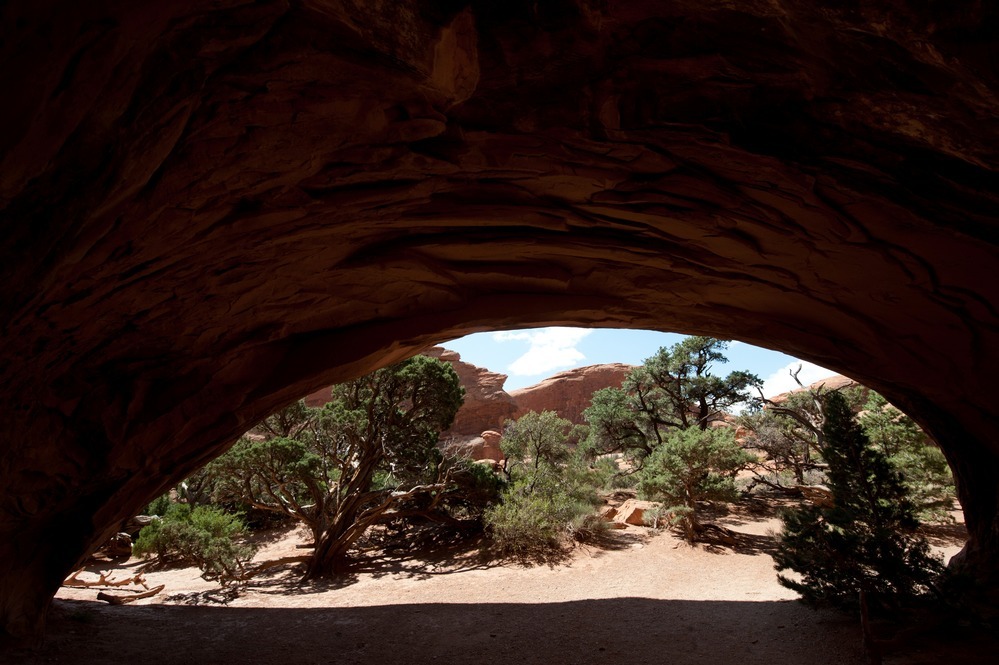
That difference matters in a park often consumed through photographs. A clean outline against the sky can conceal the uneven ground, the exposed approach and the presence of other visitors. Delicate Arch is neither an isolated studio object nor a private discovery. Its popularity is part of its modern story, alongside the geological processes that produced it.
Water in a dry country
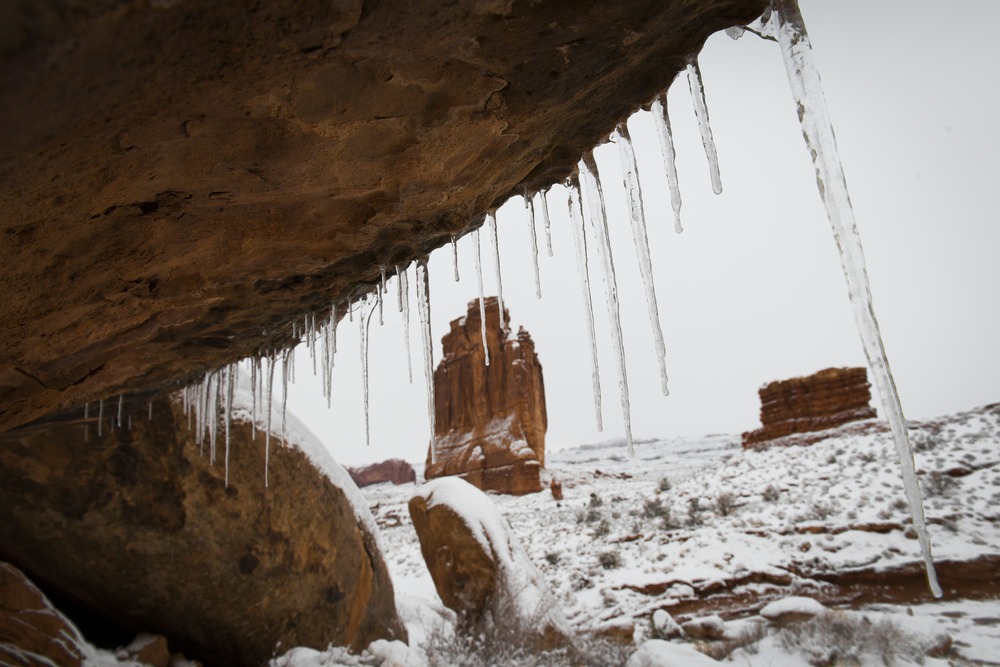
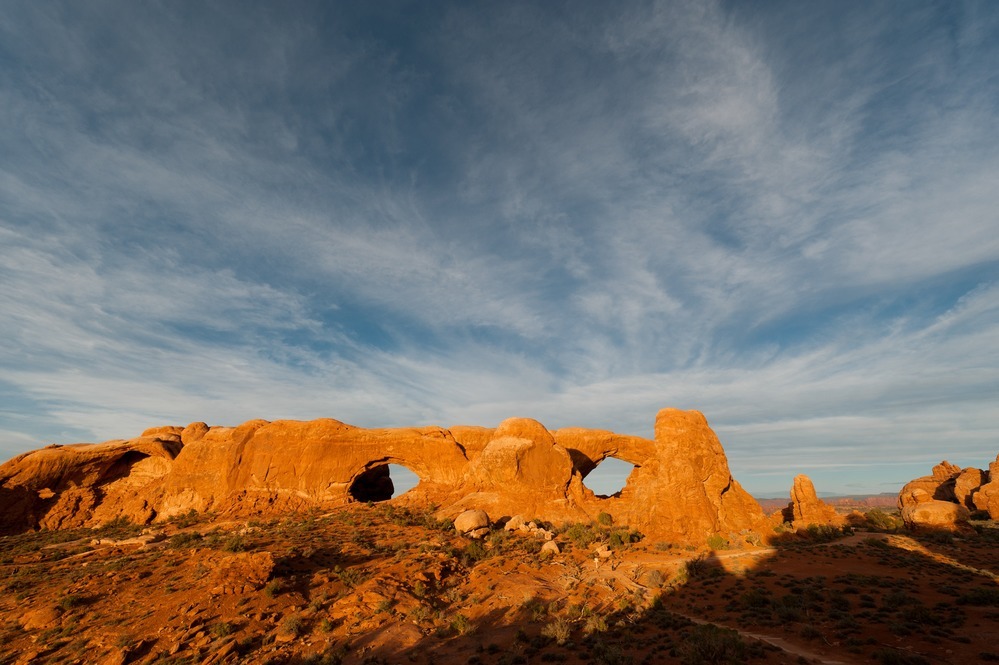
The park’s explanation of its formations places water at the centre of the story. Buried salt deformed the rock above it, helping establish fractures. As uplift and erosion exposed sandstone, those fractures became routes for moisture. Rain and freezing water enlarged weaknesses, gradually turning rock walls into fins and, in some places, openings.
The process has no obligation to preserve a beautiful result. The same forces that produce an arch can eventually destroy it. This makes the landscape less a permanent sculpture garden than a collection of temporary balances. There is no contradiction between its immense age and its capacity for sudden change.
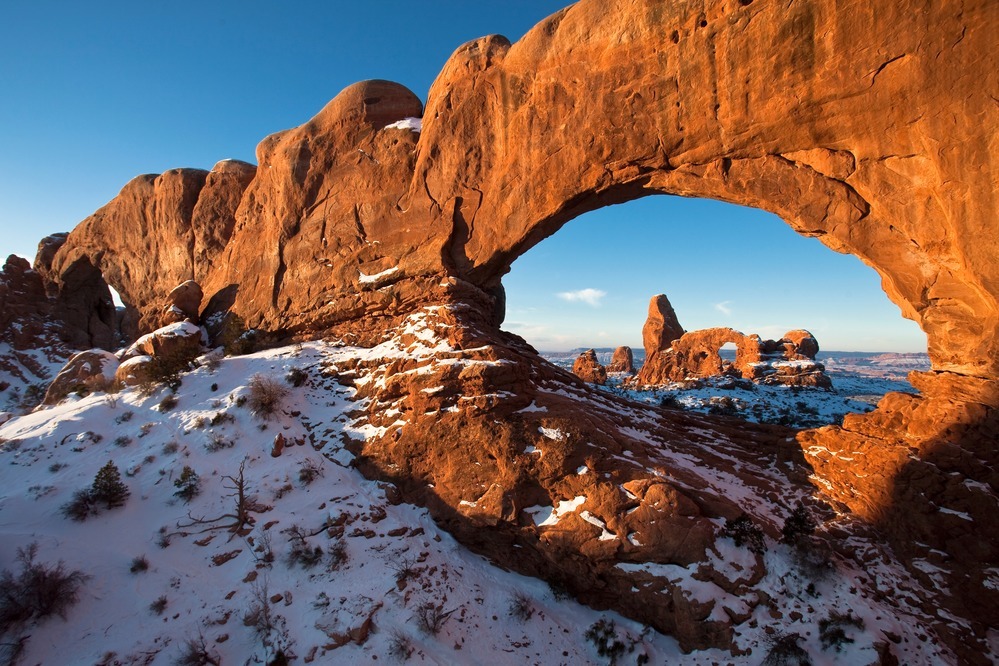
Nearby Canyonlands makes erosion visible across broad plateaus and deep river-cut divisions. Arches brings the idea into tighter focus. An opening in a fin allows the eye to follow absence itself, seeing the gap as clearly as the surviving sandstone around it.

A span that records its own losses
At Devils Garden, Landscape Arch offers a particularly striking expression of that tension. The NPS measures its opening at 306 feet, while describing the narrowest section as only about six feet across. Pieces fell from it during the 1990s. The remaining span is impressive not because it promises permanence, but because its delicacy is visible.
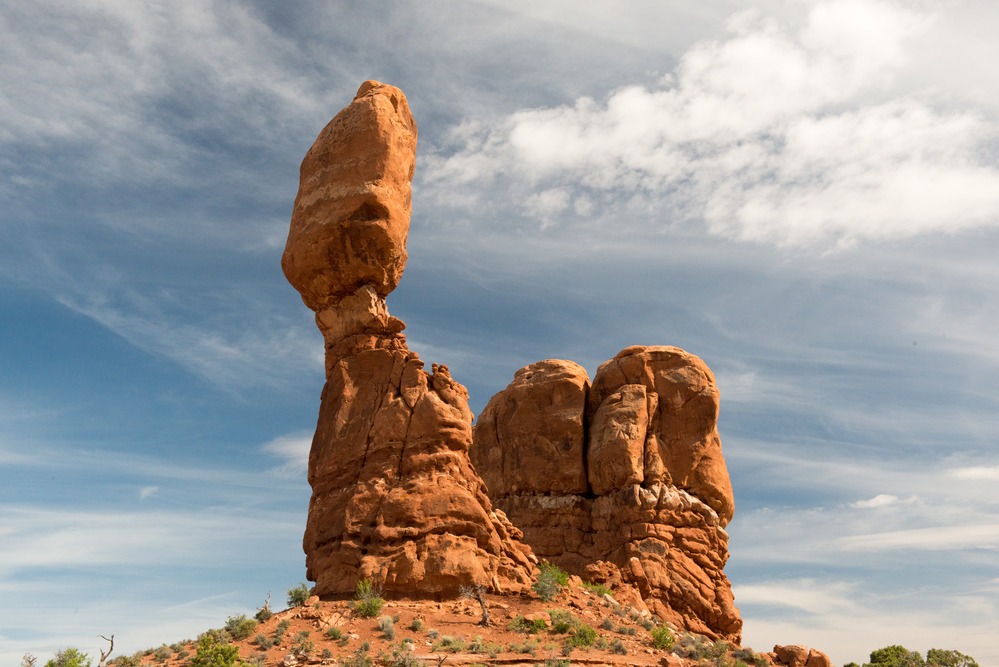
The surrounding fins also change the way space is experienced. Instead of a single grand panorama, there are corridors, interruptions and partial views. The relatively straightforward approach to Landscape Arch gives way to more difficult terrain farther along the trail system. The distinction is physical, not merely a change in scenery.
That intimacy sets Arches apart from the long sweep of the Waterpocket Fold at Capitol Reef. Both are Utah landscapes with powerful geological identities, but one dramatic formation does not stand in for the other. Their differences are the reason to look closely, rather than collect a succession of similar red-rock photographs.

The less conspicuous life of the desert
Much of the park’s vulnerability lies below the famous skyline. The NPS discussion of disturbed land describes living soil crusts that can be damaged by footprints and vehicle tracks. Once broken, the surface becomes more vulnerable to wind and water erosion. Ground that appears bare is not necessarily empty or durable.
The park’s cultural history similarly challenges the idea of an unoccupied wilderness. It acknowledges the ancestral and traditional connections of Native nations, including Hopi, Paiute, Navajo, Ute and Zuni communities. The landscape’s significance cannot be reduced to the arrival of modern sightseers.
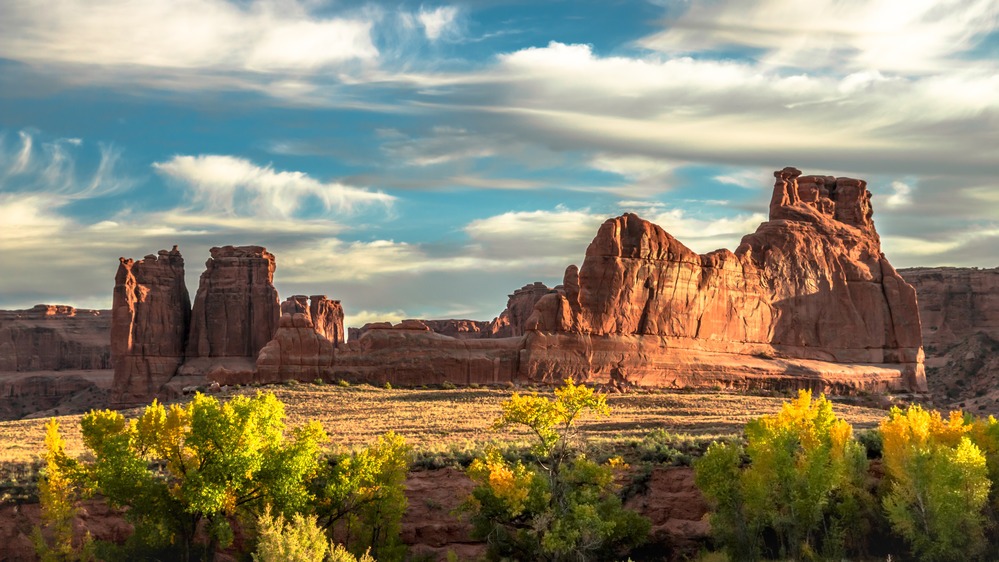
As at White Sands, the most immediately spectacular surface is only one part of the desert’s meaning. At Arches, a more attentive view connects the enormous sandstone opening with the fragile ground beneath it. The celebrated silhouette remains compelling. Understanding what sustains it, and what surrounds it, makes the picture larger.