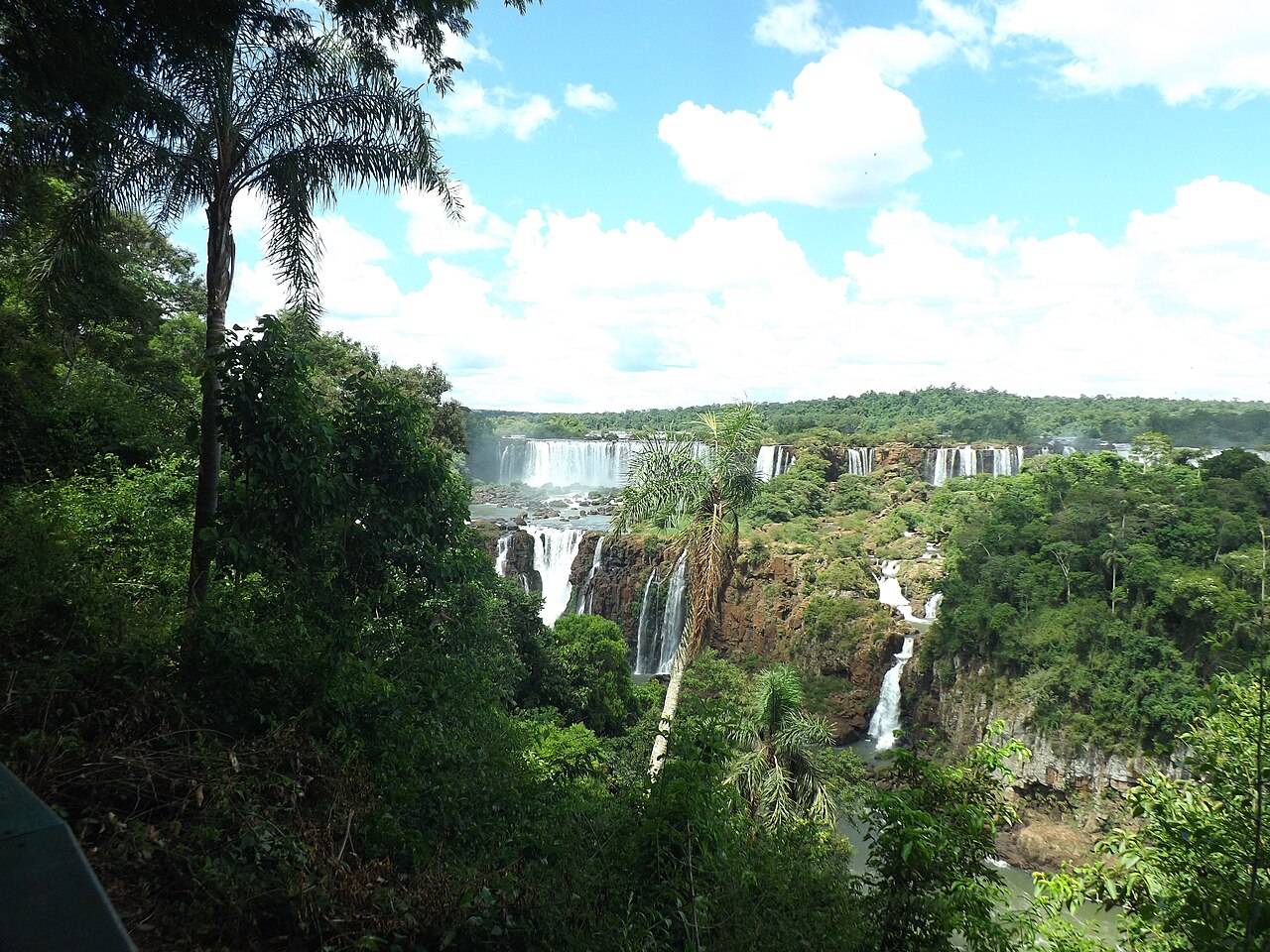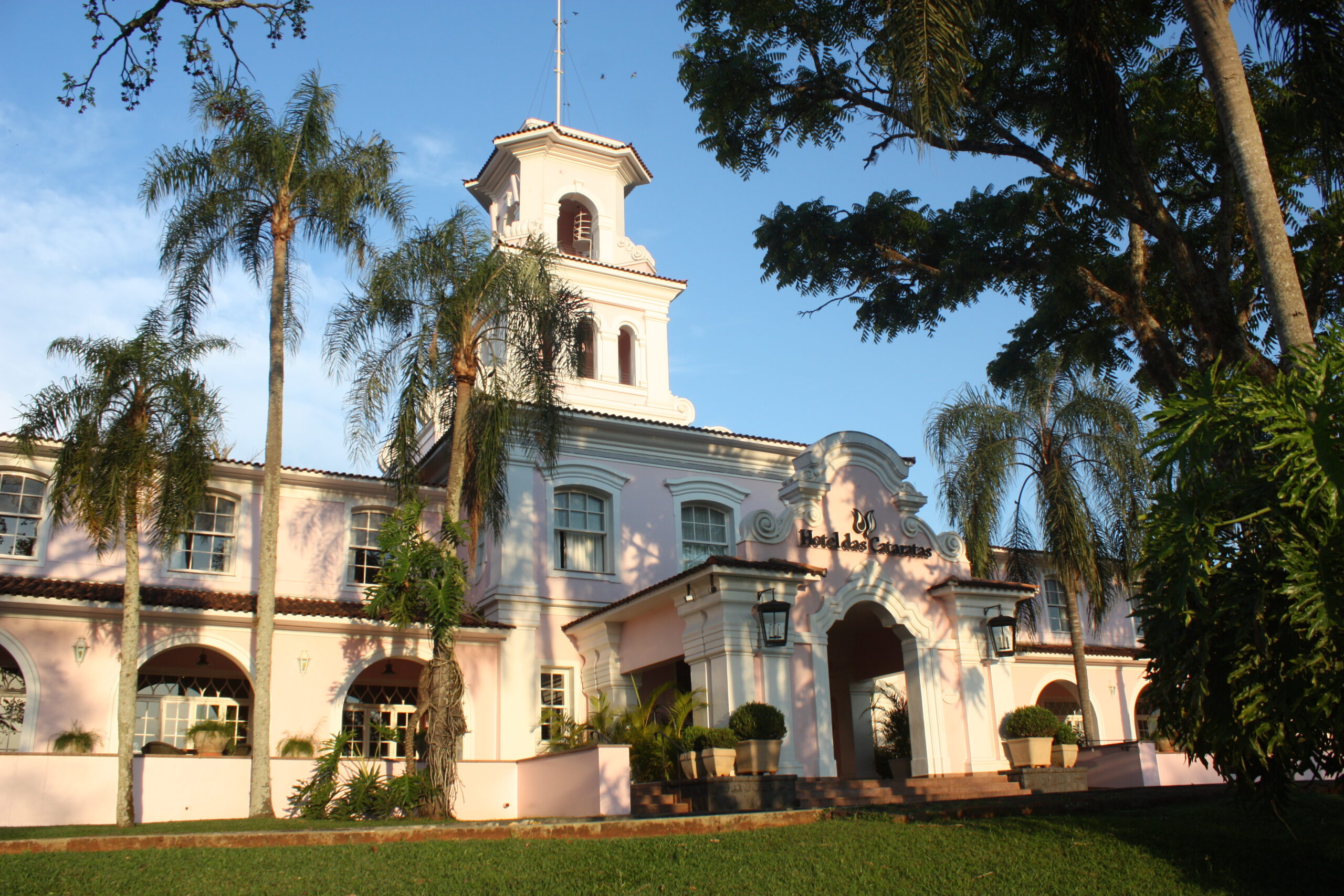
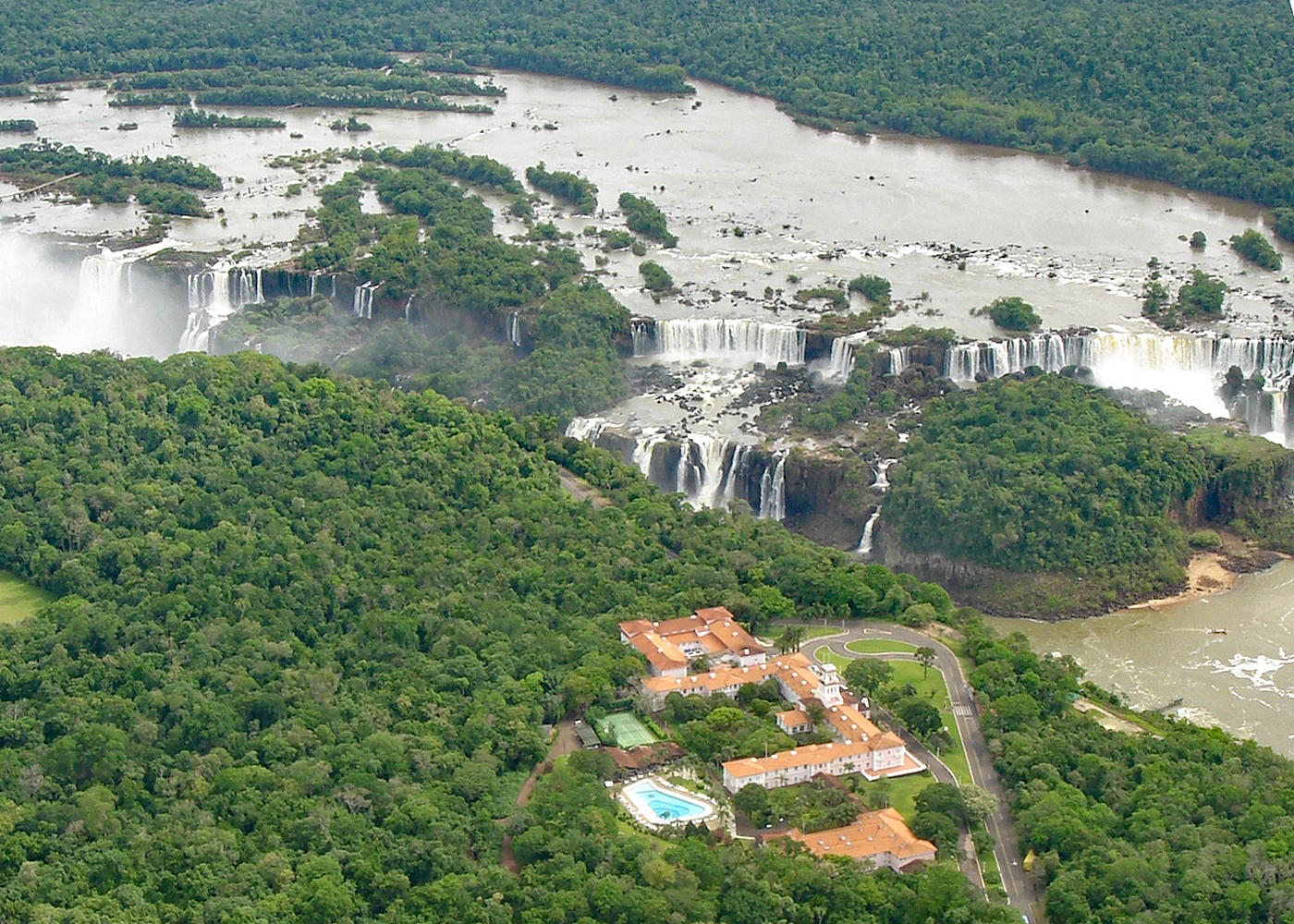
The most valuable thing about Hotel das Cataratas is not behind its pink walls. It is the time outside them. On the Brazilian side of Iguassu Falls, the Belmond property occupies a position that changes the relationship between a hotel and its surroundings: guests sleep inside the national park, rather than arriving with the day visitors and leaving when their excursion ends.

That distinction gives this accommodation its real story. Belmond confirms that overnight guests can reach the falls before and after public visiting hours. The scenery does not become private, and access remains subject to the park’s rules, but the rhythm changes. A waterfall that is usually encountered as the centrepiece of a sightseeing day can instead become a place to return to, in different light, without another journey from town.

A pink landmark in a much larger landscape
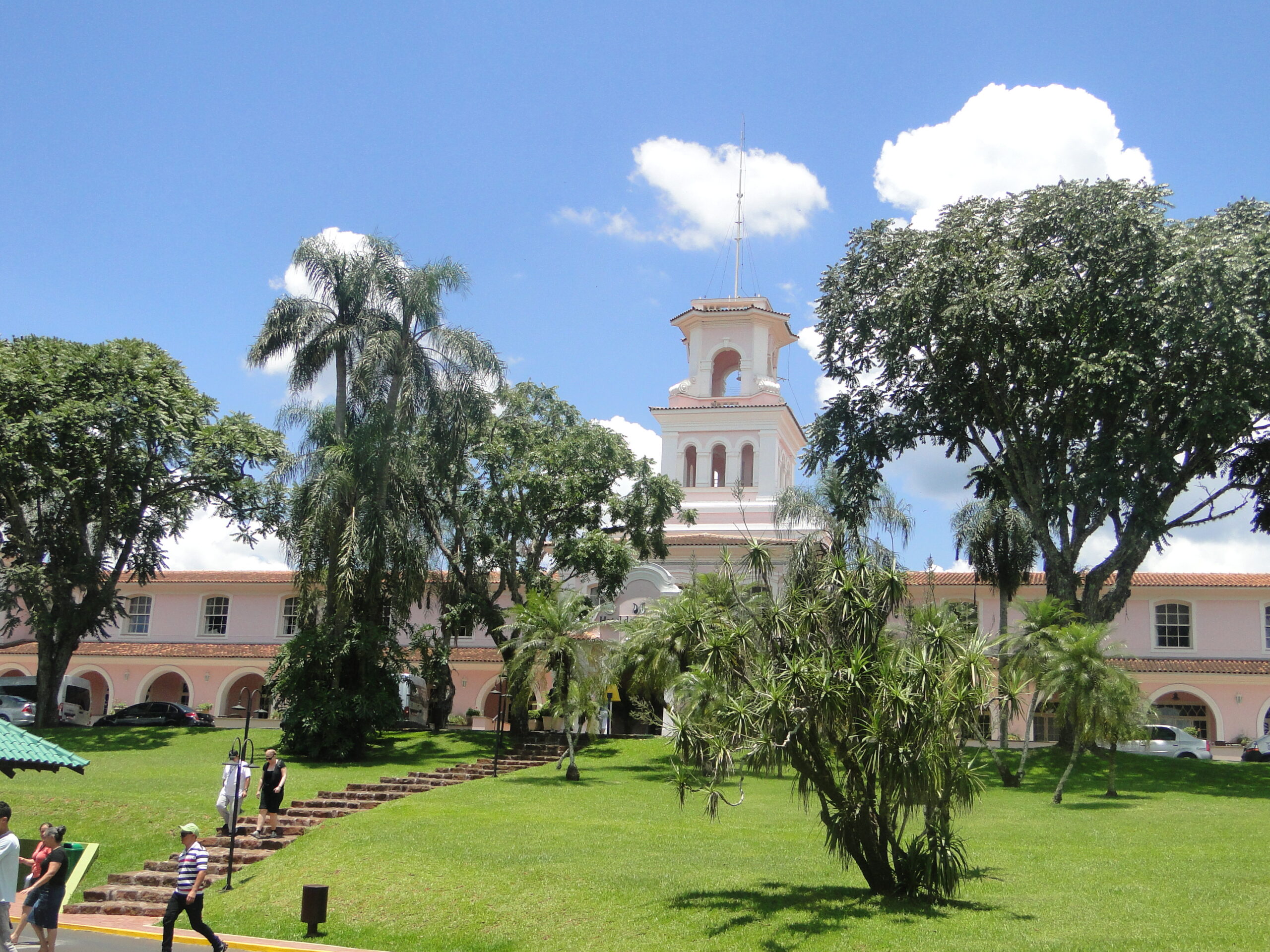
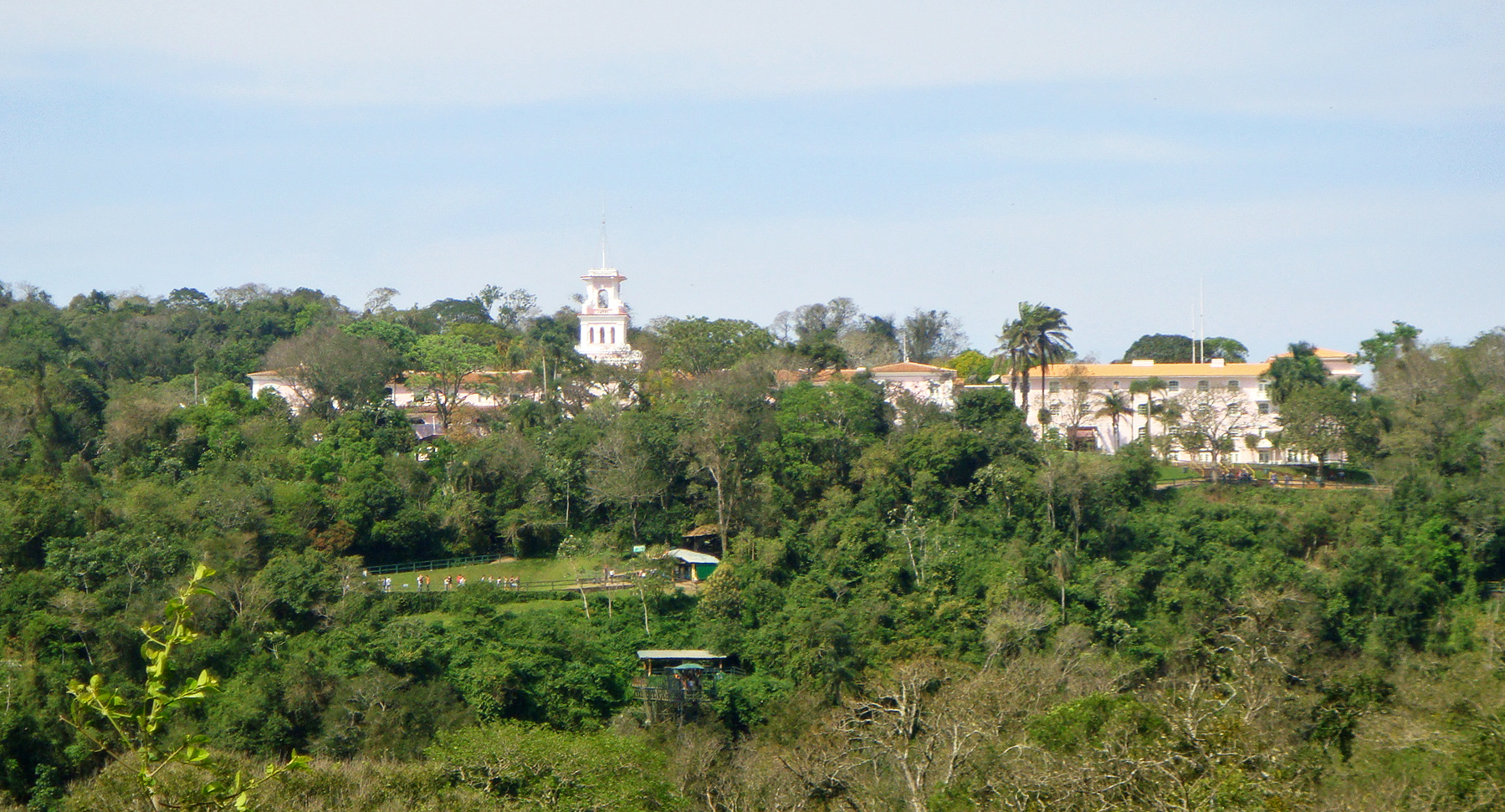
Seen across the river, the hotel looks surprisingly small. Forest surrounds its long, low outline; above it rises a modest tower, rather than the silhouette of a modern resort block. According to Belmond’s historical account, the property opened in 1958 with 62 rooms. Further wings followed in 1971 and 1982. Its Portuguese-colonial-inspired appearance belongs to a twentieth-century hotel, not to a surviving colonial mansion.
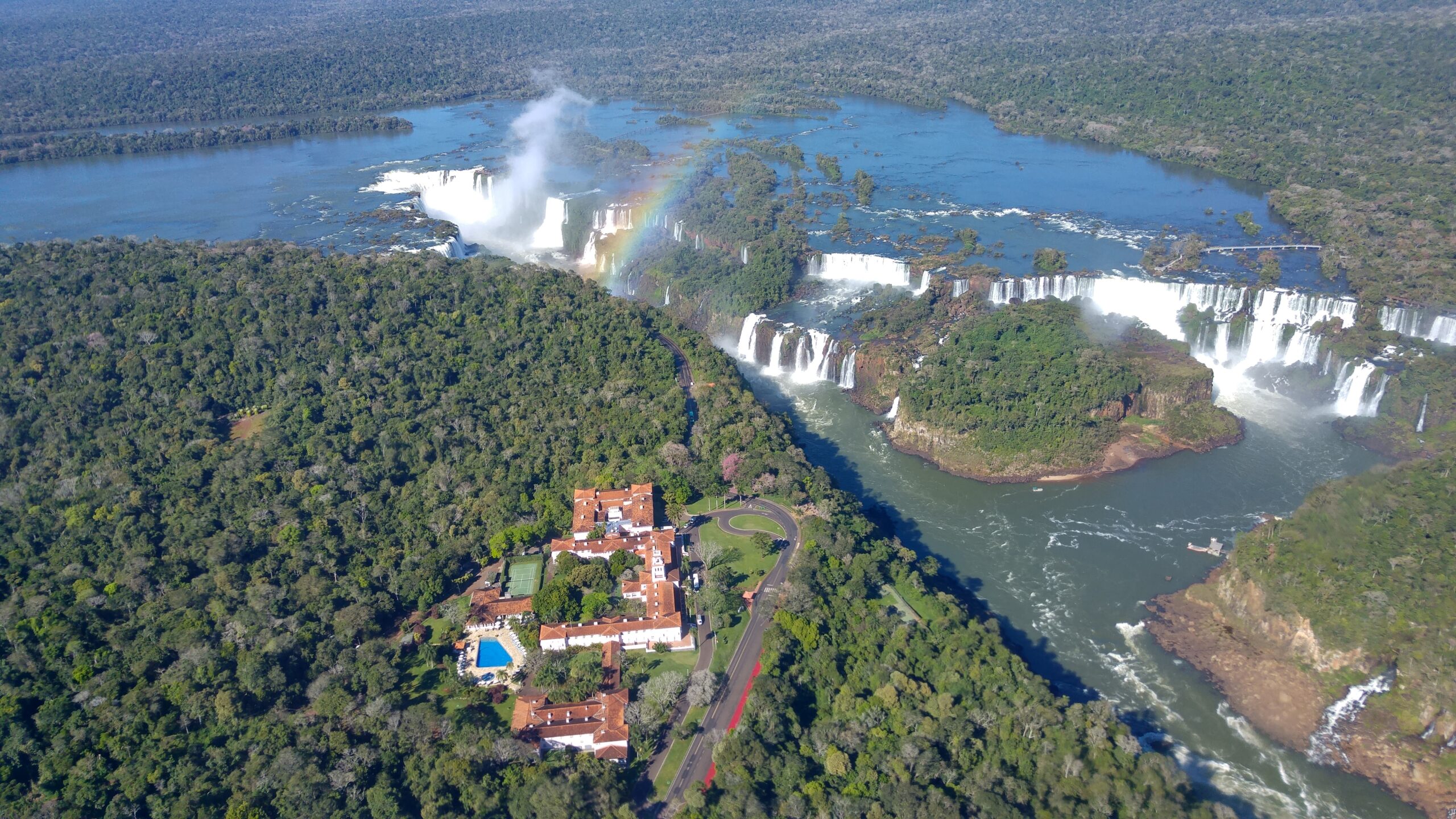

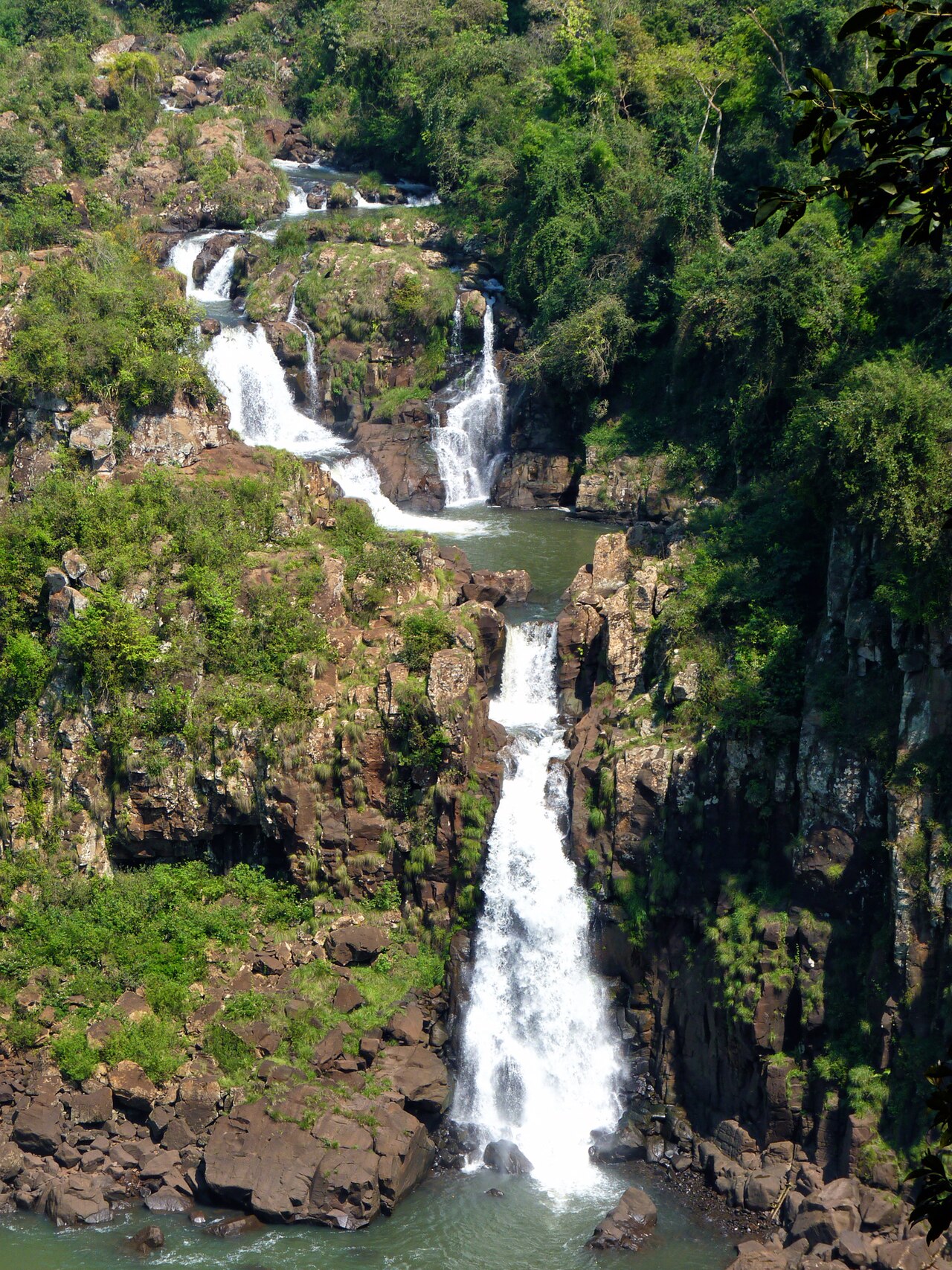
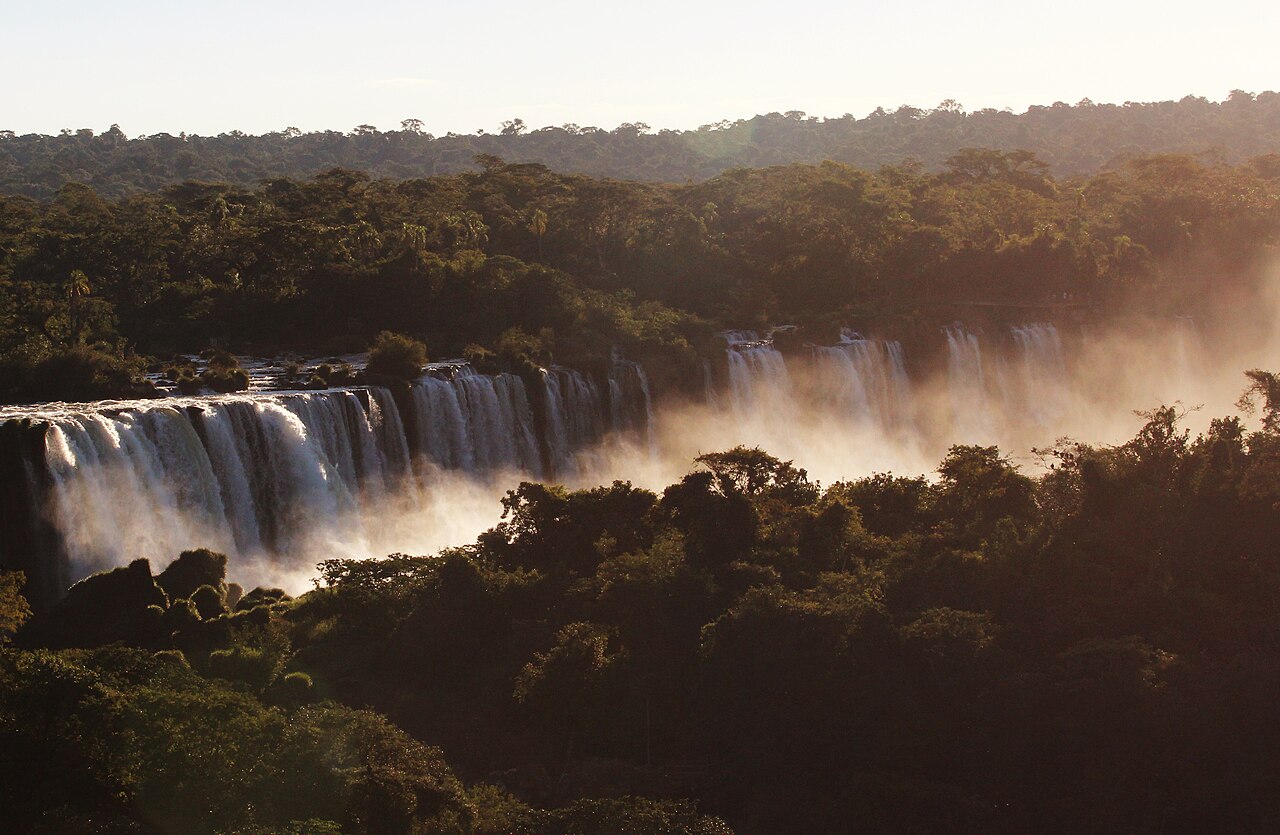
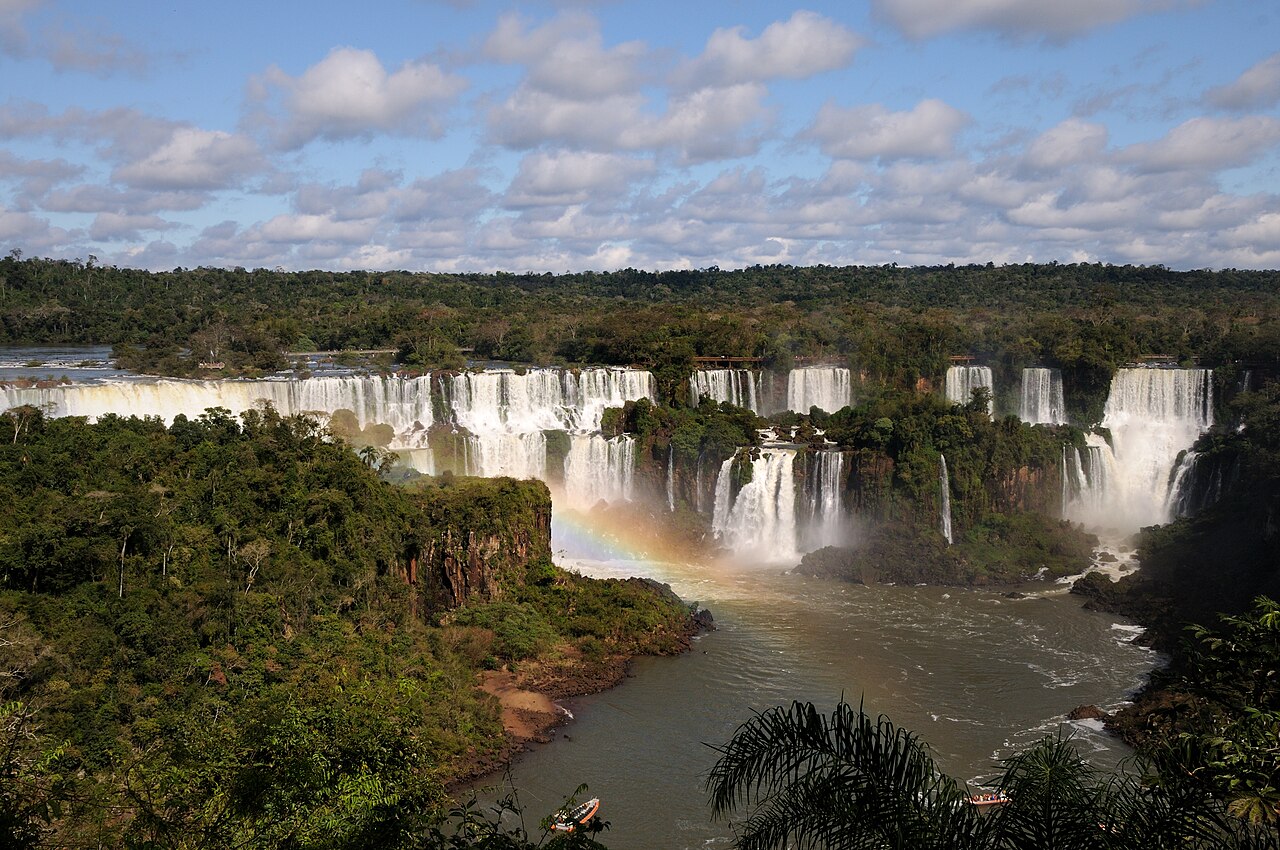
The distinction matters in a place where architecture is easily overshadowed by geography. UNESCO describes Iguaçu National Park as part of a major surviving expanse of the interior Atlantic Forest. The waterfalls shared with Argentina stretch for approximately 2.7 kilometres. The protected landscape is not simply the hotel’s backdrop: it is the reason for the journey, and the reason a stay here is unlike an ordinary resort holiday.
Our feature on Iguaçu Falls in Brazil explores that wider setting. At the hotel, the same landscape is experienced at a different pace. Returning from the river to a garden or terrace does not require abandoning the park altogether.

Rooms designed to retreat from the spectacle
The current hotel listing gives 176 rooms and suites. They are not interchangeable observation platforms. Belmond’s accommodation collection runs from rooms to larger suites, while individual categories distinguish garden, forest and waterfall outlooks. Anyone booking primarily for the view should choose the named room category rather than assume that every window faces the cascades.

Inside, the hotel presents a quieter domestic vocabulary: wooden furnishings, pale fabrics and blue-and-white bathroom details appear in its published room photography. It is a deliberate contrast with the monumental landscape outside. This is not an account of an overnight inspection; the room descriptions here are based on the hotel’s own current material, rather than a claimed personal stay.

Elsewhere, the heated outdoor pool, tennis courts and spa give the day alternatives to another walk. Dining follows the same contrast between occasion and informality: Restaurant Y offers creative Brazilian cooking, while Ipê is the more relaxed poolside setting. The point is less to fill every hour than to allow an afternoon at the property without treating it as time lost from the falls.

The forest sets the terms
A location inside a protected area also brings limits. The hotel’s published arrival information says private cars generally remain outside the park, with authorised transport completing the journey. Arrangements should therefore be confirmed before arrival, particularly for travellers landing across the border in Argentina rather than at Brazil’s Foz do Iguaçu airport.
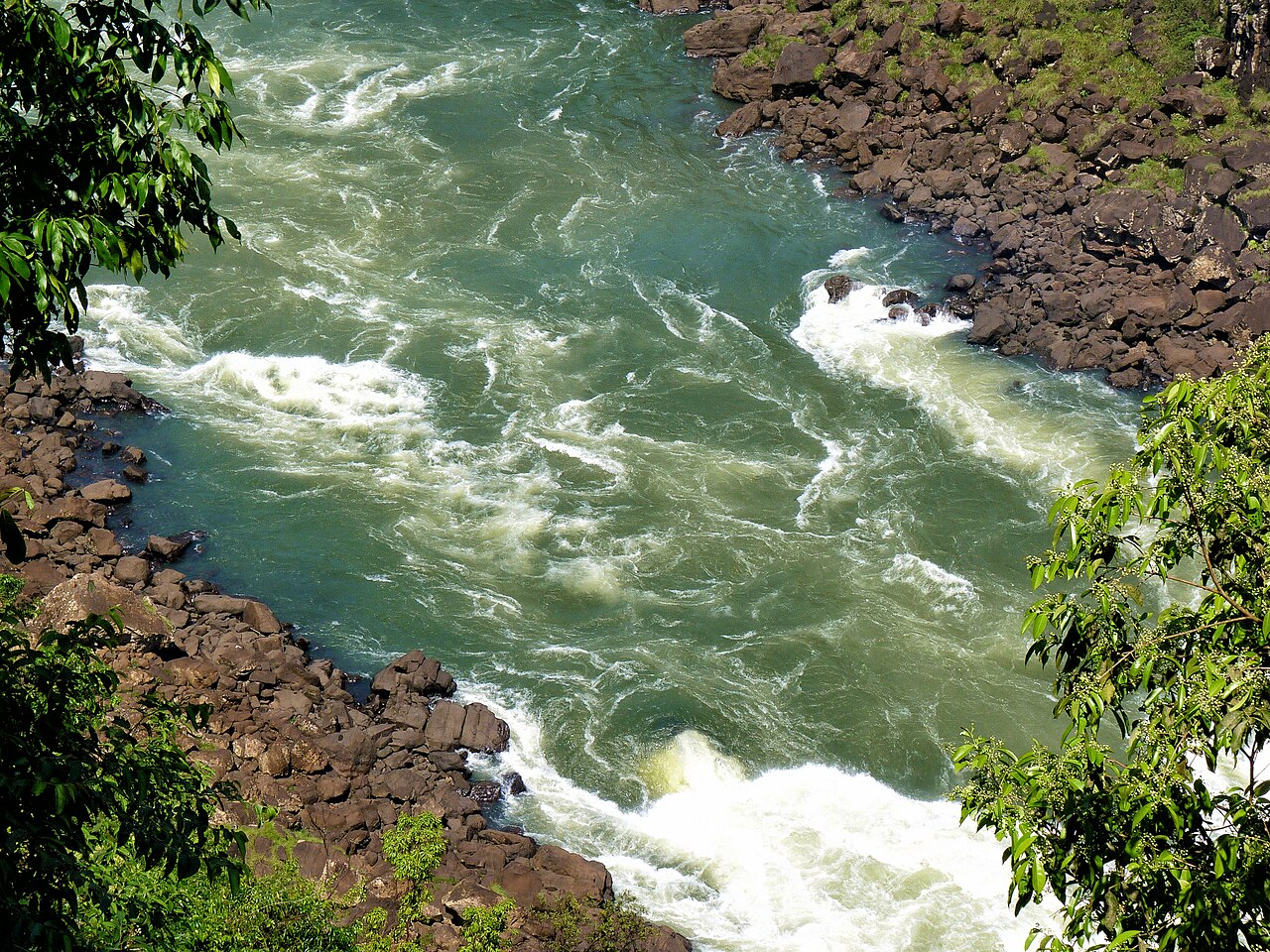
The hotel’s experience programme extends beyond the familiar waterfall circuit to birdwatching, forest bathing and guided outings. These are opportunities, not promises of wildlife sightings or universally available departures. Weather, river conditions and conservation rules remain more important than any itinerary.

For a broader Brazilian journey, the contrast with Copacabana Palace in Rio is striking: one hotel faces a city’s public waterfront, the other sits inside a protected forest. A stay can also be considered alongside Ouro Preto’s historic streets, another expression of Brazil’s relationship between landscape and built form.

At Cataratas, however, the lasting distinction is simpler. The hotel offers somewhere to remain when a conventional excursion would already be ending. Its appeal lies in exchanging a hurried encounter with the falls for the possibility of another look.