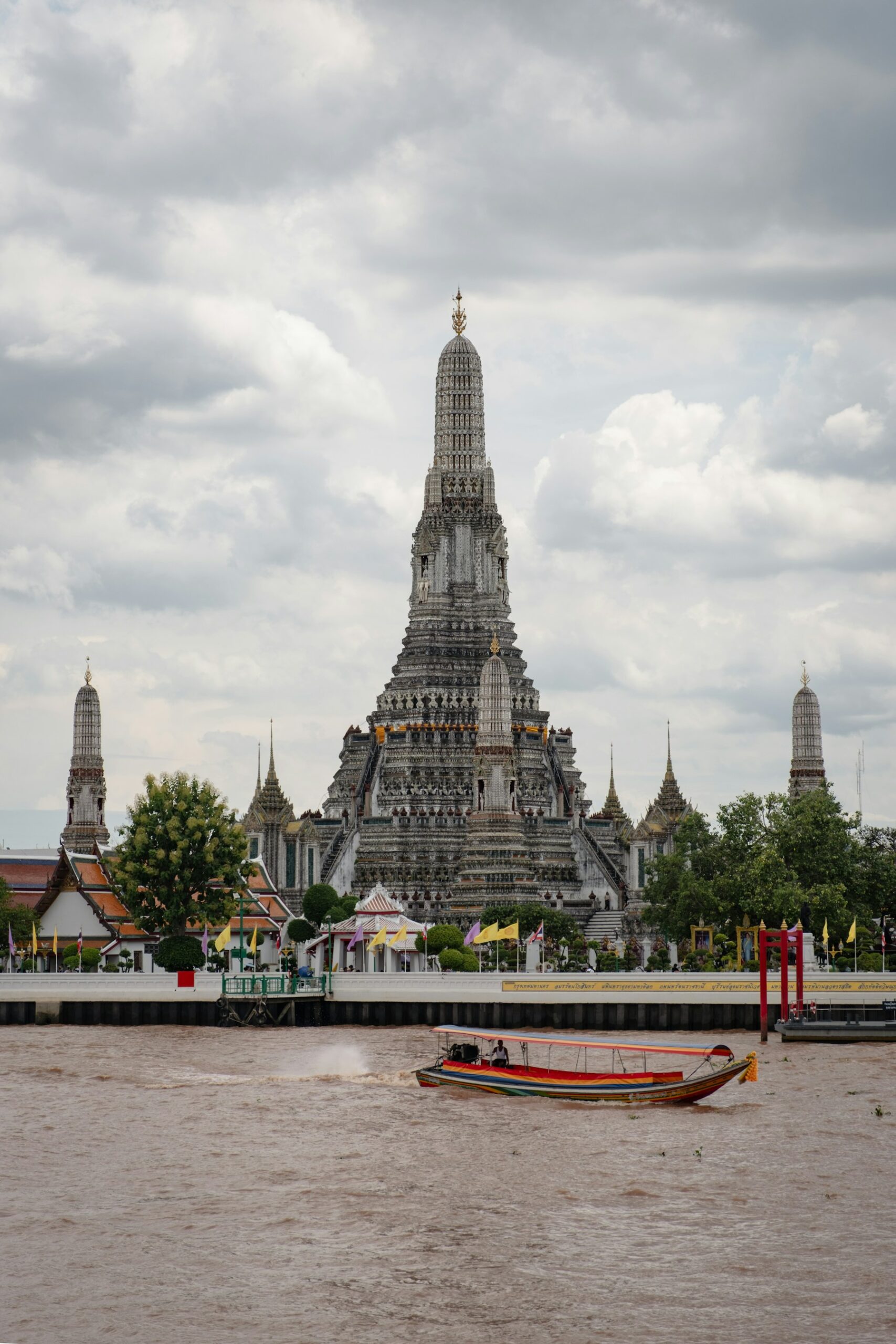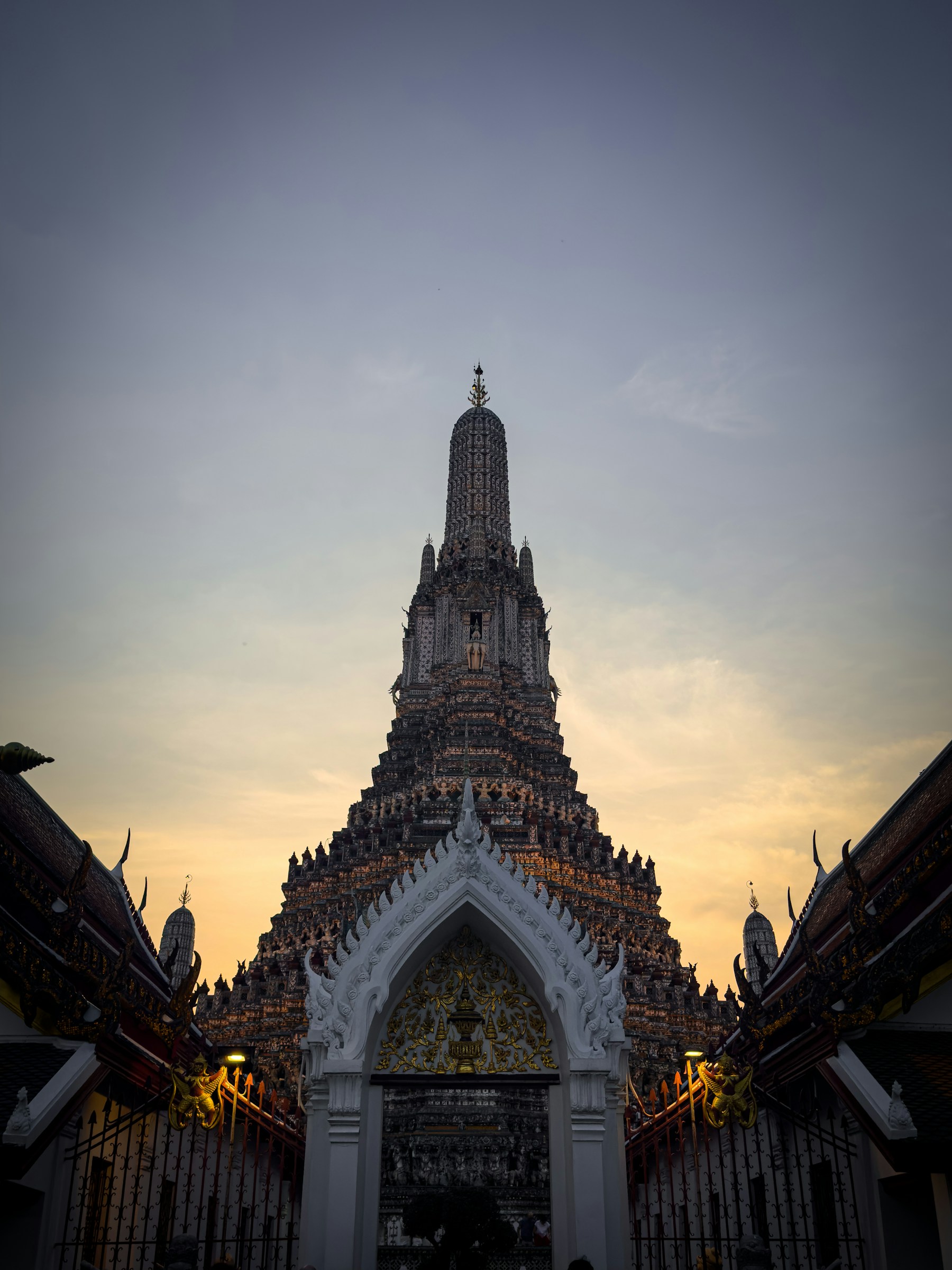
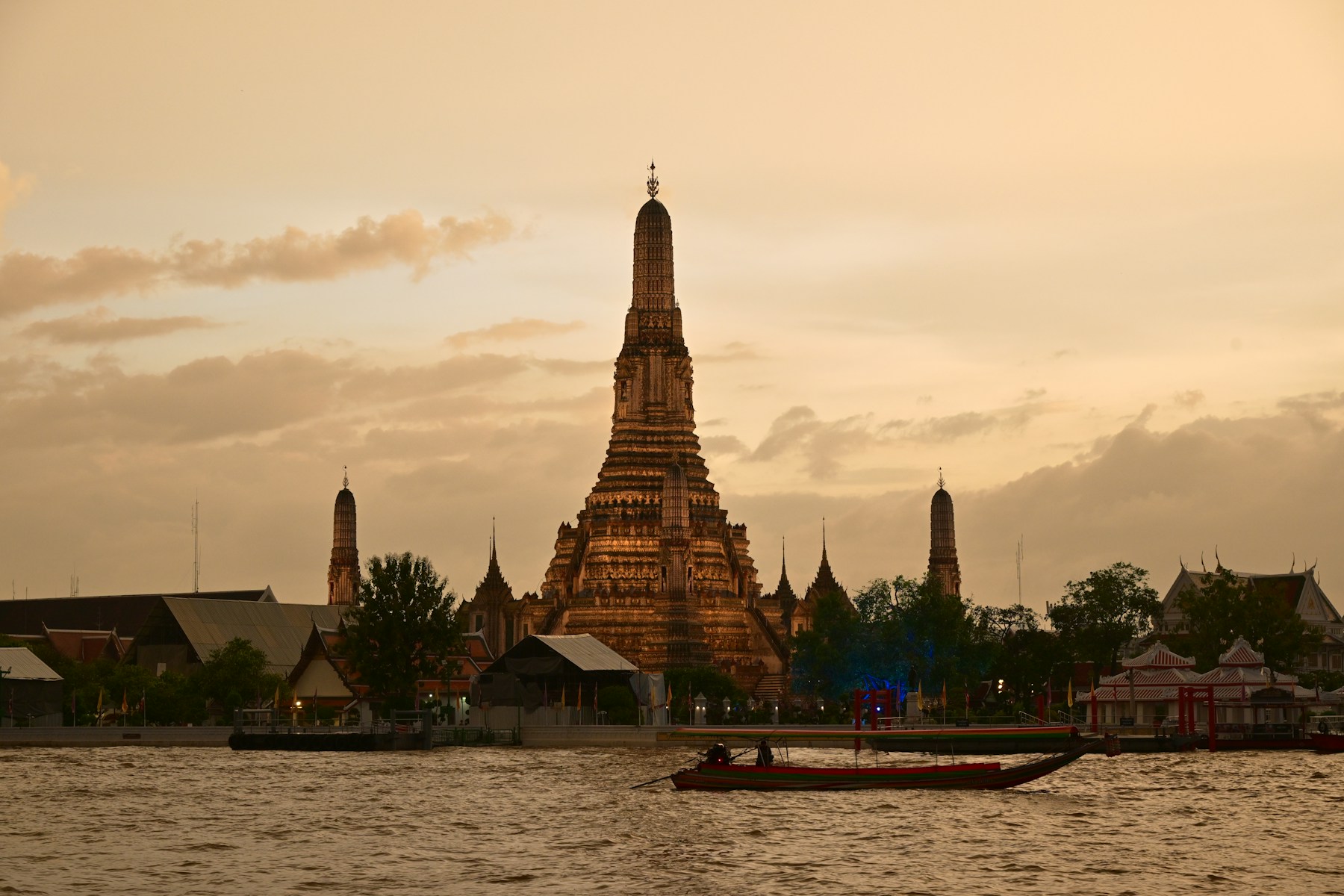
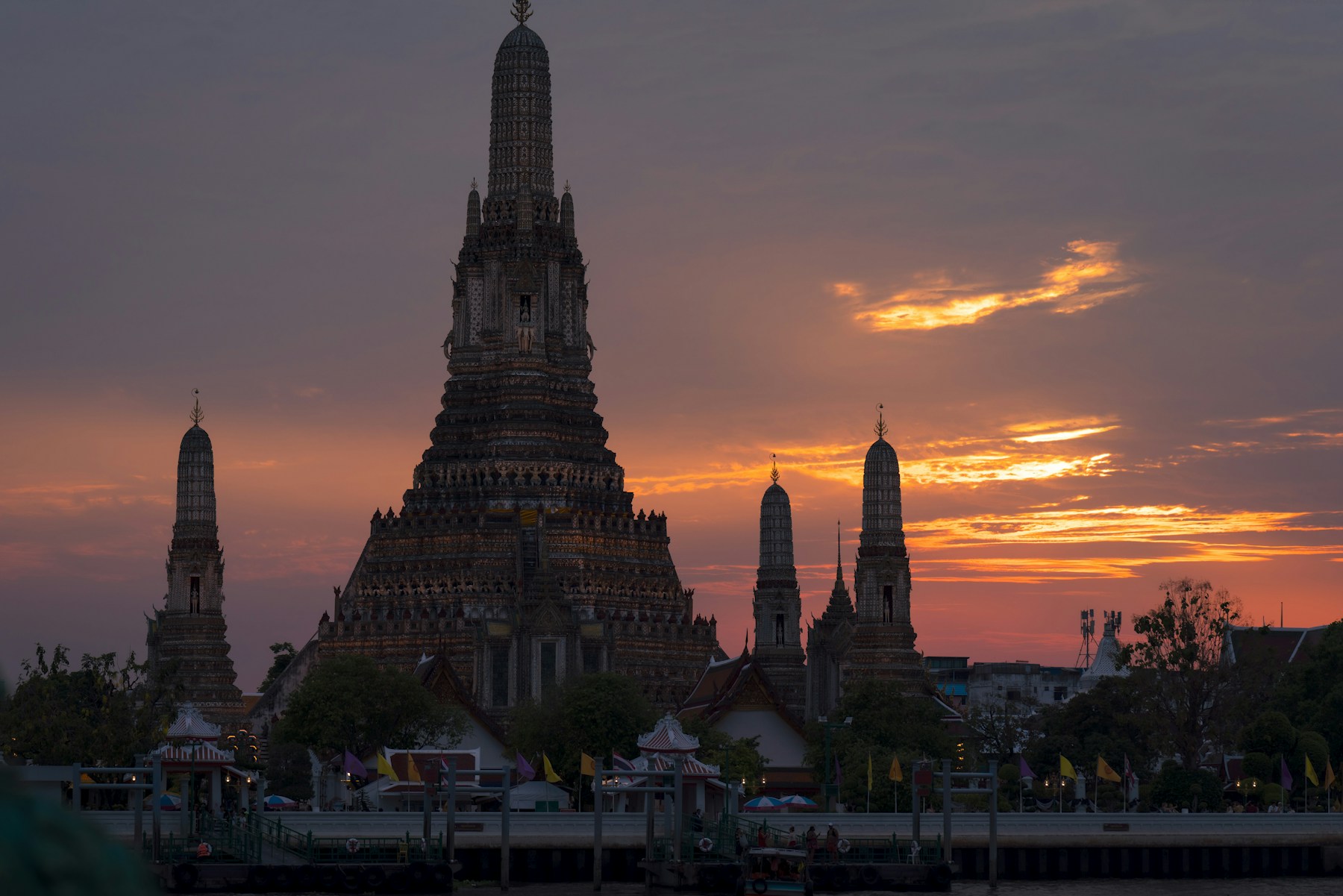
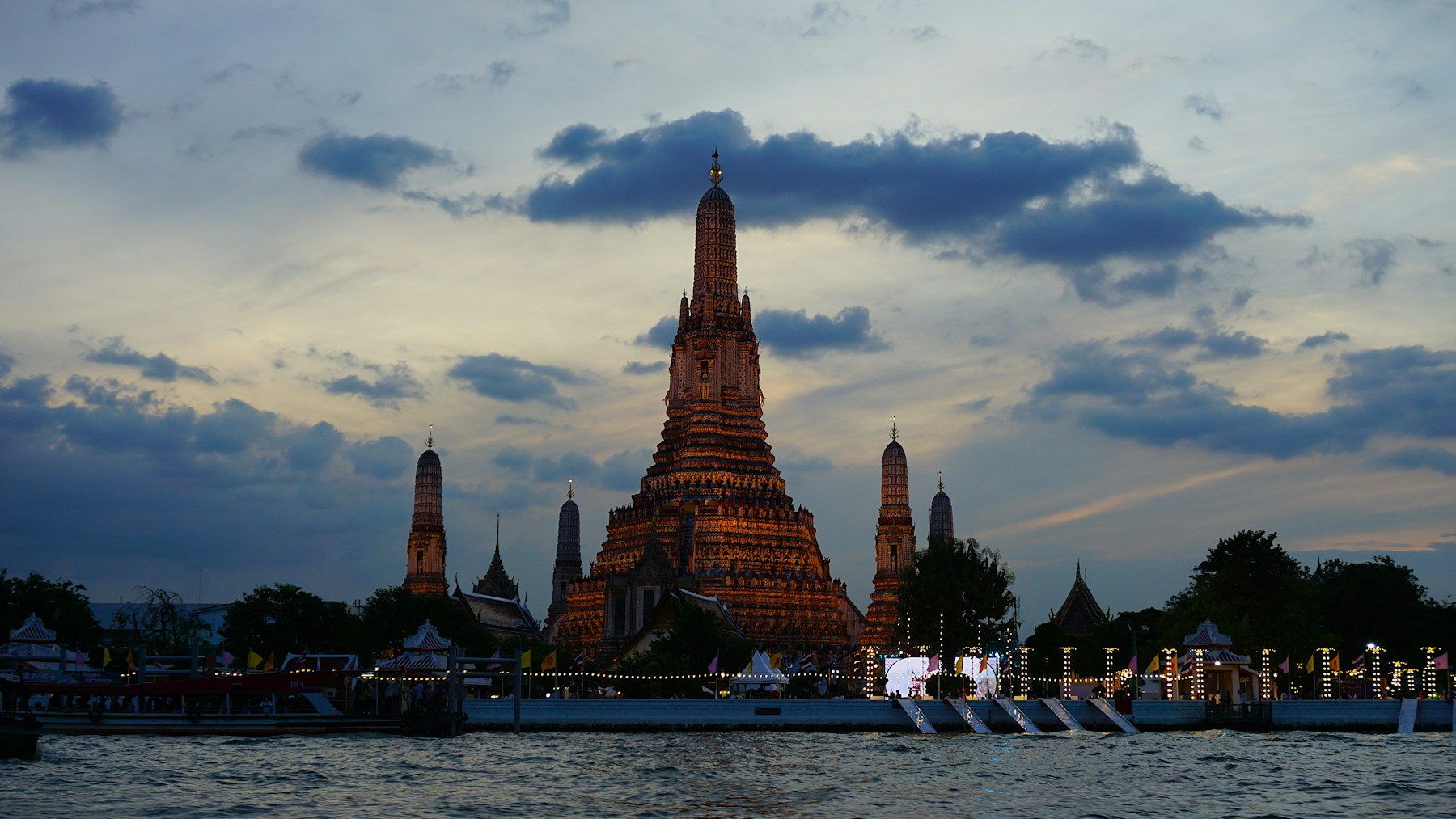
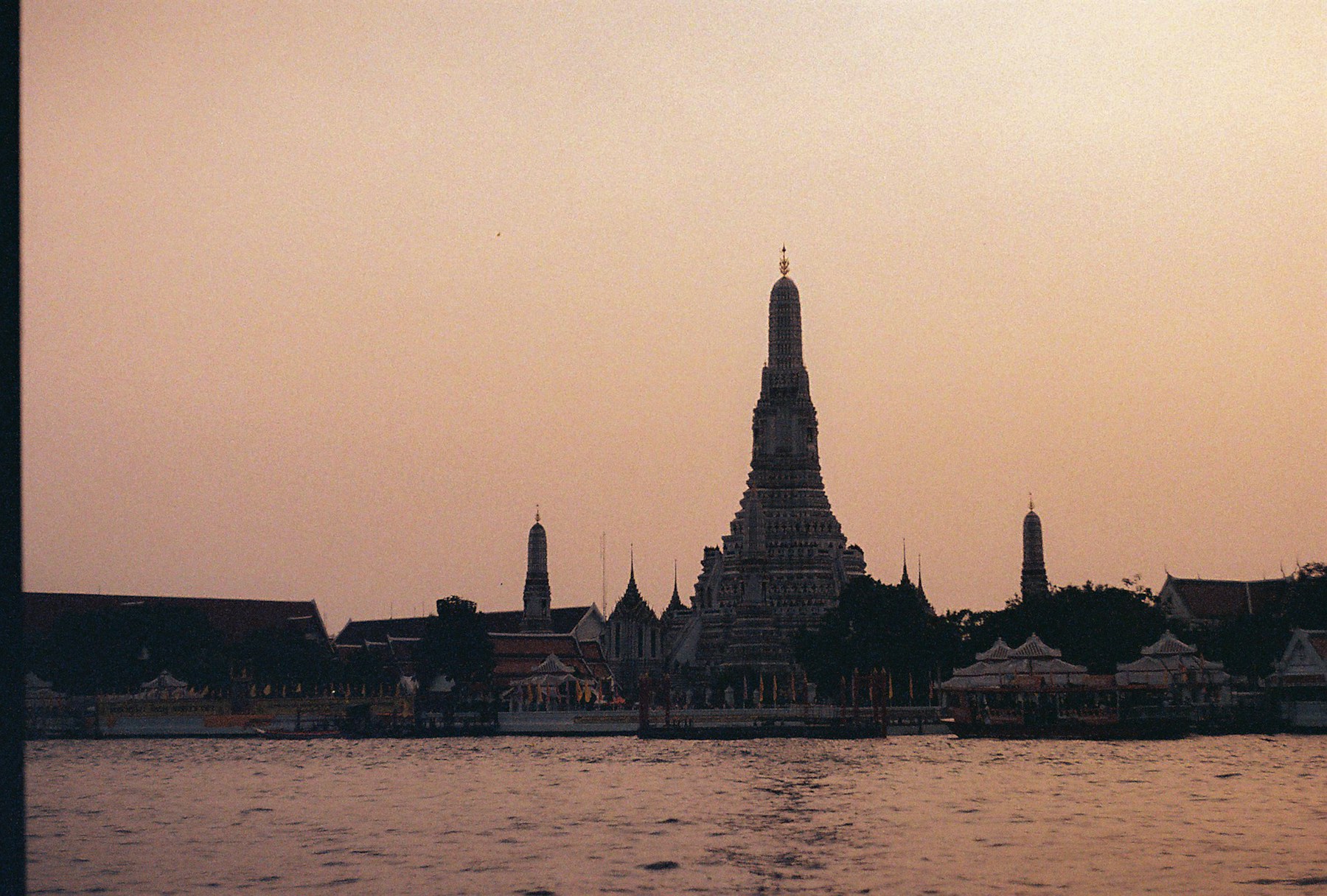
Wat Arun is easiest to recognise from across Bangkok’s Chao Phraya River, where its central prang rises above a cluster of smaller towers. Yet the long view only tells half the story. Up close, the surfaces become a dense arrangement of porcelain, sculpture and repeated patterns. Plan for both distances: time inside the temple grounds, followed by a look back from the water or opposite bank. That simple choice makes a better visit than arriving only for a sunset photograph.
Start with the temple, not the skyline
Wat Arun stands on the river’s west bank, in Thonburi. The Tourism Authority of Thailand’s temple listing traces major work through the reigns of Rama II, Rama III and Rama IV. The result is a landmark associated with Bangkok’s royal history, but it remains a religious place rather than an outdoor stage set.
Give yourself around ninety minutes to two hours as a comfortable planning allowance, with extra time for the journey. You may need less if you only want a short circuit, or more if architecture is your main interest. Resist filling every remaining hour with another temple: heat, queues and river crossings can make a tightly packed itinerary feel much longer than it looks on a map.
Know the admission and opening hours
The Thai tourism authority’s Japanese-language visitor page lists opening from 08:00 to 18:00 and admission of 200 baht. The Thai government’s visitor information specifies that the 200-baht charge applies to foreigners, with free entry for Thai visitors. Recheck before travelling and follow any notices at the entrance, particularly during religious ceremonies.
Carry baht for admission and local transport rather than making the day depend on a particular card being accepted. Arriving early is a sensible way to avoid doing the most exposed walking at midday, although it does not guarantee empty grounds. A late-afternoon visit can work too, provided the temple visit comes before the evening view and you leave adequate time before closing.
Choose the right boat journey
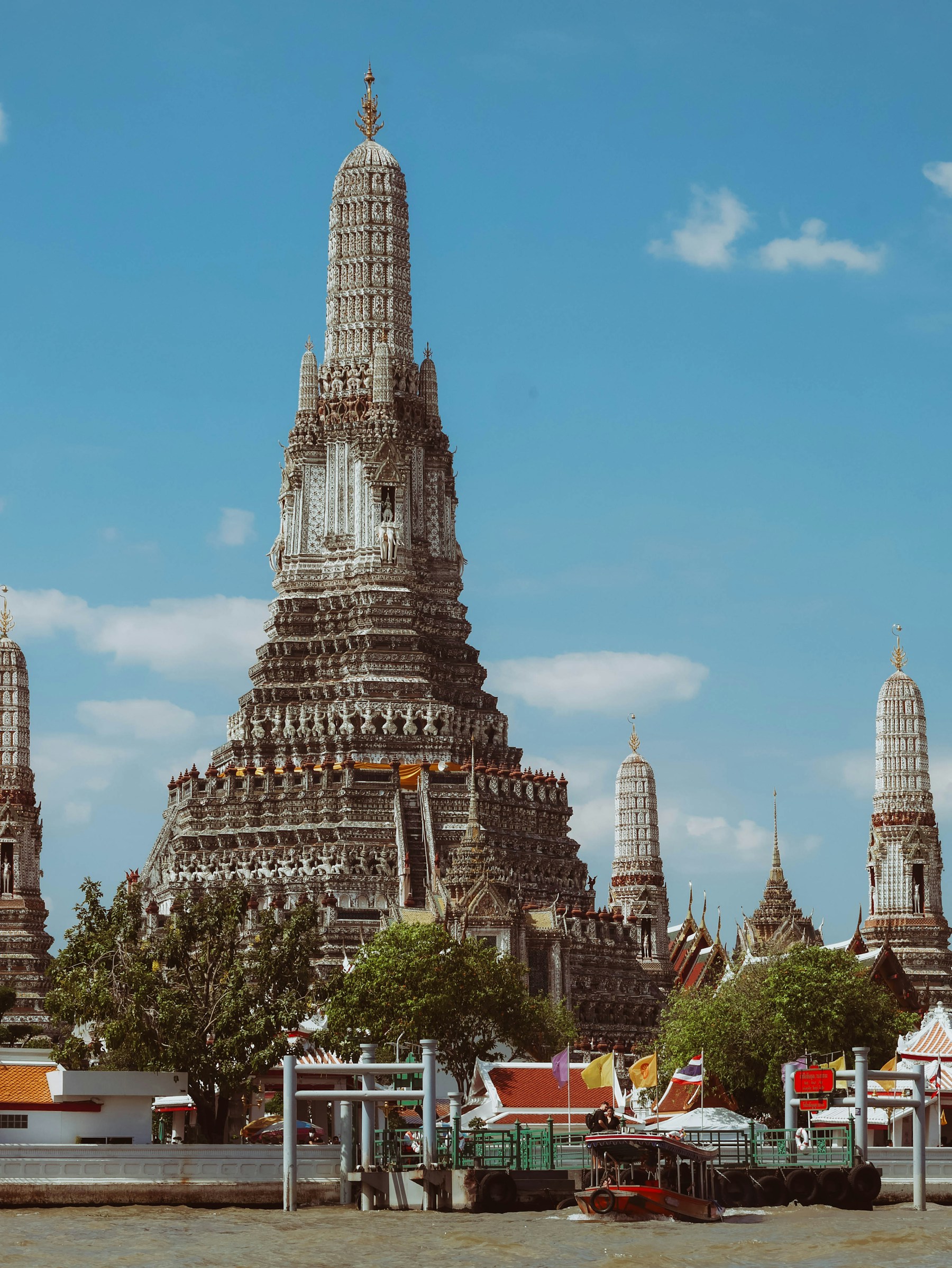
There is a difference between a short cross-river ferry and a sightseeing boat running along the river. If you are already near Tha Tien, opposite Wat Arun, check the local crossing and its current fare at the pier. If you are coming from further along the river, the Chao Phraya Tourist Boat operator includes Wat Arun among its stops. Check the day’s route and last departure before buying a pass.
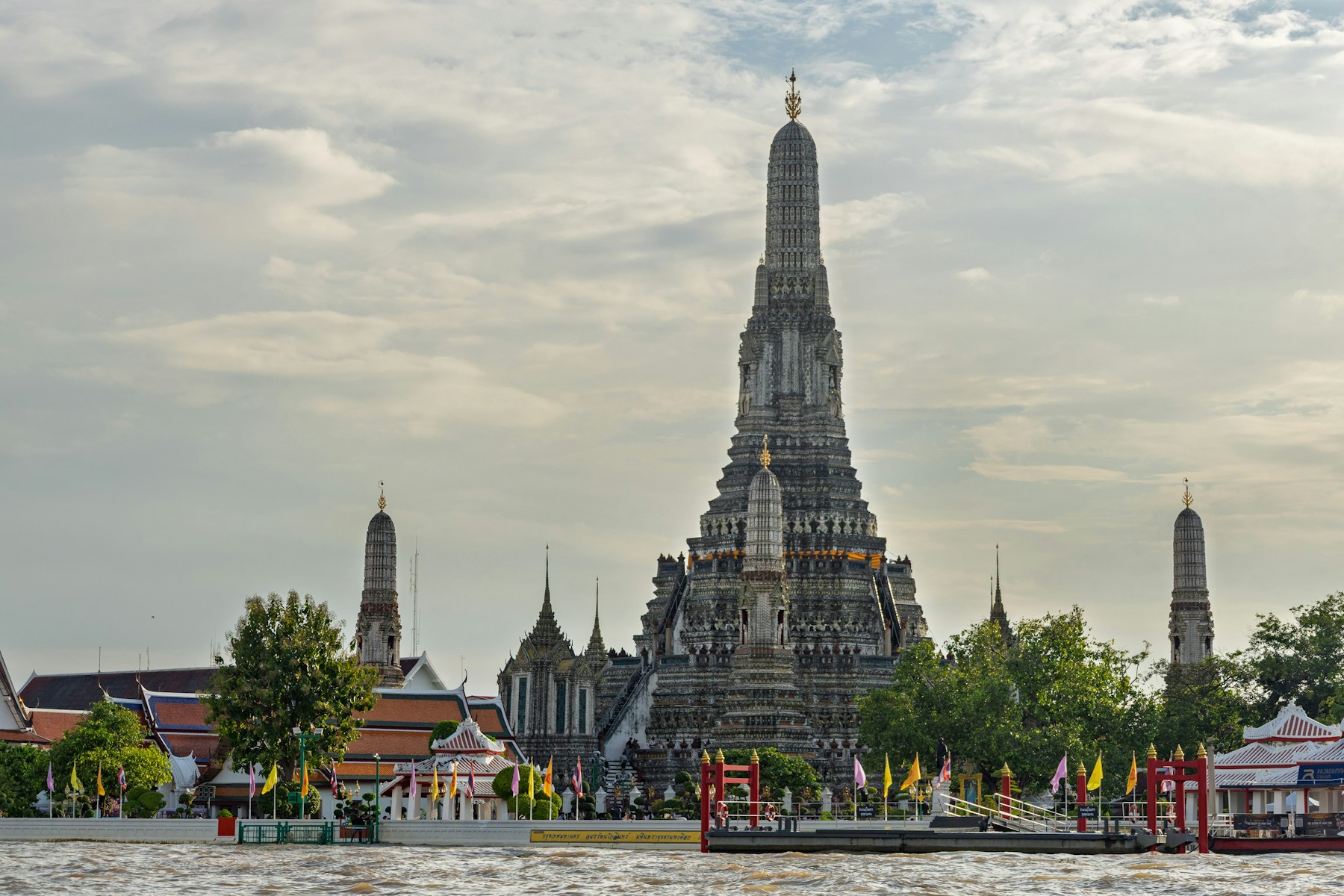
Do not assume every boat calling at a busy pier serves the same route. Confirm the destination with staff, keep your ticket handy and allow room for boarding passengers. Travellers with mobility needs should ask about the precise boat and pier arrangement in advance: a river journey can involve moving gangways and changes in level. A road arrival may be the more manageable choice for some visitors.
Slow down beside the prang
The central tower’s decoration deserves more attention than a single wide-angle photograph. Look for changes in colour, floral patterns and the figures supporting the tiers. Thailand’s UNESCO Tentative List submission for the Phra Prang explains the porcelain decoration and imagery associated with Mount Meru. This is a tentative-list entry, not an inscription on the World Heritage List.
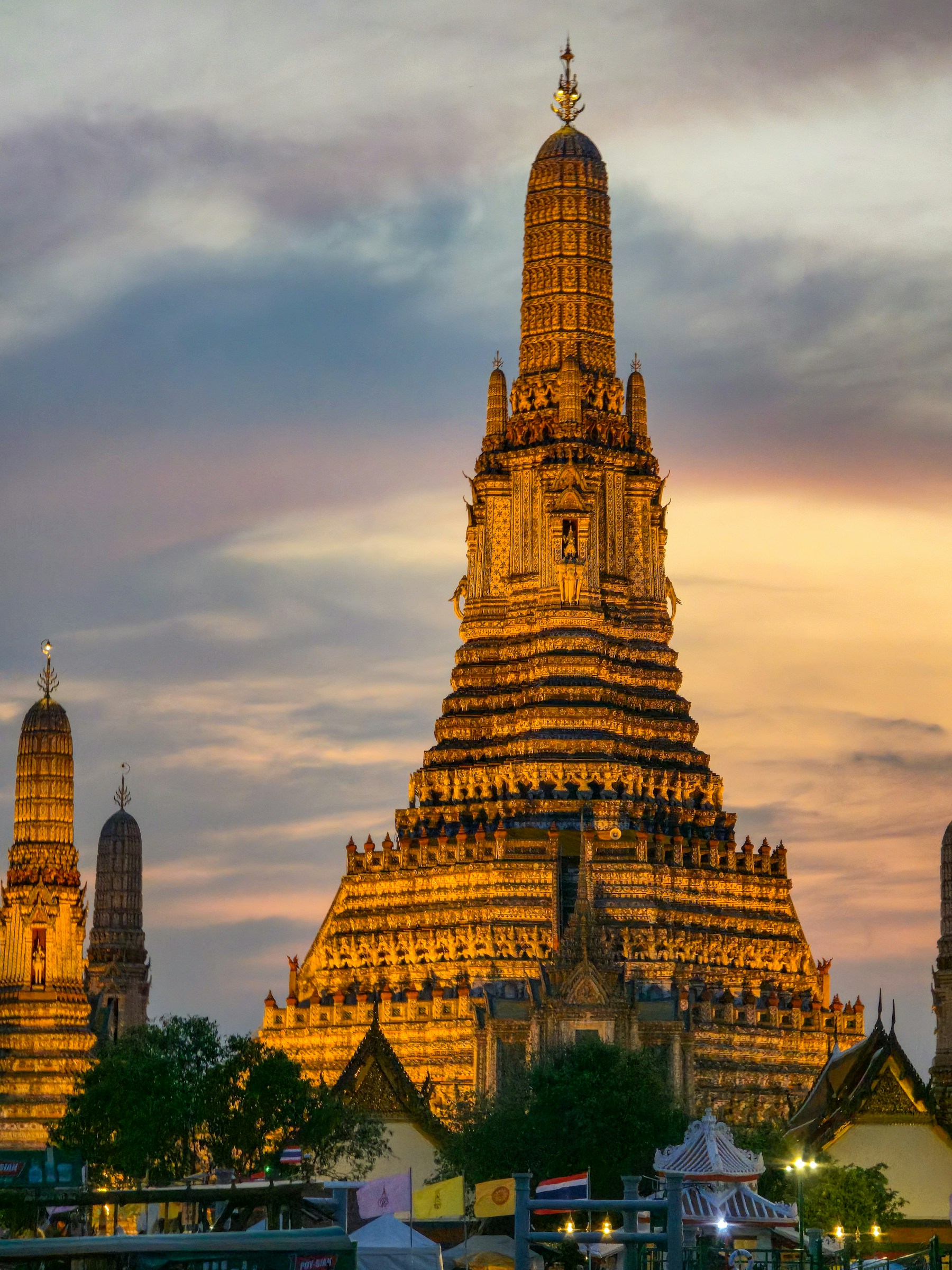
Move around the permitted paths and compare the main tower with the smaller structures instead of aiming only for height. Access to steps and terraces can change, so follow barriers and staff directions. Do not plan on climbing to the summit. Steep or wet steps need care, and a good view of the architecture does not depend on reaching every accessible level.
Dress for a working temple
Choose clothing that covers shoulders and knees, and shoes that are comfortable for walking but easy to remove where required. Keep voices low near worshippers, follow photography notices and ask before photographing people closely. The small practical decisions matter: carry drinking water, protect yourself from the sun and put the camera away while negotiating steps.
Traditional Thai outfit rentals are part of the visitor scene, but they are optional. If you choose one, agree the price, return time and any extra charges before changing. A photograph is not a reason to block a stairway or interrupt worship. The temple is most rewarding when visitors make room for its everyday purpose as well as its appearance.
Build a manageable Bangkok day
After the visit, leave space for a meal rather than rushing straight to another ticket gate. Our Bangkok street-food guide can help shape that part of the day. On a longer holiday, our first-time Thailand itinerary puts the capital in context without requiring every famous sight in one afternoon.
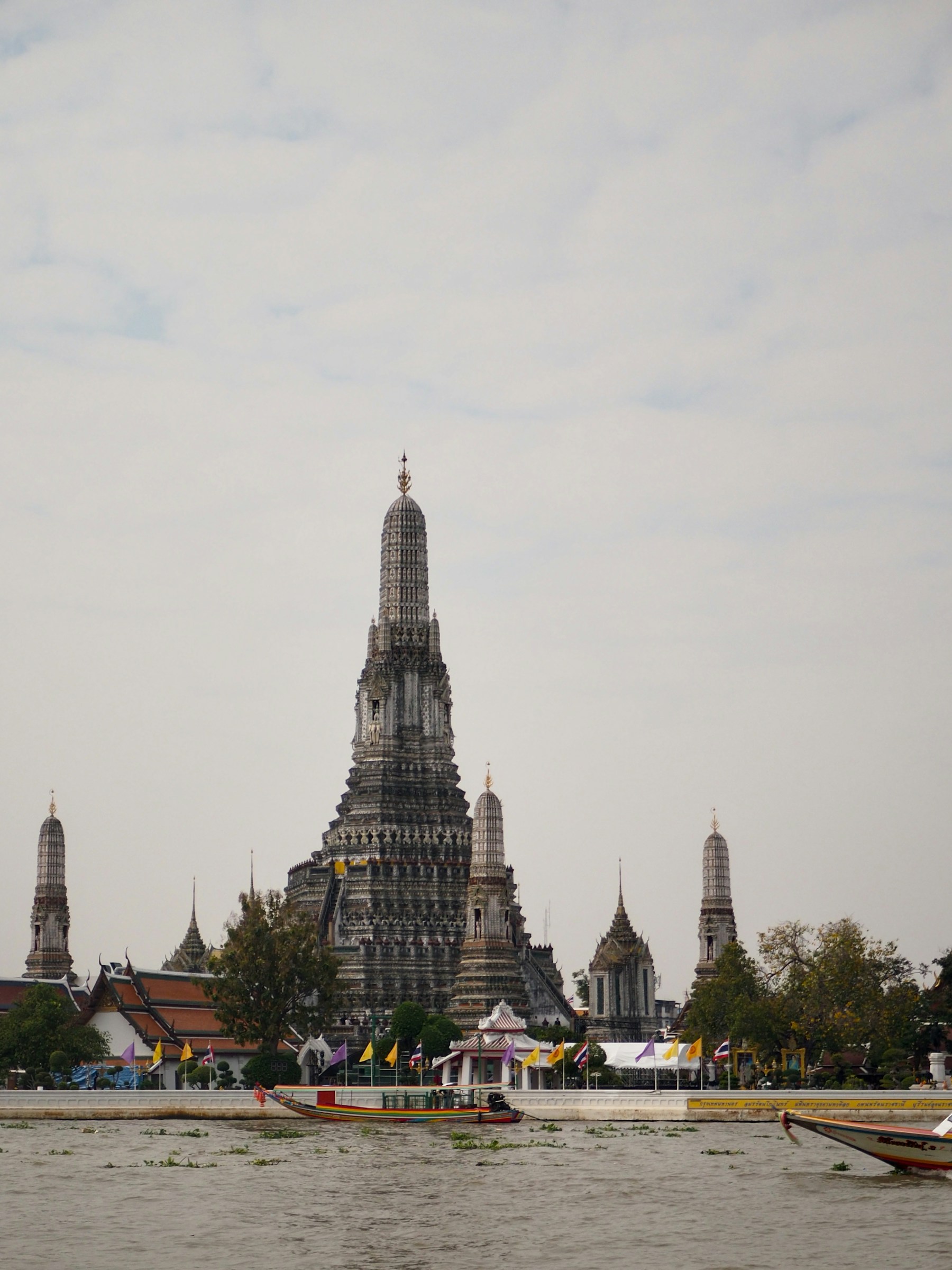
For a separate day devoted to earlier royal history, consider our Ayutthaya Historical Park guide. Wat Arun itself is best finished with a little stillness: step back, watch boats pass and notice how the prang changes as the light softens. The view across the river is a satisfying conclusion once you have seen the detail behind the silhouette.