

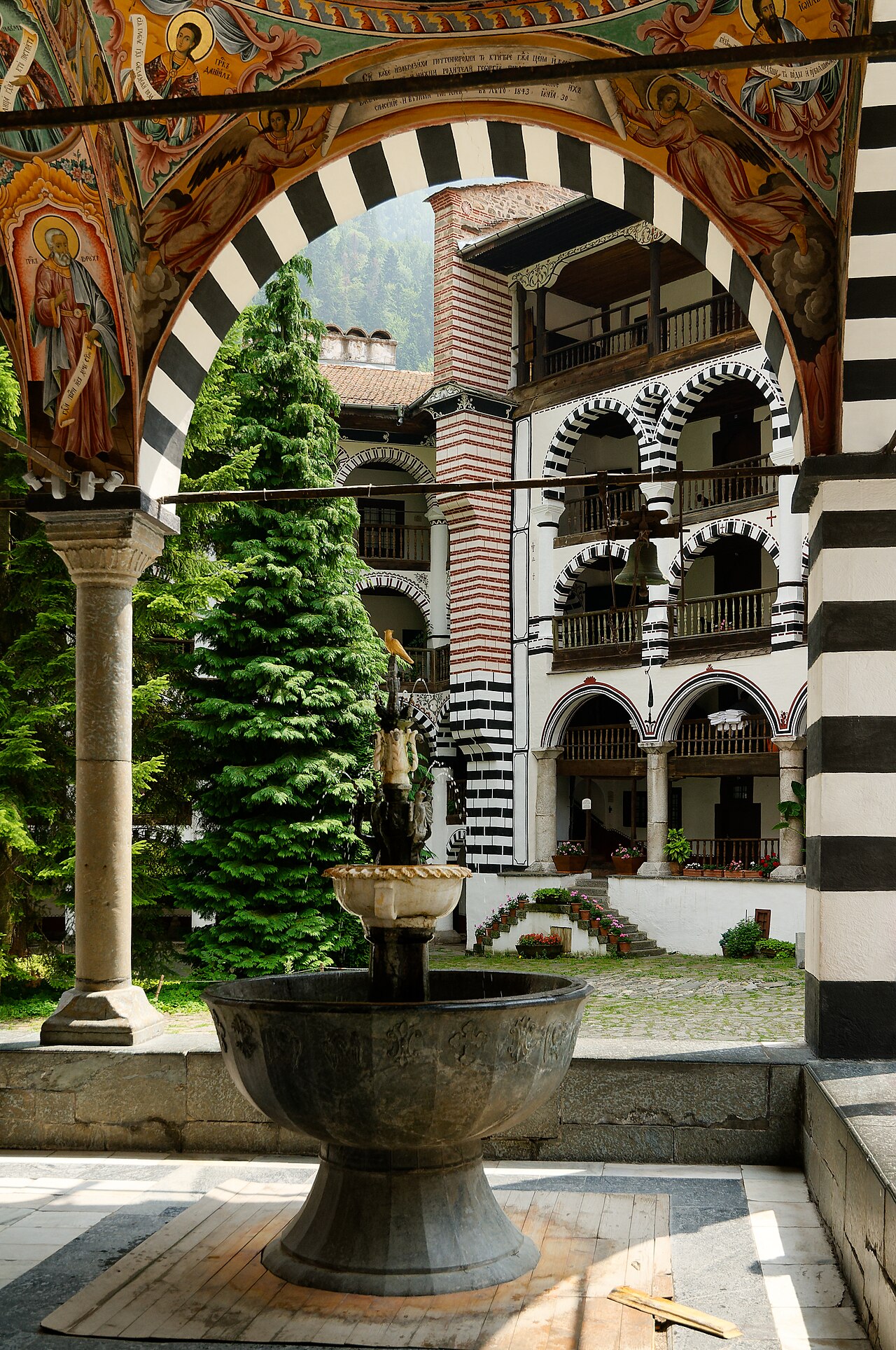
At Rila Monastery, the mountains are never far from the architecture. Forested slopes rise behind arcaded residential wings, while the striped arches and domes of the church draw the eye towards the centre of the courtyard. It is one of Bulgaria’s great cultural sights, but it is also a functioning Orthodox monastery, with expectations that shape how visitors should behave.
The most satisfying visit leaves room for both sides of that identity. Come for the architecture and art, then slow down enough to recognise that the complex is a place of worship rather than simply an attractive enclosure for photographs.
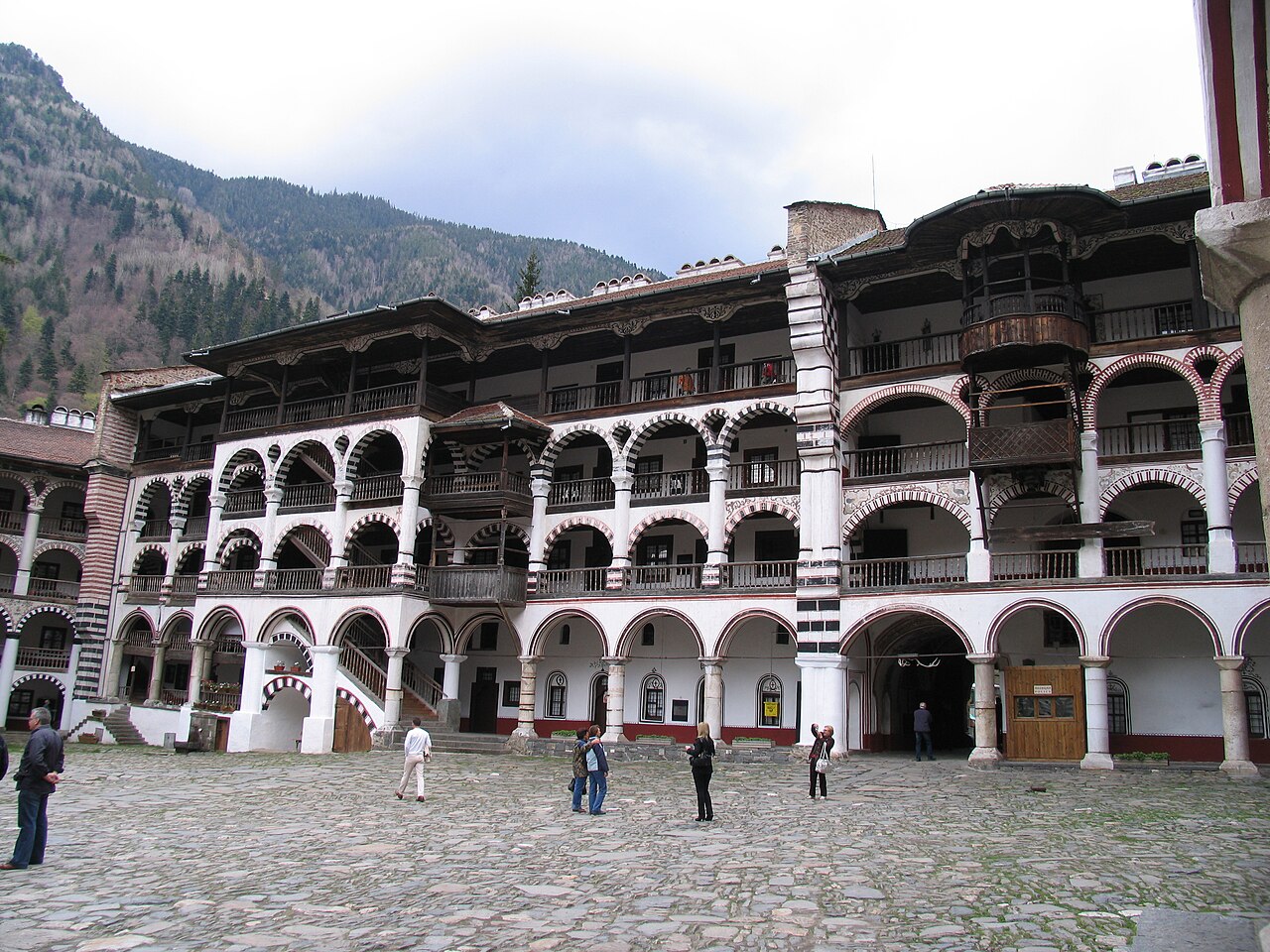

Read the courtyard as layers of history
UNESCO’s account of Rila Monastery traces its foundation to the tenth century and St John of Rila. Much of the striking ensemble visible today belongs to the rebuilding that followed a nineteenth-century fire. It is therefore more revealing to look for different historical layers than to assume everything dates from the monastery’s beginnings.
The monastery’s own history places the site within Bulgaria’s religious and cultural life. Its significance extends beyond the beauty of a church façade: the monastery helped sustain spiritual, literary and artistic traditions over a long period.
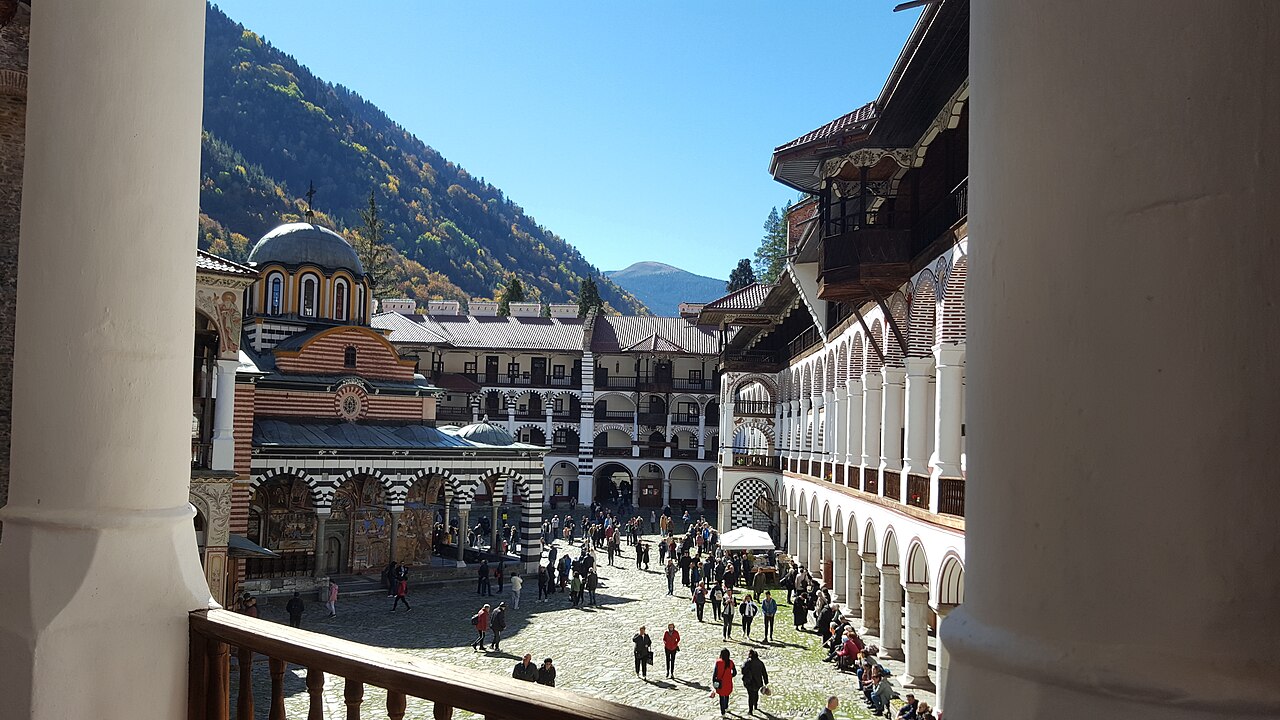

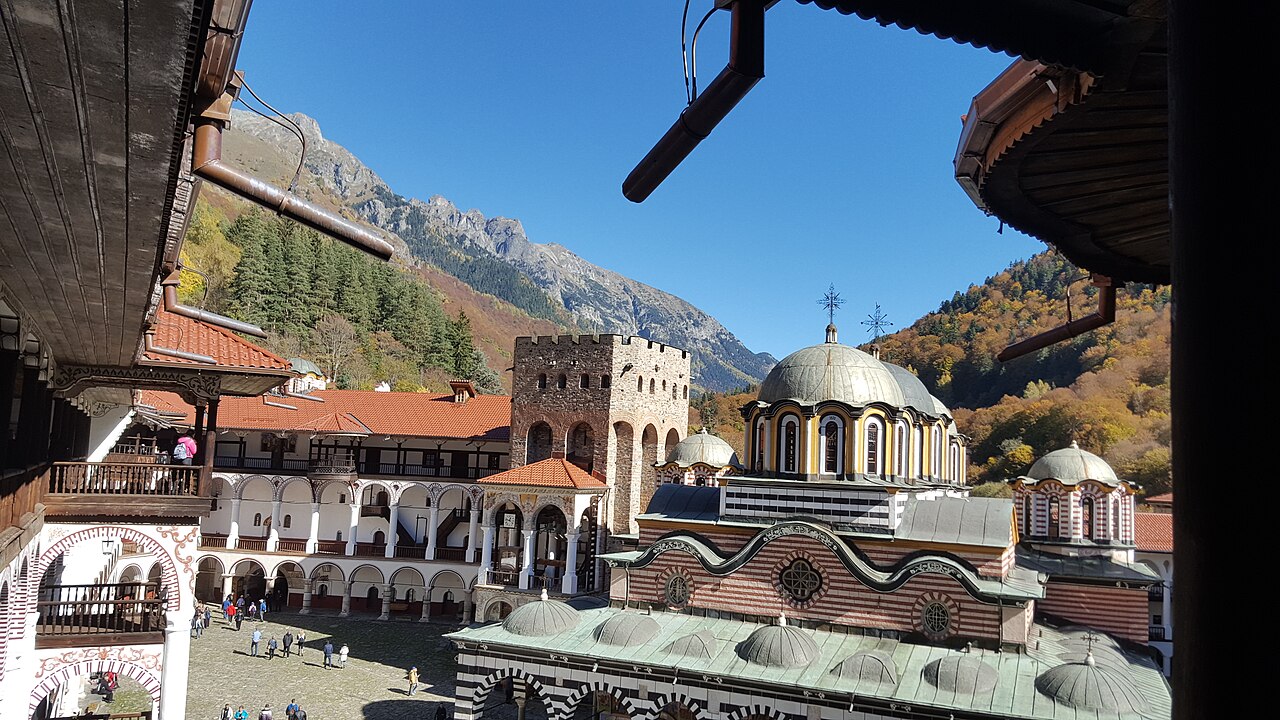
Begin by looking across the courtyard before heading straight into the church. The relationship between the central buildings and the surrounding galleries is part of the composition. The scale becomes clearer when the eye moves from the repeated arches to the compact, much older tower.
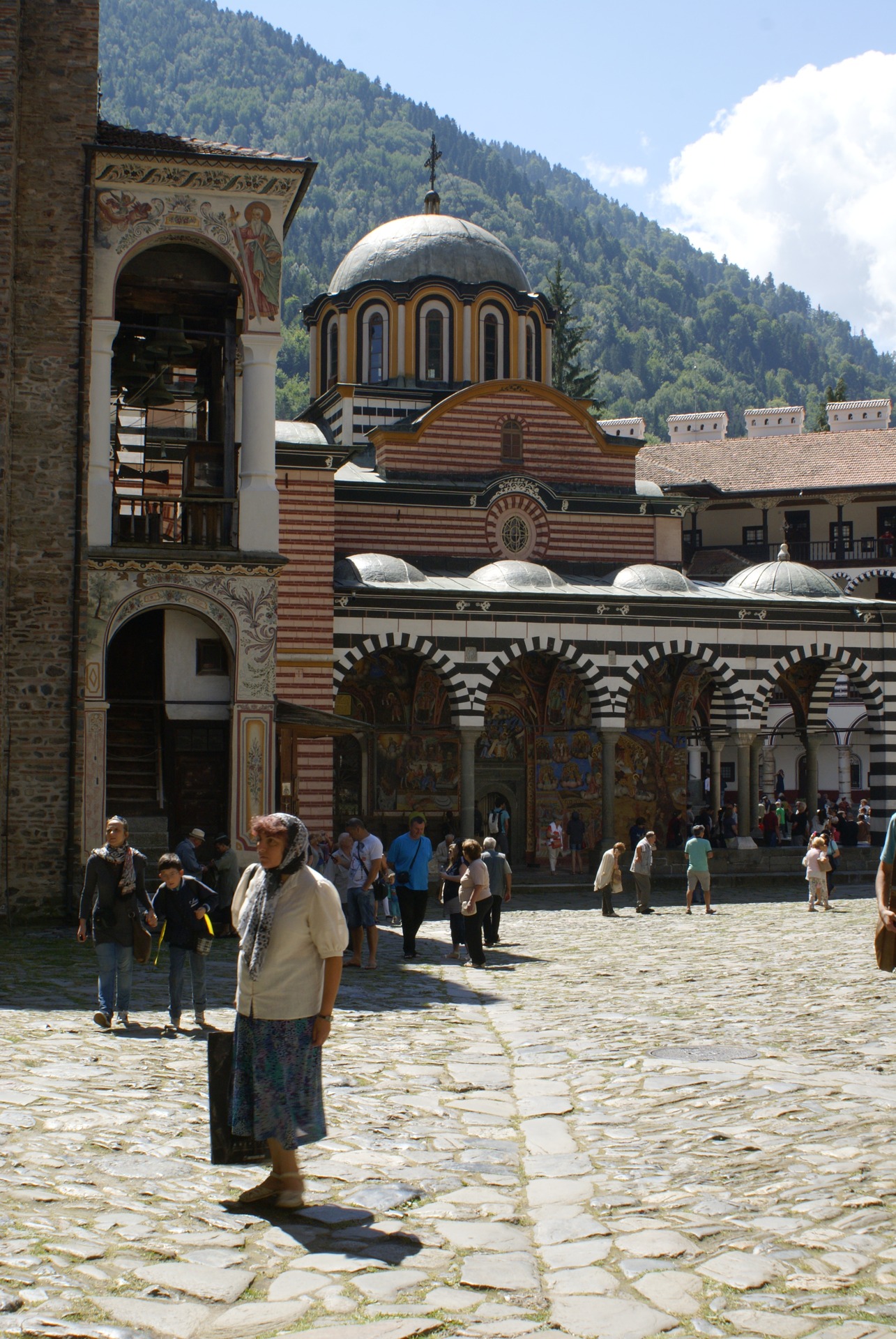
The medieval tower and the main church
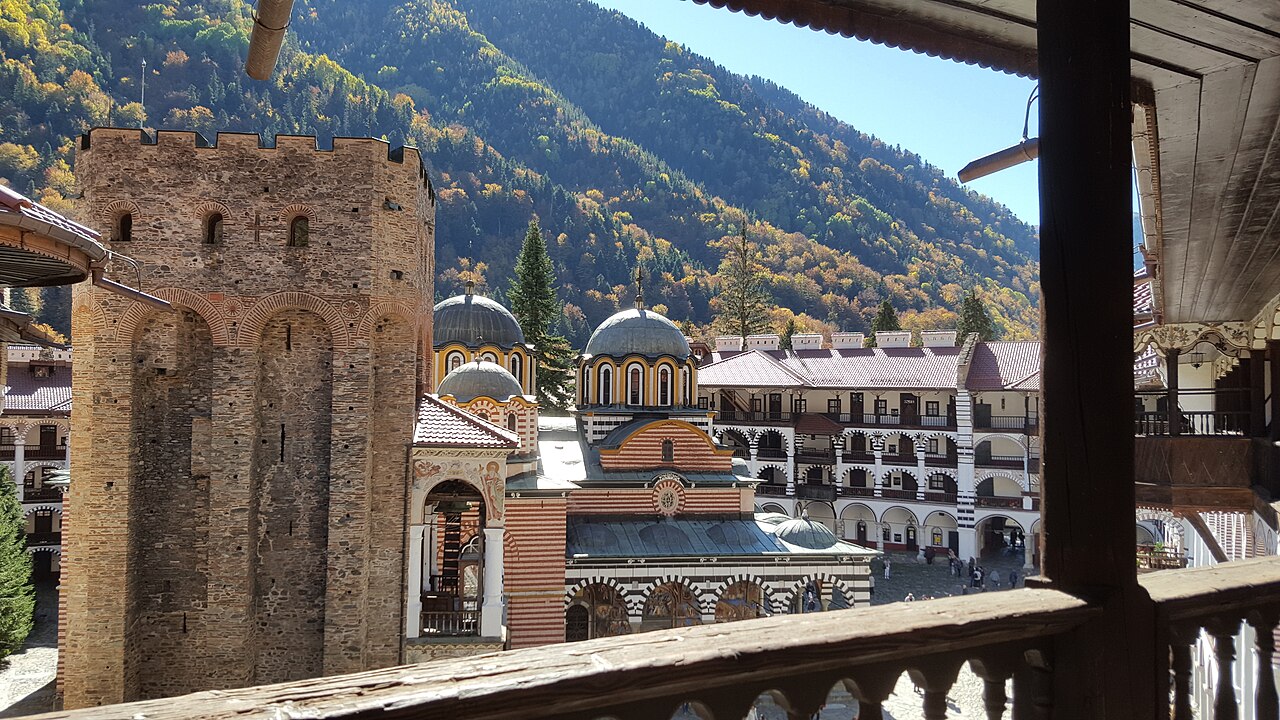
Hrelyo’s Tower dates from 1335. Its five-storey defensive form contrasts with the elaborate nineteenth-century church beside it. A chapel of the Transfiguration preserves medieval painting within the tower. Ask about opening arrangements on arrival, as access differs from the freely explored courtyard.
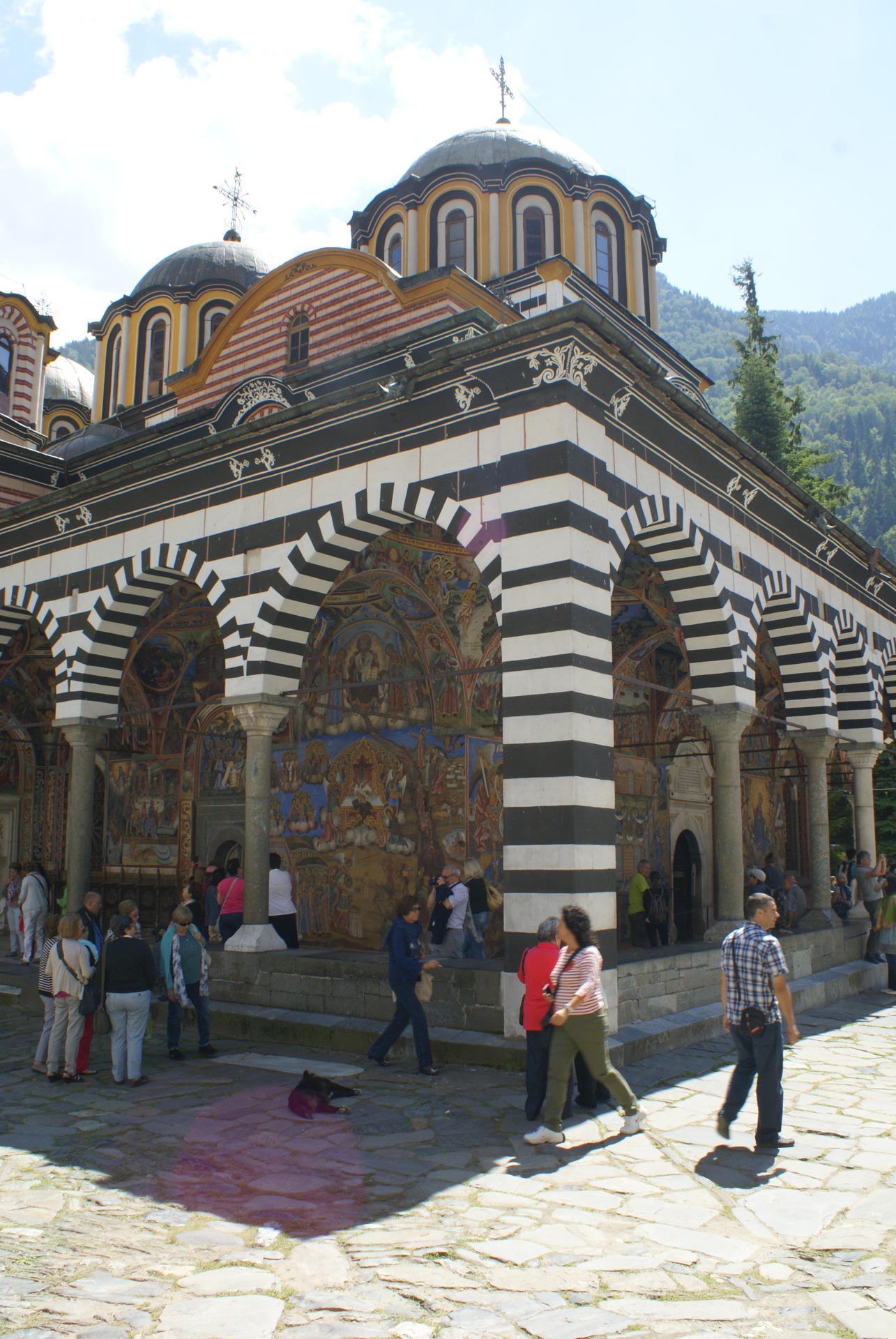
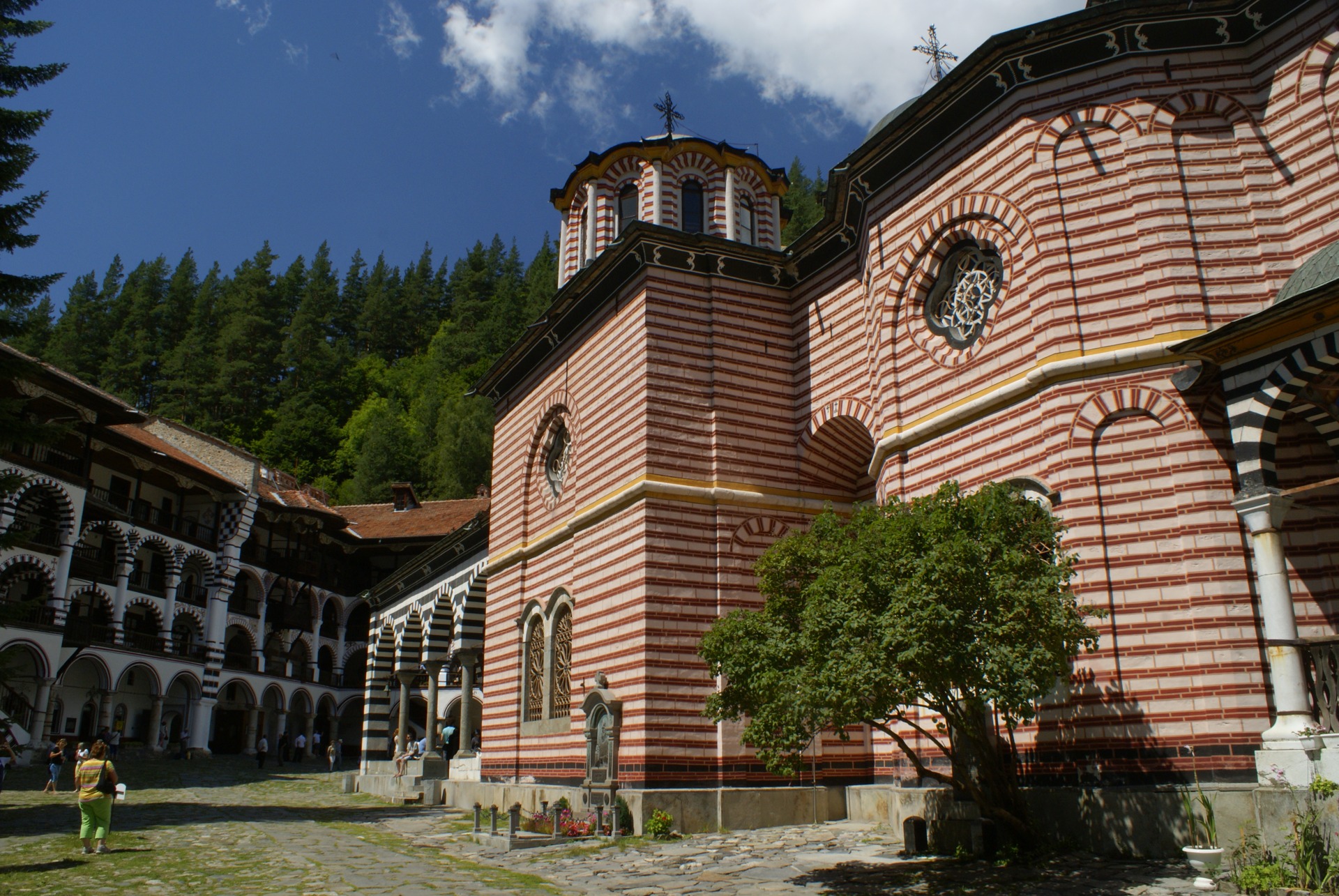
The church’s exterior rewards close attention to colour, rhythm and detail. Take time at the porch without turning the entrance into a bottleneck. Where worship is taking place, allow those attending for religious reasons to pass and keep conversation low.
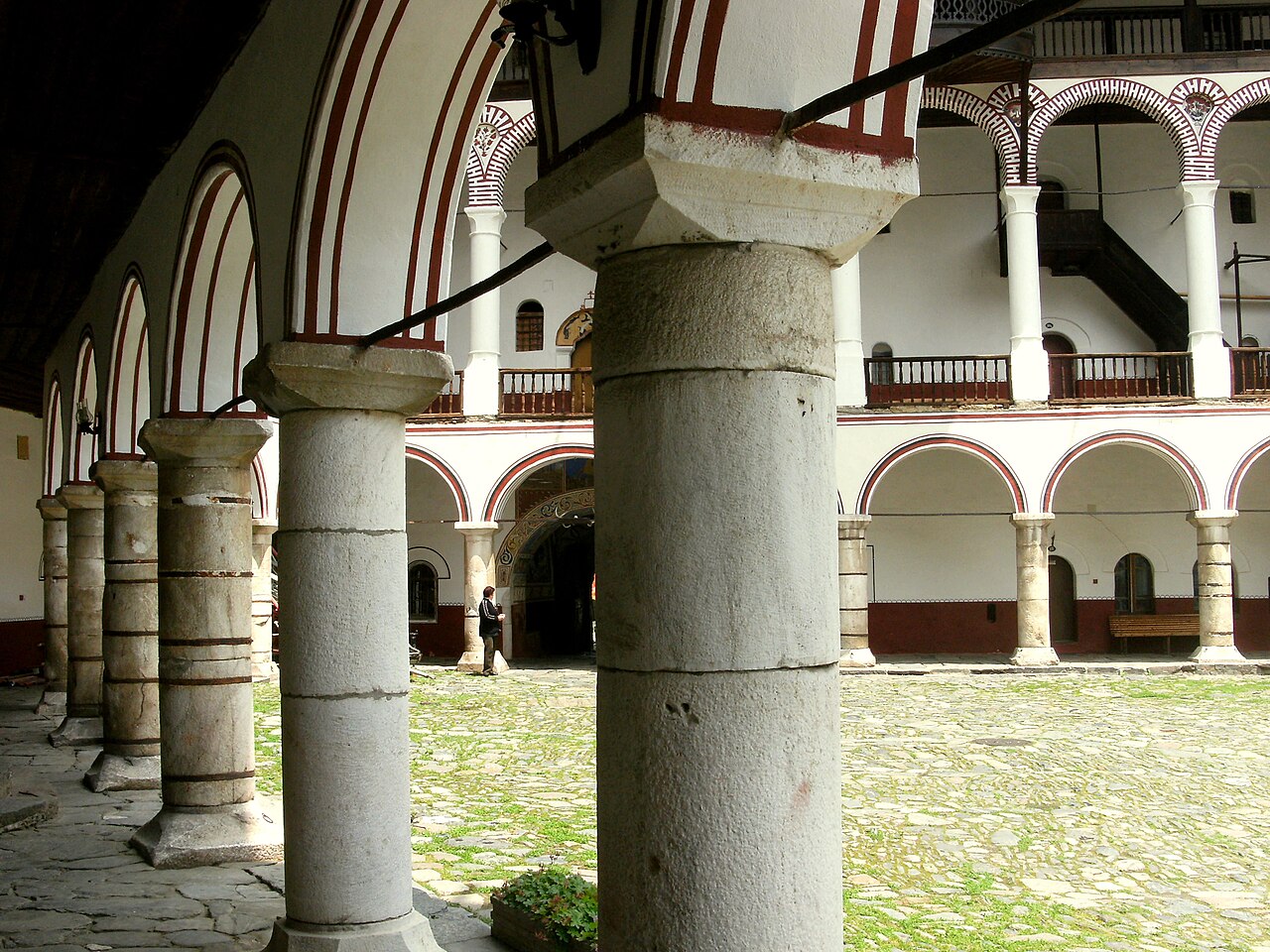

The monastery’s rules prohibit photography and video inside the church and museum. Photography should therefore be planned around the permitted outdoor spaces, with cameras put away before entering.
Give the museum its own time
The Church History Museum introduces manuscripts, printed books and religious objects that cannot be understood from the courtyard alone. Raphael’s Cross, known for its exceptionally fine carving, is among its most distinctive exhibits.

The cross provides a striking change of scale after the architecture outside. Minute carved figures draw attention to patient craft, while manuscripts and books connect that artistry with the monastery’s life as a centre of learning. The museum deserves its own part of the visit.
Check the current opening and admission arrangements for the specific spaces you want to see. The monastery has different visitor areas, each with its own admission arrangements.
Dress and behave for a working monastery
The published visitor requirements rule out shorts, short skirts and sleeveless tops. Plan suitable clothing before leaving the hotel, even in warm weather. A suitable extra layer is useful when the day includes both city sightseeing and the monastery.
The rules also restrict access to the residential upper floors and prohibit smoking and pets in the complex. Respect barriers and instructions even when an older photograph appears to have been taken from a position no longer open to ordinary visitors.

Travel light for the church visit. The monastery’s guidance excludes bulky luggage and prams from the church, so families and travellers in transit should think through how to manage belongings without blocking access or expecting staff to improvise storage.
Arrange the journey instead of relying on old bus advice
Transport is the most important practical detail to settle in advance. The monastery’s current access guidance says regular public transport has not been restored. It points visitors towards private or organised transport, or a journey via Blagoevgrad followed by a taxi.
Do not build the day around an old description of a direct public bus from Sofia without independently confirming that service. If booking an excursion, ask how much time is actually allowed at the monastery and whether the museum or other stops are included. The return journey matters as much as reaching the gate.

Sofia is a useful place to compare accommodation and transport arrangements before setting out. Our guides to Sense Hotel Sofia and Sofia hotels with swimming pools offer different starting points for planning a city stay.
Rila is worth more than a quick photograph and a hurried departure. Leave time for the courtyard, the church and the smaller objects that explain its cultural life, then let the mountain setting have the last word. Explore our Bulgaria travel collection for ideas to connect the monastery with a wider journey.