
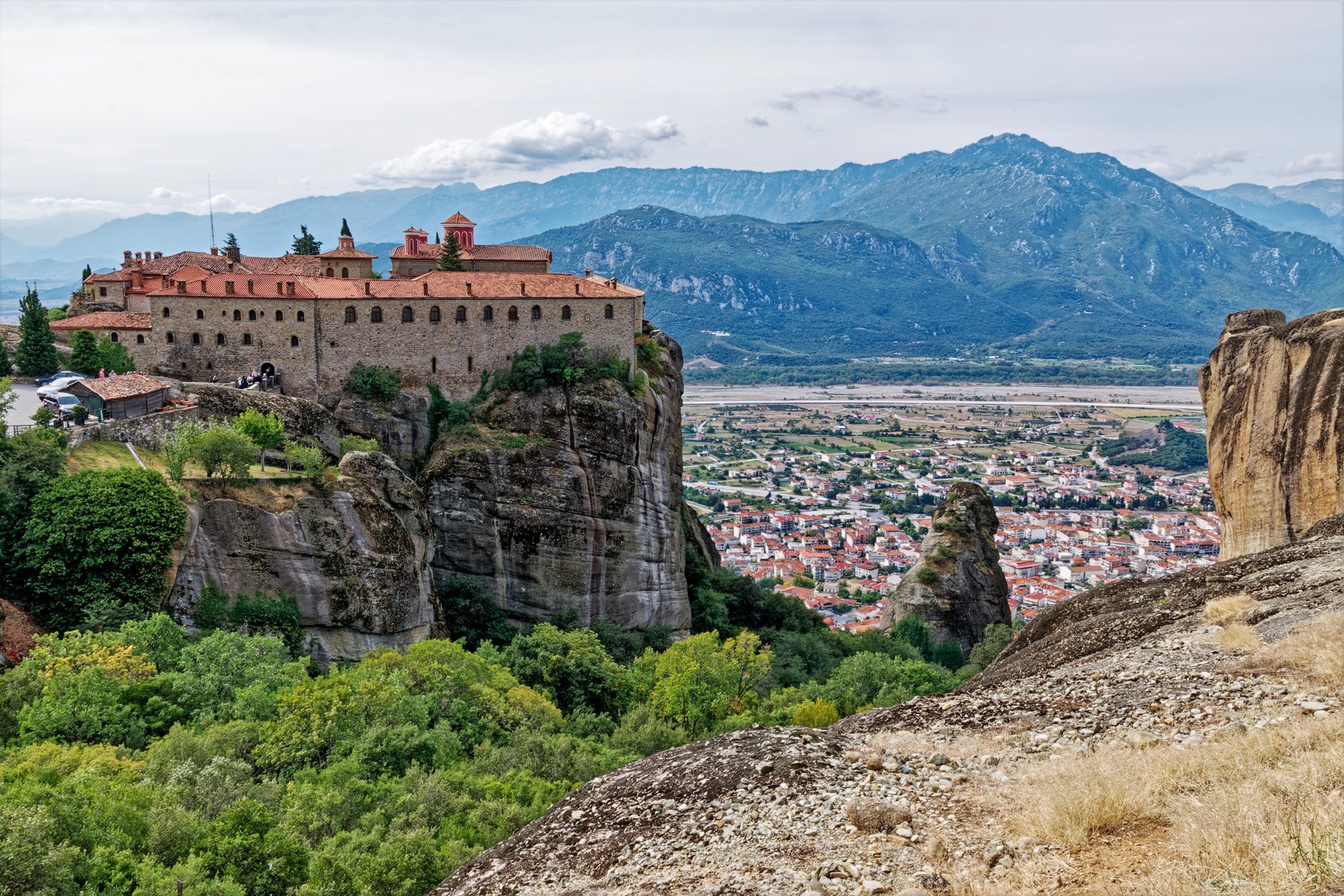
At Meteora, the buildings do not dominate the landscape. They complete it. Tiled roofs, stone walls and small courtyards sit above sheer columns of rock, their outlines so closely fitted to the summits that architecture and geology appear to share the same purpose. Below them, the streets and houses of Kalambaka restore a human scale to a scene that otherwise seems almost impossible.

This is mainland Greece at its most arresting, but the monasteries are more than a dramatic photograph. The distance between a roadside view and a monastery doorway is also a distance between two ways of understanding the place: as a spectacle, and as a religious landscape shaped by the pursuit of separation from everyday life.

A landscape that became a refuge
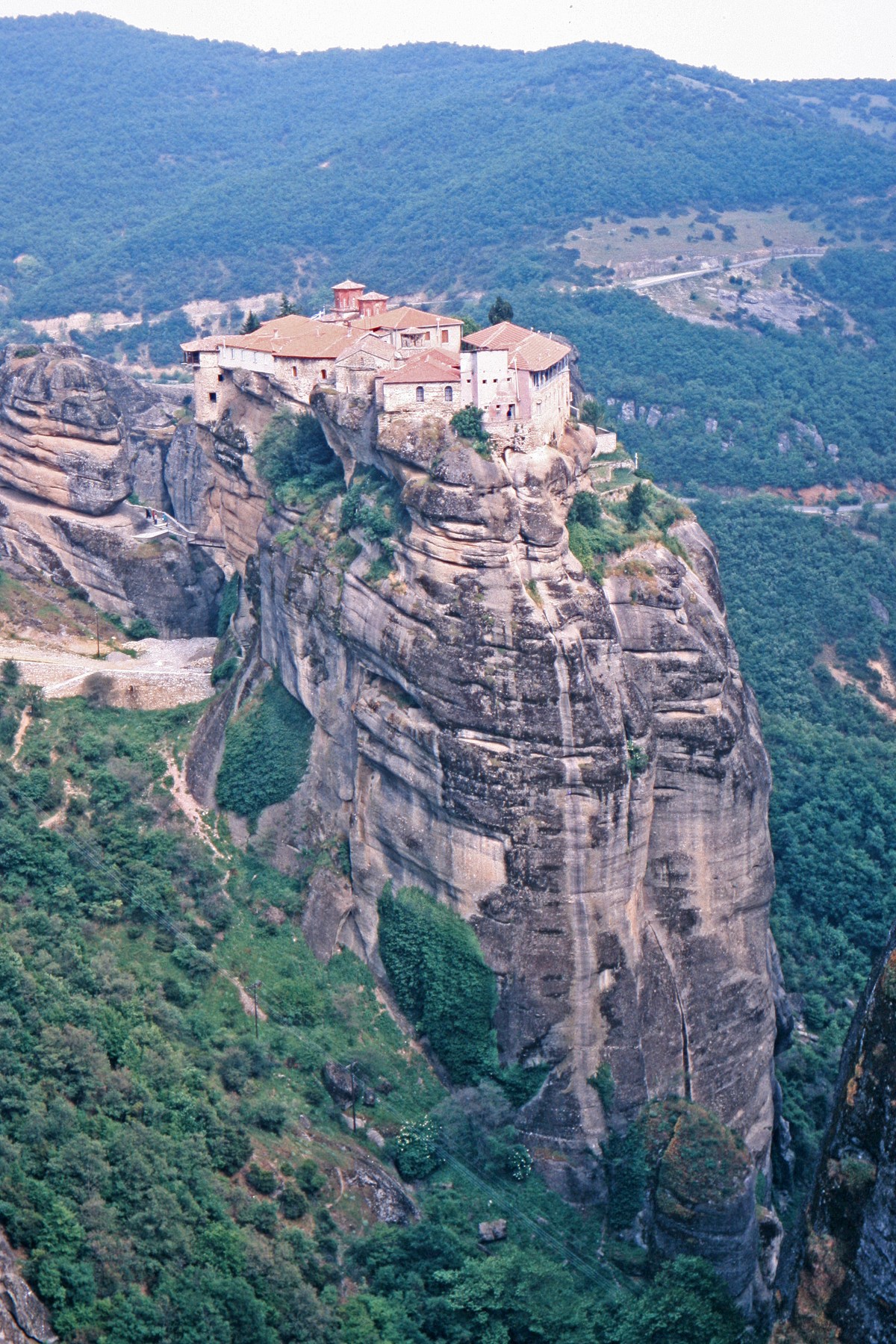
UNESCO’s account of Meteora places the first monks on these sandstone peaks in the 11th century. By the 15th century, 24 monasteries had emerged. Their position offered an extraordinary setting for withdrawal, while the communities created a cultural inheritance whose importance extends well beyond the improbable location of their buildings.

The surviving frescoes are central to that inheritance. UNESCO identifies Meteora as an important chapter in post-Byzantine painting, including the work of Theophanes the Cretan at Saint Nicholas Anapafsas. Looking only at the skyline misses this other dimension: the landscape outside may command immediate attention, but the painted interiors explain why these places matter as much to art history as to travel photography.
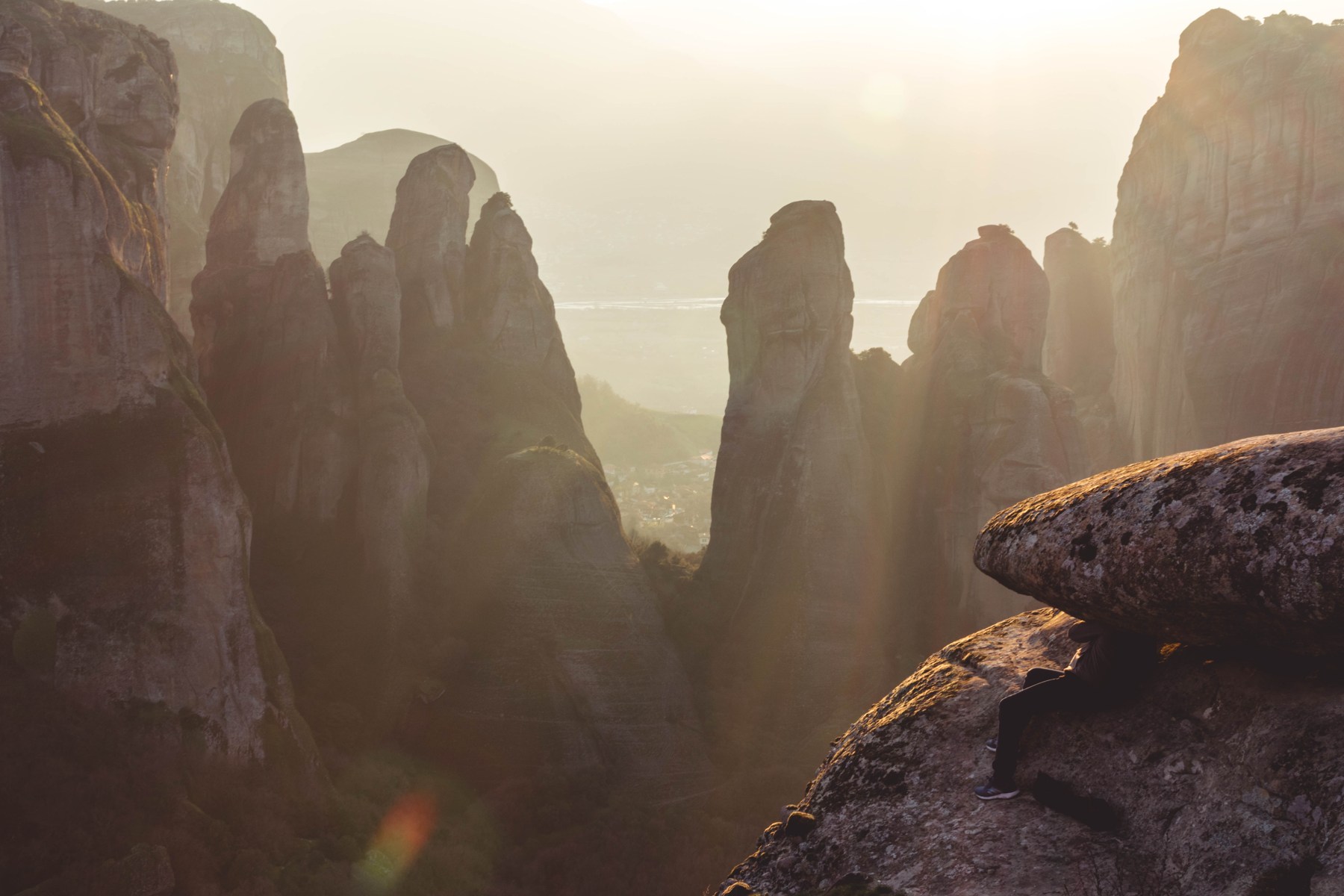

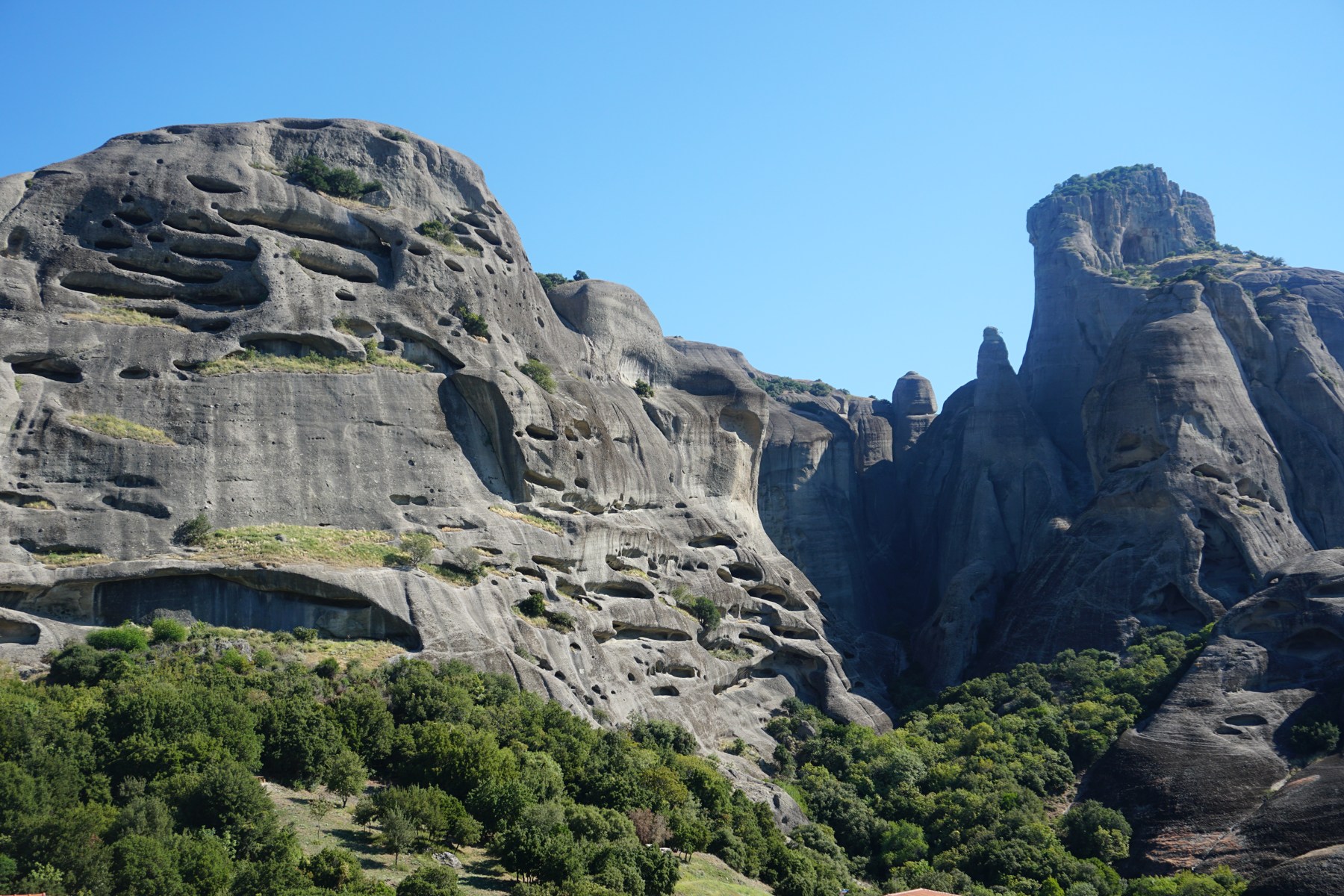
The rocks themselves belong to a much longer story. The municipality’s explanation of Meteora’s natural environment describes sedimentary deposits subsequently shaped by geological movement and erosion. Their rounded faces and deep divisions are not a constructed setting for the monasteries. The buildings came much later, making use of a terrain already extraordinary.

Stone, bridges and the distance below
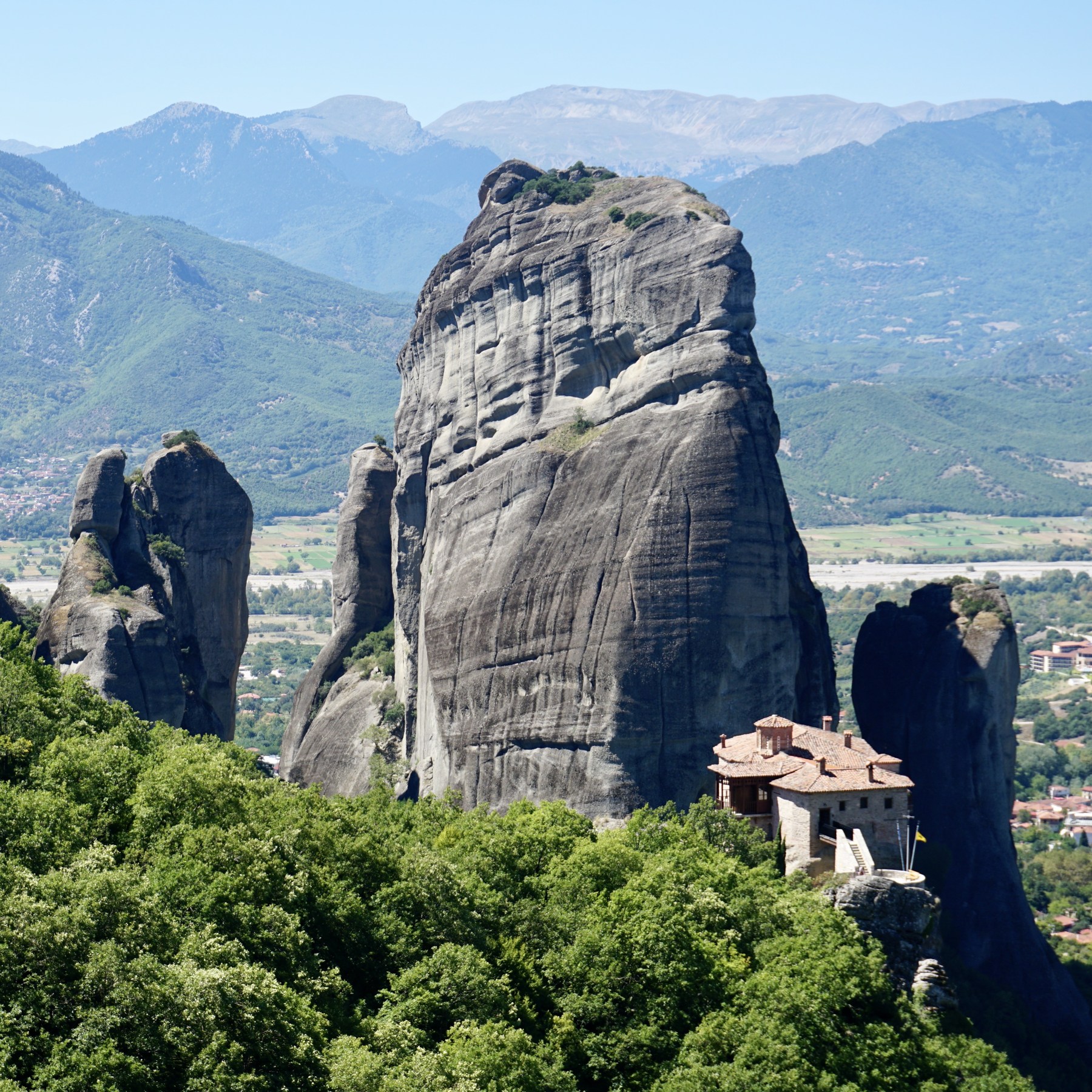
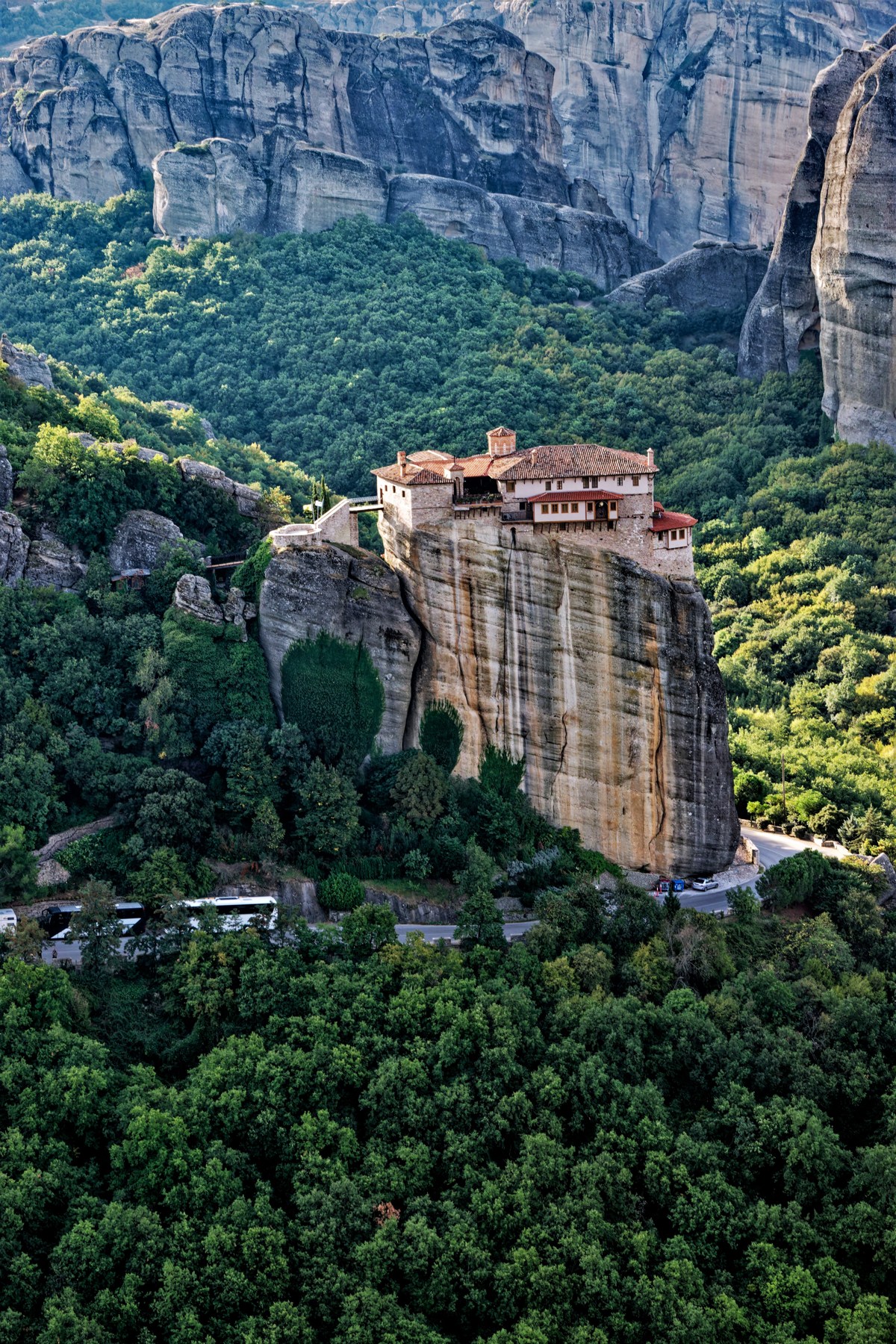
At Rousanou, the relationship between rock and building becomes particularly clear. The monastery occupies almost the whole summit of its narrow support. Walls seem to rise directly from the cliff, while the surrounding wooded slopes make the isolation more legible. Its present approach is also a reminder that access has changed: rope ladders gave way to a wooden bridge in the 19th century, followed by steps and bridges in the 20th.
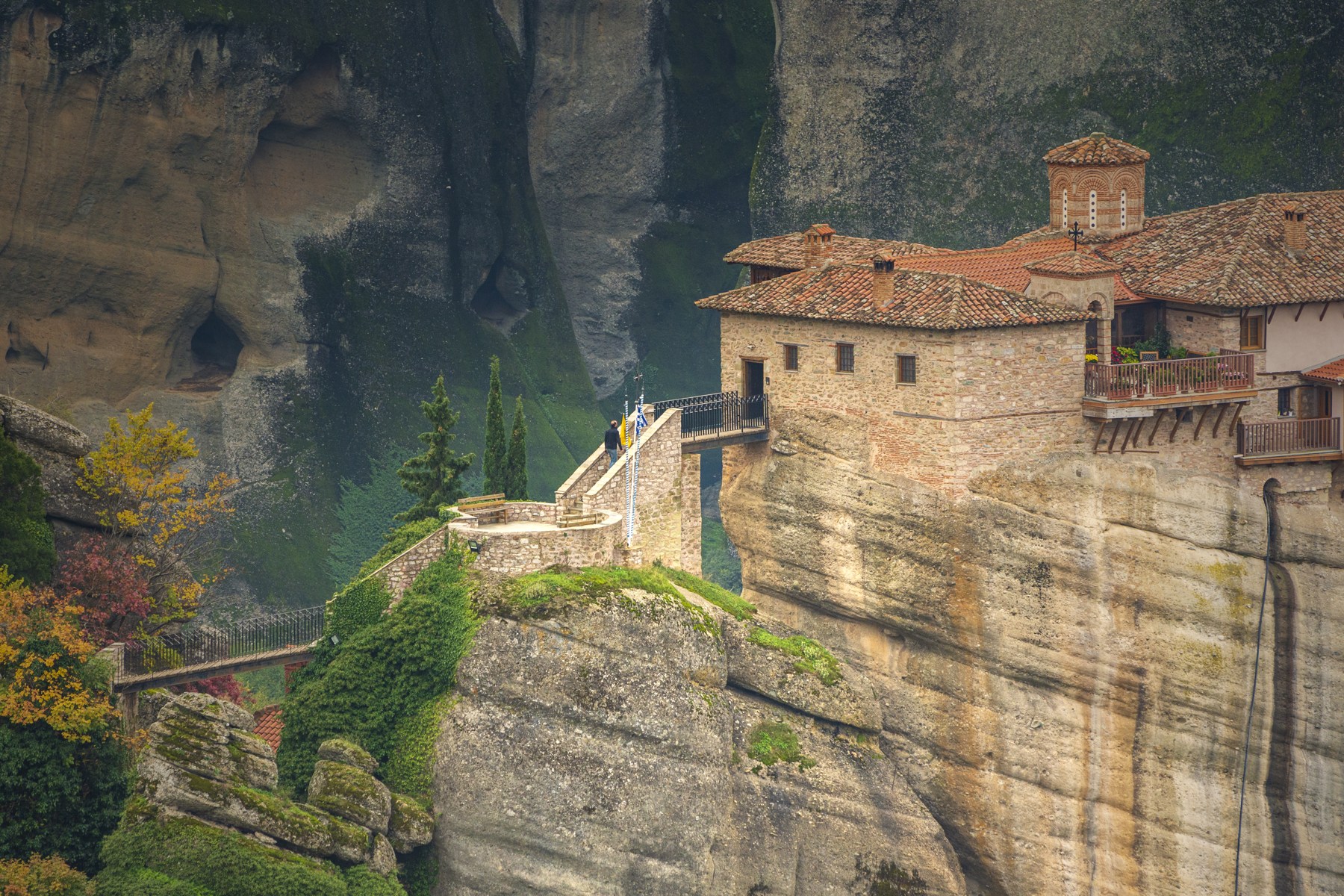

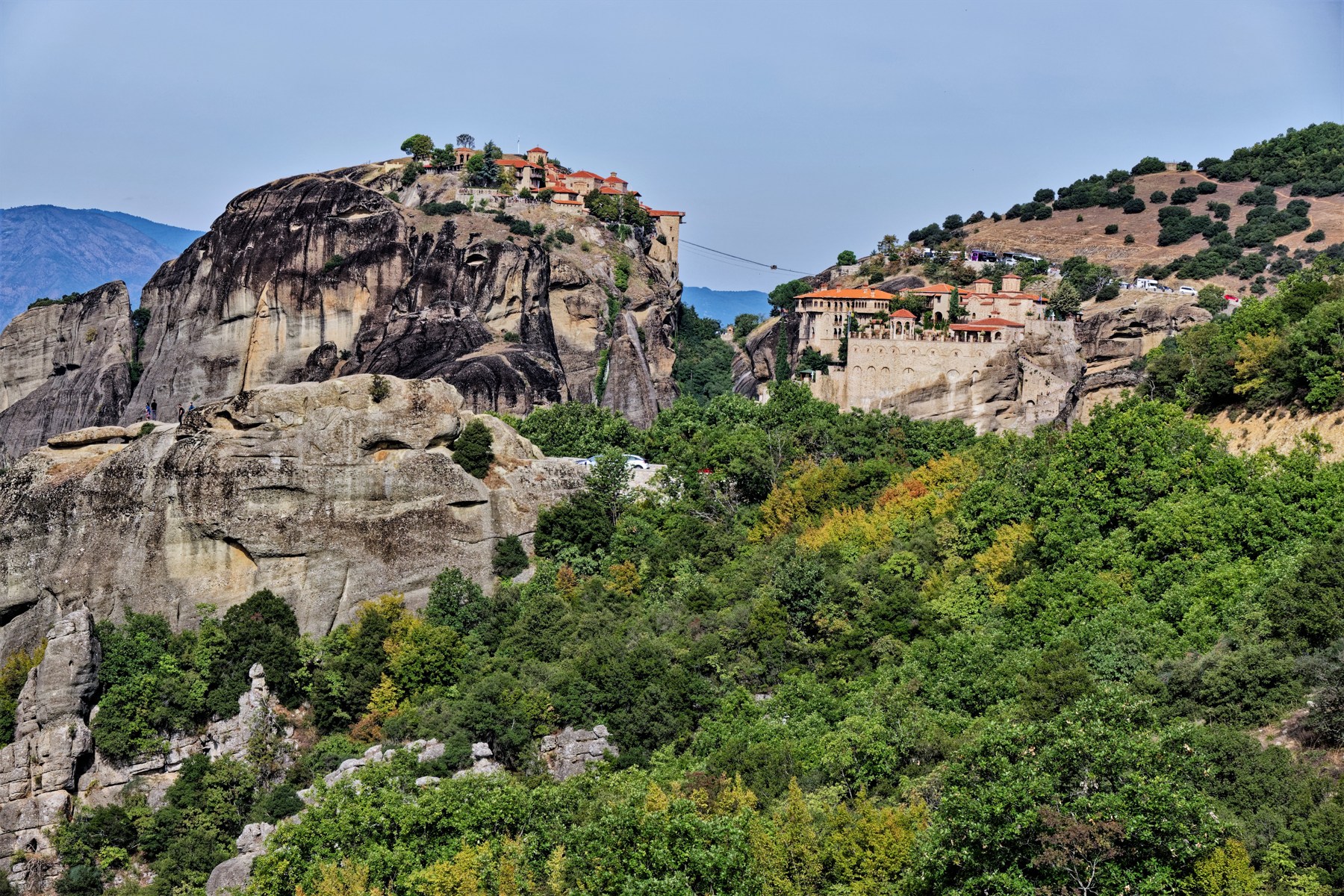
Nearby, Varlaam carries the name of a 14th-century ascetic. The brothers Theophanis and Nectarios, priest-monks from Ioannina, subsequently became its founders. Such individual histories prevent the monasteries from dissolving into a single scenic image. Each has its own story, even when a distant viewpoint brings several into the same frame.
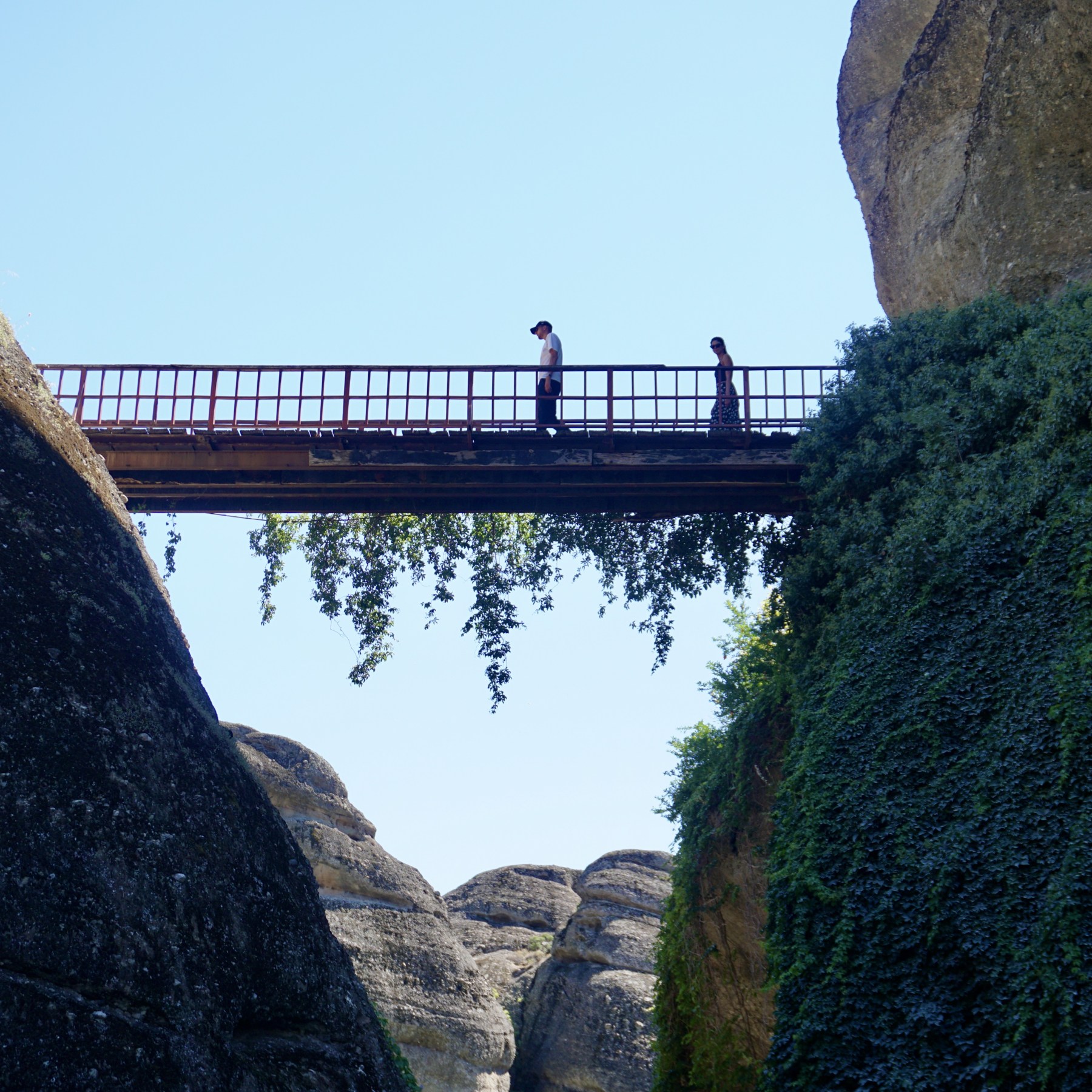

Bridges, paths and stairways now allow visitors to cross some of the separations that once defined monastic life. That convenience should not obscure the character of the destination. These are places of worship, not abandoned monuments arranged solely for sightseeing. Quiet behaviour and appropriate clothing are part of entering them respectfully.

The town beneath the towers
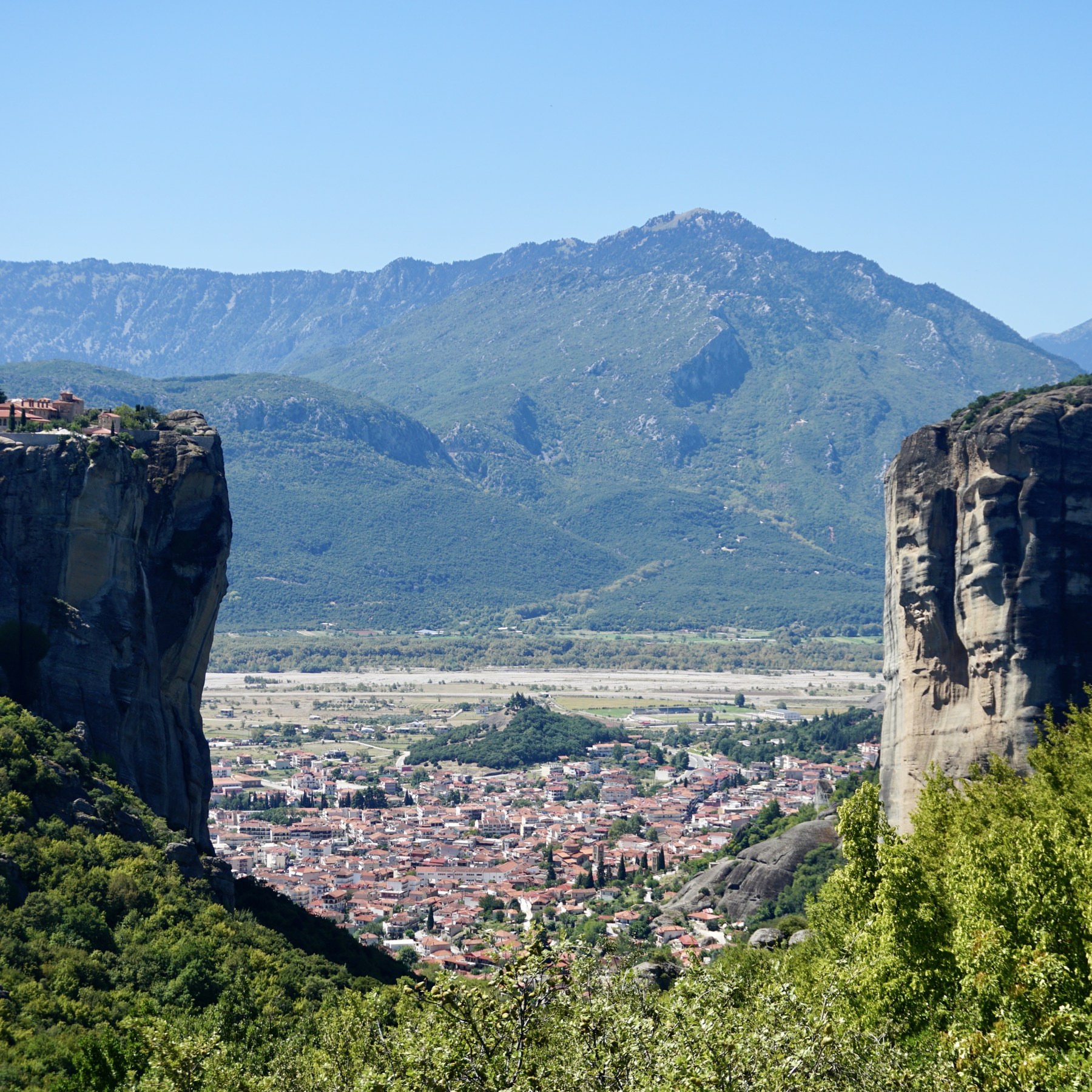
The Greek National Tourism Organisation describes Kalabaka as the town at Meteora’s feet, beside the Pinios River. Its presence matters. From above, houses and streets show just how high the rocks rise; from below, the formations become part of the ordinary horizon. Staying in the area rather than treating it as a brief stop gives both perspectives room to develop.

There is a broader mainland journey here, too. Travellers drawn to the terrain can place Meteora alongside Greece’s walking landscapes, while a visit to Athens offers a very different encounter with the country’s architectural inheritance. Compared with the maritime rhythm of a Greek island journey, Meteora turns attention inland and upward.

Practical arrangements reward the same unhurried approach. The municipality’s visitor information warns that opening hours can change; monasteries also have different closing days. Most involve steps. Saint Stephen has an easier approach across a small bridge, although visitors with access requirements should confirm their particular needs before travelling. Covered shoulders and suitable clothing are required, and comfortable shoes and water make sense on the approaches.
Trying to collect every monastery in one sweep risks reducing Meteora to a sequence of arrivals. Its lasting impression lies instead in the changing relationship between the buildings and their surroundings: a roofline seen against the mountains, a bridge suspended between rock faces, a town appearing far below. The achievement is not simply that people built here. It is that the landscape still holds the greater part of the view.