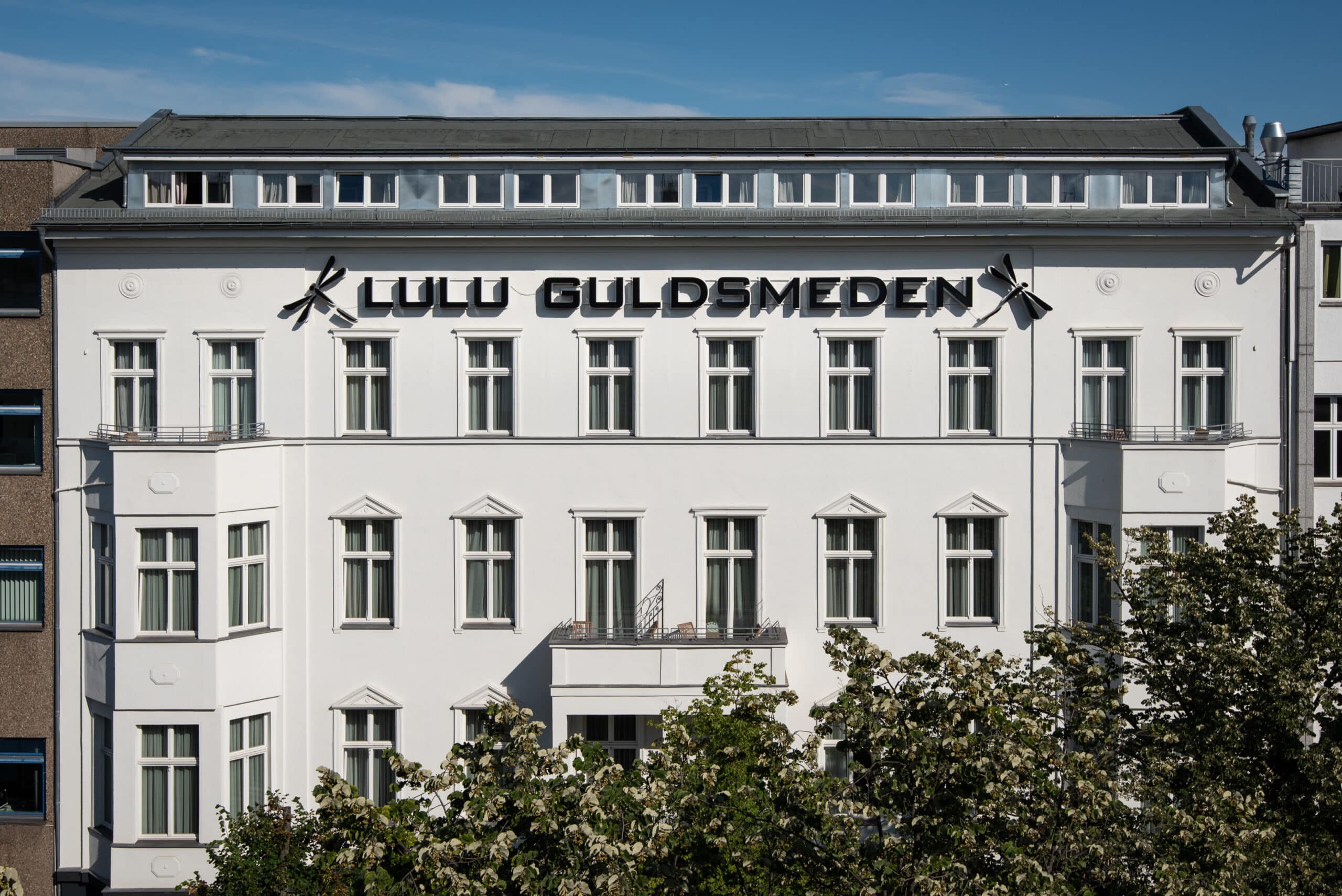
Behind the pale façade of Lulu Guldsmeden, Berlin’s harder edges give way to timber, textiles and a courtyard filled with places to sit. The contrast is the point. Potsdamer Straße remains outside; inside, four-poster beds and woven furniture propose a less hurried version of a city break. This is not Scandinavian design stripped down to an empty white room. It is a warmer, more layered interpretation, with enough colour and texture to resist anonymity.
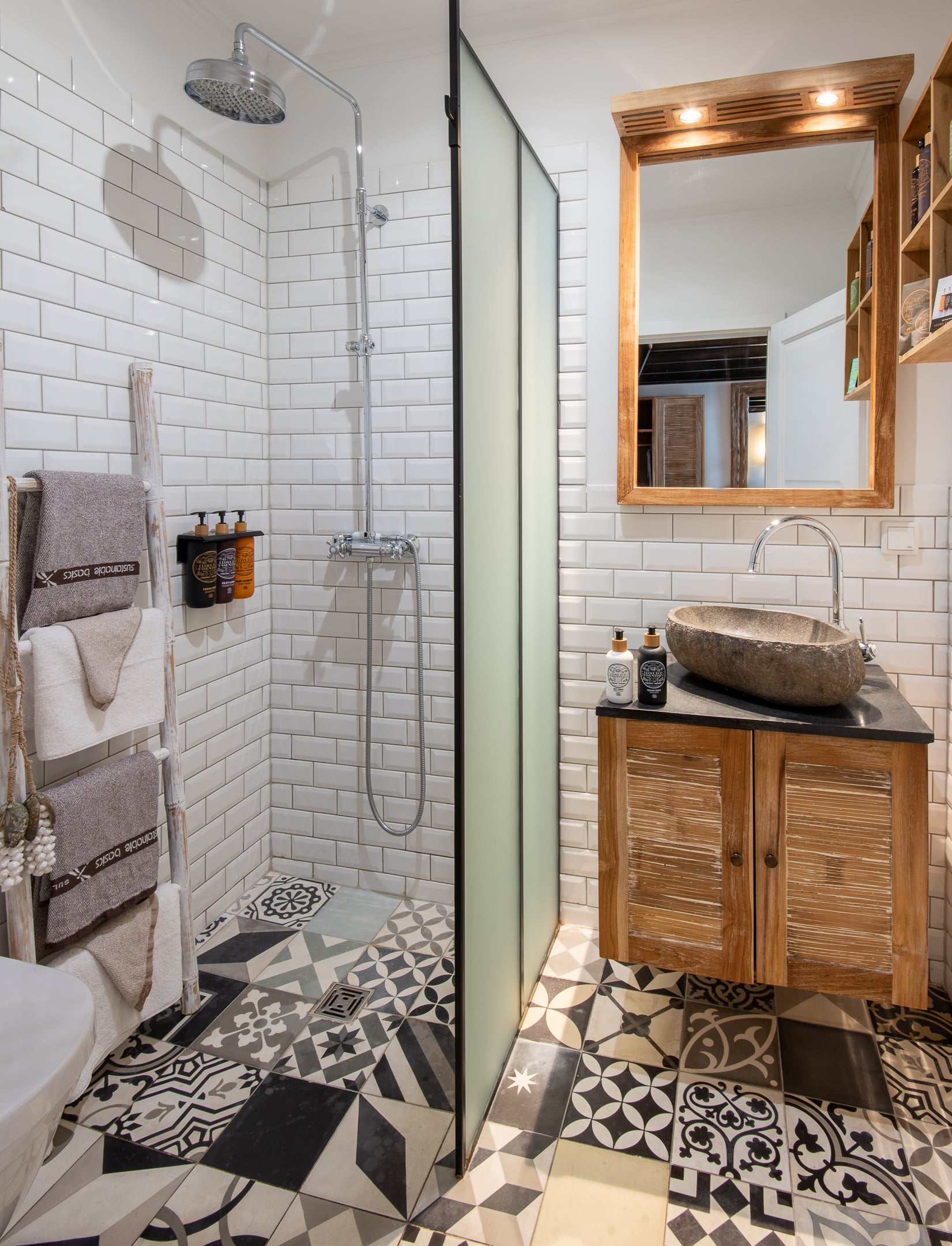
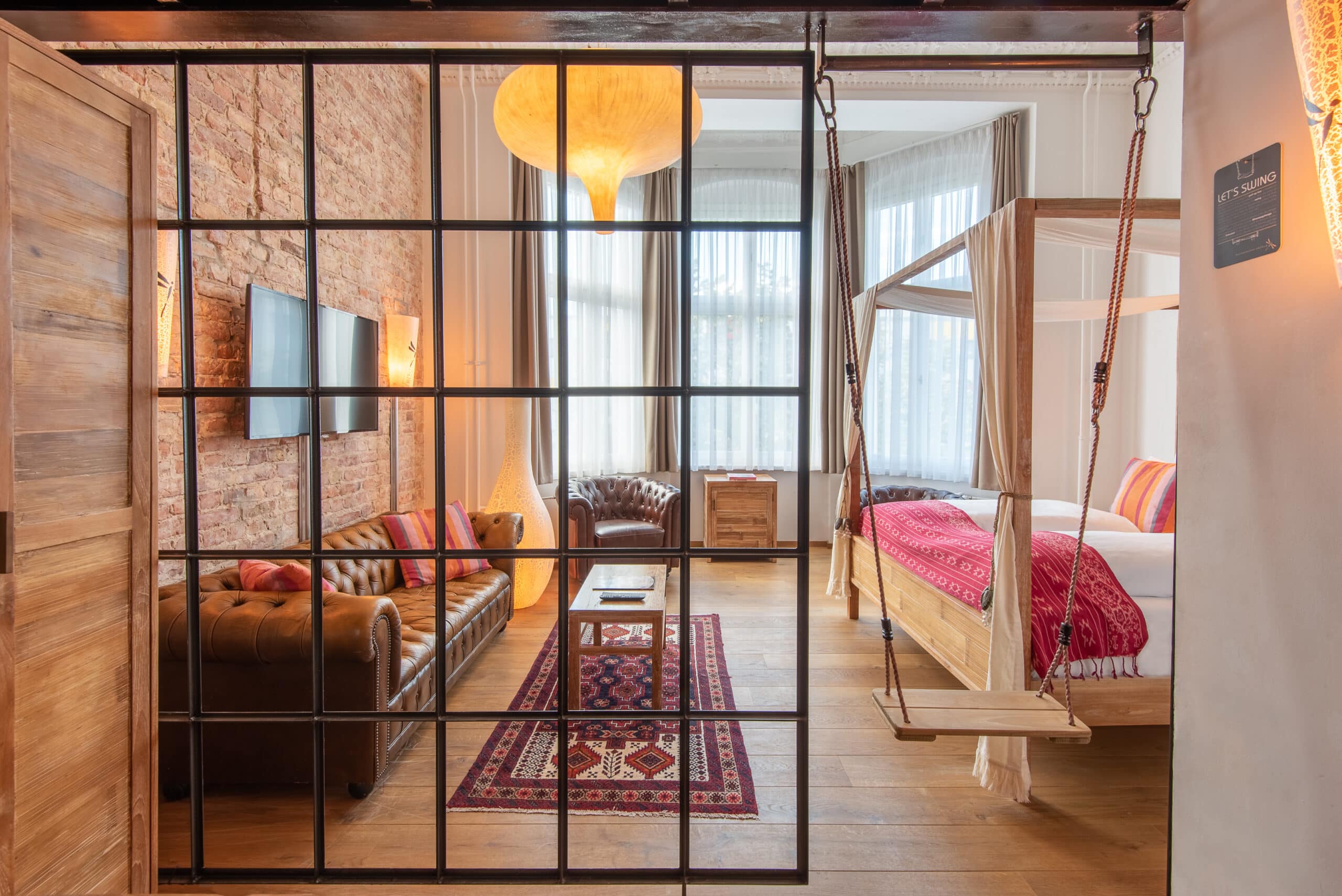
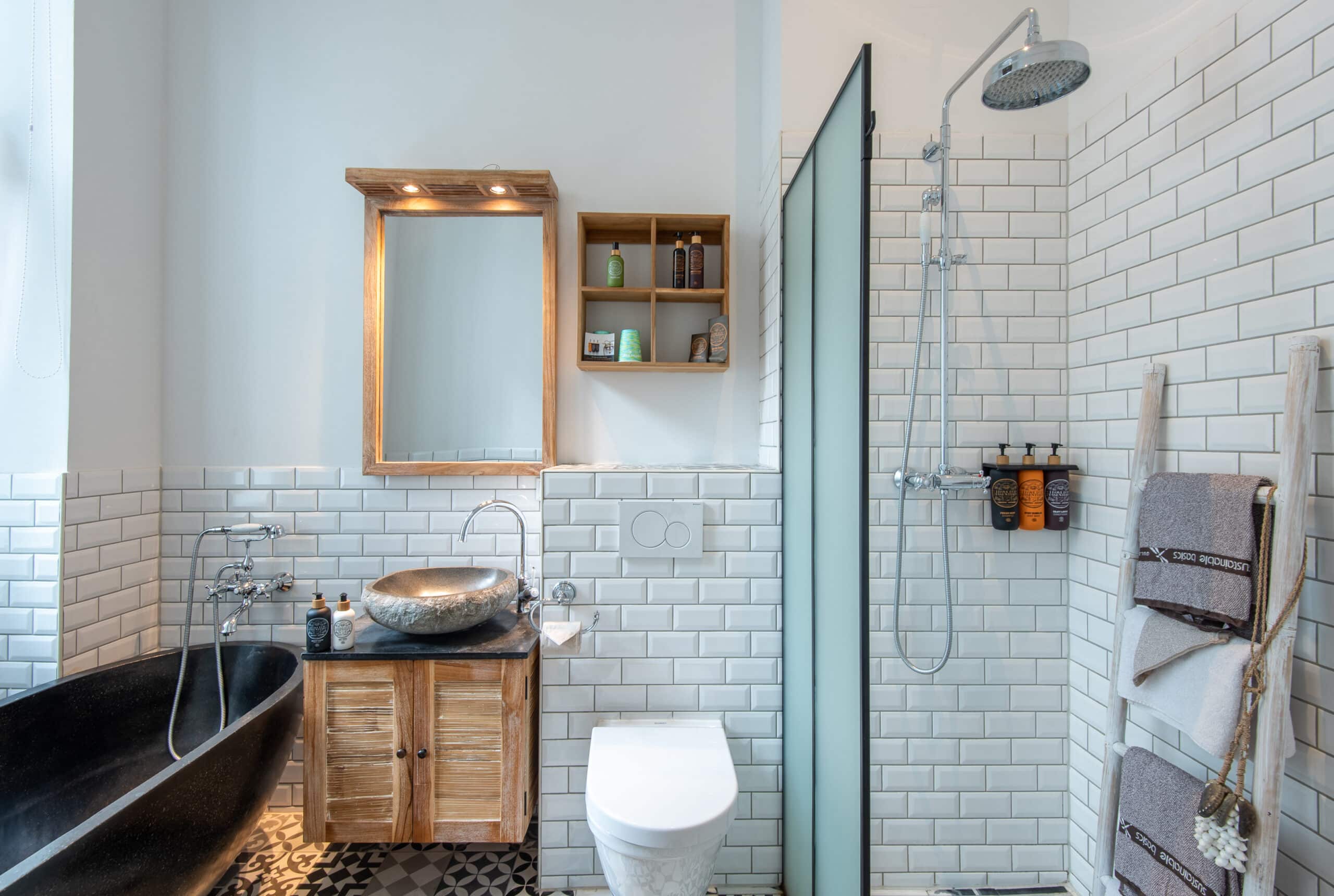
The hotel’s own introduction describes a meeting of Nordic and Balinese influences. Its photographs make that combination tangible: exposed brick beside glazed partitions, patterned rugs beneath wooden bed frames, planting around café tables. Rather than one dramatic architectural gesture, the identity emerges through repeated domestic details.
A Berlin address with room to retreat
Lulu stands at Potsdamer Straße 67, between the Tiergarten and Schöneberg neighbourhoods. According to visitBerlin’s account of the property, the building dates from 1850. That older shell helps explain why the interiors feel different from the interchangeable bedroom corridors of a purpose-built business hotel. Height, windows and the relationship between street and courtyard give the decoration something substantial to work with.
The address also resists a simple choice between sightseeing base and neighbourhood stay. VisitBerlin places galleries and the Wintergarten variety theatre within the surrounding streets, with Park am Gleisdreieck adding a green counterpoint. The attraction is not that everything in Berlin is on the doorstep. It is that the immediate area has a life beyond the hotel lobby.
For a city so often approached through monuments and nightlife, this quieter geography can change a visit. Our look at Berlin’s parks and cultural landscapes offers another way to think about that balance: open space is part of the city’s character, not simply a break between attractions.
Bedrooms with a little theatricality
The official city hotel listing records 81 rooms, including six Lulu Suites. The hotel’s current room categories range from compact options to lofts and suites, so the photographs should not be read as a promise that every reservation delivers the same space.
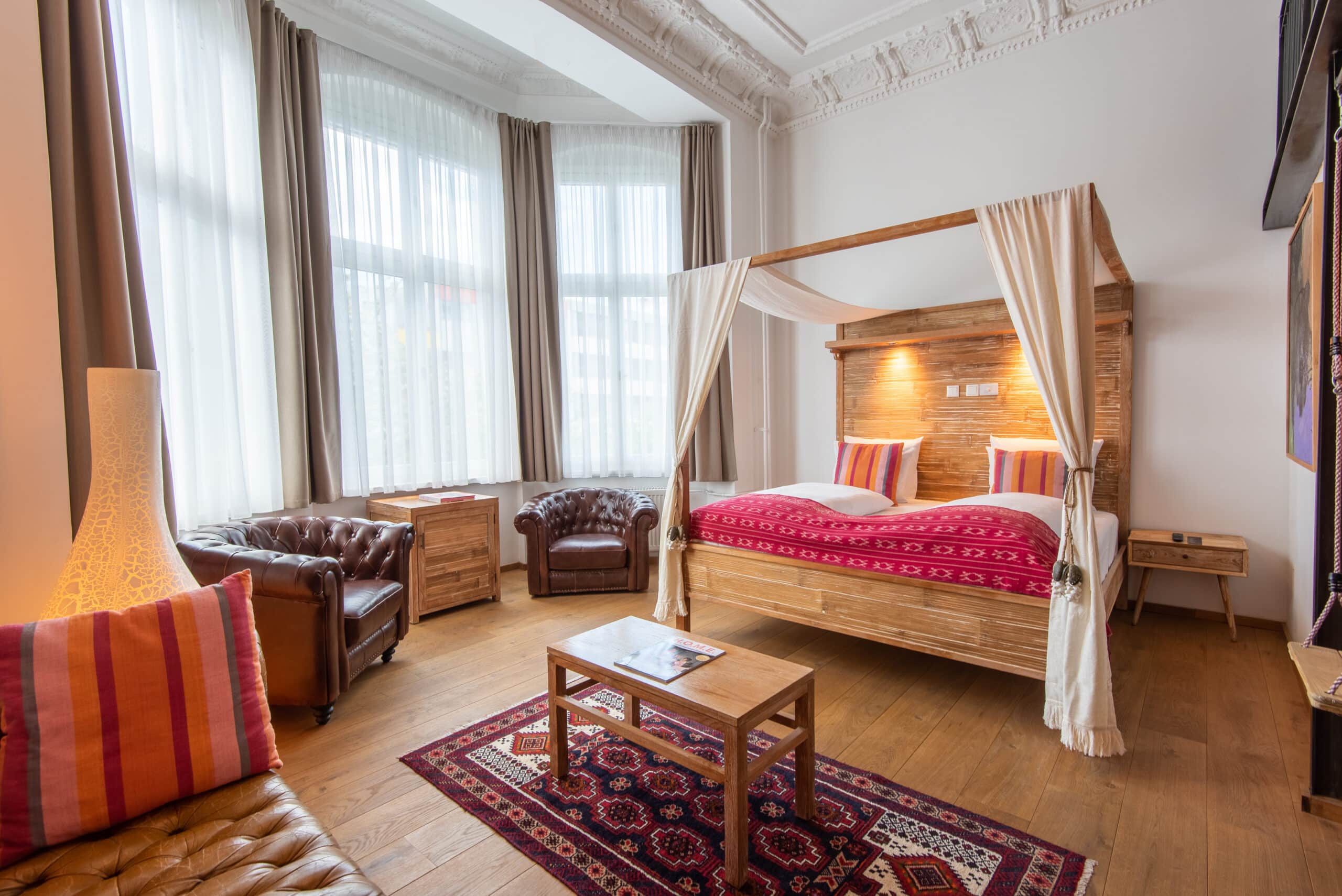
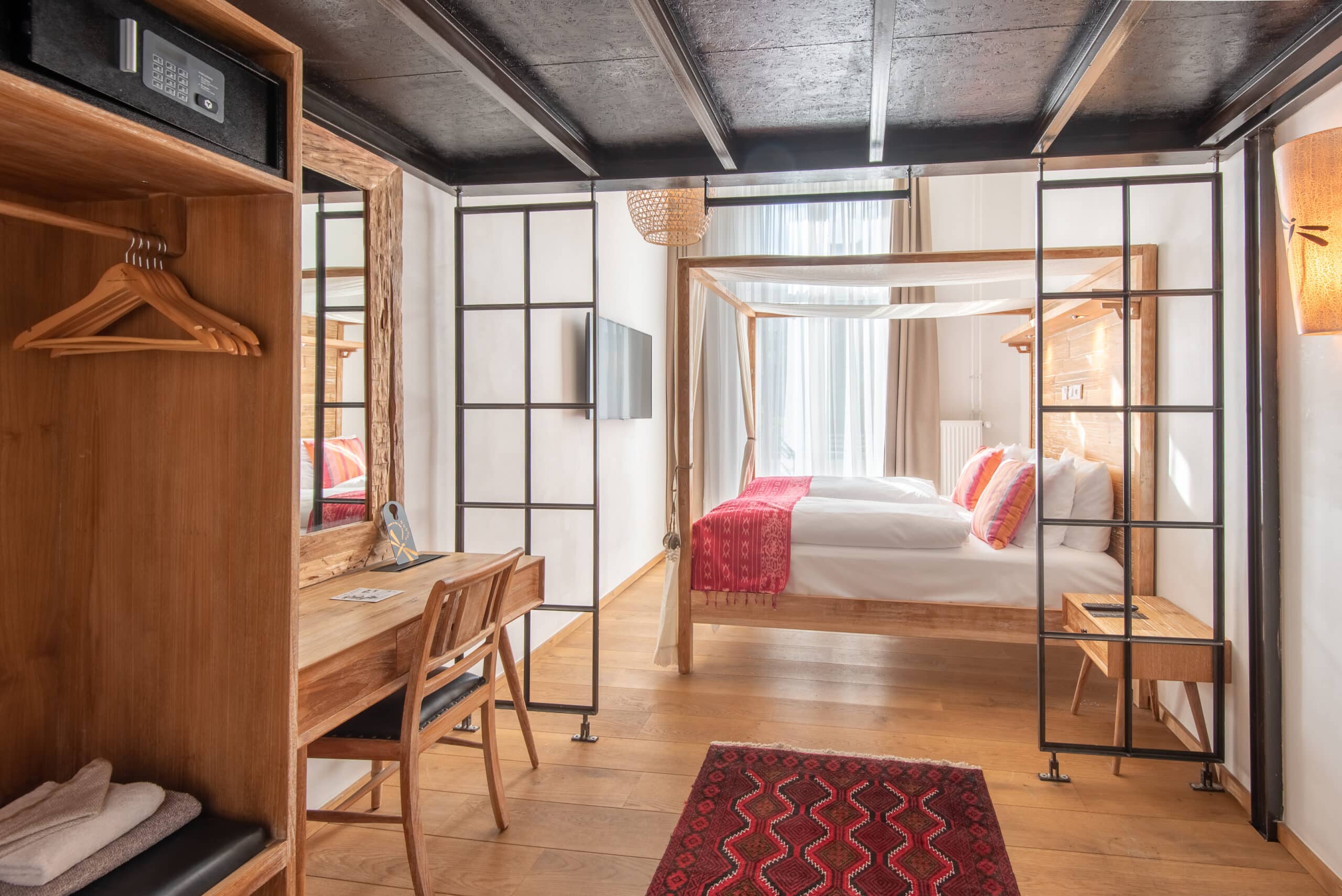
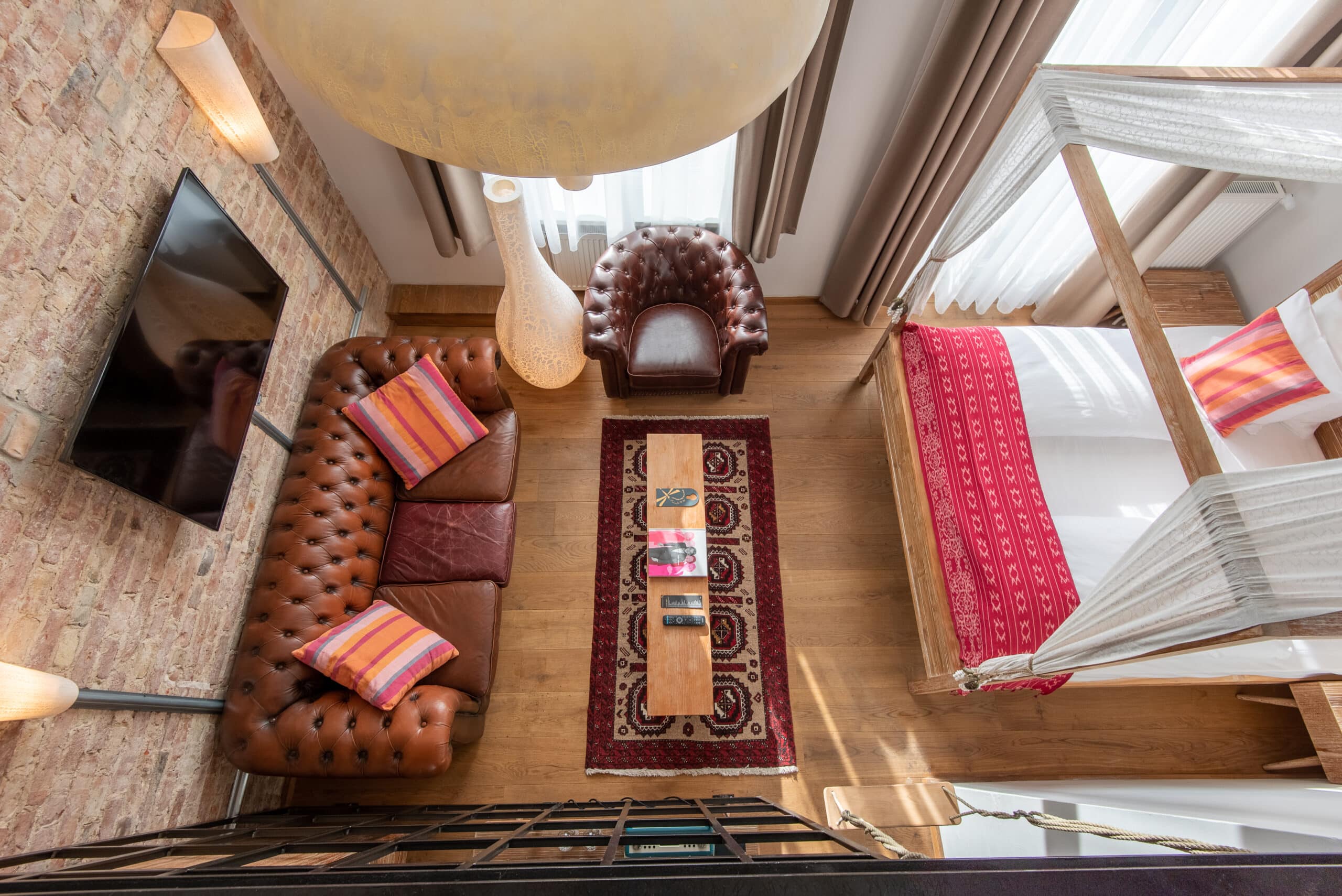
What links them visually is the furniture. Four-poster frames create a room within the room, while soft furnishings keep the geometry from becoming severe. In the suite photographs, seating and sleeping areas have distinct personalities rather than disappearing into a single bed-dominated rectangle. The loft accommodation introduces another dimension, making the room feel more like a small interior landscape than a standard overnight compartment.
Travellers familiar with Bryggen Guldsmeden in Copenhagen will recognise the family resemblance. Here, however, the Berlin building and street setting supply a different backdrop. The brand’s design vocabulary is consistent without making the address irrelevant.
The table and the courtyard
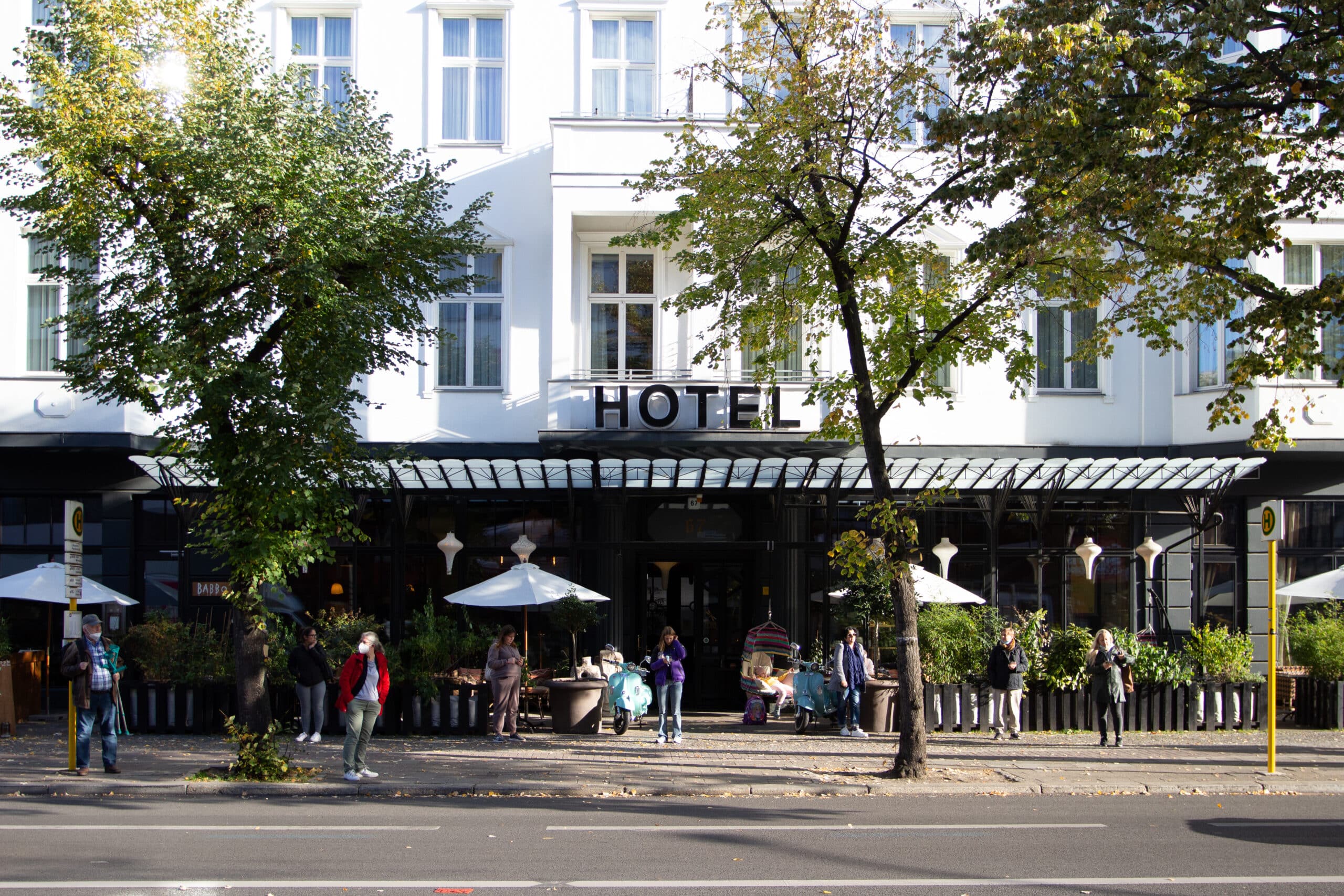
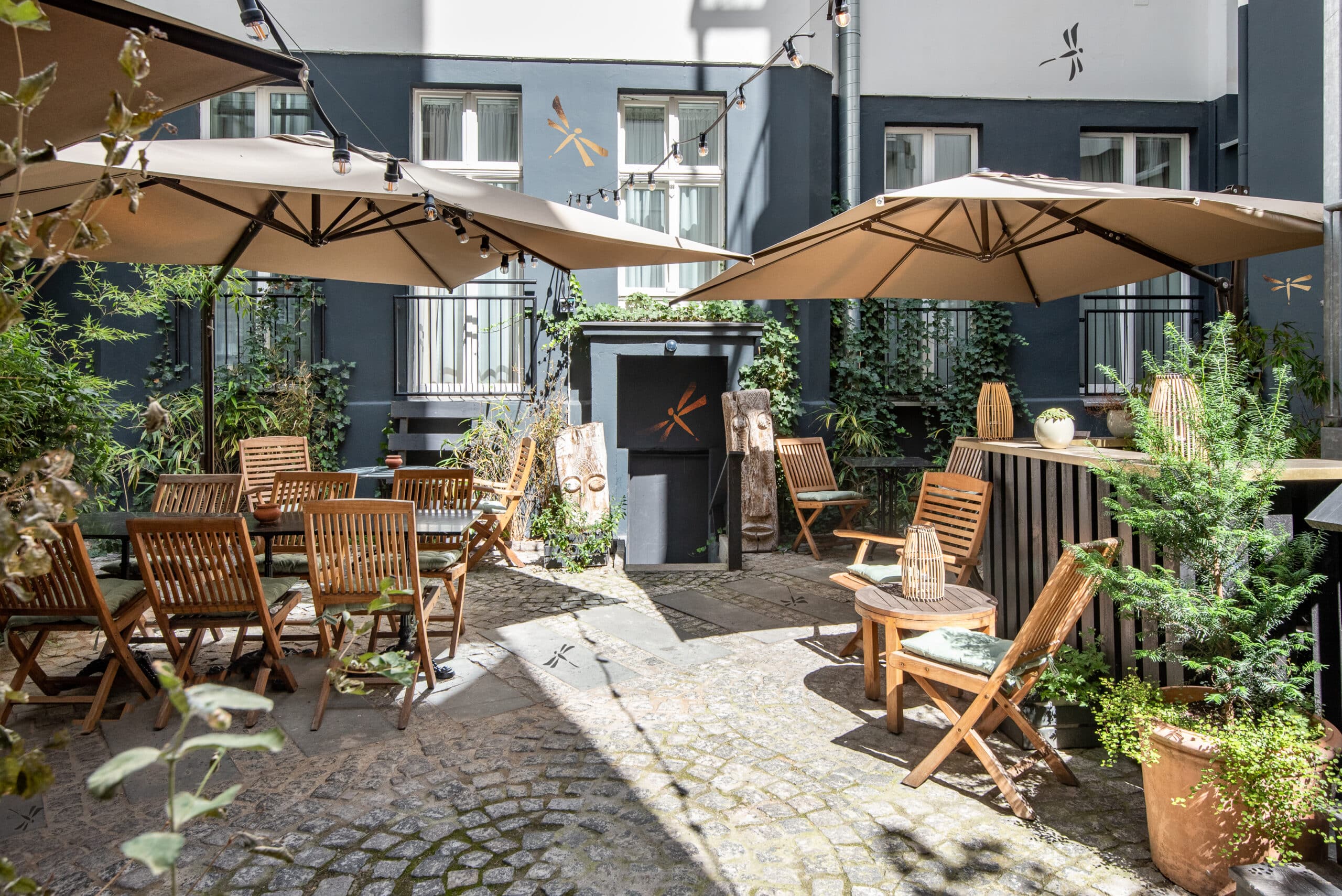
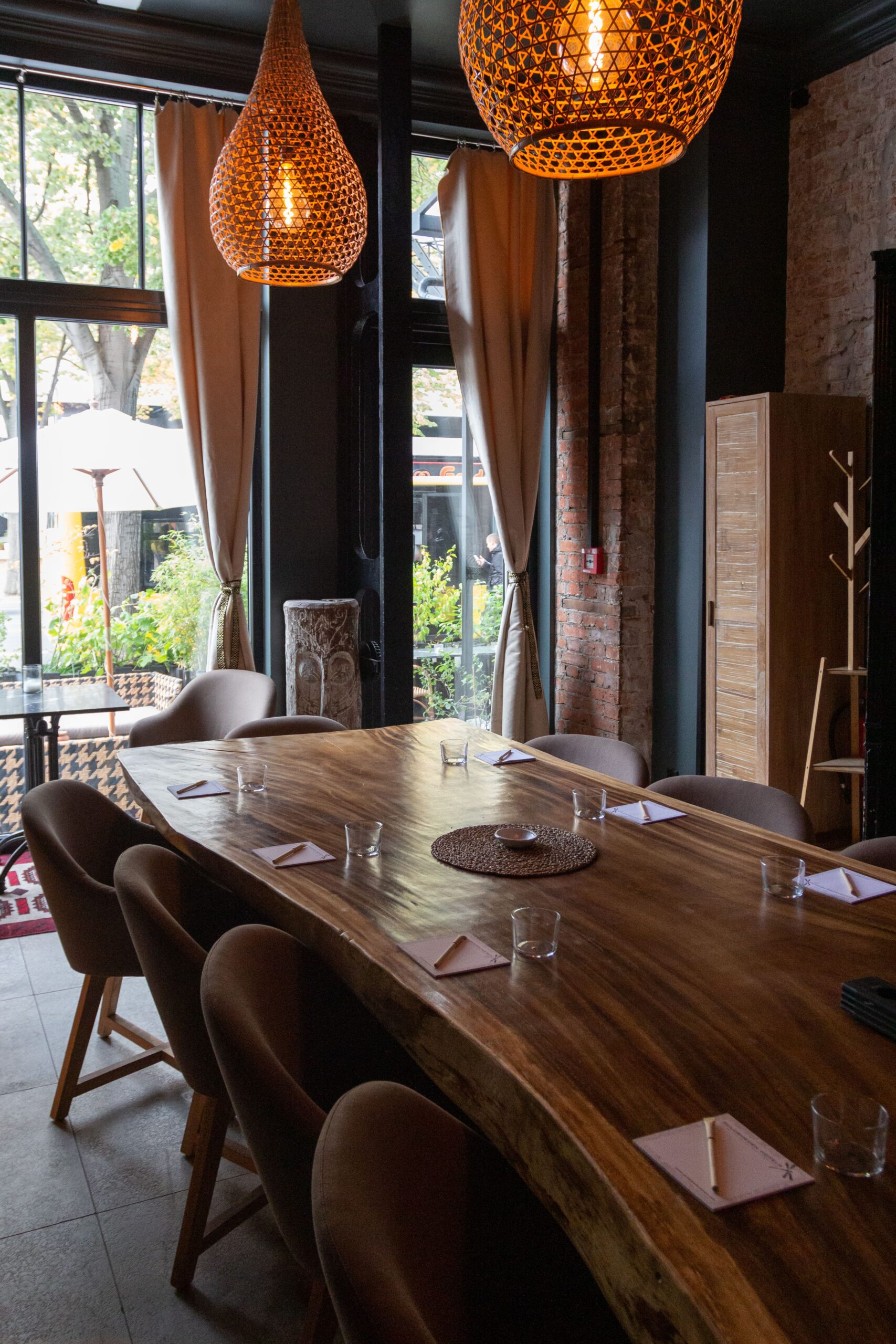
Food supplies another strand of the hotel’s identity. Lu Liba takes its direction from Lebanese and Mediterranean cooking, while the courtyard provides an alternative to dining rooms that feel cut off from daylight. In the hotel’s images, umbrellas, plants and informal seating make that outdoor space look deliberately inhabited rather than ornamental.
That relationship between rooms and shared spaces matters on a short stay. A hotel can offer somewhere to pause without demanding that the whole trip revolve around its facilities. Berlin remains the reason to come; the courtyard offers a place to let a day settle before heading back out. Readers planning later evenings can also consult our coverage of Berlin nightlife.
Looking beyond the green vocabulary
Guldsmeden describes Lulu as GreenSign-certified, but the more revealing document is its property-specific 2025 management plan. It sets out practices including food-waste measurement and sourcing arrangements. These are the operator’s reported measures, not a claim that an overnight stay has no environmental impact.
The distinction is worth keeping. Natural-looking interiors alone cannot demonstrate environmental performance. Lulu’s appeal rests instead on a combination that can be examined: a recognisable Berlin address, rooms with character, a social courtyard and published operational commitments. Together they suggest a city hotel interested less in spectacle than in making the time between outings feel considered.