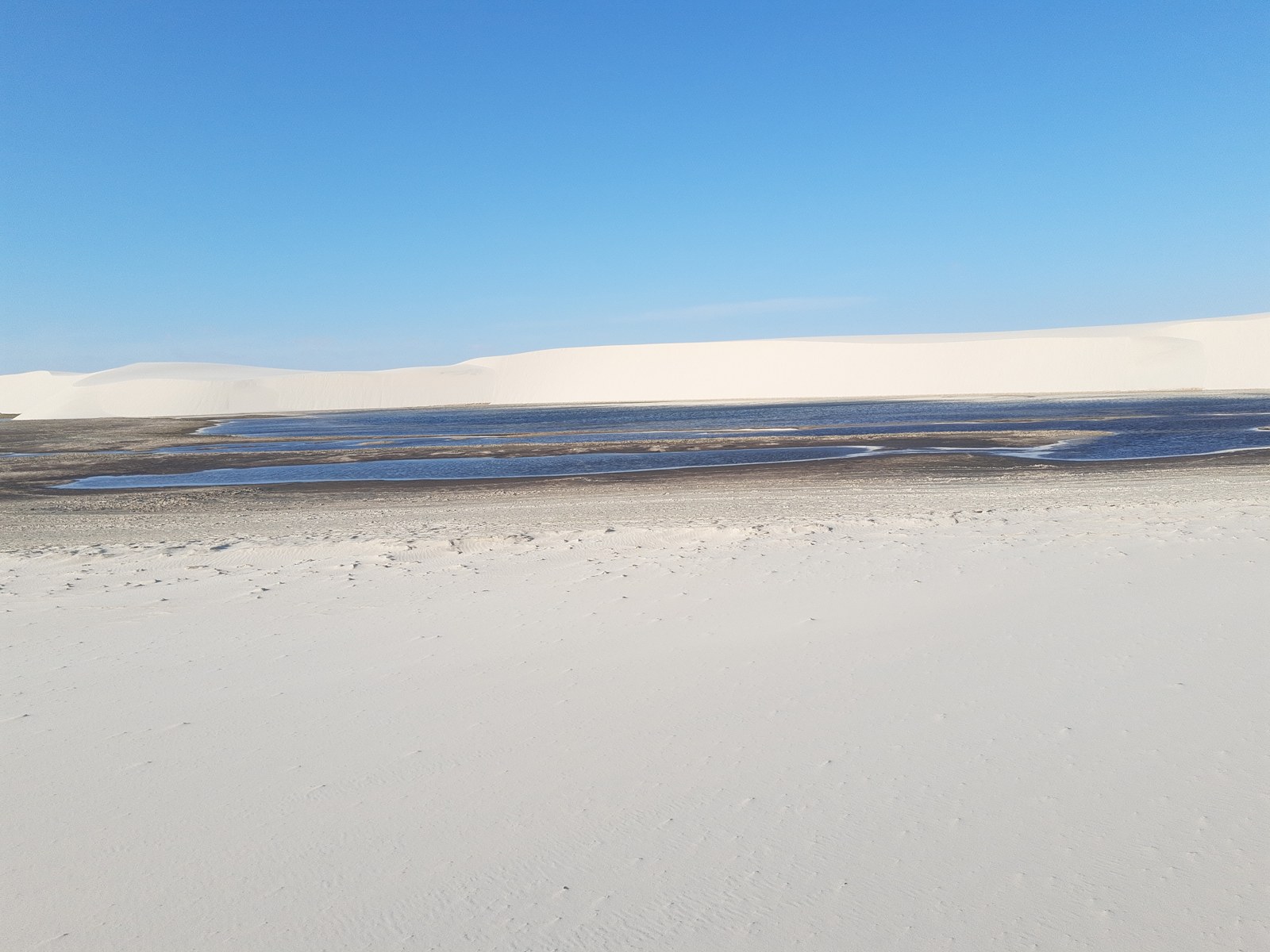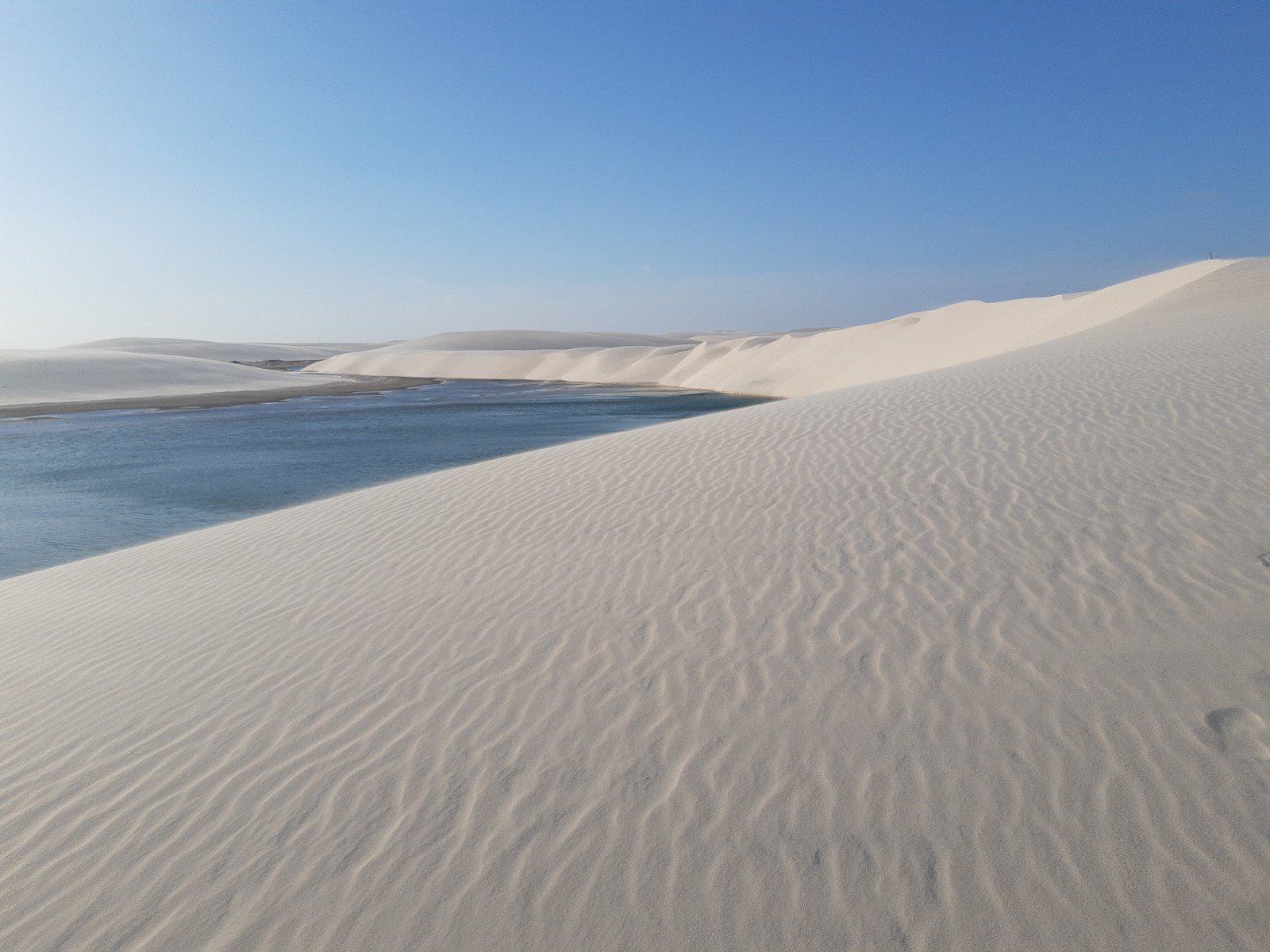
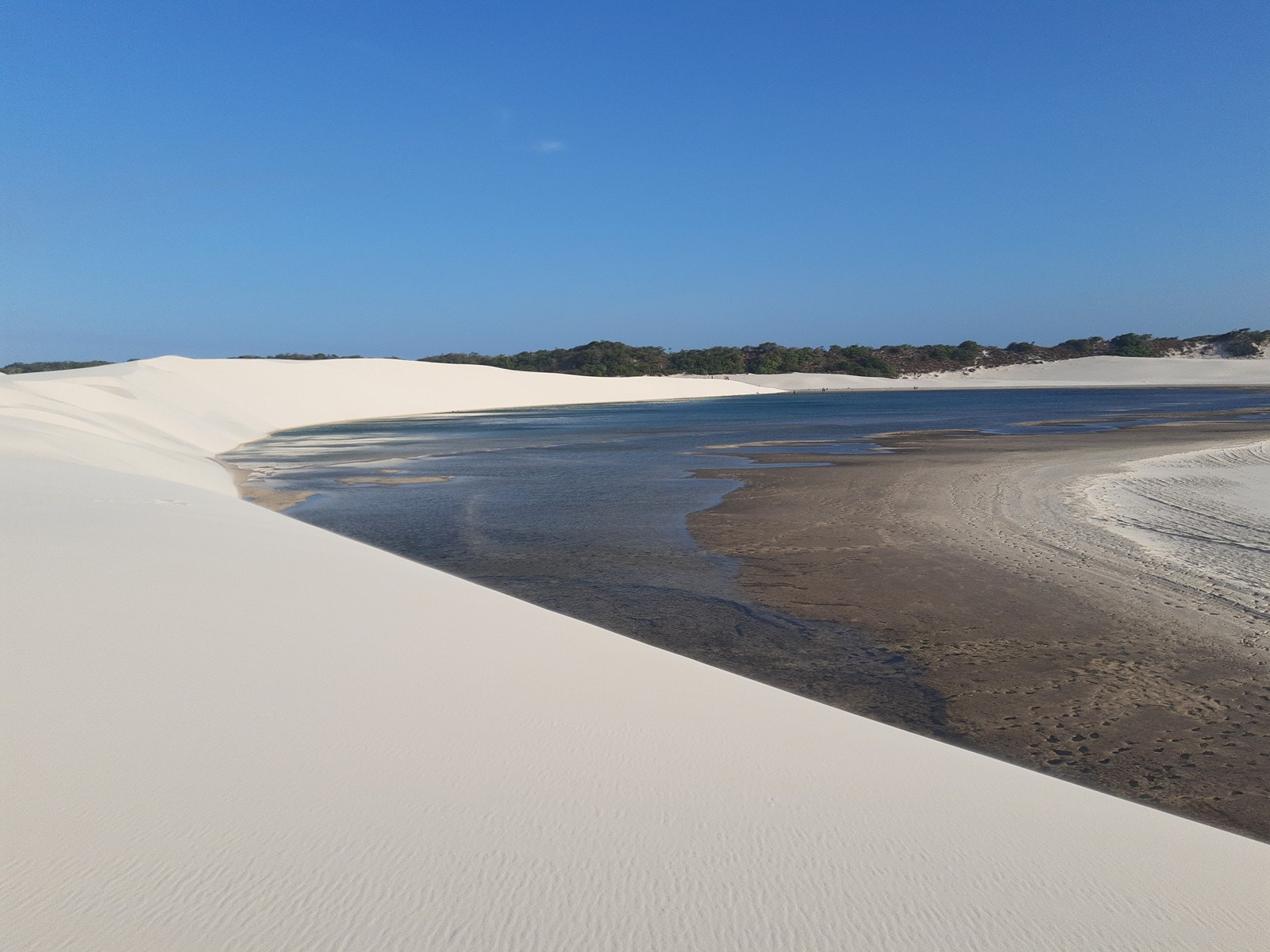
Lençóis Maranhenses is a place to plan around water, wind and distance. In this national park in northeastern Brazil, pale dunes curl around rain-fed lagoons. The scene changes with the season, so a photograph of a full blue pool is not a promise of what you will find on a particular day.
For a first visit, choose a gateway, leave room for changing conditions and book an authorised local operator. A well-paced lagoon outing is a better introduction than trying to fit a long crossing into a spare afternoon.
What makes Lençóis Maranhenses different?
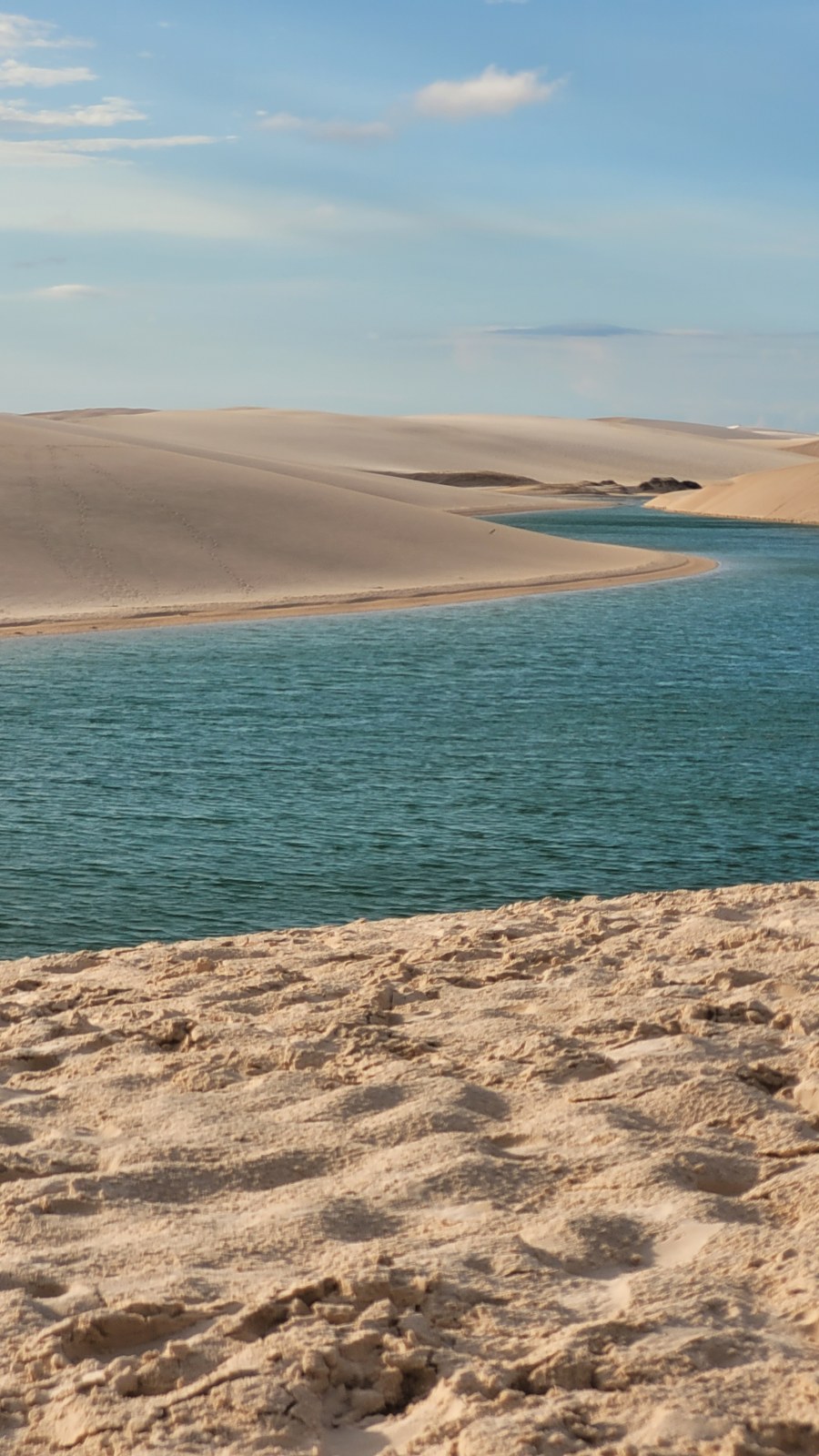
Despite its desert-like appearance, this is a coastal landscape shaped by substantial seasonal rainfall. UNESCO’s World Heritage description explains how wind moves the sand while rainwater supplies the lagoons. Some pools persist; others disappear and return in a different form. The park entered the World Heritage List in 2024.
The dunes are only part of the story. Restinga vegetation, mangroves and freshwater environments also matter here. Look beyond the most vivid patch of blue: the meeting of sand, water and vegetation gives the landscape its depth.
When to visit the lagoons
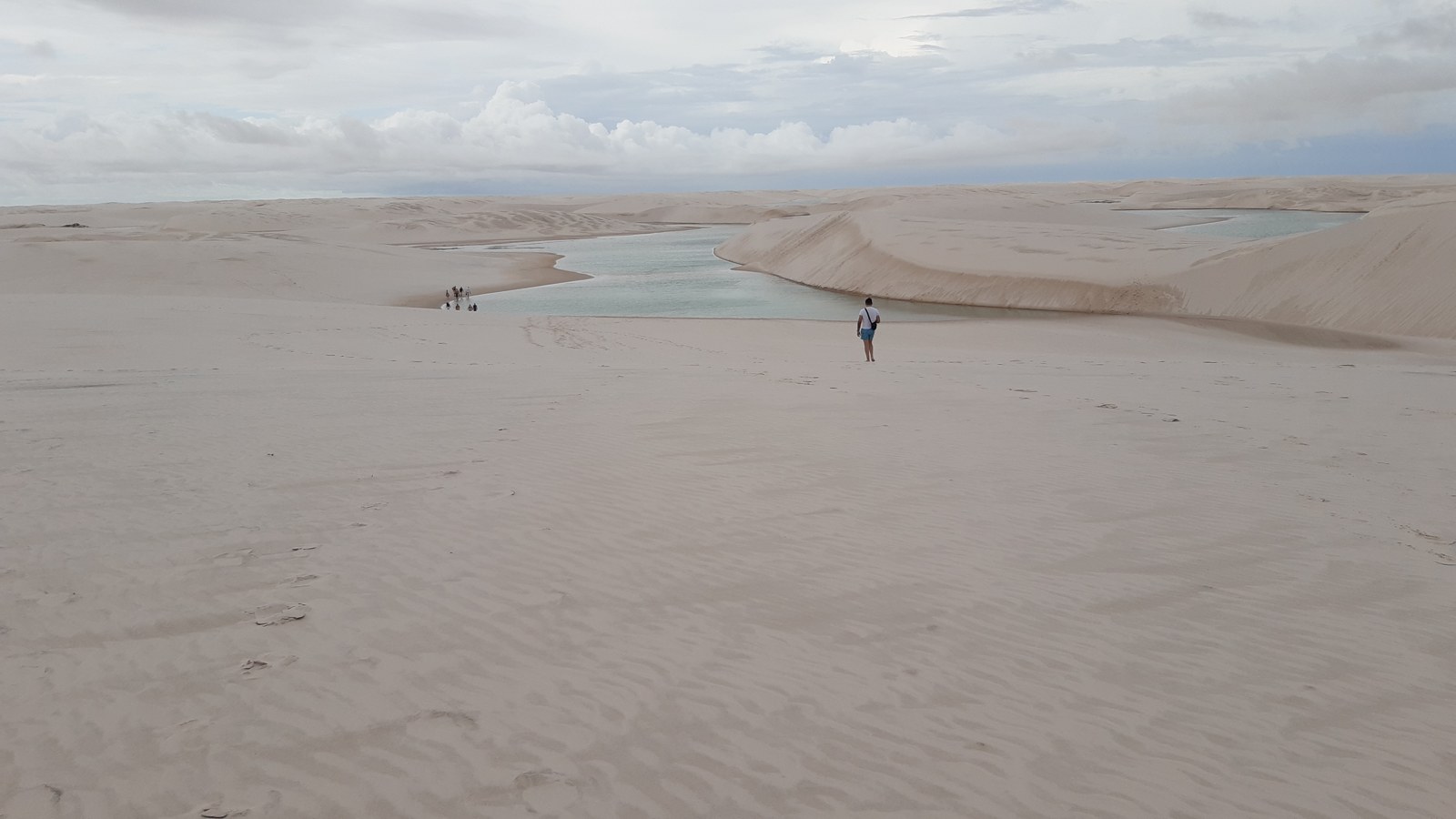
Brazil’s tourism ministry highlights the months after the rains, particularly May to September, in its overview of Lençóis Maranhenses. Treat that as a planning window, not a guarantee. Rainfall varies, and a shallow lagoon can change well before a deeper one.
Ask your operator which circuits currently have water and how much walking they involve. If swimming is central to your trip, make that clear before booking. The archival photographs in this guide show different conditions, not a live report of lagoon levels.
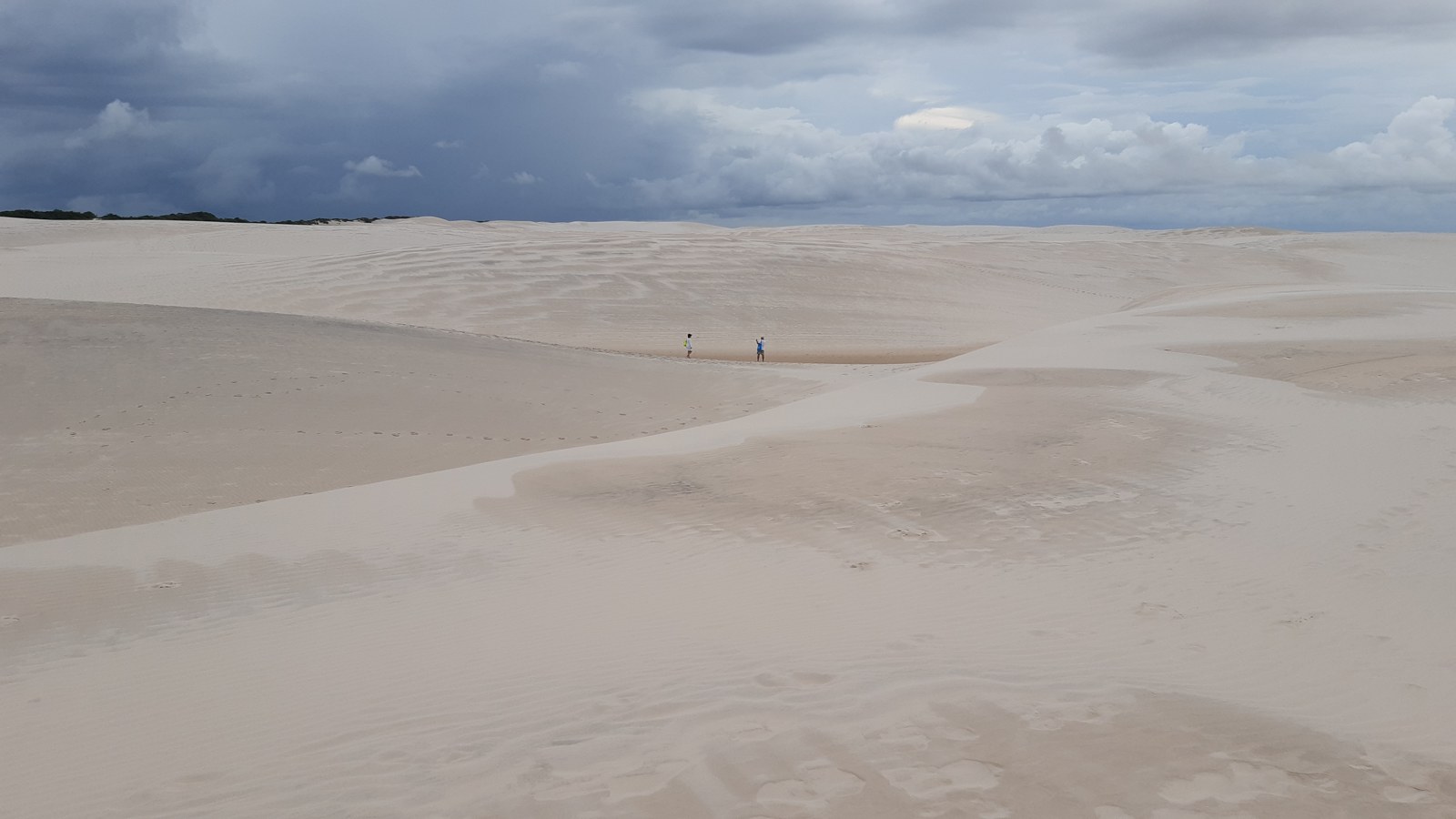
Choose your gateway before your excursion
Barreirinhas and Santo Amaro do Maranhão are principal gateways. São Luís is a practical arrival point for an onward road transfer. Check the complete journey with your accommodation rather than judging it by the distance to a dune on a map.
Compare the pickup point, transfer time, walking distance and return arrangements. A cheap outing that requires an awkward journey from your hotel may be less useful than a closer, clearer option. Avoid booking a tight flight connection immediately after a remote excursion.
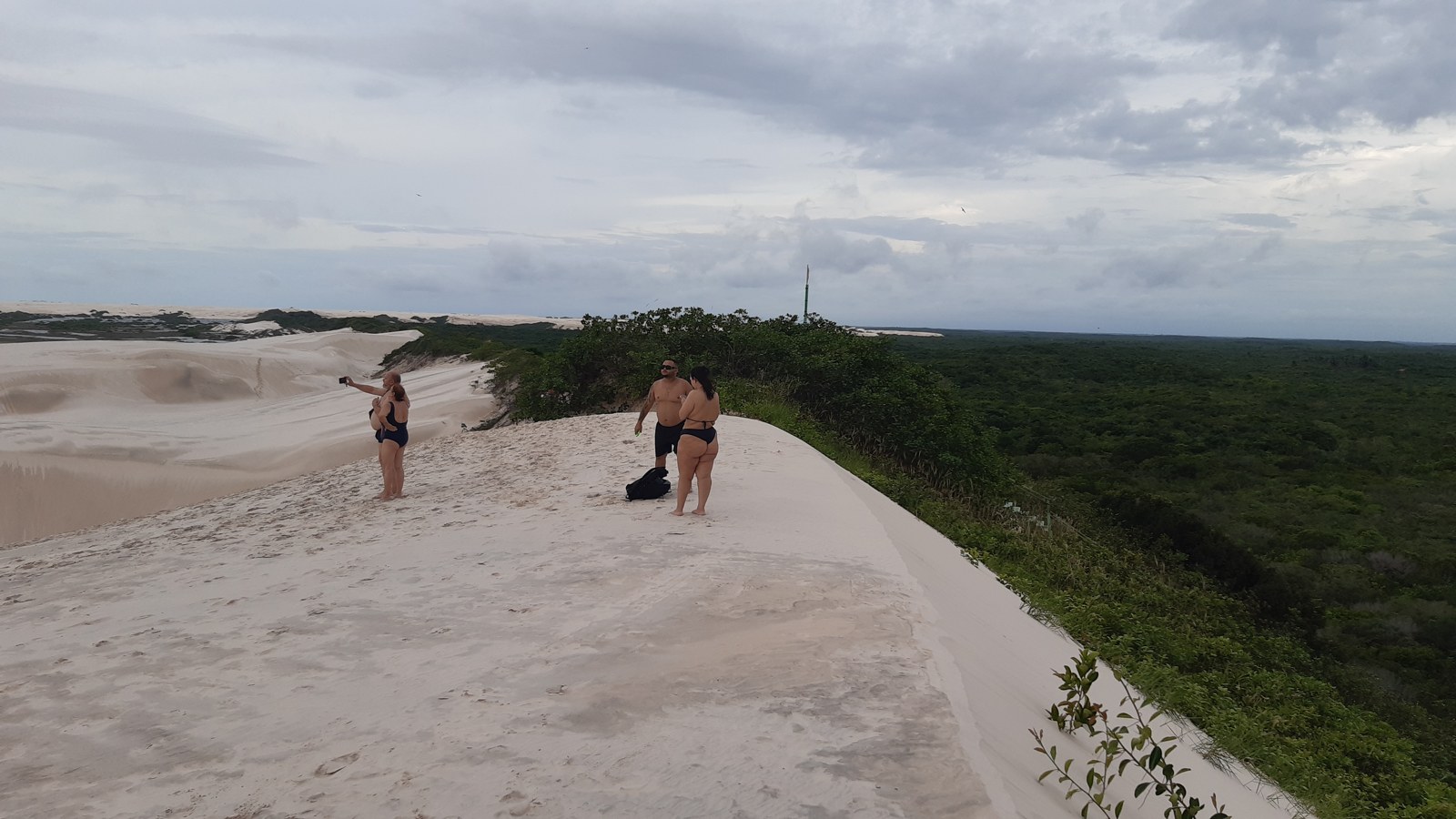
A sensible first day in the dunes
Begin with one lagoon circuit rather than a checklist of names. Leave time to climb at a comfortable pace, stop for the view and return without rushing. Sand makes even a short distance more demanding than a paved city walk.
Discuss mobility needs before paying. Ask about vehicle boarding, the steepest sandy section and whether a shorter route is possible. Do not assume that a four-wheel-drive transfer removes the need to walk.
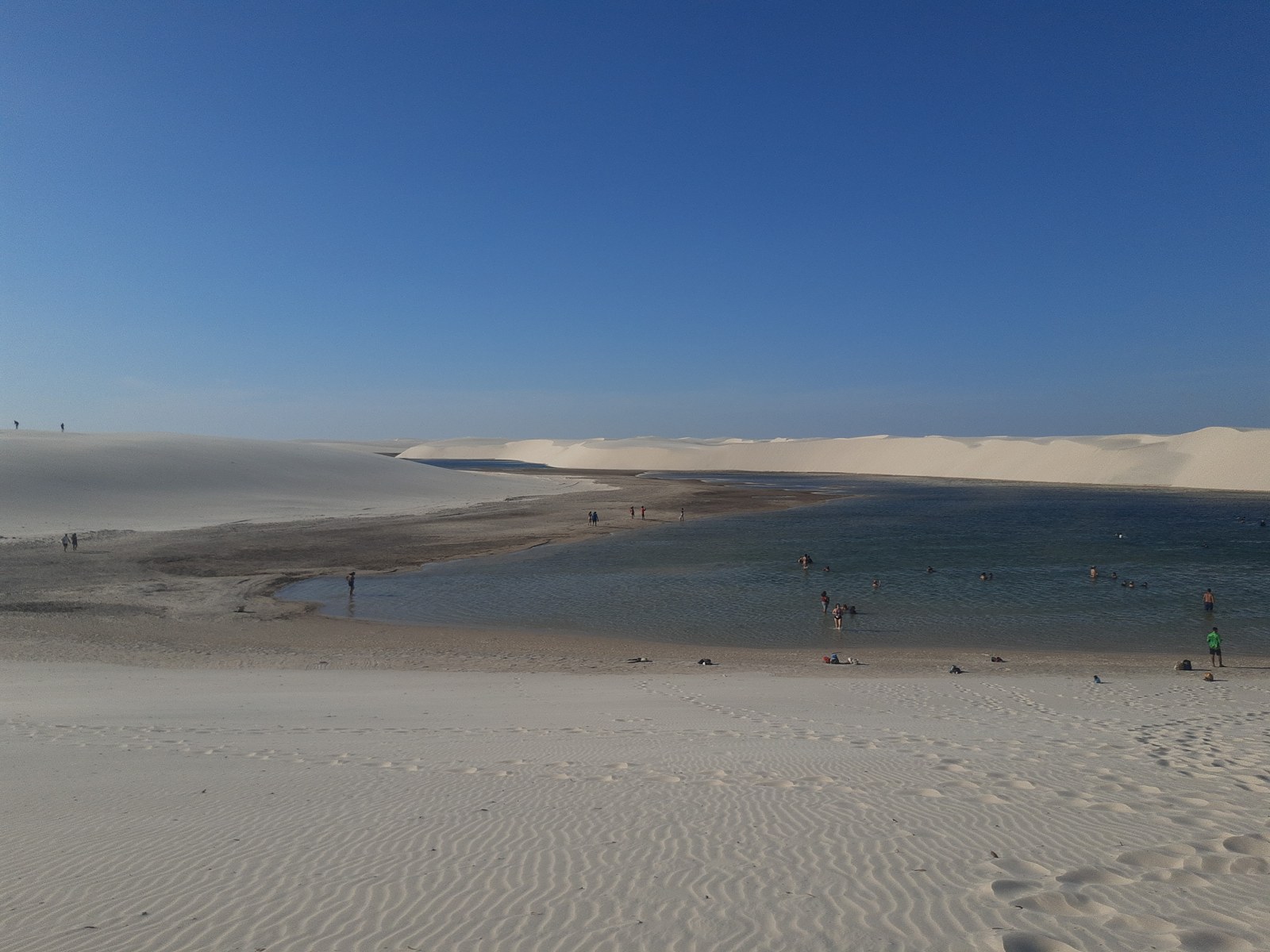
Guides, vehicles and entry costs
The ICMBio visitor guidance says the agency does not charge park admission, although operators charge for their services. Use authorised drivers, guides and vehicles. Private-car sightseeing inside the park is not permitted.
Bring water, sun protection and insect repellent, and follow your guide’s instructions. Alcohol, domestic animals and fires are prohibited. A rental vehicle is not permission to drive onto the dune field.
Day visit or multi-day crossing?
The Travessia dos Lençóis is a different undertaking from a short lagoon visit. It links Atins and Santo Amaro through a sensitive area where tourist access is on foot. Community stops are part of the route, not incidental facilities to assume will have space.
Under the current official trekking rules, support-point reservations are mandatory, with proof carried by the group or guide. Groups are limited to ten people per guide. Overnight walks require an appropriately sized human-waste collector; glass containers are prohibited. Entry and exit registration are also required.
Choose the crossing only if the walking, heat and overnight arrangements suit you. Confirm the current requirements directly with your operator before committing.
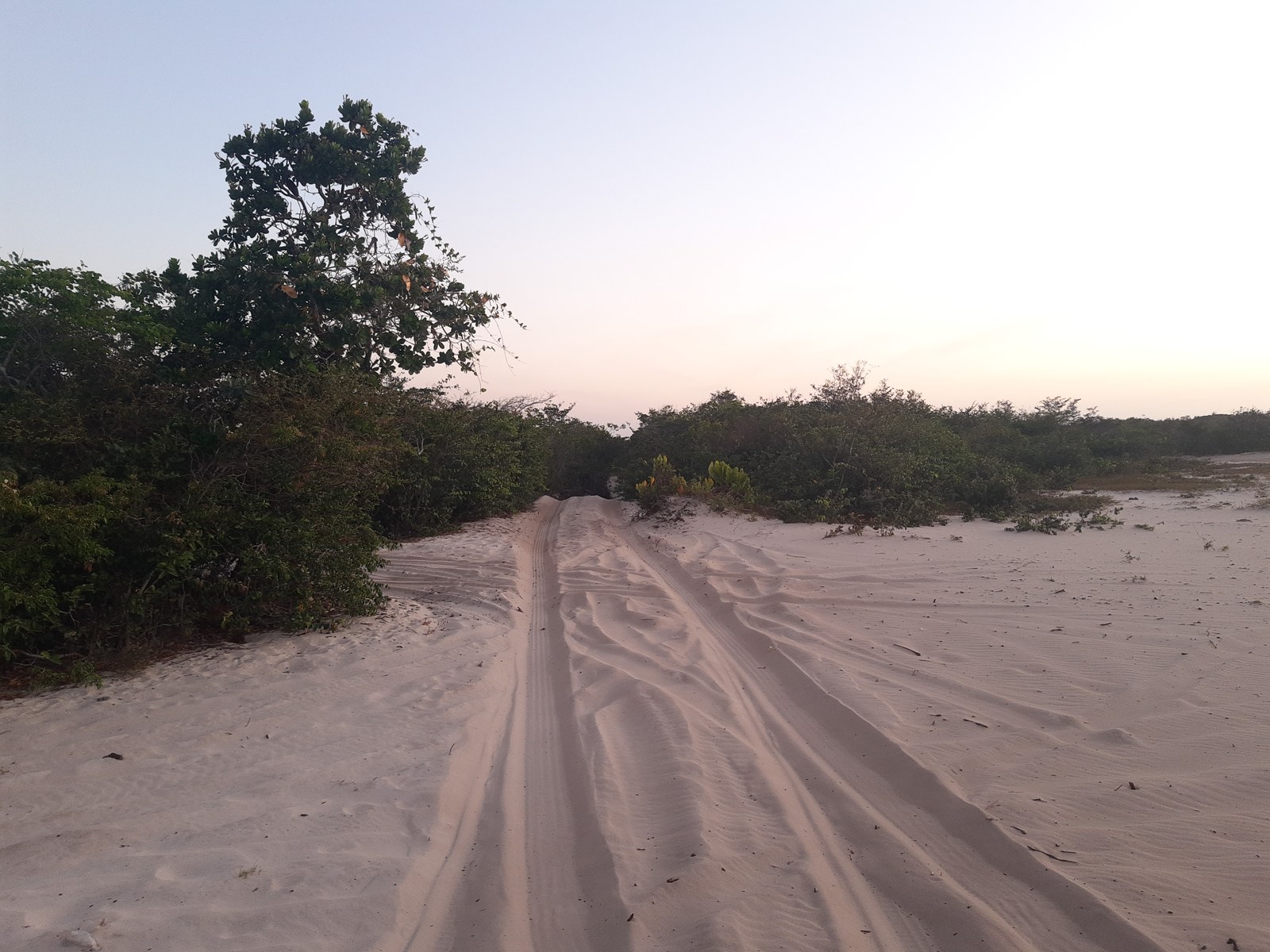
Photograph the place without chasing a promise
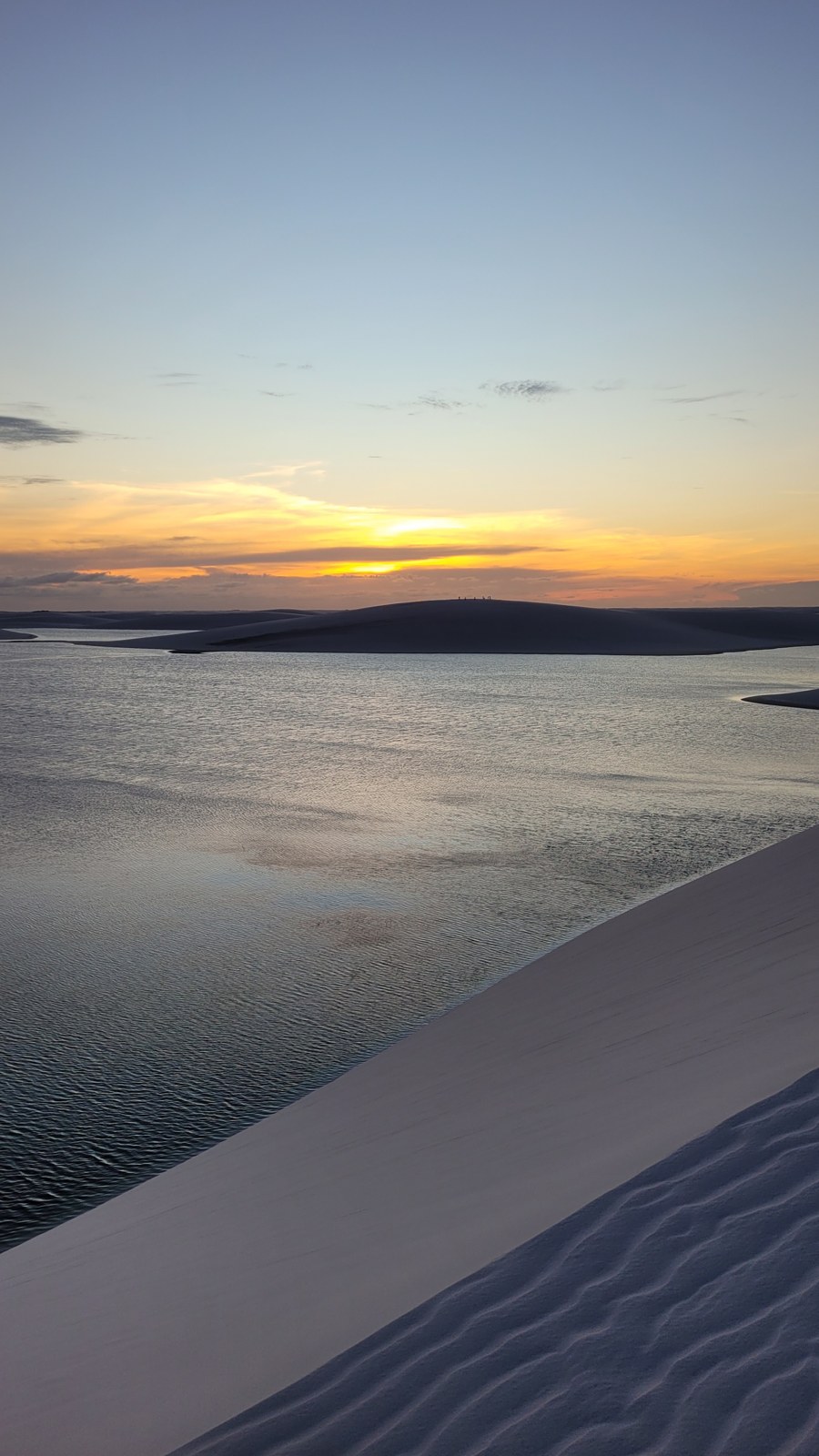
A lagoon can look very different under cloud, in bright midday sun or near sunset. Allow your photographs to reflect the conditions you actually find. Keep the return journey and your group’s pace ahead of getting one last image.
The official park page is the starting point for updated notices. Check it again before departure, particularly if you are planning something beyond a standard guided outing.
Build a wider Brazil or South America trip
Lençóis Maranhenses deserves its own travel time. It is not a quick add-on to southern Brazil. Our guide to Iguaçu Falls from Brazil offers a contrasting waterside landscape, but combining the two requires a separate transport plan.
For a broader South America itinerary, compare this active stop with a slower vineyard stay in Mendoza, or explore the very different distances and terrain in our Patagonia travel guide. These are separate journeys, not neighbouring excursions.
Before you book
- Confirm current lagoon conditions for your dates.
- Choose a gateway that matches your excursion pickup.
- Check the operator’s authorisation and exactly what the price includes.
- Discuss walking ability, heat and access needs in advance.
- Keep transfers and departure-day plans flexible.
The reward is not simply a photograph of a blue lagoon. It is time to notice how the sand changes direction, how vegetation marks the edge of the dunes, and how different the same place feels as the light moves.