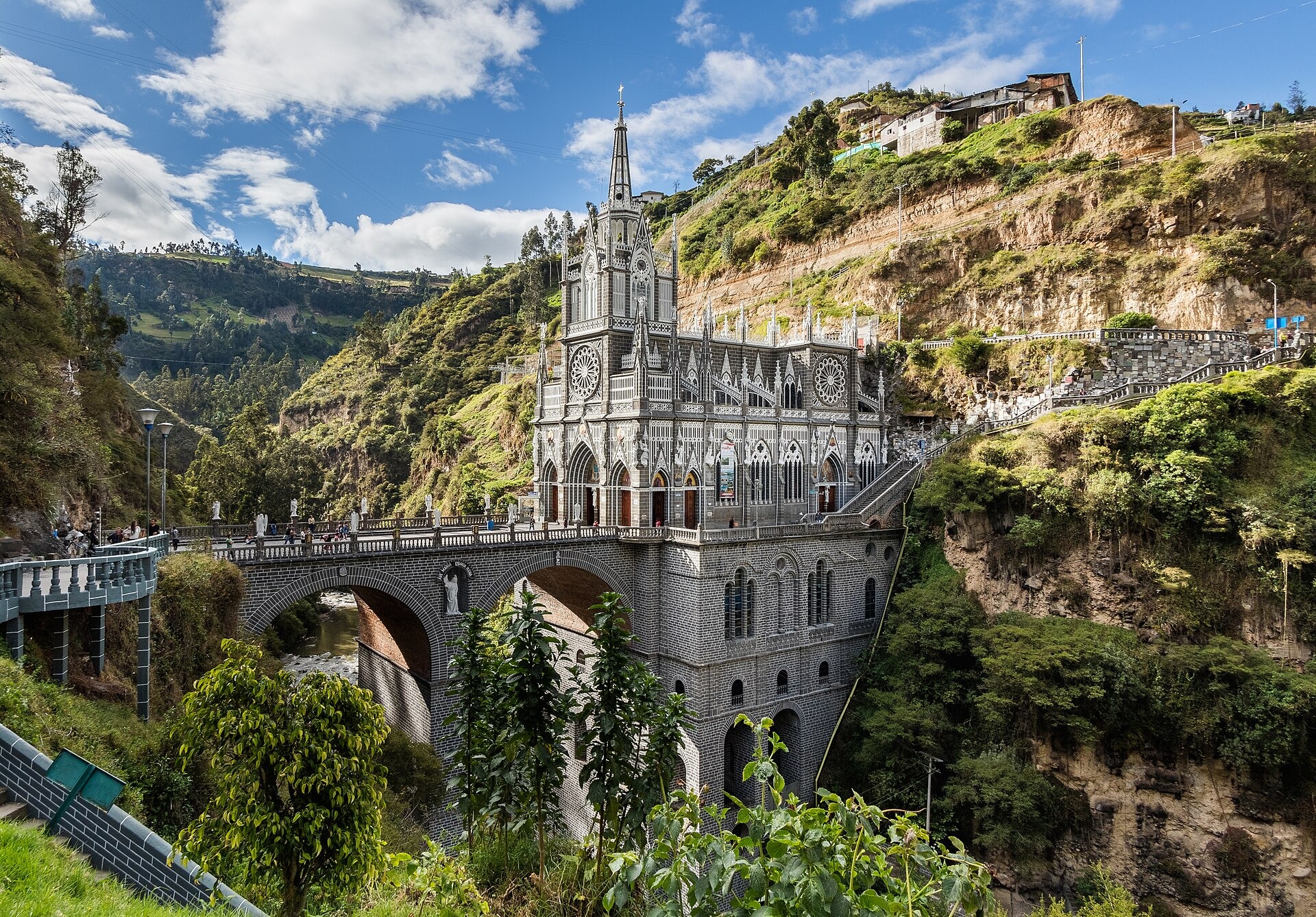
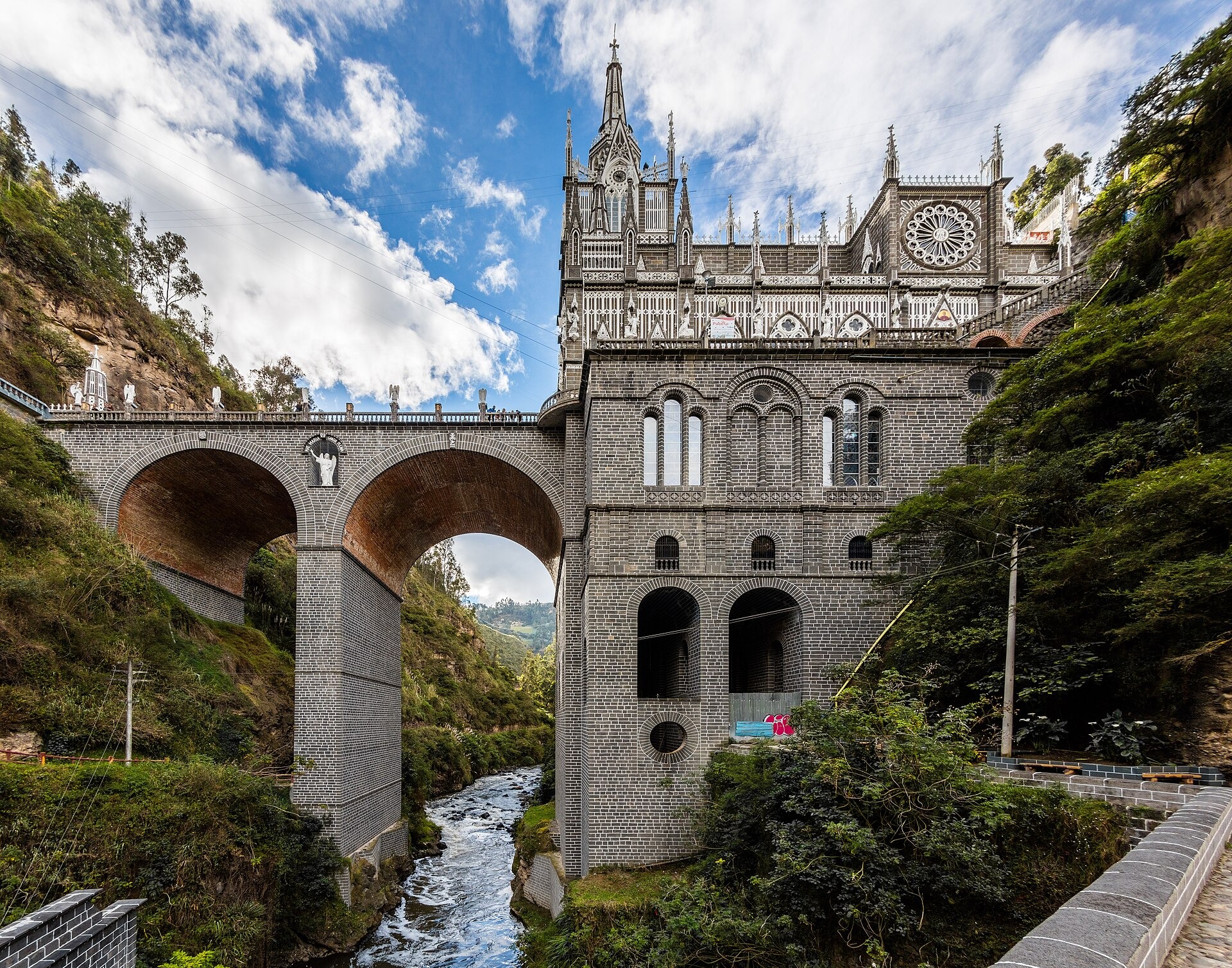
The first view of Las Lajas is an architectural surprise. A church rises from a bridge in a green Andean gorge, its pointed towers competing with the cliffs rather than the roofs of a town. In photographs, the building can look almost detached from everyday life. In reality, this sanctuary near Ipiales belongs to a living landscape of pilgrimage, gratitude and repeated journeys.

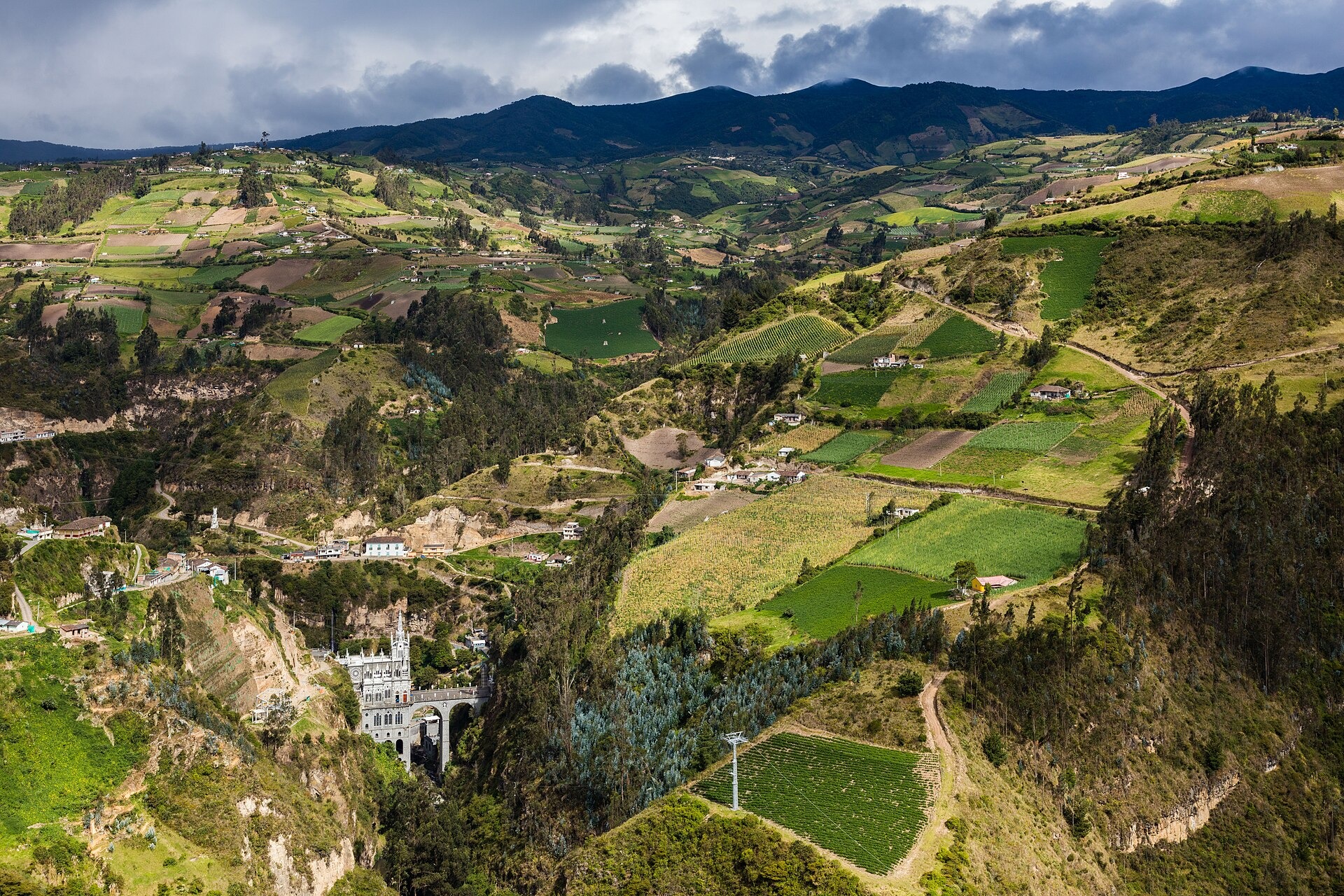
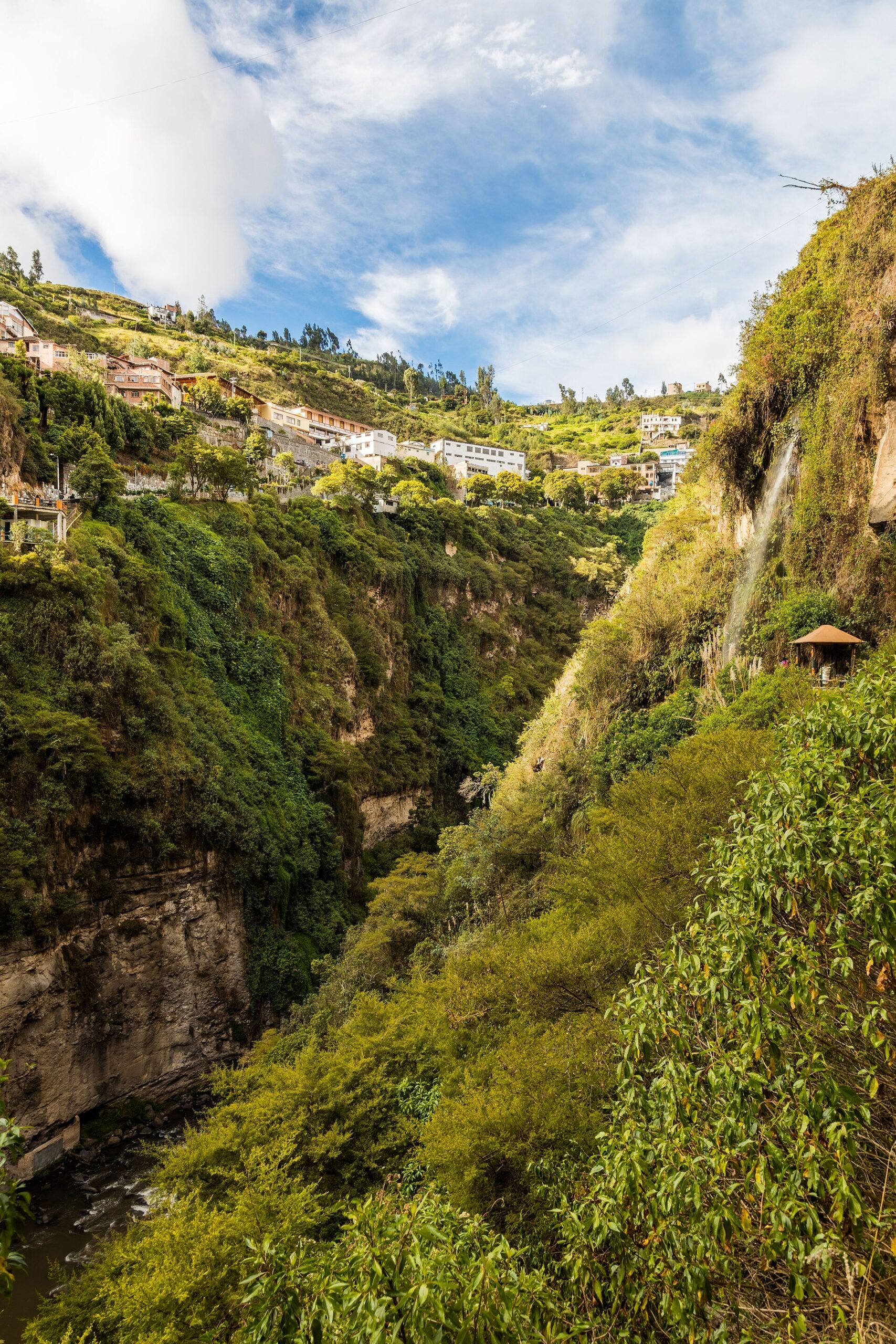
The setting is southern Colombia’s Nariño department, close to the border with Ecuador. The national tourism authority’s account of Nariño places the sanctuary approximately seven kilometres from Ipiales. That geography matters. This is not a quick extension of a Caribbean beach holiday, nor a monument tucked into the capital. It is a destination in the highlands, where the canyon of the Guáitara River becomes part of the building’s identity.

A twentieth-century church with a much older story
Despite its medieval appearance, the present sanctuary is comparatively recent. The regional government records its construction between 1916 and 1949 and names Lucindo Espinosa and J. Gualberto Pérez as its architects. Its Gothic Revival vocabulary is easy to recognise: pointed arches, vertical emphasis and towers that draw the eye upwards. Here, however, those familiar forms meet a much less familiar foundation, with the bridge carrying the approach across the gorge.

The site’s religious history reaches further back. According to the Nariño tourism authority, local tradition traces its origin to 1754, when María Mueses and her daughter Rosa took shelter during a storm. The story describes the child recognising the Virgin in the rock and speaking to her mother. It is a devotional tradition, not an event that a travel account can independently establish as a miracle.
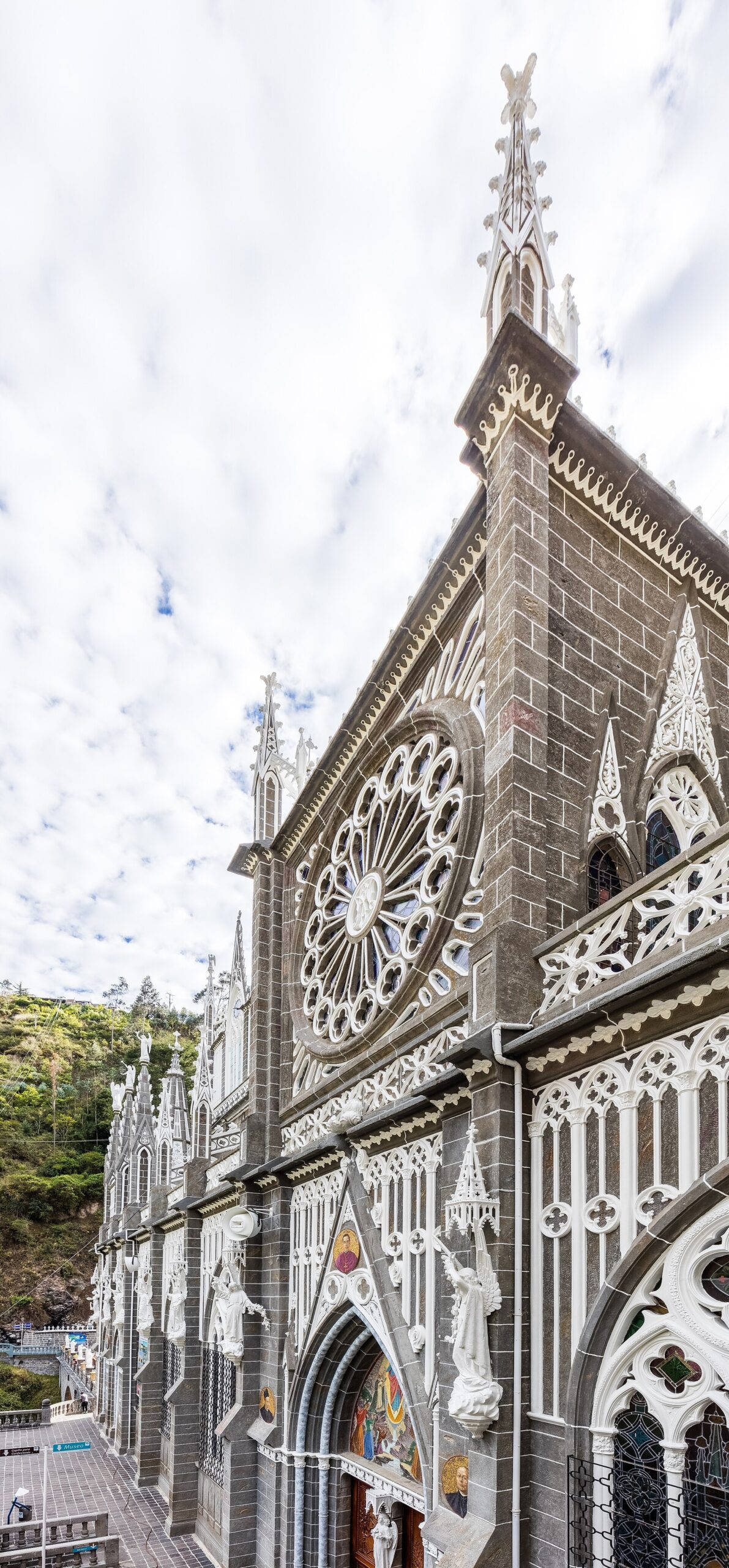

What is unmistakable is the significance that the story acquired. Successive structures grew around the place of devotion before the present church took shape. The building is therefore more than an audacious response to a difficult site. Its position expresses the importance of remaining connected to a particular rock, a particular image and a particular story.

The small details behind the great view
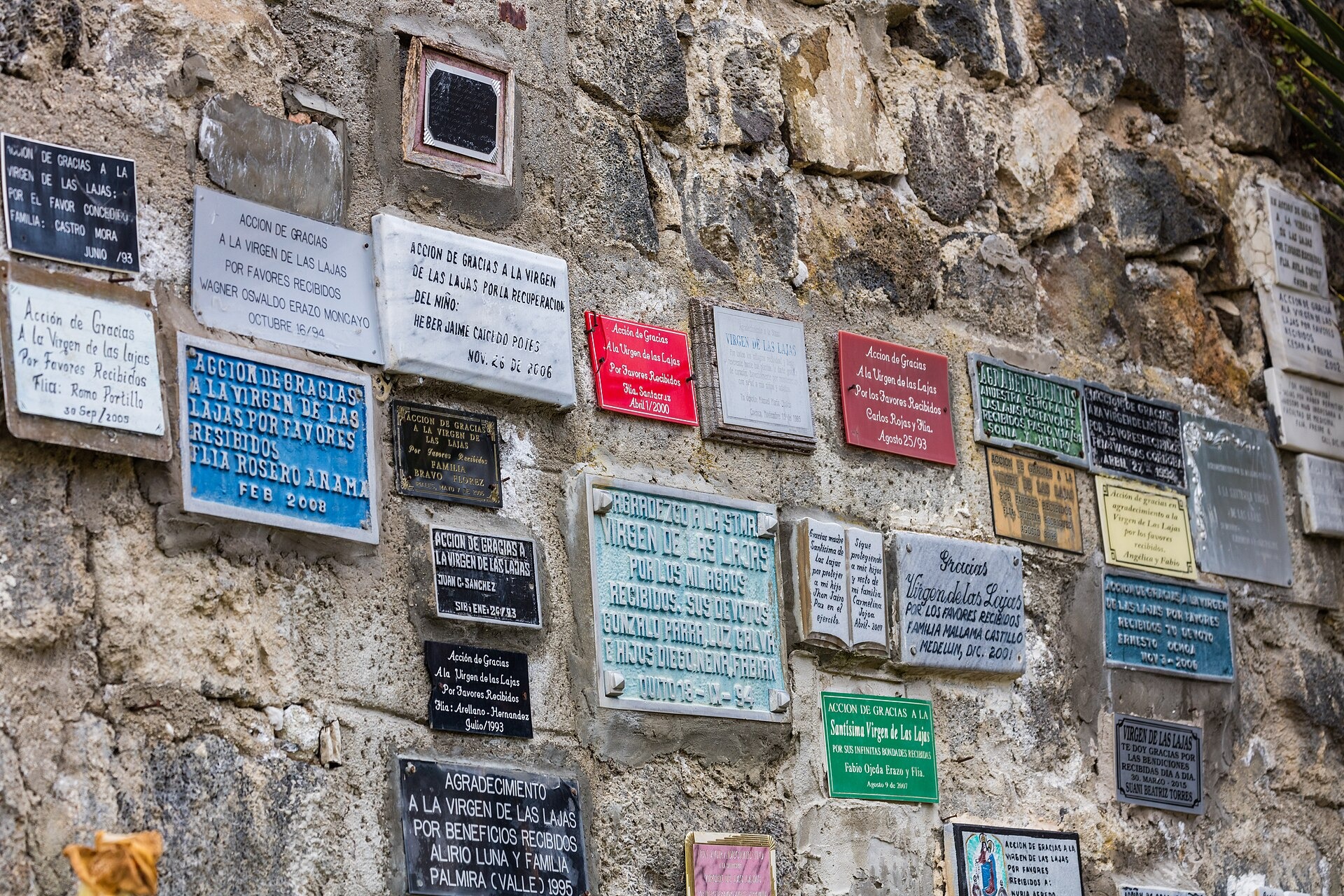
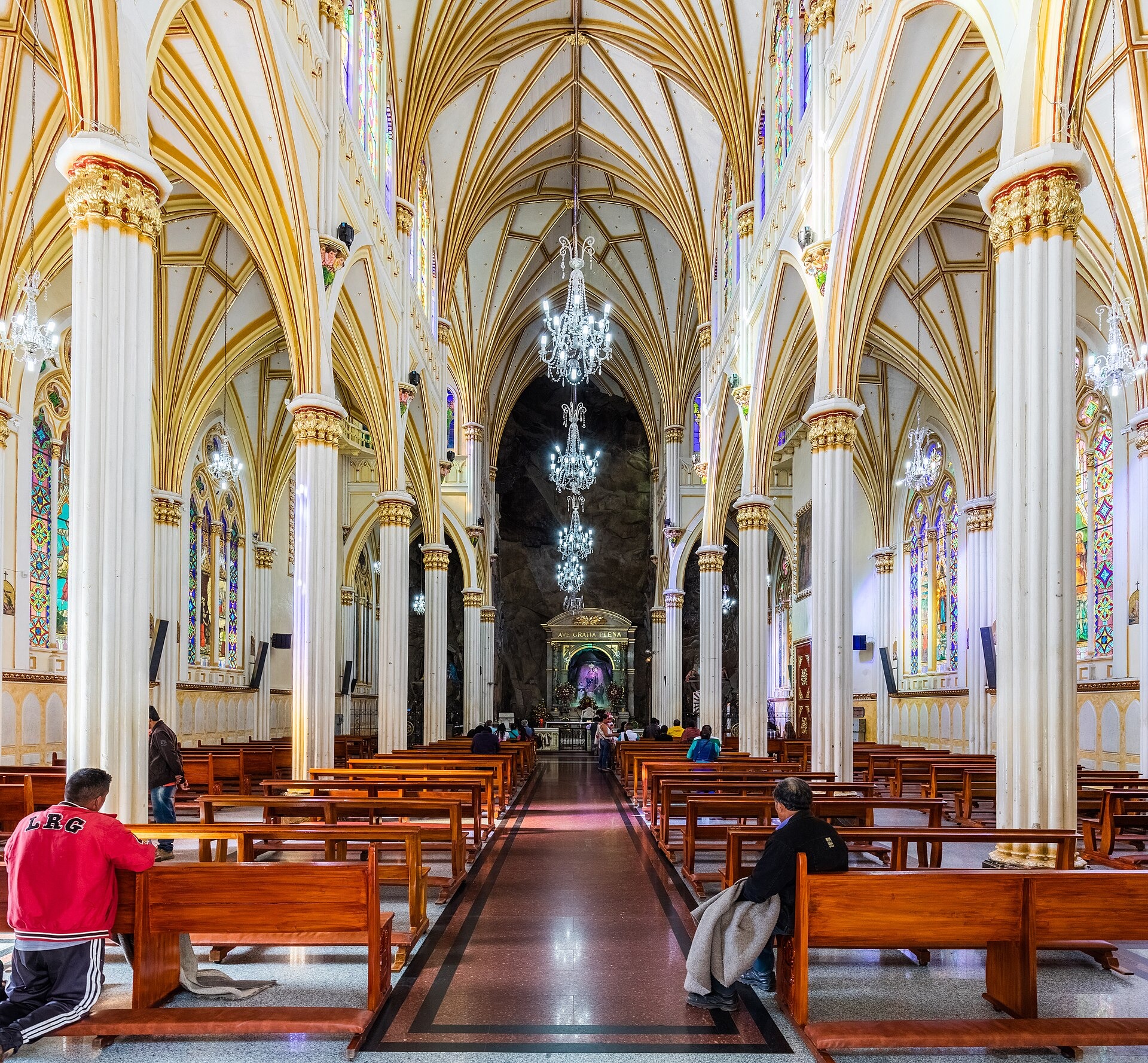
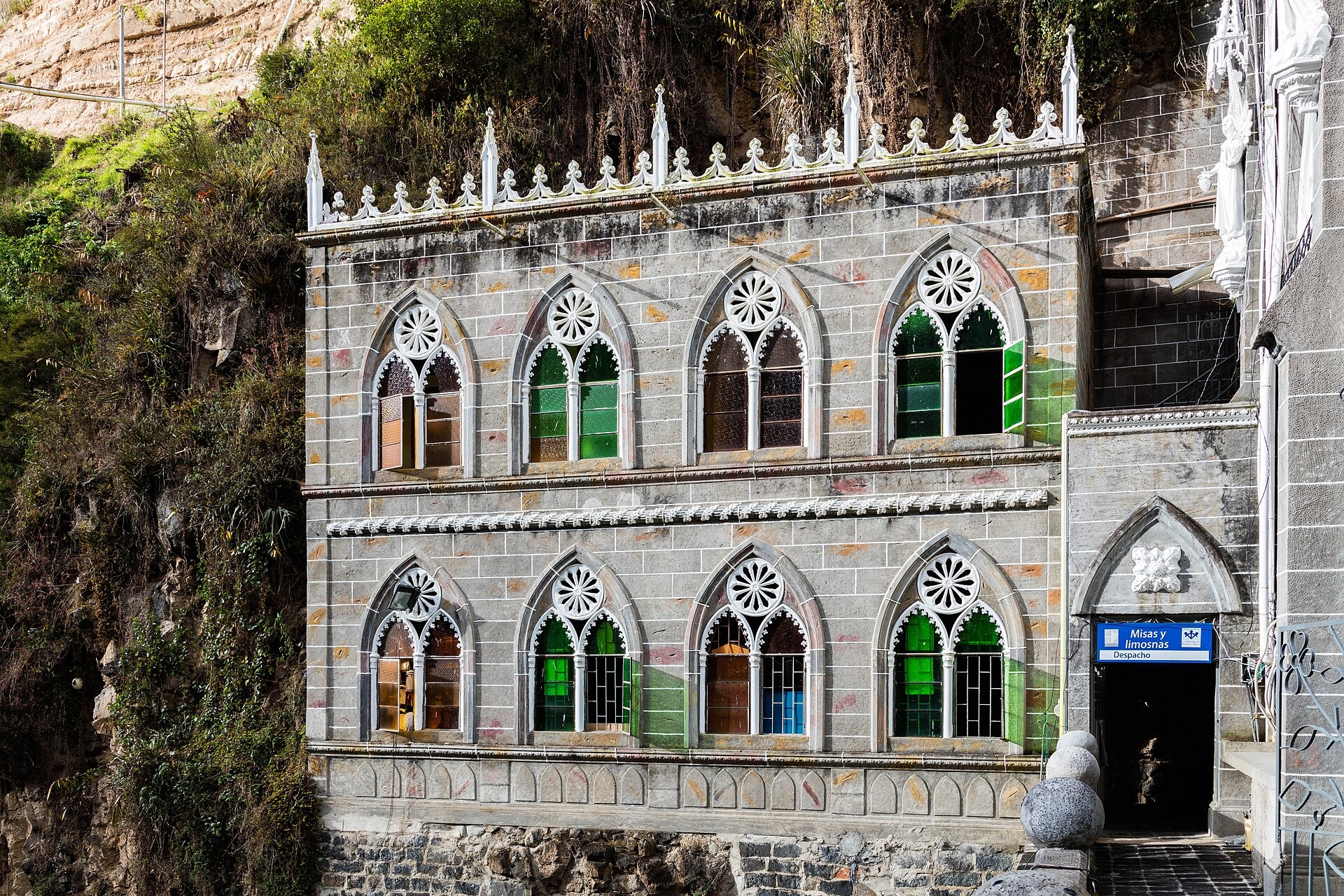
The spectacle of the exterior can overwhelm the quieter evidence of why people come. Colombia Travel’s detailed account of the sanctuary describes plaques recording thanks, stained glass, wooden pews and a pale interior with gold decoration. These details bring the scale back from the monumental to the personal. A façade addresses everyone at once; a message of gratitude records an individual relationship with the place.
Visitors need not share the faith to recognise that distinction. The strongest photographs show the relationship between church, bridge and canyon, but the experience is incomplete if the sanctuary is treated simply as a scenic backdrop. Services and private prayer continue to define its purpose. Moving quietly and keeping cameras away from people in worship is part of seeing the place properly, not an interruption to sightseeing.
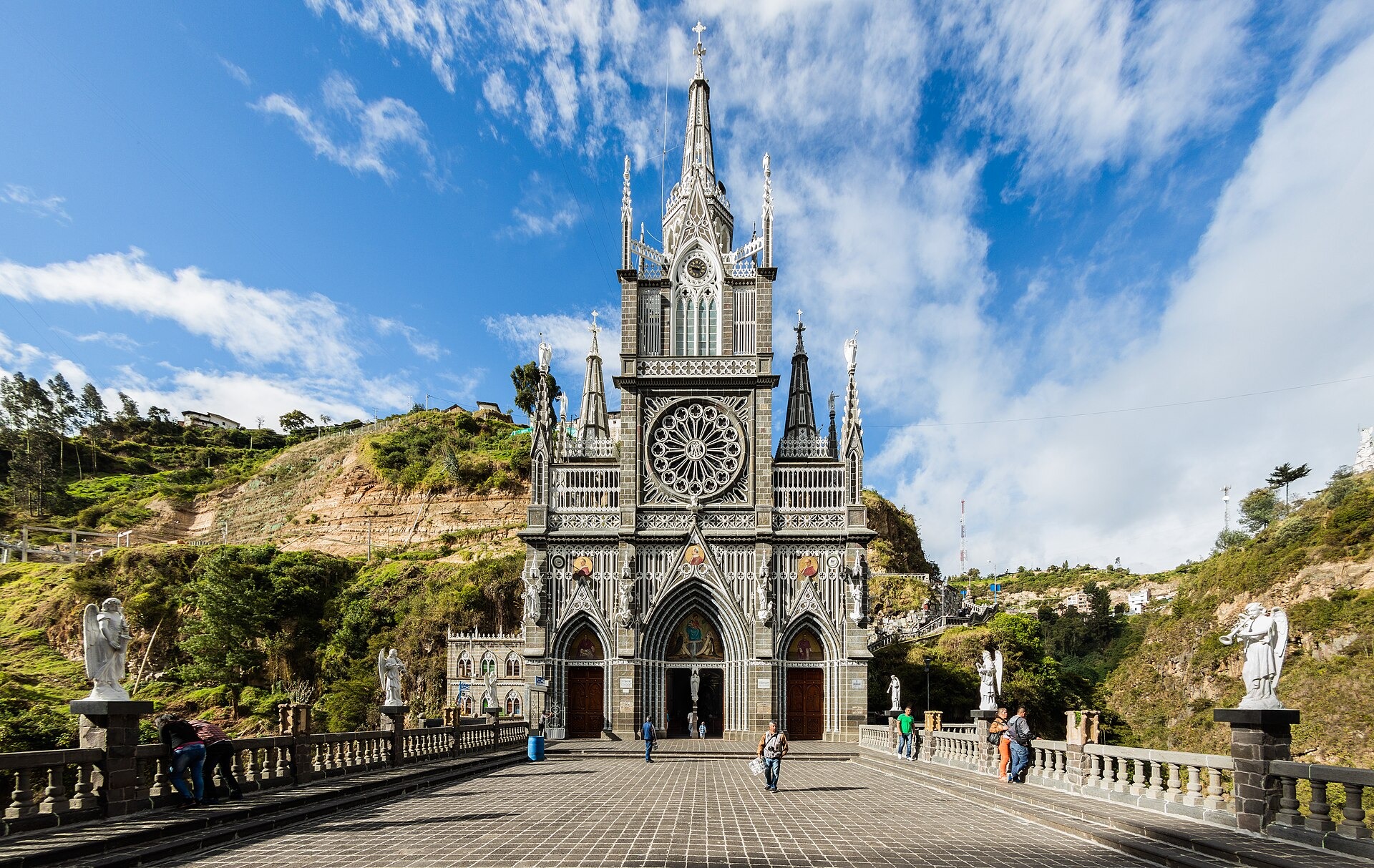

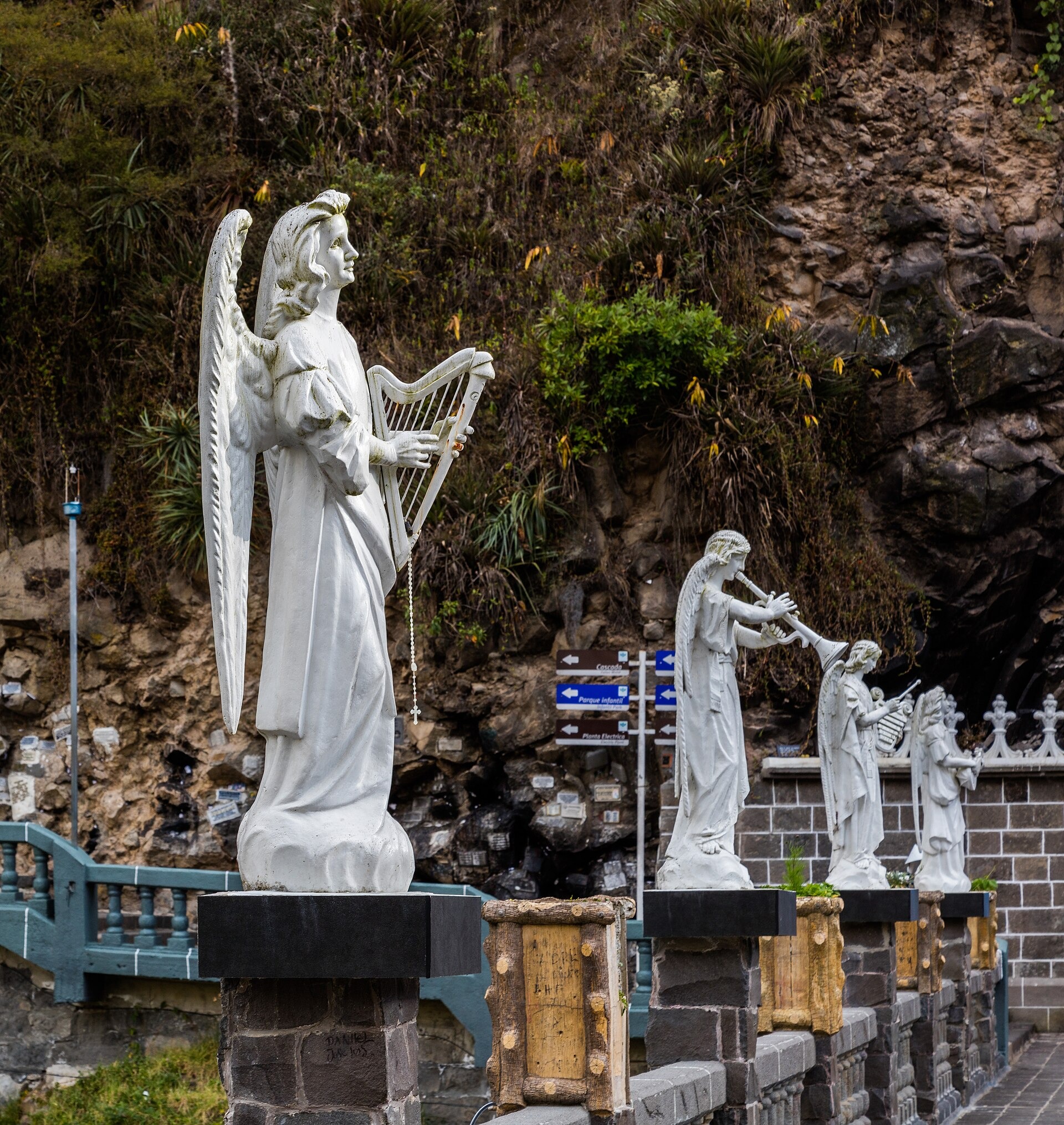
There is also a slower pleasure in looking at the architecture from different distances. From across the gorge, the church reads as a silhouette. Closer to the bridge, the repeated arches and stone surfaces become more apparent. Inside, the eye exchanges the green canyon for windows, vaulting and devotional imagery. Each change of viewpoint alters the balance between landscape and construction.

Reading the landscape, not just collecting the image
The sanctuary also belongs to a broader tradition of religious and spiritual travel in Colombia, recognised by the national tourism authority. That context is useful even for visitors drawn chiefly by the architecture. The building remains a place of devotion, not a fixed photographic installation. Worship times, transport arrangements and any access restrictions should be confirmed locally before travel rather than assumed from an older itinerary.

For travellers crossing Colombia, Las Lajas reveals a different register from the urban energy of Cali, the capital explored through our Bogotá coverage, or the coastal setting of Cartagena. These are contrasts, not neighbouring stops that can be folded casually into the same afternoon.

Allowing the sanctuary its own time makes the difference. The famous view is real, but it is only the beginning. Las Lajas becomes more compelling when the extraordinary bridge is understood not merely as an engineering statement, but as a route taken by generations of people towards a place that matters to them.