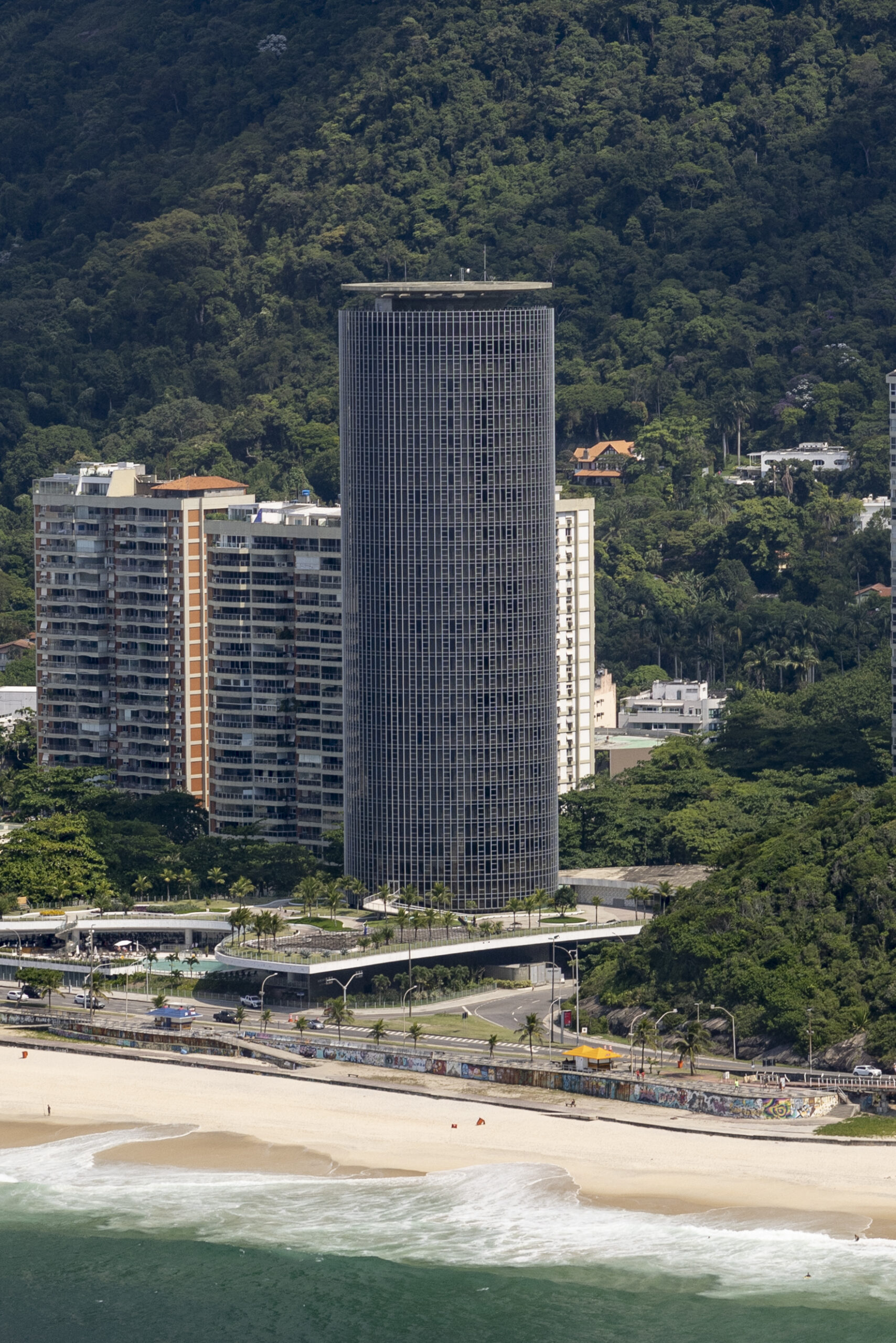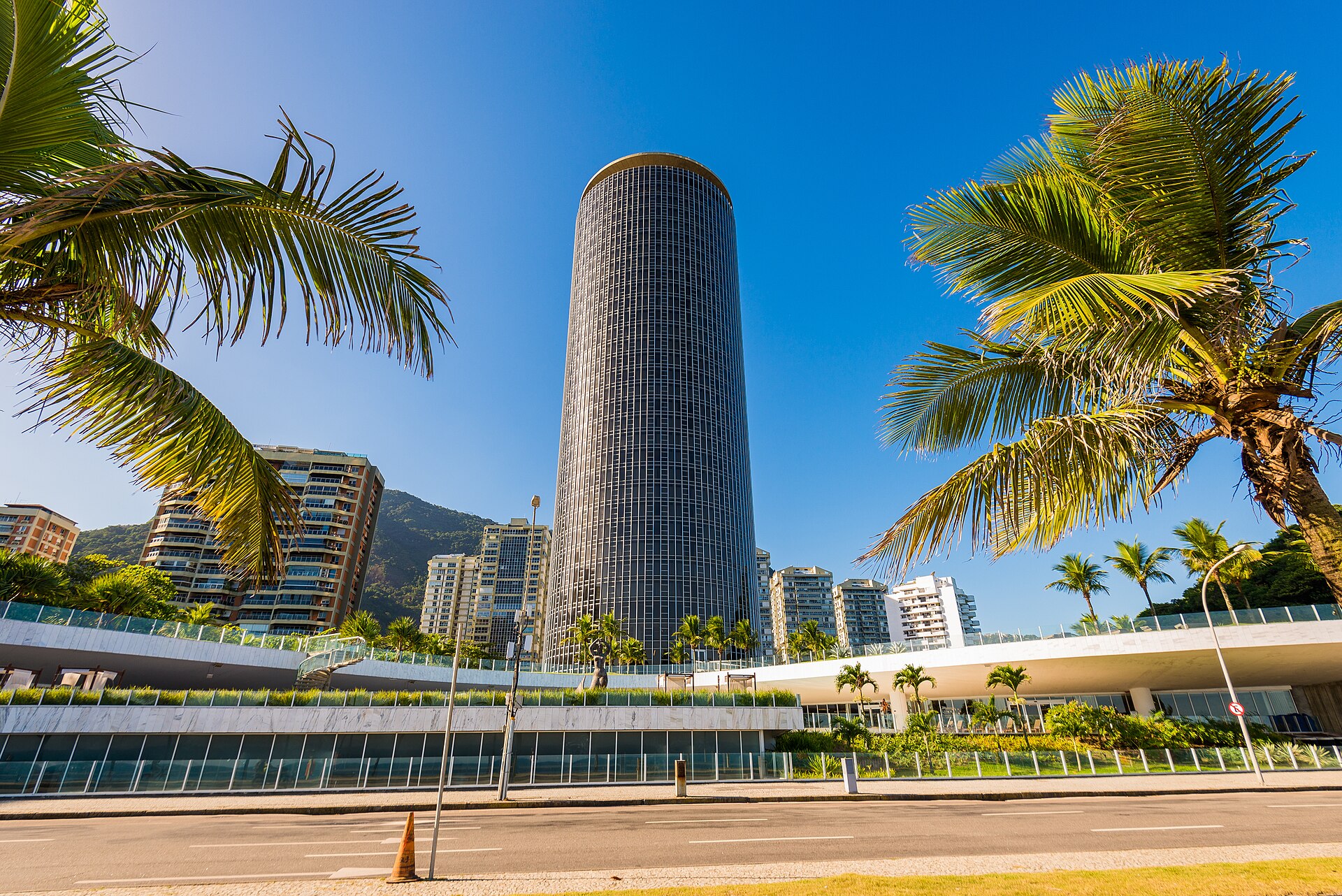
Rio’s beachfront hotels are often sold through their views. Hotel Nacional offers a different starting point: the building itself. Oscar Niemeyer’s cylindrical tower, Roberto Burle Marx’s gardens and an ensemble of integrated artworks make this São Conrado address a place to consider for its architecture as much as its access to the sea.
A hotel shaped by Brazilian modernism
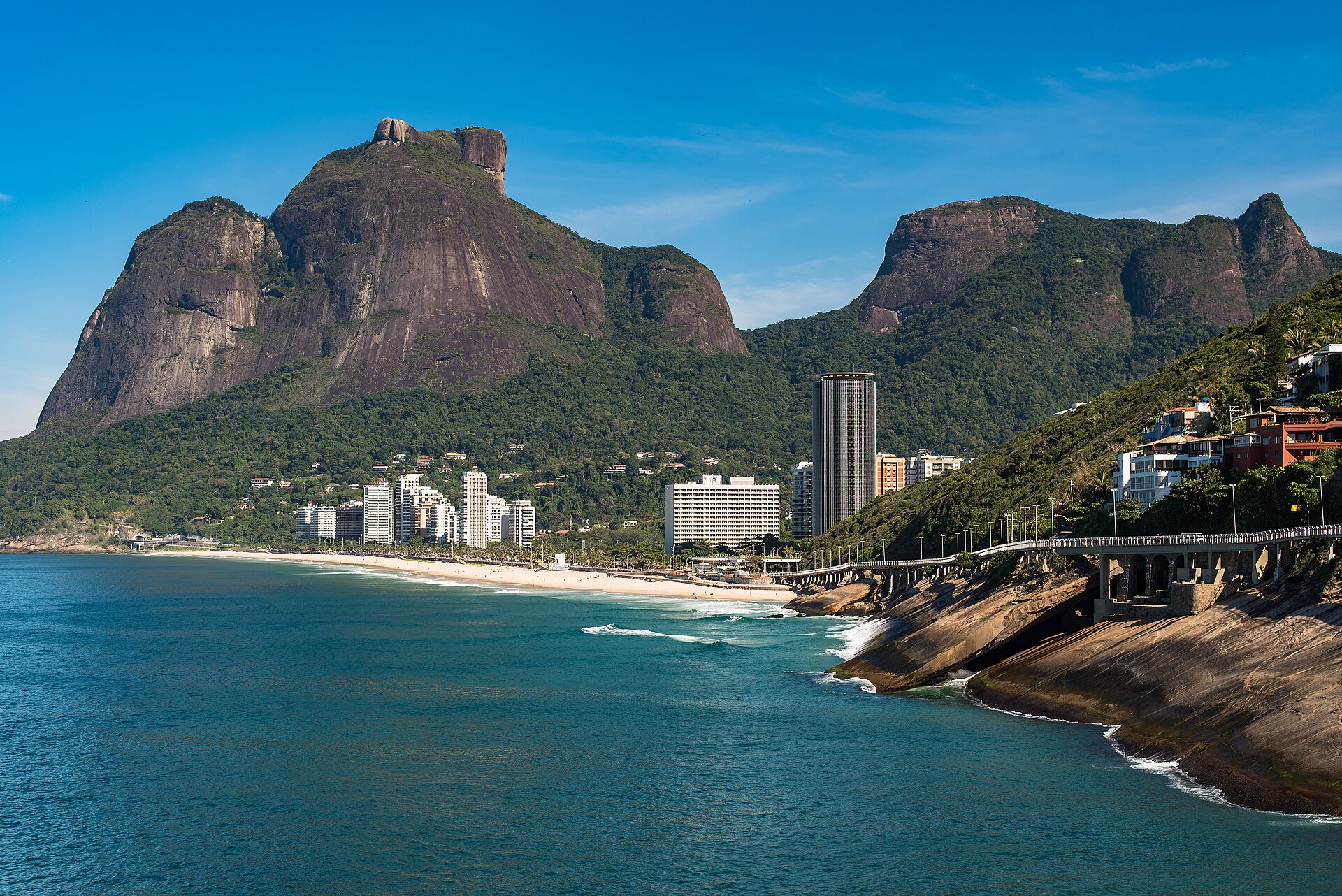
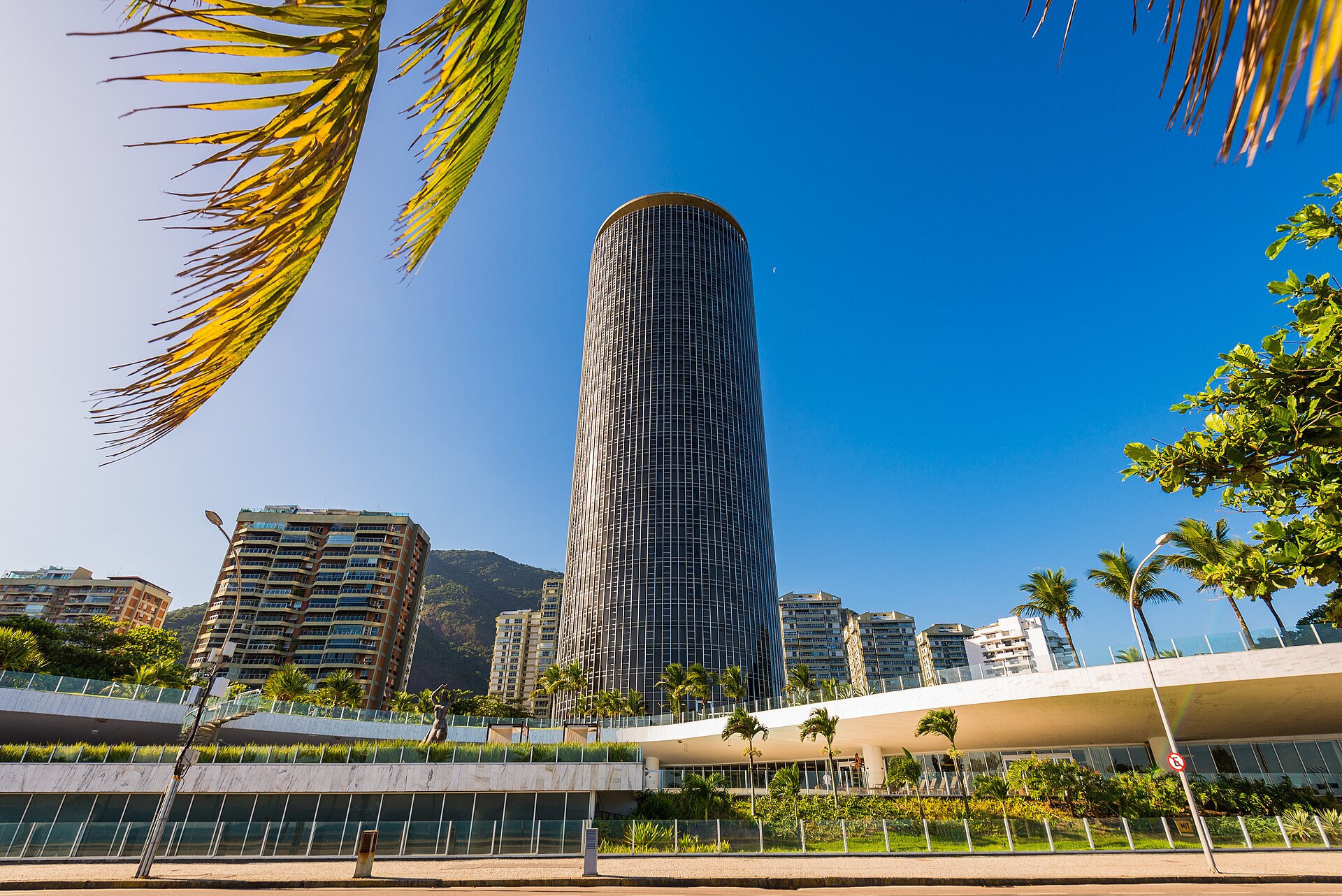
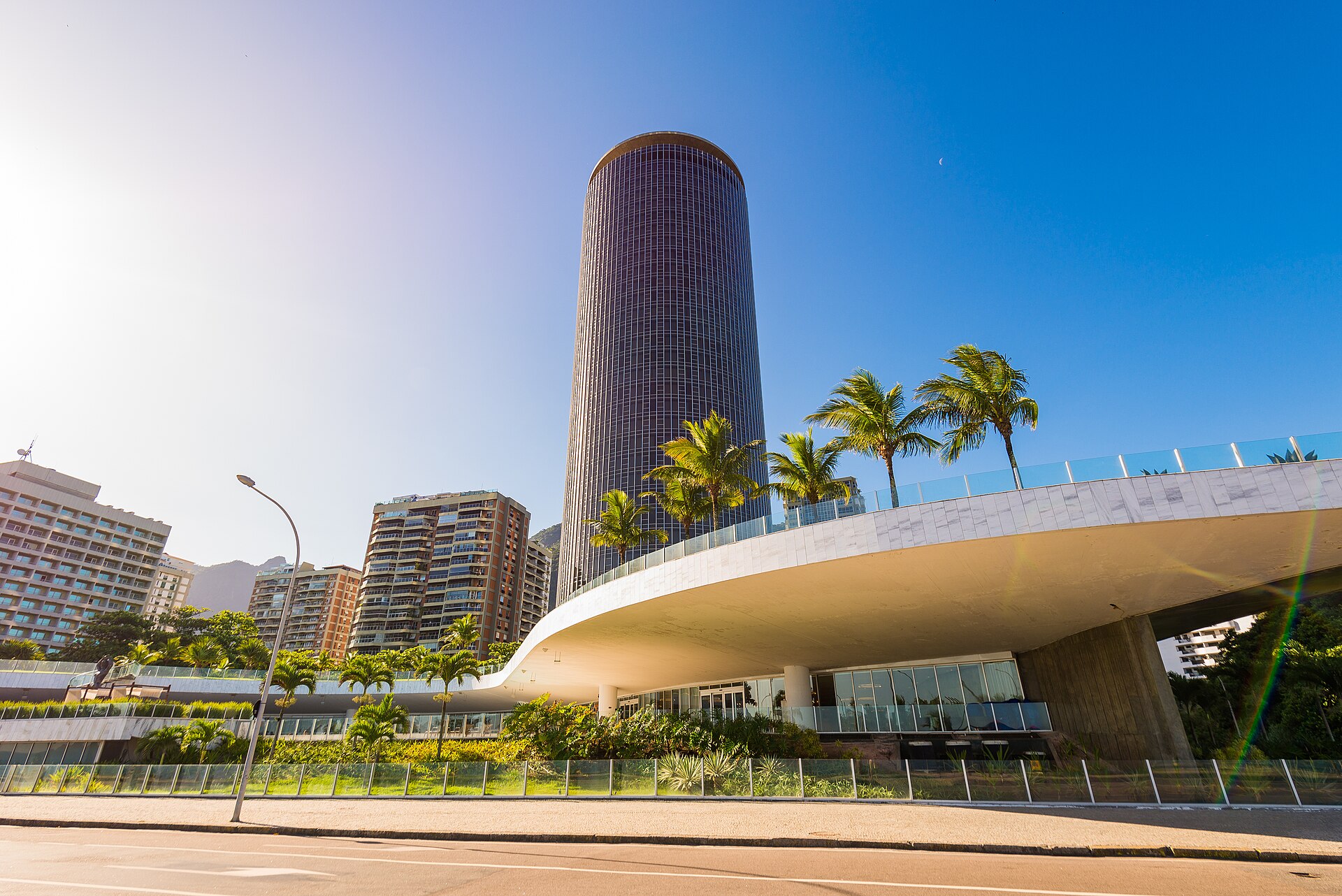
The hotel’s official history dates its opening to 1972. Its tower rises above a much lower podium, producing a contrast between a clearly defined vertical landmark and the flowing spaces below. The surrounding landscape gives that geometry a particularly Brazilian setting: ocean on one side and Rio’s steep green landforms beyond the streets.
The contrast with Rio’s traditional grand hotels is architectural as well as geographical. The Copacabana Palace belongs to a different chapter of the city’s hotel history; Nacional’s identity is tied to the ambitions of twentieth-century modernism.
Preservation has also required intervention. The contractor responsible for its later restoration and retrofit describes work to preserve the original architectural conception while modernising the building. The result is an operating, adapted landmark rather than an untouched time capsule.



Art belongs to the building, not just its walls
The property’s art and architecture account identifies a group of works conceived as part of the hotel’s public spaces. Carybé’s large panel uses reinforced-concrete pieces to tell a story of migration from northeastern Brazil. A suspended papier-mâché lamp by Pedro Correia de Araújo brings a very different material and scale to the interior.
Outside, Alfredo Ceschiatti’s bronze Mermaid connects sculpture with the poolside setting. Michael Gross’s tile panels add another strand to the ensemble. Together, they extend the building’s identity beyond the tower’s familiar outline. Structure, artwork and landscape belong to the same architectural composition.
The artworks inhabit a working hotel rather than a museum. Their setting is part of their meaning, although access to individual spaces follows the property’s operations.


The garden and the coastline
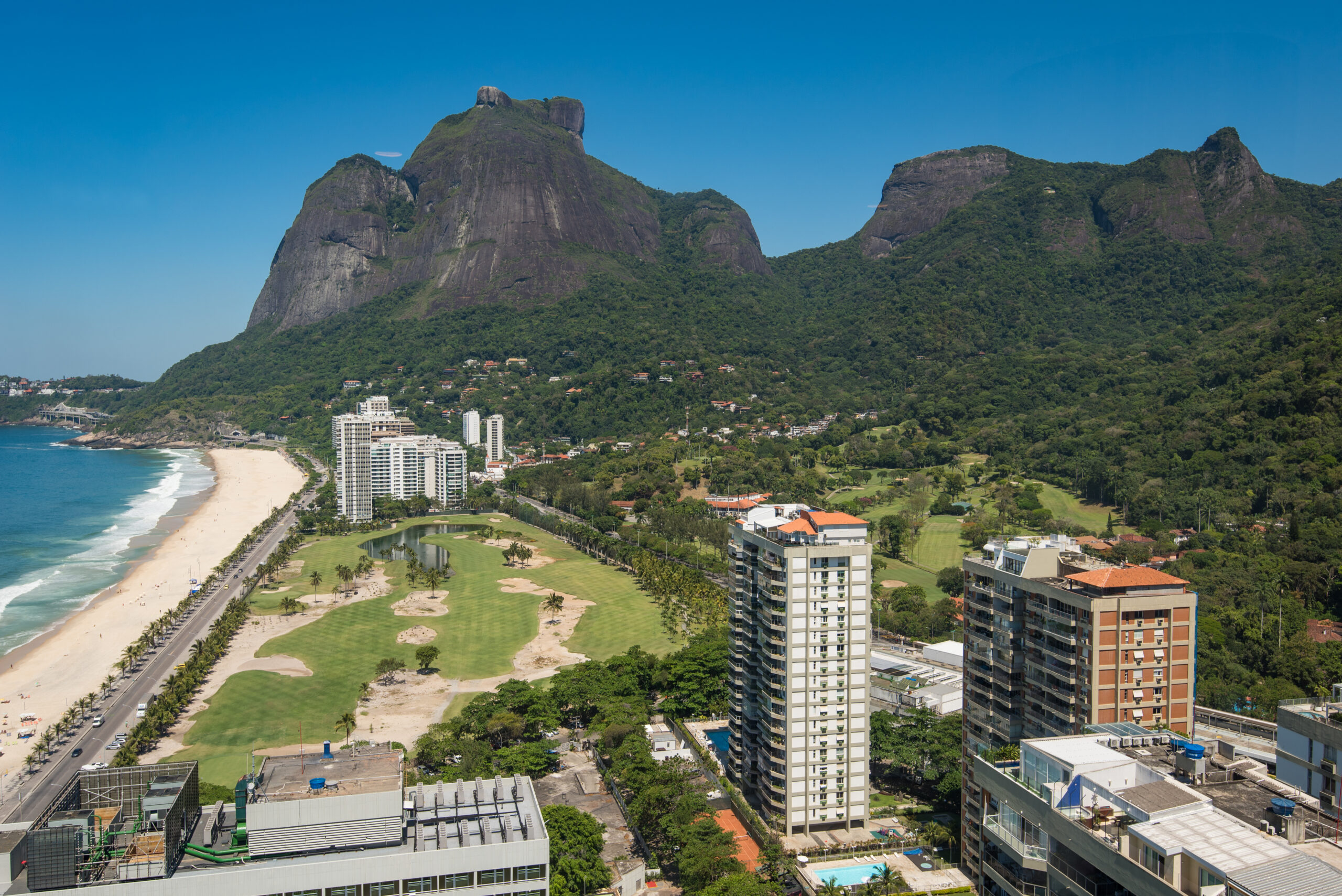
The Burle Marx garden occupies more than 10,000 square metres according to the hotel. Native Brazilian plants, curving routes and the relationship with the architecture are central to its description. It offers a useful counterpoint to the repeated vertical lines of the tower.
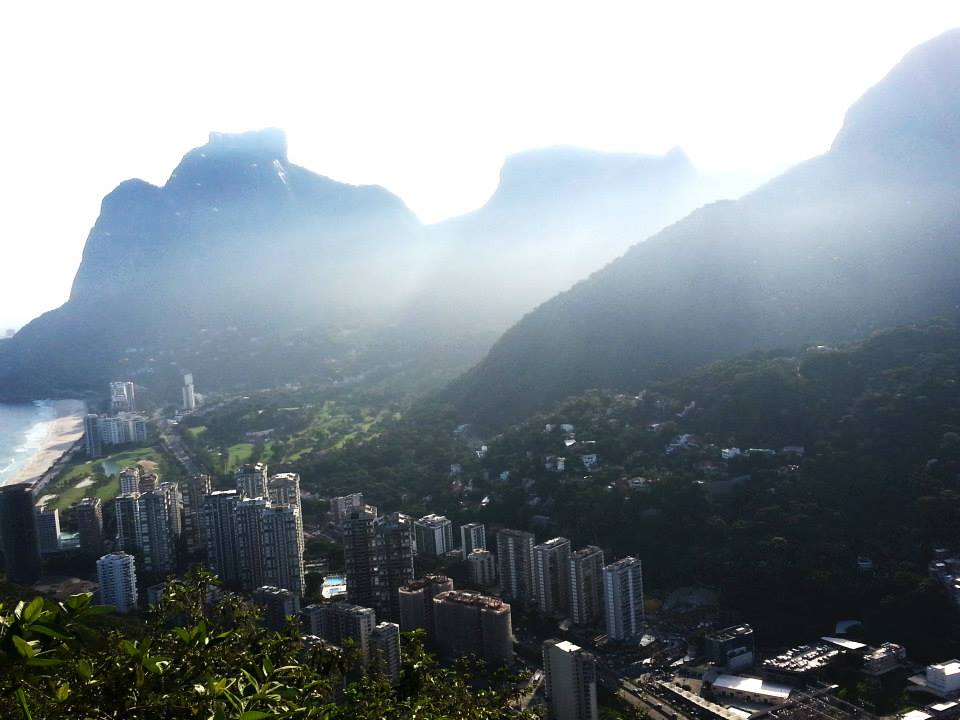
São Conrado is essential to the story. The hotel stands at Avenida Niemeyer 769, away from the best-known Copacabana promenade. The coast here is framed by dramatic topography, and hang-gliding and paragliding activity is part of the surrounding beach landscape.
That position gives Nacional a particular relationship with Rio de Janeiro. The mountains and ocean are not simply a backdrop to a generic resort: they frame a densely built neighbourhood in which the tower remains a conspicuous landmark.


A landmark that still works as a hotel
Behind the monumental exterior is a substantial accommodation operation. The hotel advertises 413 rooms across seven categories, and its published room descriptions distinguish sea-facing accommodation from other outlooks. The tower’s location does not make every room an ocean-view room.
The distinction is revealing. From outside, Nacional reads as a single cylindrical form; within it, the guest experience is divided among different orientations and room categories. Architecture supplies the common identity, while the coastline is encountered differently across the building.
The restaurant A Sereia draws on Brazilian regional cooking, according to its official presentation. Its name echoes the Mermaid sculpture, carrying one of the hotel’s visual motifs into its present-day hospitality.



The coast as an architectural setting
Nacional’s importance as a hotel cannot be separated from its place in Rio’s built environment. The tower, garden and integrated art turn an accommodation address into a record of how modernism imagined leisure on the Brazilian coast.
It is a different kind of landmark hotel from a nature-focused address such as Hotel das Cataratas. Here the defining encounter is between modern design and the city’s coast. The landscape is dramatic, but the building is not content to disappear into it.
That tension is what makes the address distinctive. Nacional is at once a place to stay and a large, deliberate architectural gesture: a circle of glass and structure set against the irregular outlines of Rio’s mountains and shore.