
From the Alarico Bridge, the old town of Cosenza climbs Pancrazio Hill above the meeting of the Busento and the Crati. Houses stack tightly towards the water, the Norman-Swabian Castle holds the ridge, and the newer streets begin only once the ground flattens. A short stay here is shaped by that split: you sleep in the newer centre, then decide each morning whether the day belongs to the historic lanes, to the Sila plateau, or to the road south through Calabria.
Cosenza is the capital of the region’s largest province, and it was already a centre for the Bruzi in the fourth century BC, spread across seven hills over the two river valleys. For a visitor, the useful question is more immediate. Which of two small stays in the new centre sits closer to the walk you want in the evening, and which one makes a car for the mountains or the coast less of a problem?
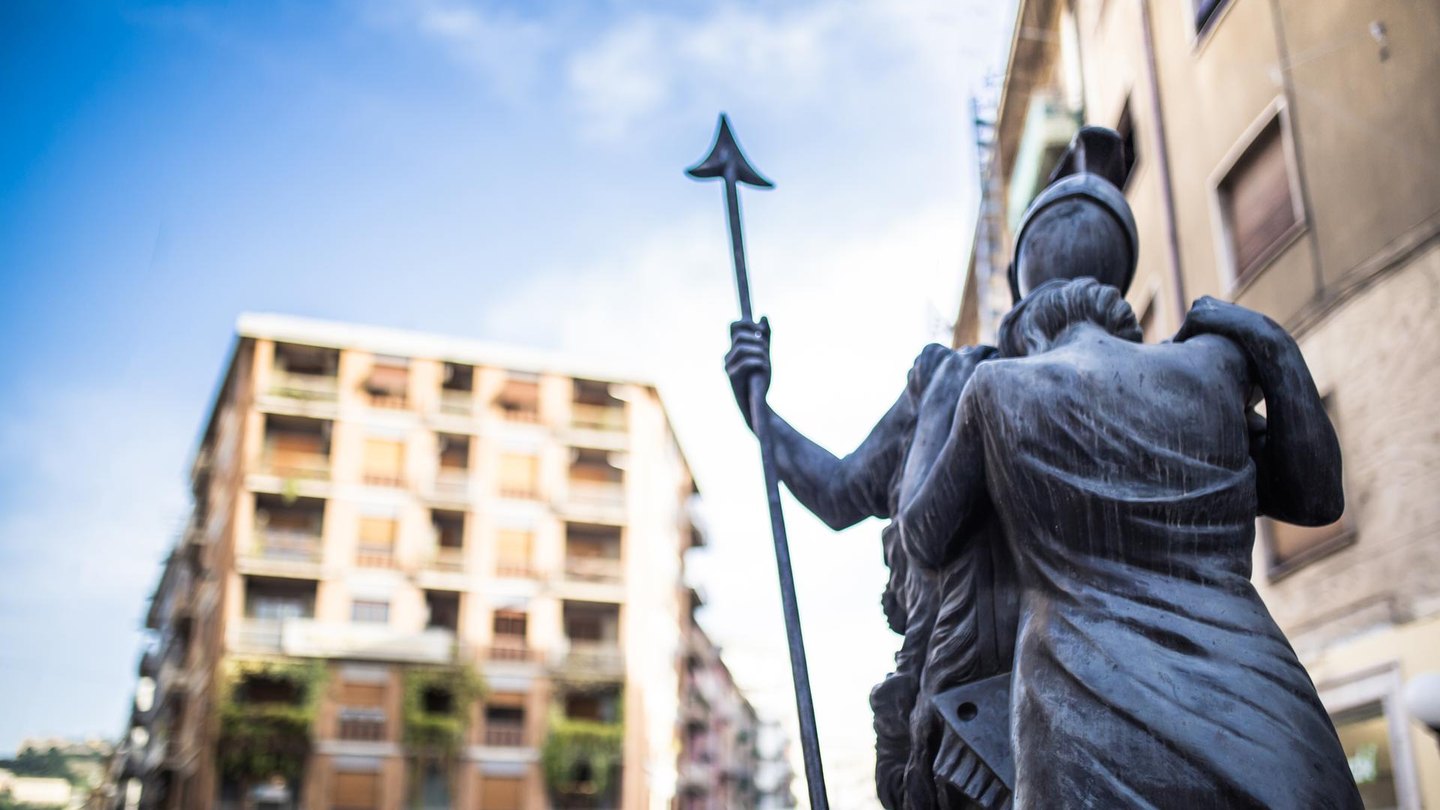
The newer streets spread north along the Crati valley, with Corso Mazzini as their pedestrian spine. Both of the bed and breakfasts in this article sit in that flatter part of the city, within a short walk of the shops and the open-air sculptures of the MAB, and both can be booked through their own websites. They differ in the details that matter once you have arrived: one has a private guarded car park and family rooms, the other includes a full breakfast and stands a few hundred metres from the motorway entrance.
Sunrise Home on Traversa Filippo Caruso
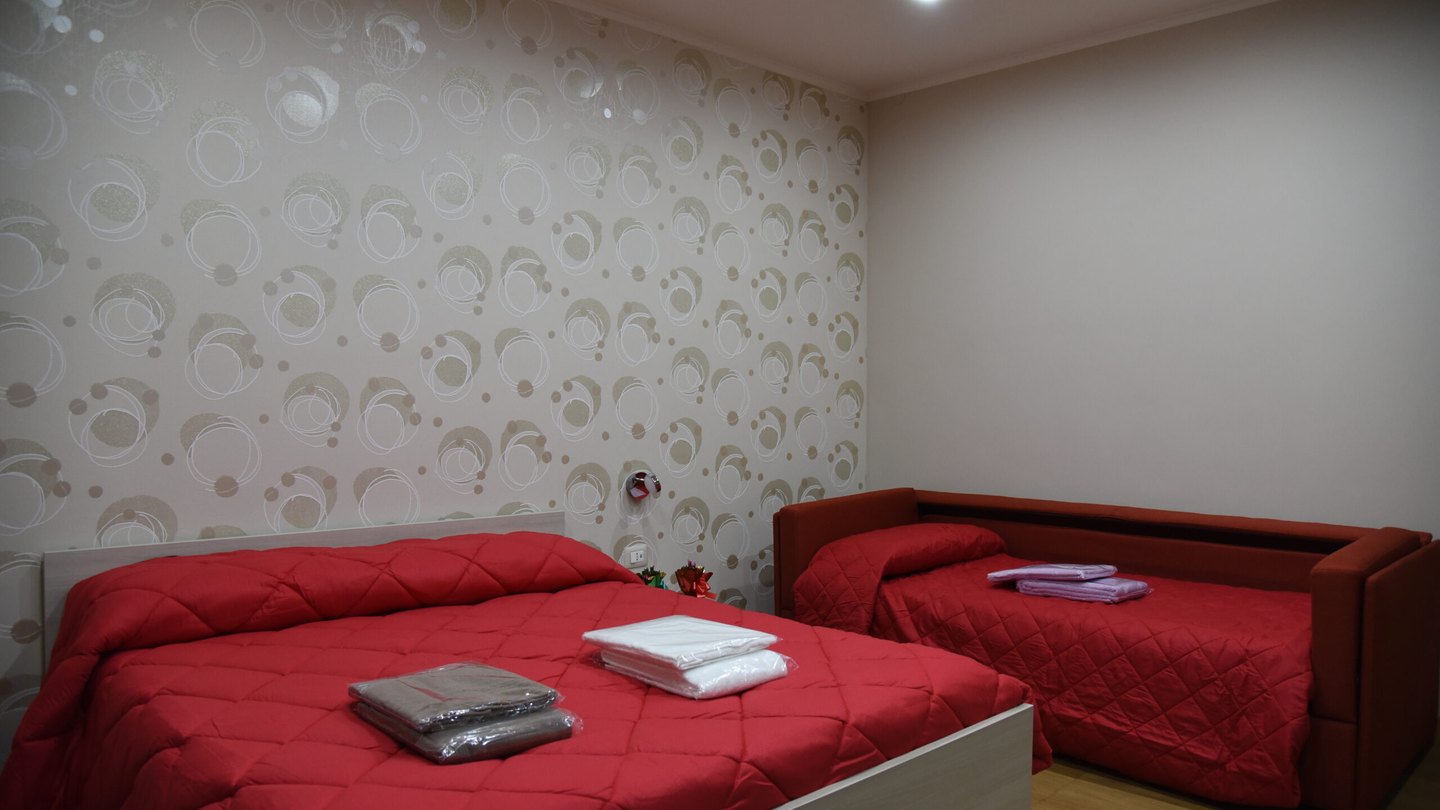
Sunrise Home occupies Traversa Filippo Caruso 26/28, just off the centre and close enough to Corso Mazzini that the evening walk is the obvious way back after a meal. The address is especially useful if you are arriving by car and want to leave it for the night: the house offers private guarded parking, which is the practical reason to choose it if the Sila or the Tyrrhenian coast is part of the plan. Arrival is arranged as a smart check-in, and rooms have an ultra-fast Wi-Fi connection.
The rooms are divided by how you travel. The Sunrise Duo Suite is set up for two people, with a king-size bed, a private bathroom and a smart television. The Triple Sunbeam Room takes three and has a coffee corner. The Sunrise Family Quarters are the rooms to ask about if you are four: the spaces are separate but connected, with a living area, so a family can close a door without booking two rooms across a corridor. The published offer is the room, the parking and a self-managed arrival; rates are confirmed directly with the house.
Corso Mazzini is the street this location is built around. It is a pedestrian shopping street, and since 2006 it has also been the line of the MAB, the Museo all’Aperto Bilotti, created from a donation by Carlo Bilotti to the city. Calabria’s official guide to contemporary art in Cosenza lists, among the works along the corso, Salvador Dalí’s St. George and the Dragon, Giorgio de Chirico’s Hector and Andromache, Giacomo Manzù’s Cardinal, sculptures by Pietro Consagra and Mimmo Rotella’s Wolf of the Sila. You pass them on the way to dinner, without a ticket office or a closing time.
The corso ends at Piazza Bilotti, where an underground multimedia museum of the city has been installed under the square. From Sunrise Home, that is the natural first walk. The historic centre is a separate climb, not a different city, and it is better taken in daylight.
B&B Margherita 2.0 on Via Gerolamo De Rada
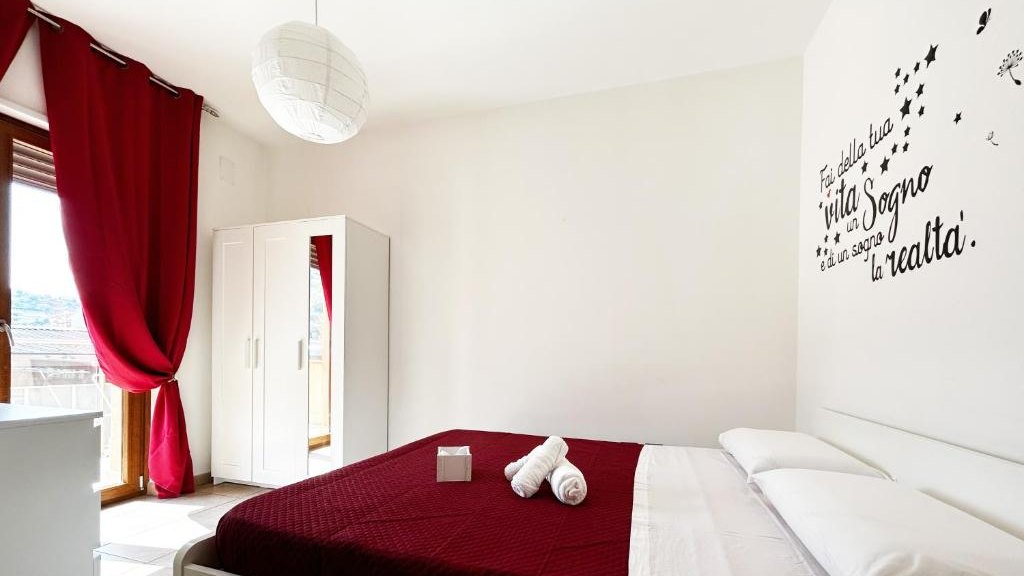
B&B Margherita 2.0 stands at Via Gerolamo De Rada 7, still in the newer part of Cosenza and, according to its owners, Daniela and Danilo, a few hundred metres from the motorway entrance. That is the reason to stay here if the days are built around driving: you can be on the A2 towards the Sila or the coast without first crossing the old town. The house has four rooms, each with its own bathroom, Wi-Fi, central heating and air conditioning, and a minibar whose products are included.
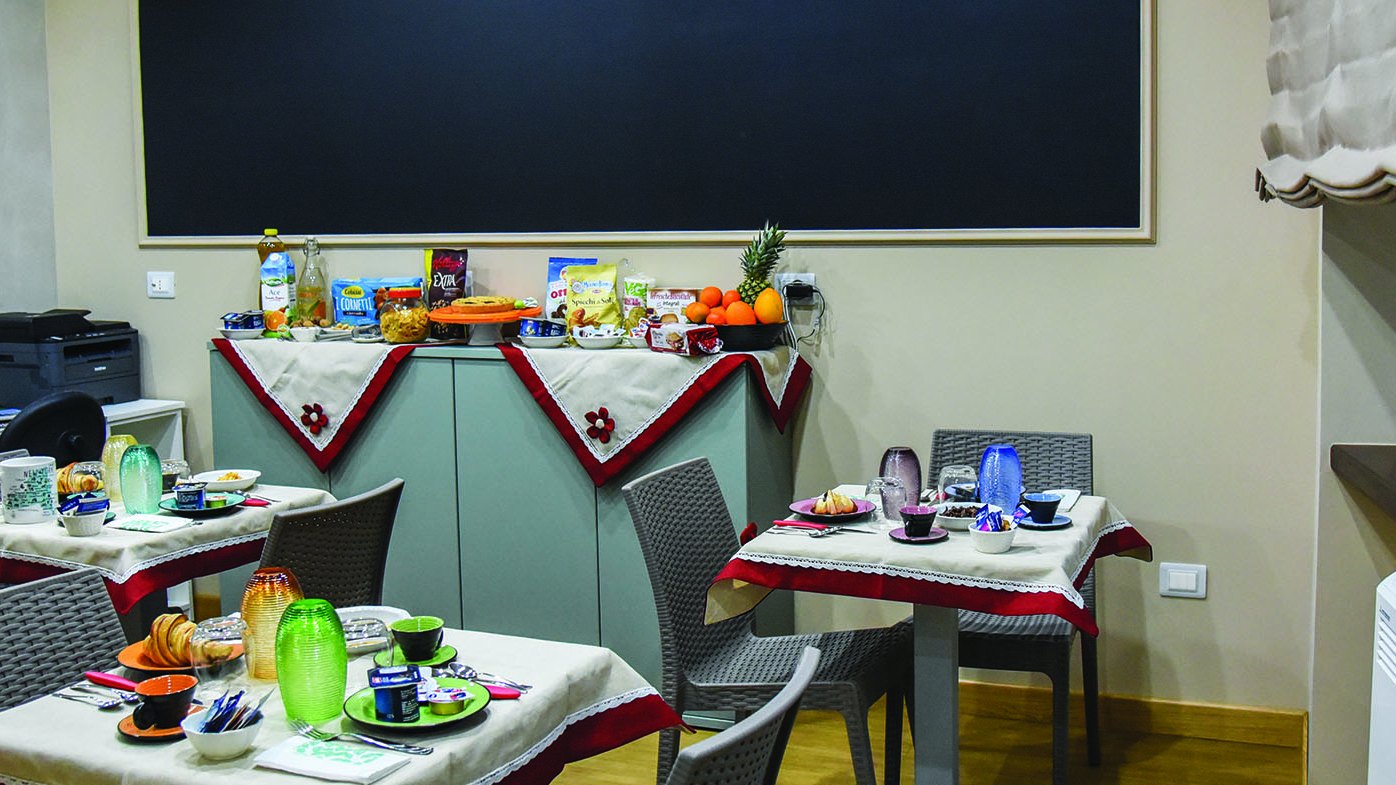
The rooms are named and priced from a published starting rate. Daisy is a single room from 55 euros a night. Margot, a double, Marguerite, a matrimonial room, and Margarita, a quadruple, all start at 60 euros. Those are starting figures, so confirm the rate for your dates when you book. A stay here includes breakfast, with homemade jams, crostate, warm cornetti, a sweet and savoury spread, and fresh fruit that the owners describe as zero-kilometre produce, available through the year. If breakfast is the part of a bed and breakfast you actually want, this is the clearer of the two addresses.
The newer centre is also where most visitors will eat in the evening. Margherita 2.0 has arrangements with two nearby restaurants, Al Girone dei Golosi and Il Vicoletto, which is useful to know if you prefer not to hunt for a table after a late arrival. From Via Gerolamo De Rada, as from Traversa Filippo Caruso, the walk into the historic centre is a deliberate outing rather than a step out of the door, and it is worth giving it a morning of its own.
Walking from Corso Mazzini into the old town
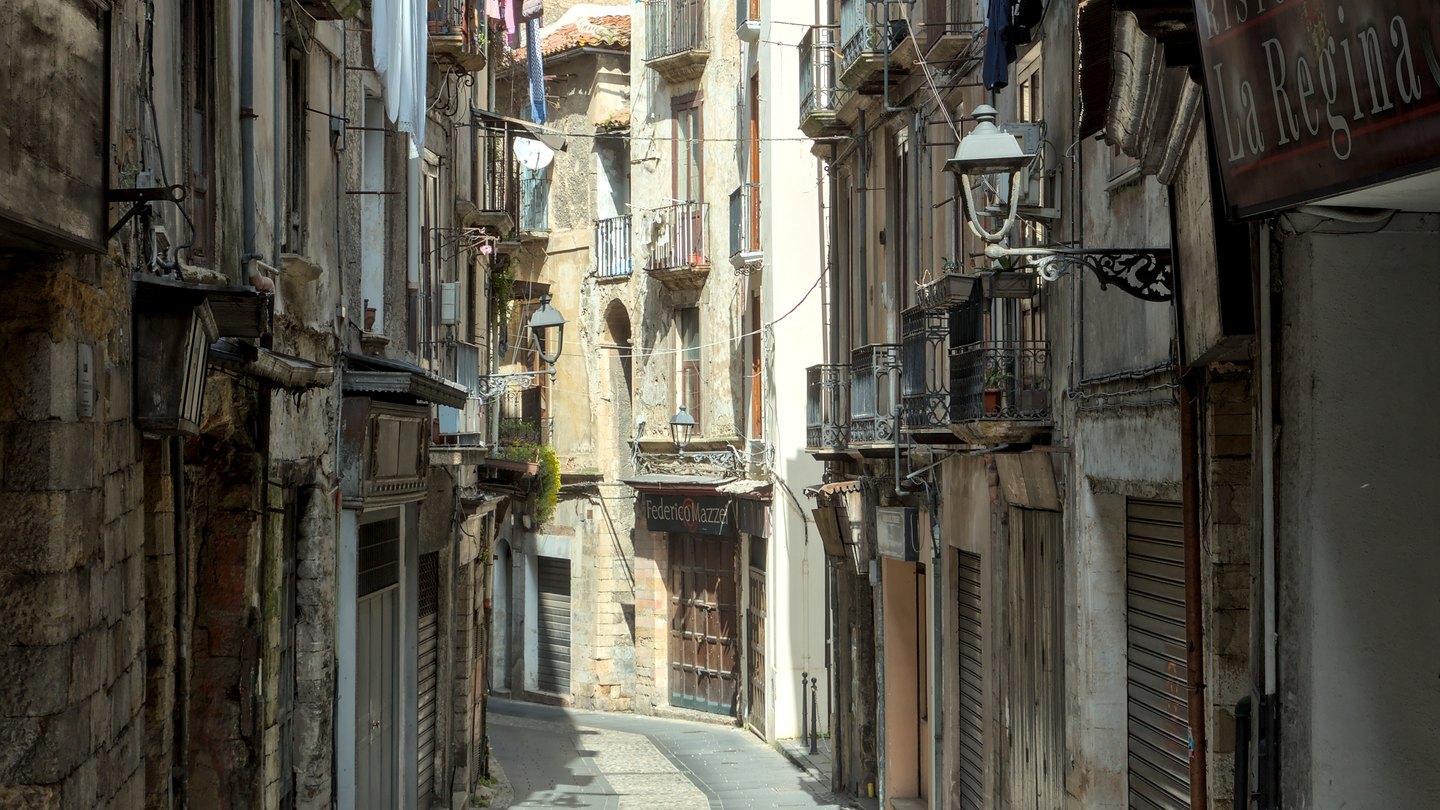
The two parts of Cosenza are close, but they do not sit on the same level. The old town rises on Pancrazio Hill, and the walk from the pedestrian corso involves a climb through streets of palazzi and stairways before you reach Corso Telesio, the main street of the historic centre. The official regional page for Cosenza is a good orientation for that walk, because it ties the old streets to the contemporary landmarks on the flatter side of the river.
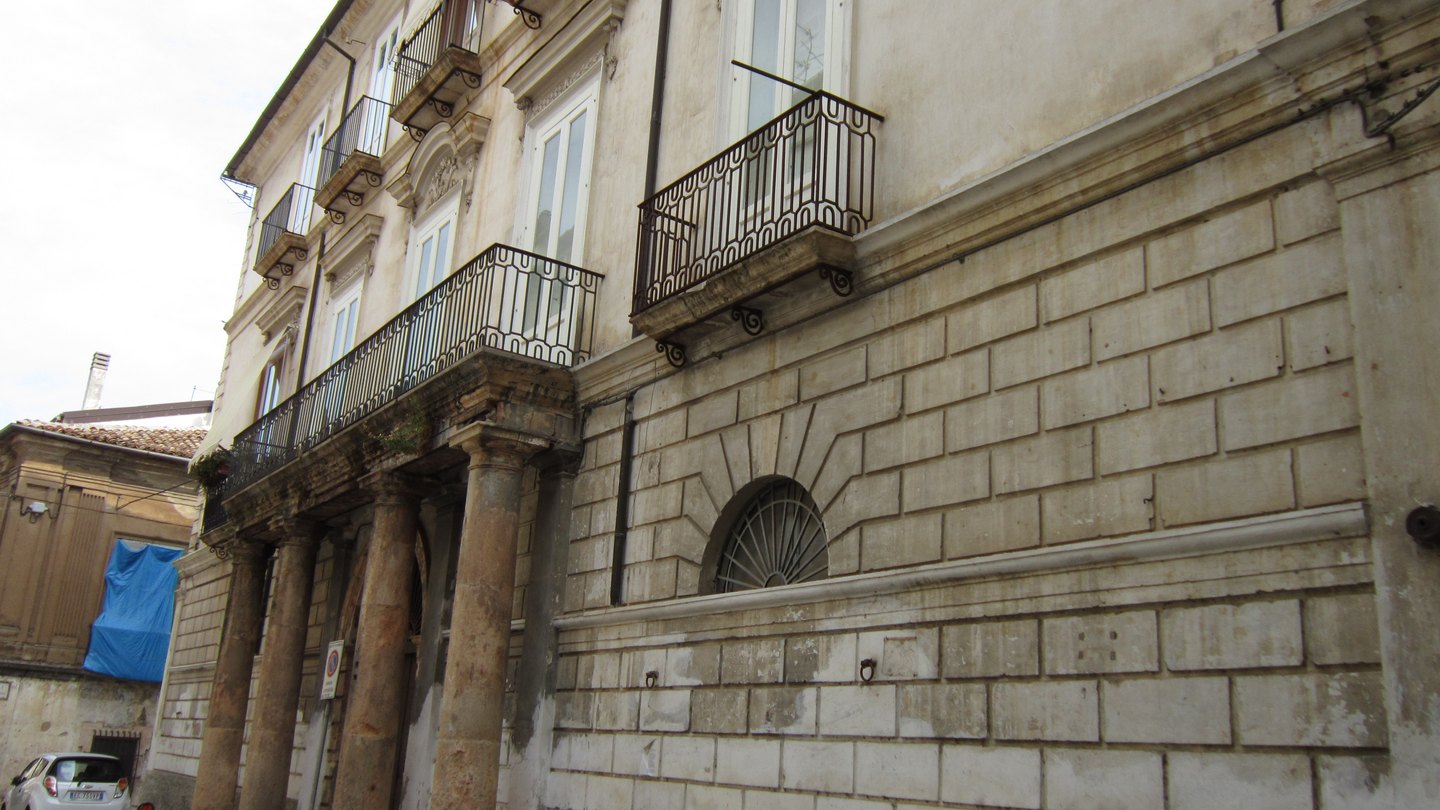
Corso Telesio runs through the heart of the old town towards the cathedral. It carries the name of Bernardino Telesio, the sixteenth-century philosopher born here, and it is still the most direct way to understand the slope and the tightness of the lanes after dark as well as in the morning.
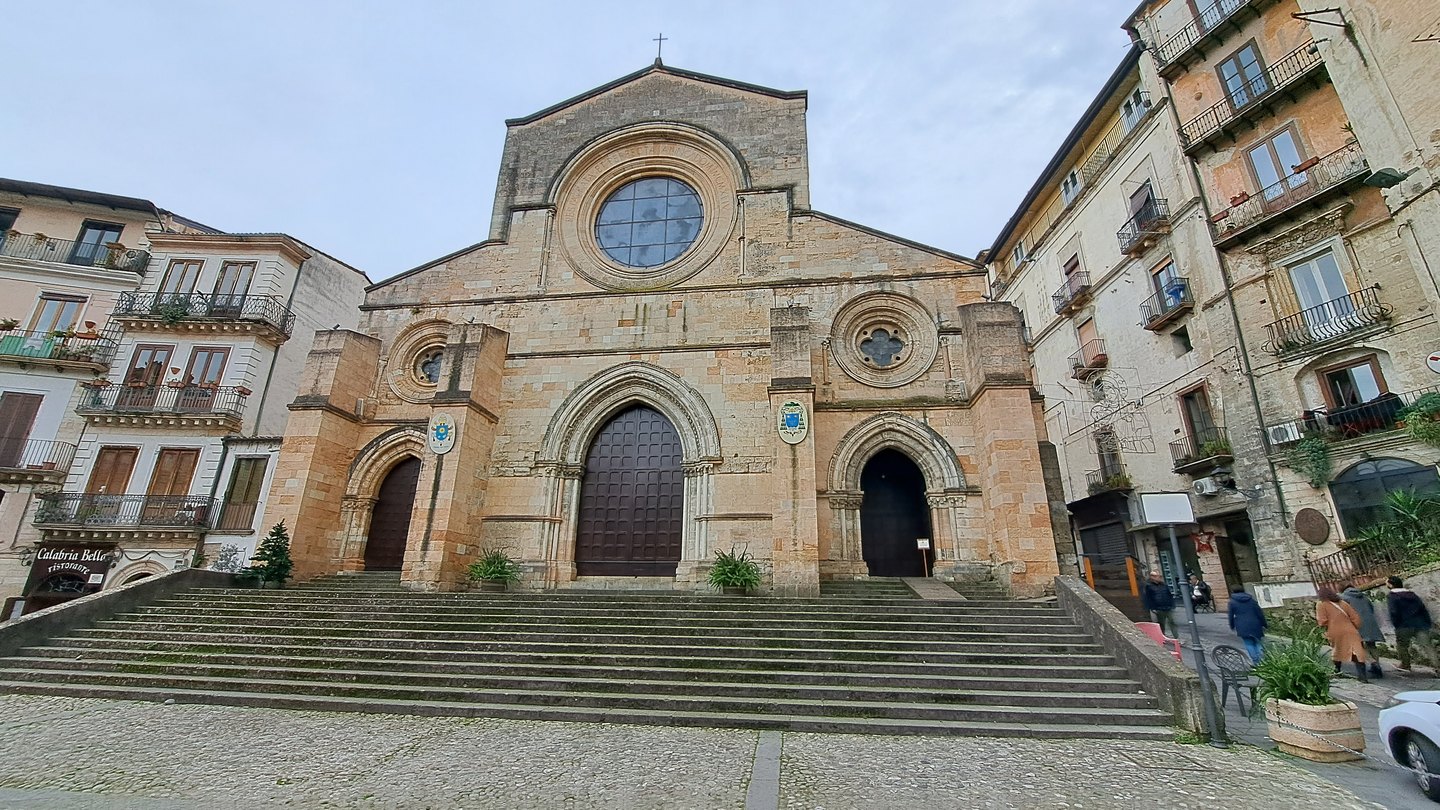
The Cathedral of Santa Maria Assunta stands on Piazza Duomo, at the end of that walk. The present church stands on the site of an earlier one destroyed in the earthquake of 1184, and it was consecrated in 1222 in the presence of the emperor Frederick II of Swabia, who gave the city the stauroteca, a reliquary cross now kept in the Diocesan Museum. The facade is divided into three portals, with a rose window above the central door and a wide stair down to the square. In 2011 UNESCO recognised the cathedral as a Witness of a Culture of Peace, a title that should not be confused with World Heritage listing.
Higher still, on the top of Pancrazio Hill, the Norman-Swabian Castle looks over both river valleys. Roger II enlarged an older structure in the twelfth century; the earthquake of 1184 wrecked it, and Frederick II rebuilt it in the thirteenth with a rectangular plan and corner towers. The interior is not currently accessible. The visit that remains is from the outside, for the walls and the view over the city.
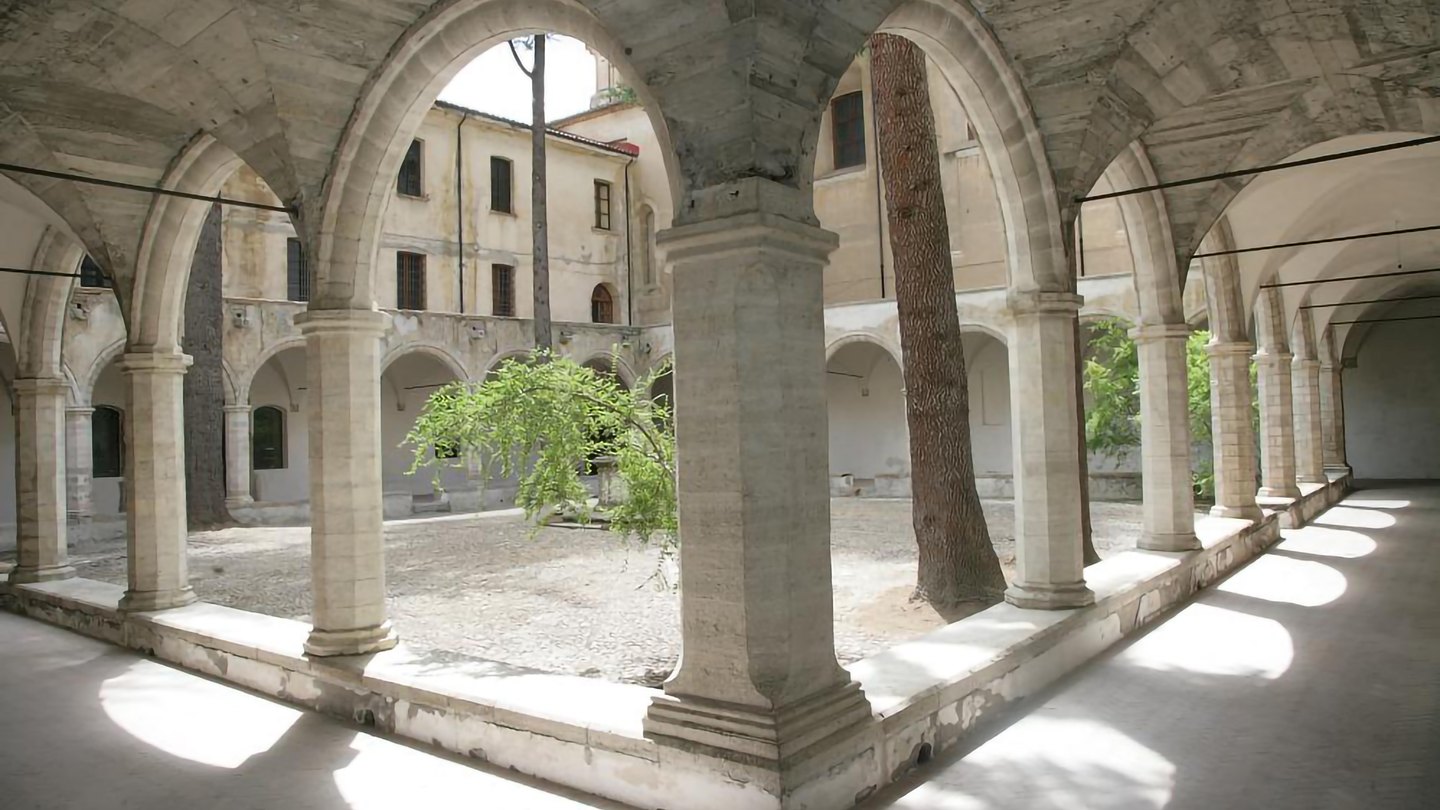
Down at the confluence of the two rivers, in the Monumental Complex of San Domenico, the BoCs Art Museum keeps a permanent collection from fourteen residency sessions that brought some 230 artists to wooden studio houses along the riverfront. The church itself was built between 1441 and 1468 and has a Gothic facade; its dome is one of the shapes you pick out from the bridges.
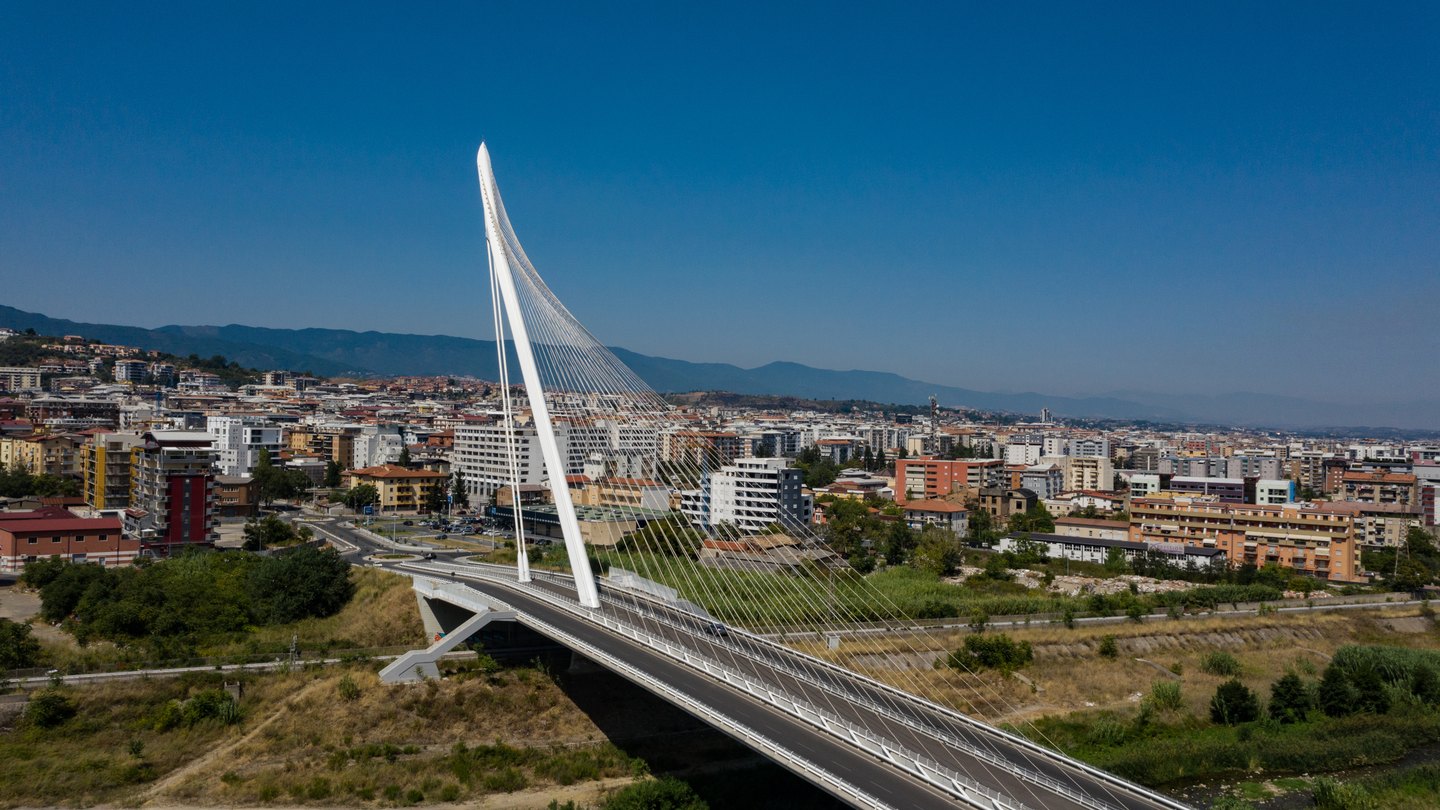
A riverside walk along the Busento or the Crati is the easiest way to see how the old town and the newer streets actually meet. The Calatrava Bridge, 103 metres long and held by a 104-metre inclined steel antenna in the shape of a harp, crosses the Crati further along and has become the most recognisable new landmark in the city. It connects the centre to a suburb on the opposite bank, and it is worth seeing as part of the same urban walk rather than as a separate excursion.
If you have time for one museum besides the cathedral, the Museo dei Brettii e degli Enotri, in the former monastic complex of Sant’Agostino, is the place that explains why Cosenza calls itself the city of the Bruzi. The display runs from early inhabitants through the Enotri and the Greek colonies of the Ionian coast to the Brettii, who made Cosenza their main centre in the fourth century BC, and on into the Roman city on Pancrazio Hill.
Using Cosenza as a base for the Sila and the south
Cosenza is also a convenient overnight stop for anyone crossing Calabria with a car. The A2 motorway has an exit for the city, and from there the Sila National Park is the natural next morning if the trip is not only urban. The park covers 73,695 hectares across nineteen municipalities in the provinces of Cosenza, Catanzaro and Crotone, on a plateau the park authority describes as the largest in Europe. Forests of Calabrian black pine, beech and fir cover most of the ground, and the larger artificial lakes, Cecita, Arvo and Ampollino, open the views. The park’s directions for visitors point drivers to the A2 exits at Cosenza, Rogliano, Altilia Grimaldi and, further south, Lamezia Terme, and name Lamezia Terme as the nearest airport.
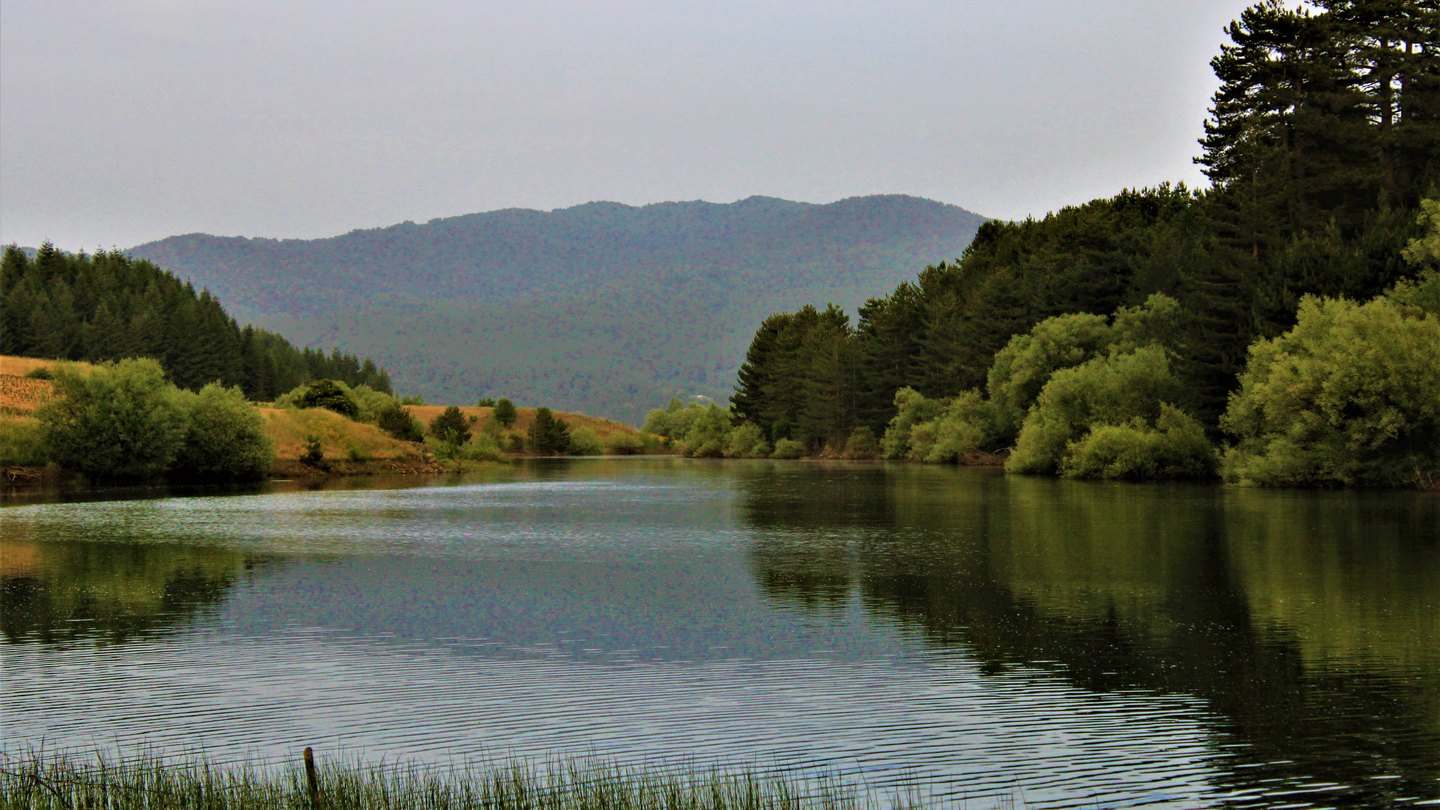
The owners of Margherita 2.0 put both the Sila and the first Tyrrhenian beaches at about half an hour from the door. That is their estimate, not a timetable, but it explains why a central Cosenza bed and breakfast is often used as a two- or three-night base rather than as a single stop on the way through. If you have a car, Sunrise Home’s guarded parking is the easier overnight arrangement; if you are travelling without one, Margherita 2.0’s breakfast and the walkable new centre will do more of the work.
A longer Calabria journey can continue south to Reggio Calabria, where the Riace Bronzes and the strait are the reason to give the city a day of its own rather than treating it as a pause before Sicily. If the trip is being built from the north, it may start with a stay in Naples before the road or the railway turns towards Calabria. And if Sicily is the next island after the strait, it helps to choose a Sicilian base in advance, because the island is too large for a single hotel to cover well.
In the morning, the decision is only which direction to walk first: downhill towards Corso Mazzini and the MAB, or uphill towards Corso Telesio and the cathedral, with the car, if you have one, already settled for the night.