
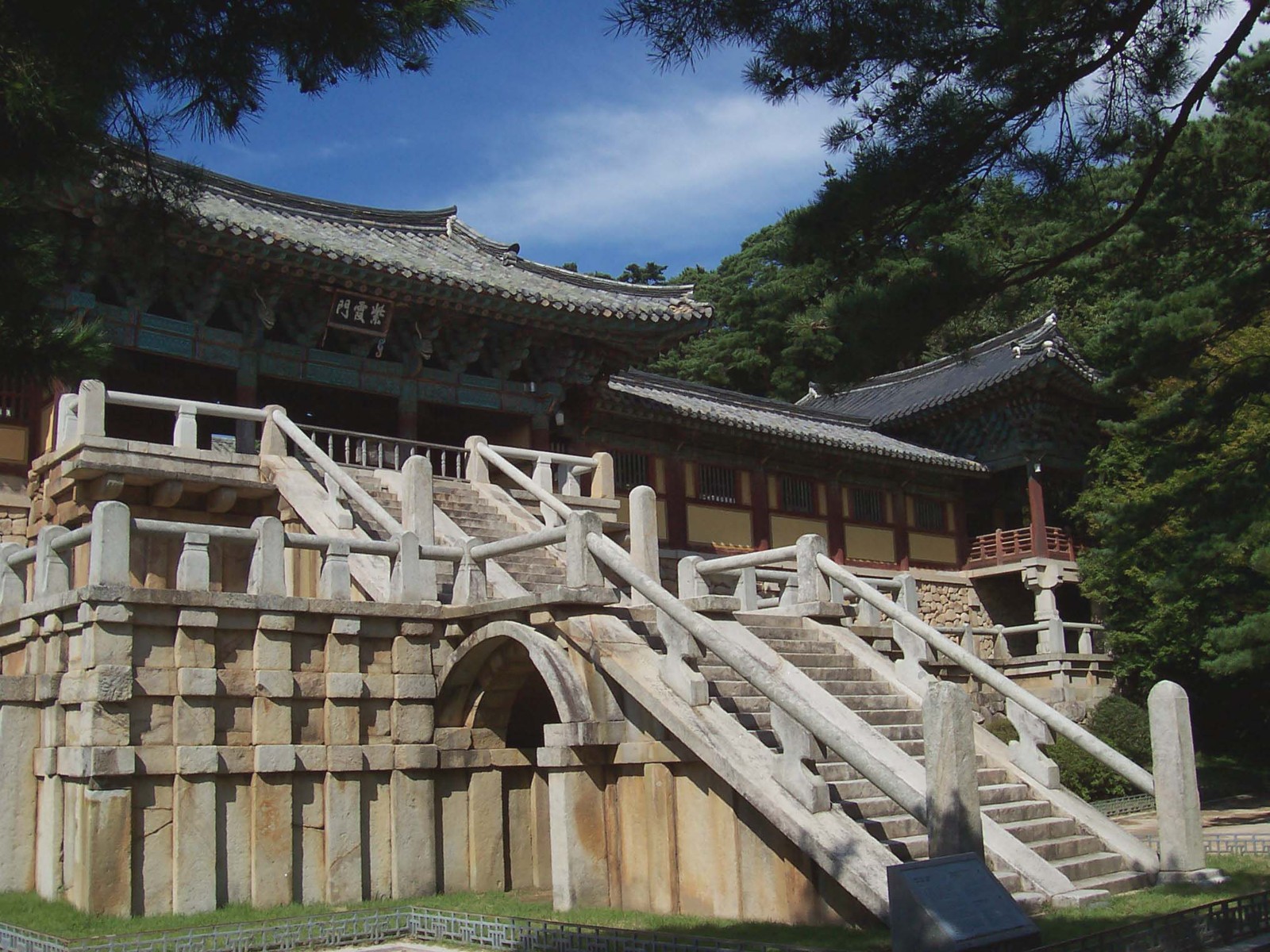
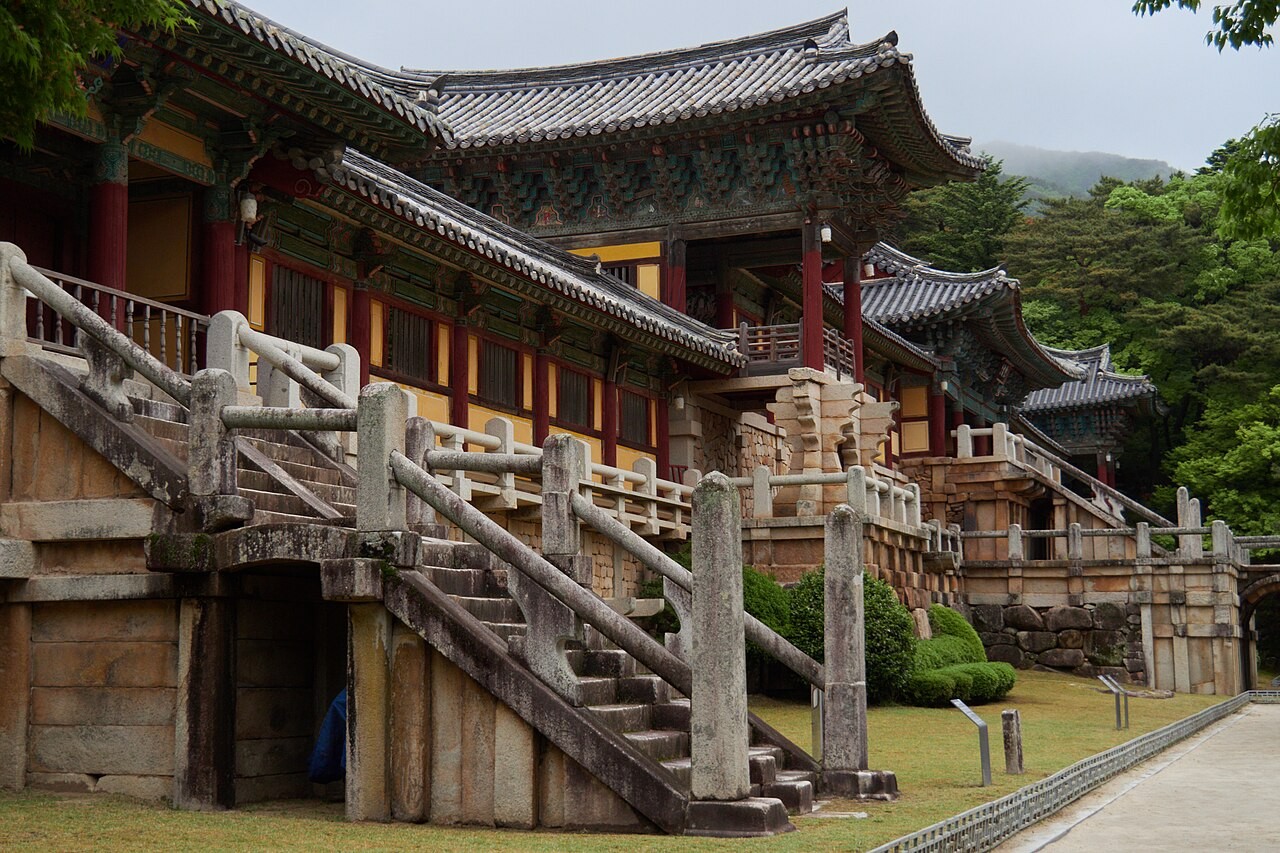
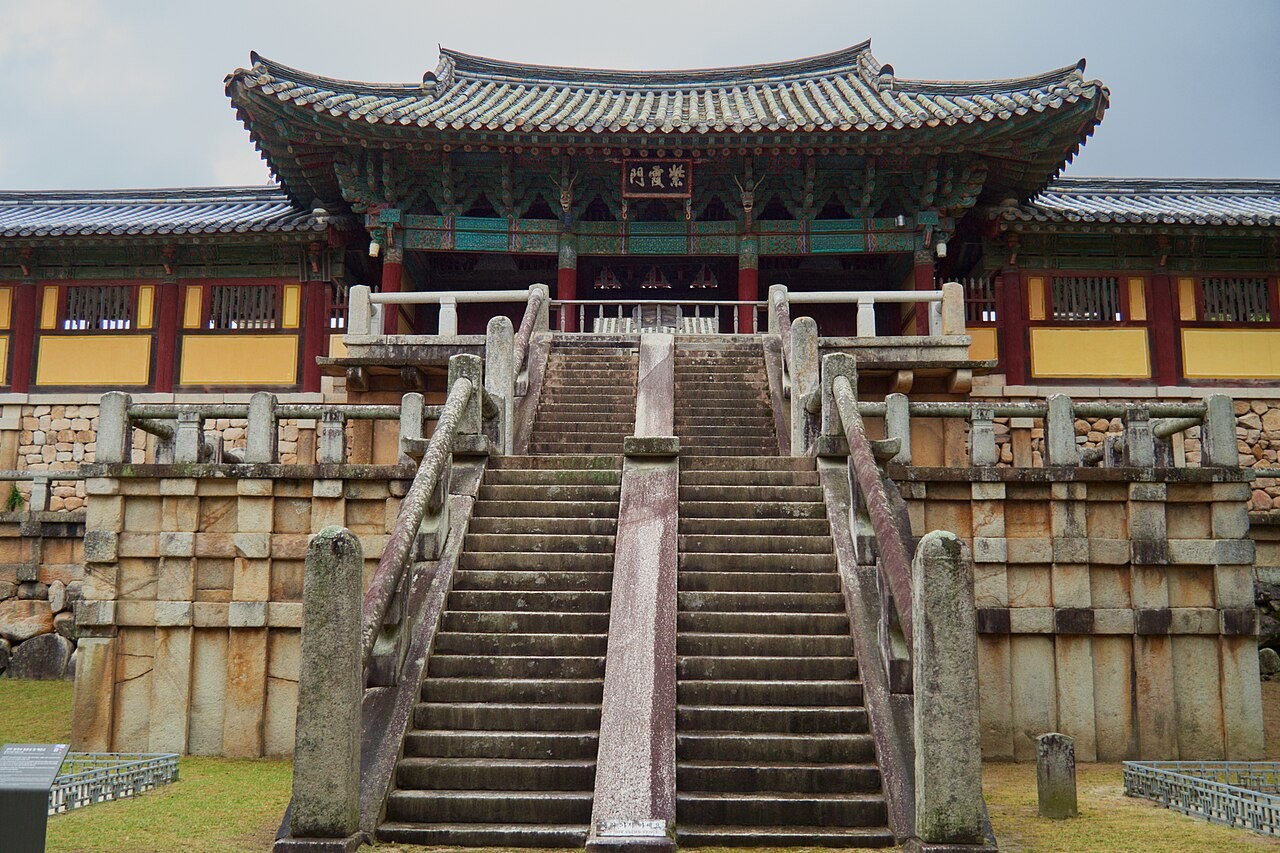
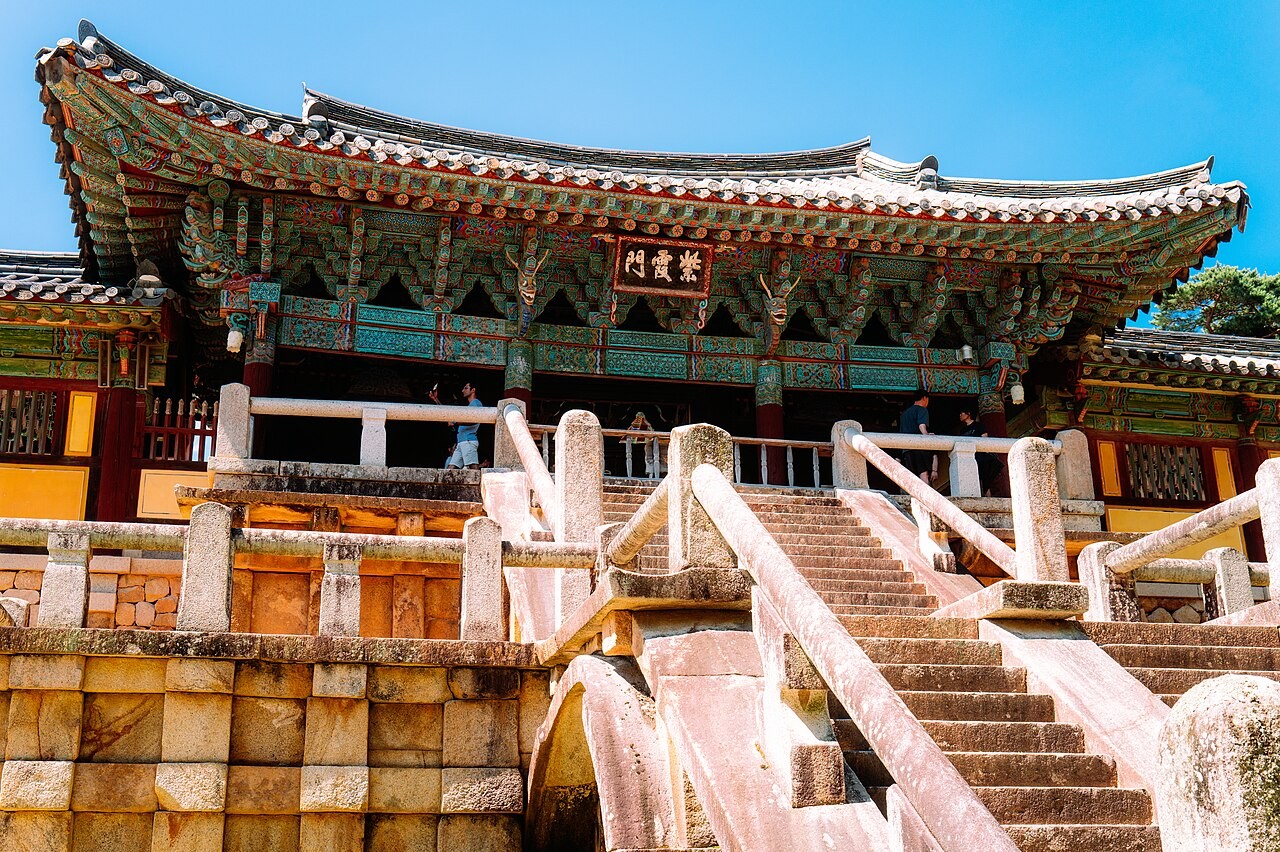
At Bulguksa, stone does more than support a building. It establishes a rhythm: terraces beneath painted timber halls, bridges that turn an ascent into architecture, and two pagodas that refuse to mirror one another. The temple on the slopes of Mount Toham is one of the great monuments of Gyeongju, but its interest lies in the relationships between these elements rather than in any single postcard view.

Gyeongju offers a different register from the palaces and neighbourhoods of Seoul. Here, an encounter with the Silla kingdom can happen through the proportions of a stone platform or the silhouette of a pagoda. UNESCO inscribed Bulguksa with nearby Seokguram Grotto in 1995, recognising a religious architectural complex whose history reaches back to the eighth century.
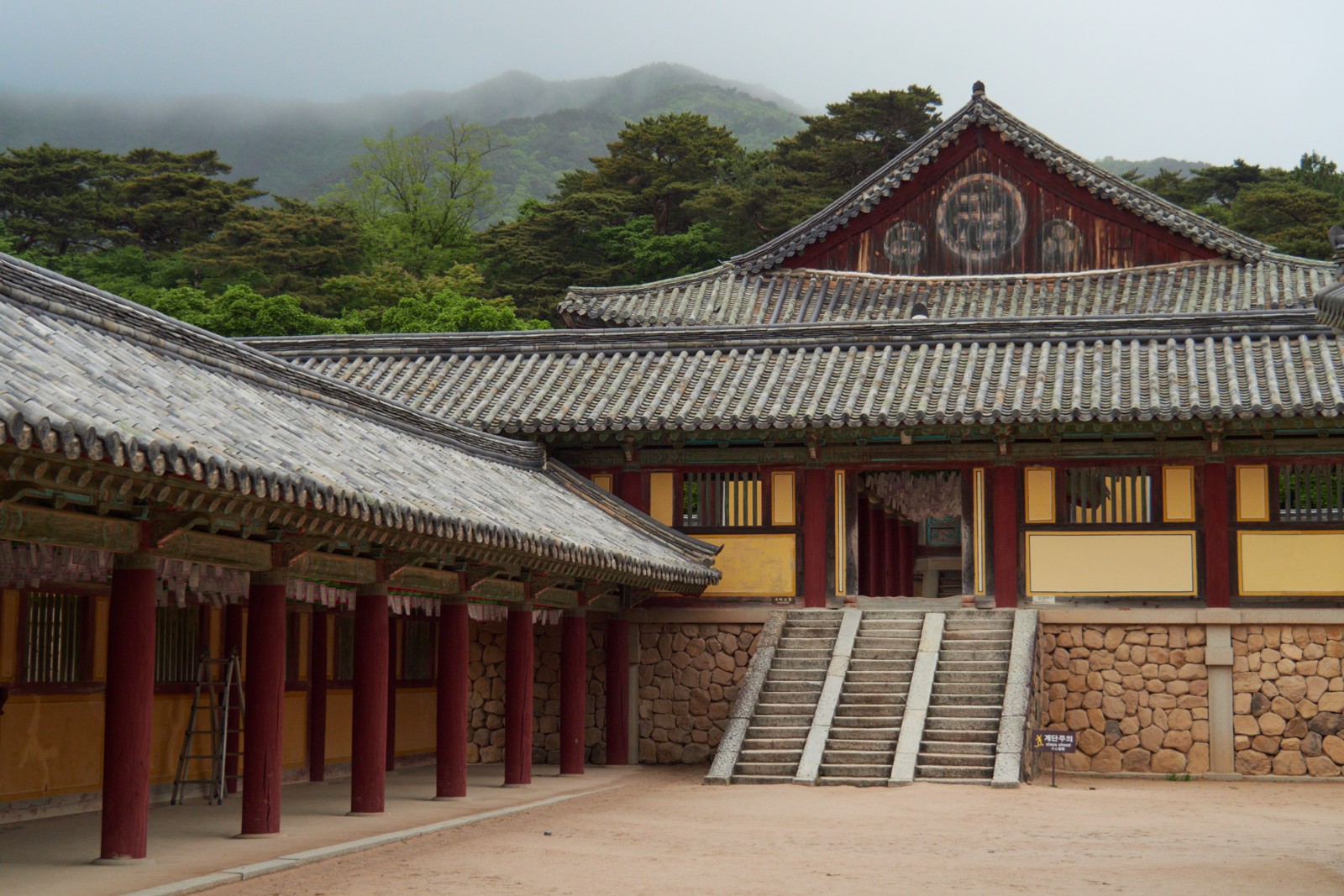

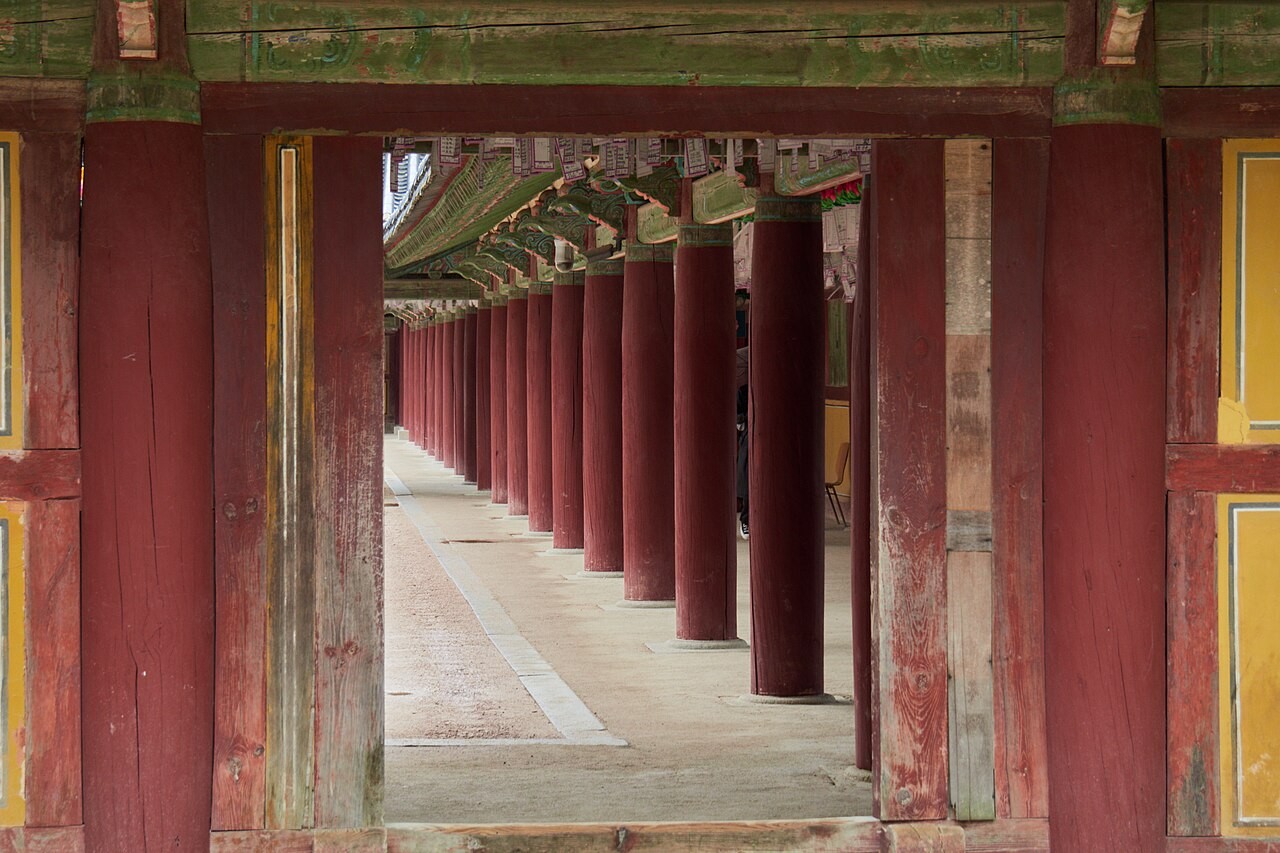
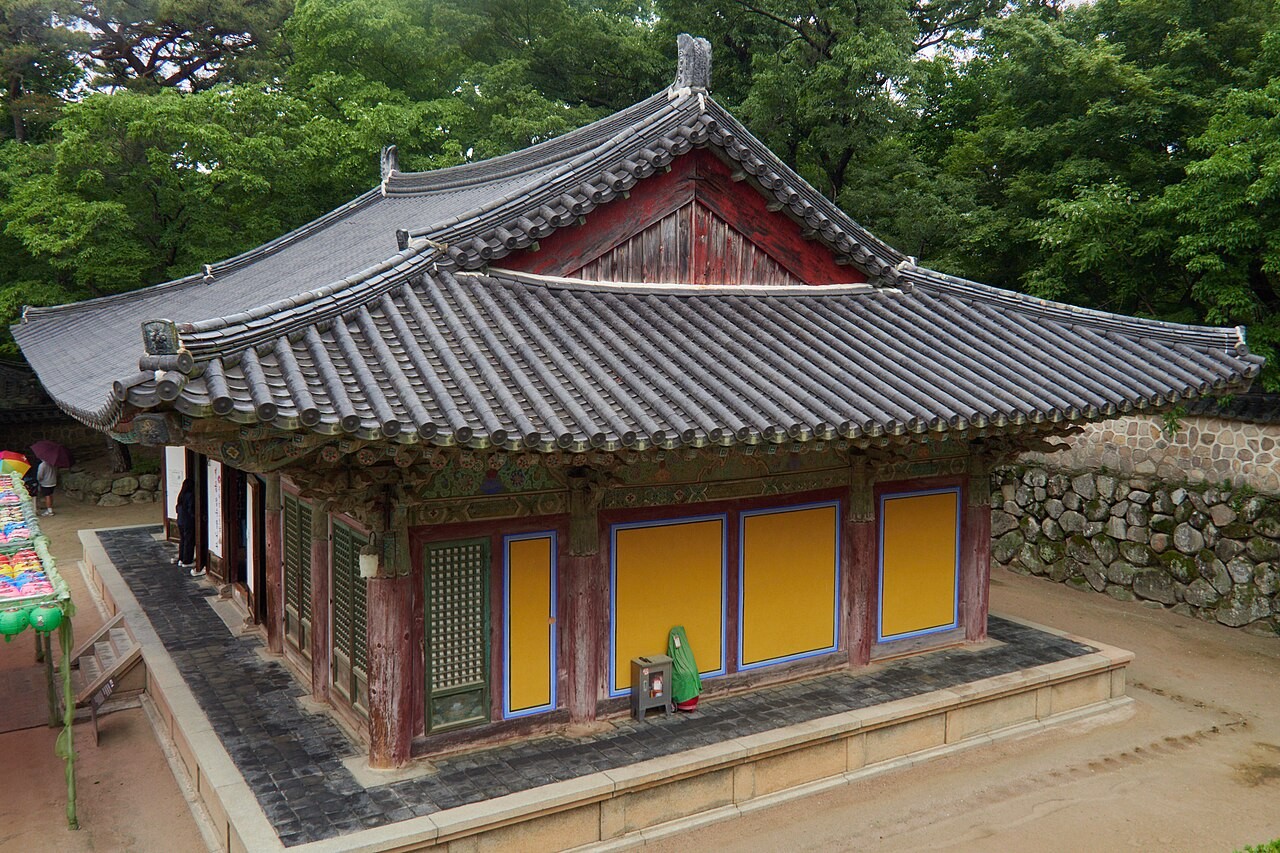
The distinction between materials gives the complex a particular visual tension. Stone establishes weight and permanence, while the timber roofs answer it with lines that appear lighter. Painted surfaces introduce another register again. Bulguksa’s coherence comes not from reducing these contrasts but from arranging them so that the eye moves continuously between them.

Two pagodas, two answers
The courtyard in front of Daeungjeon Hall contains the most revealing comparison. Dabotap and Seokgatap share the same setting but have markedly different forms. One is elaborate, the other restrained. The contrast encourages a slower sort of attention than a quick circuit around the courtyard: looking from one to the other, noticing how much character can emerge from the treatment of the same material.

The Korea Tourism Organization’s cultural heritage account emphasises that difference between the paired pagodas. Korea.net’s account of the pagodas gives their associations as the Pagoda of Many Treasures and the Sakyamuni Buddha Pagoda. Those names also correct a temptation common at historic sites: to see the structures as freestanding design objects and overlook the religious world to which they belong.

The comparison also changes the pace of the courtyard. Ornament draws the eye towards one structure, while the other directs attention to proportion and silhouette. Neither makes the other redundant. Together they turn a shared space into a conversation between architectural possibilities, with the stone beneath their differences providing a common language.

What survived, and what was rebuilt
Bulguksa should not be read as a complete eighth-century building preserved untouched. UNESCO distinguishes its surviving stone work from wooden buildings that have undergone destruction and reconstruction. Its terraces, bridges and pagodas are central to the significance of the place. Recognising that layered history makes the temple more interesting, not less: the site expresses both early craftsmanship and the continuing effort required to maintain a sacred place.

The Visit Korean Heritage audio guide places the pagodas within the courtyard and describes the destruction associated with the invasions of the late sixteenth century. The stone foundations are not background scenery. They are a way of reading what endured when more vulnerable parts of the architecture did not.

A mountain setting, not an isolated monument
The temple belongs to the Tohamsan district of Gyeongju National Park. That wider setting matters. Bulguksa and Seokguram are related monuments, but their architecture produces different experiences of religious space. The open courtyards, stairs and halls of Bulguksa stand in contrast to the grotto’s concentrated sculptural ensemble. Their connection is not architectural sameness. It is the ambition of a culture capable of giving Buddhist ideas such different physical forms within the same mountain landscape.
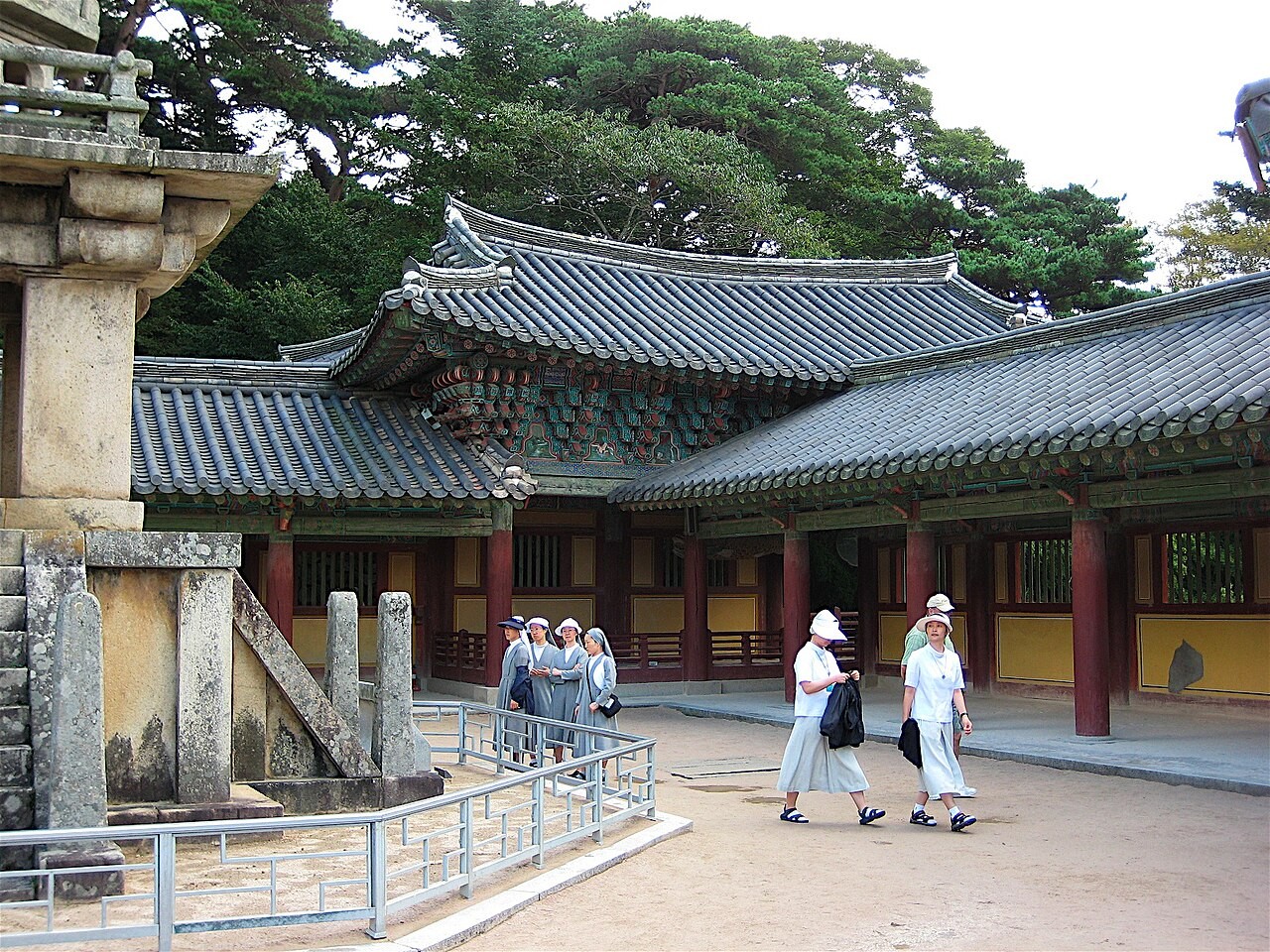

The Korea Tourism Organization’s Bulguksa listing describes a temple whose architectural importance is inseparable from its Buddhist identity. That distinction matters in a place so readily reduced to a sequence of images. A staircase is both an extraordinary arrangement of stone and part of the approach to sacred space; a hall is more than its painted façade. The monument belongs to a living religious tradition as well as to an international heritage list.
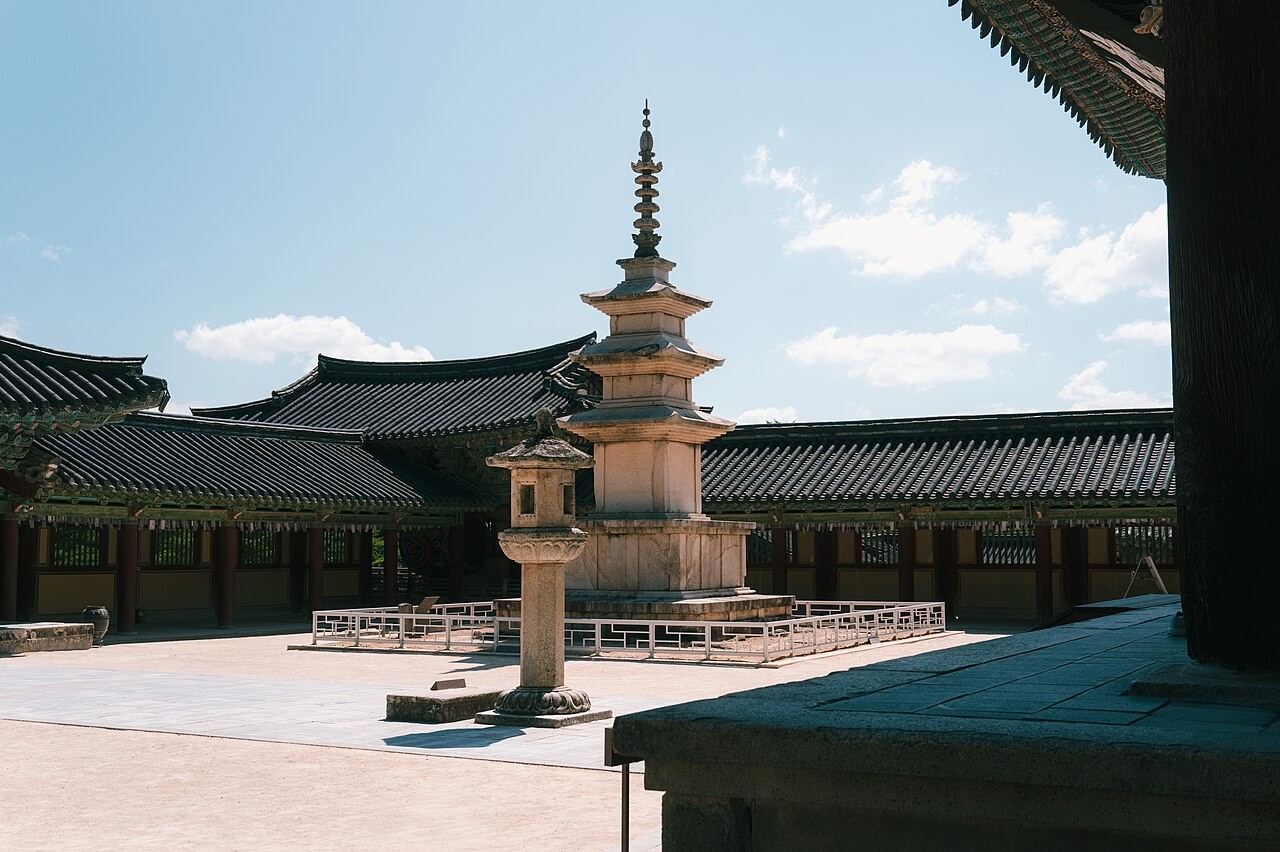

The contrast with Busan’s coastal neighbourhoods reveals how differently places within southeastern Korea express their relationship with the landscape. Coastal streets and temple terraces belong to the same broader region without telling the same story. Further away, Jeju’s volcanic landscapes offer another encounter with stone altogether. At Bulguksa, however, it is human intervention that holds the attention: the decisions that turned heavy material into steps, terraces and two profoundly different pagodas.