
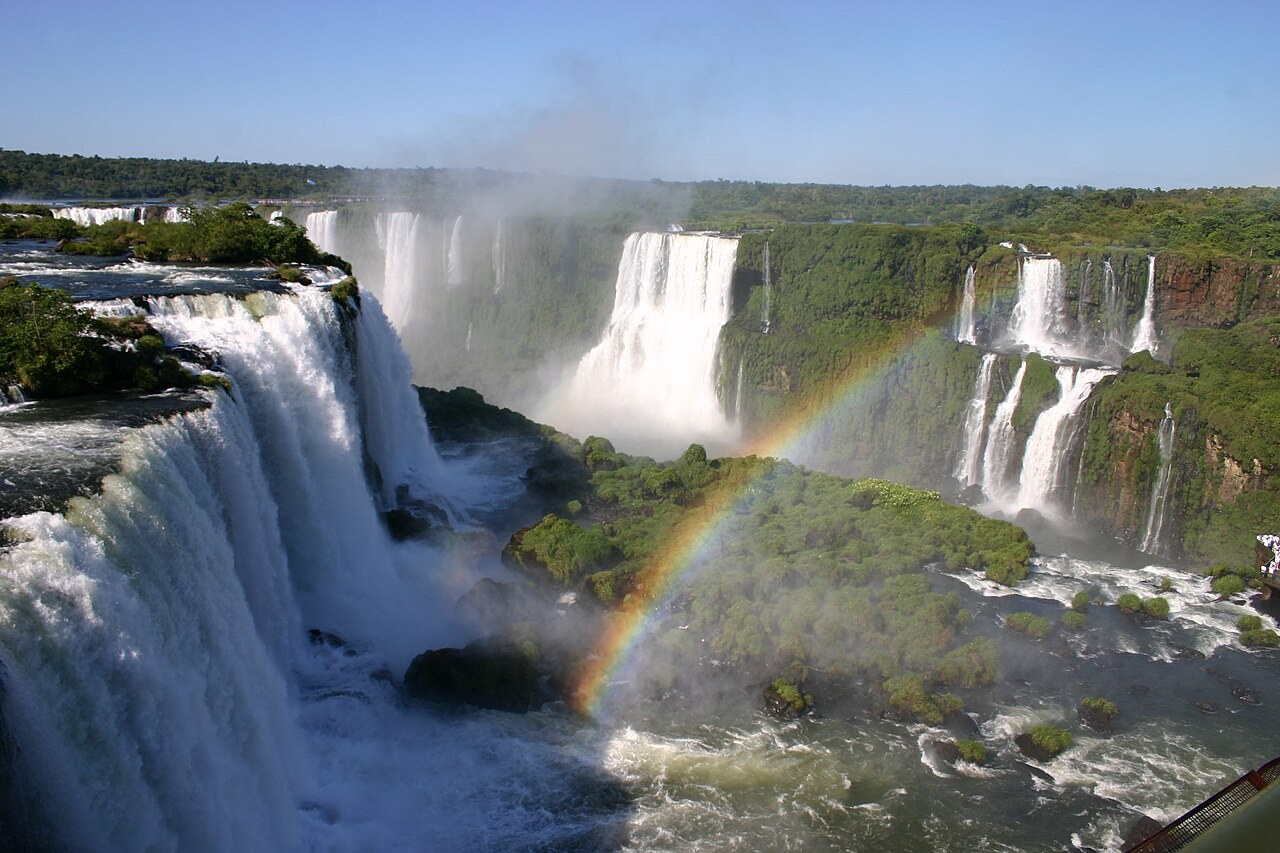
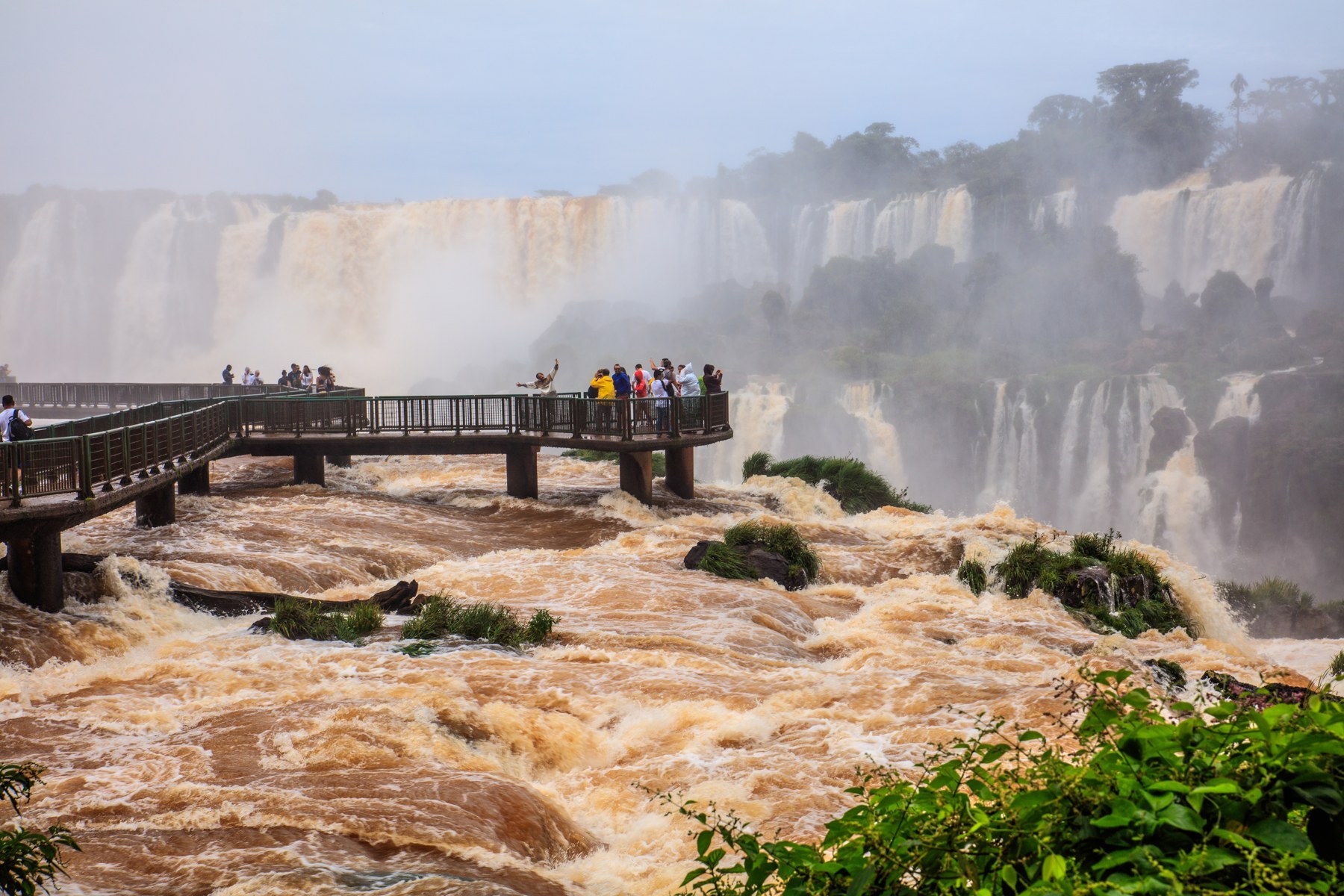
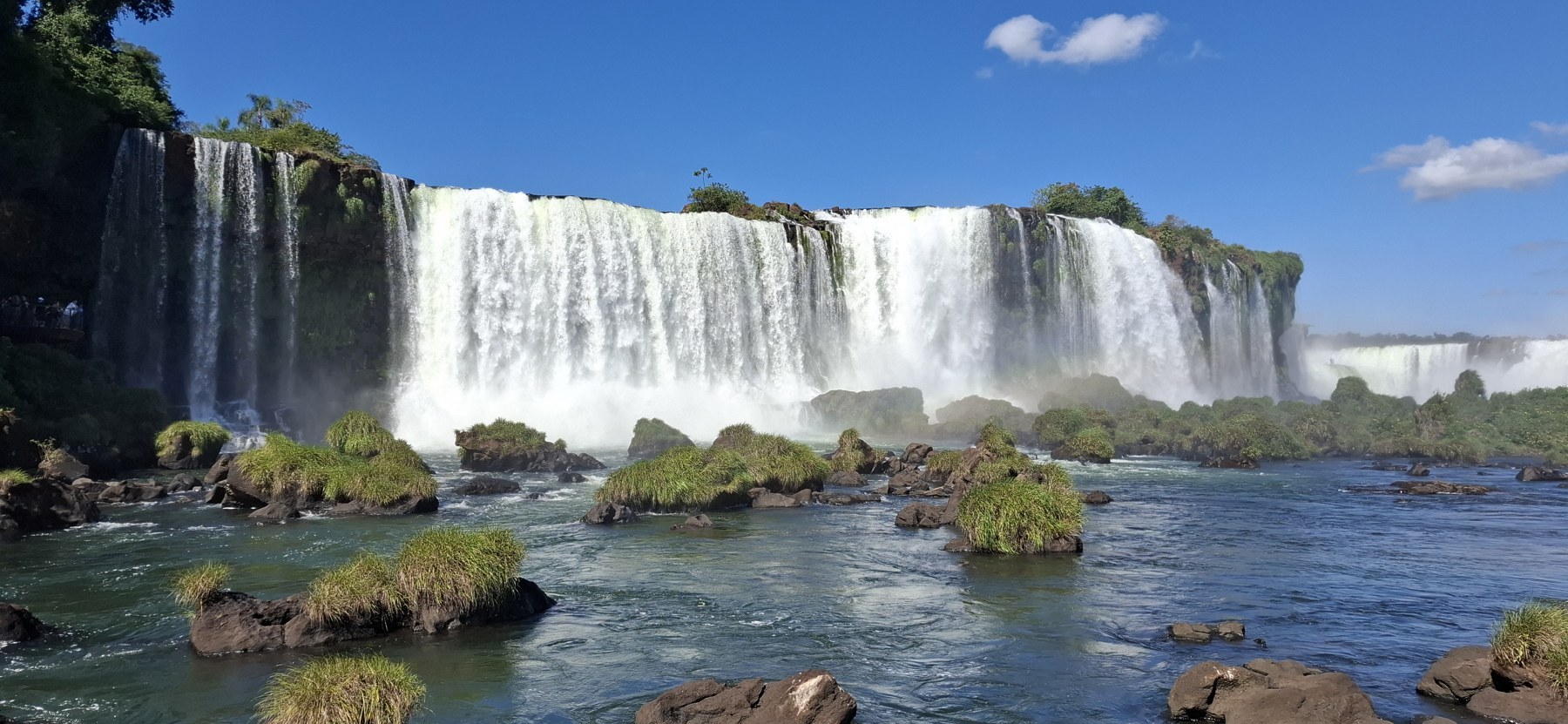
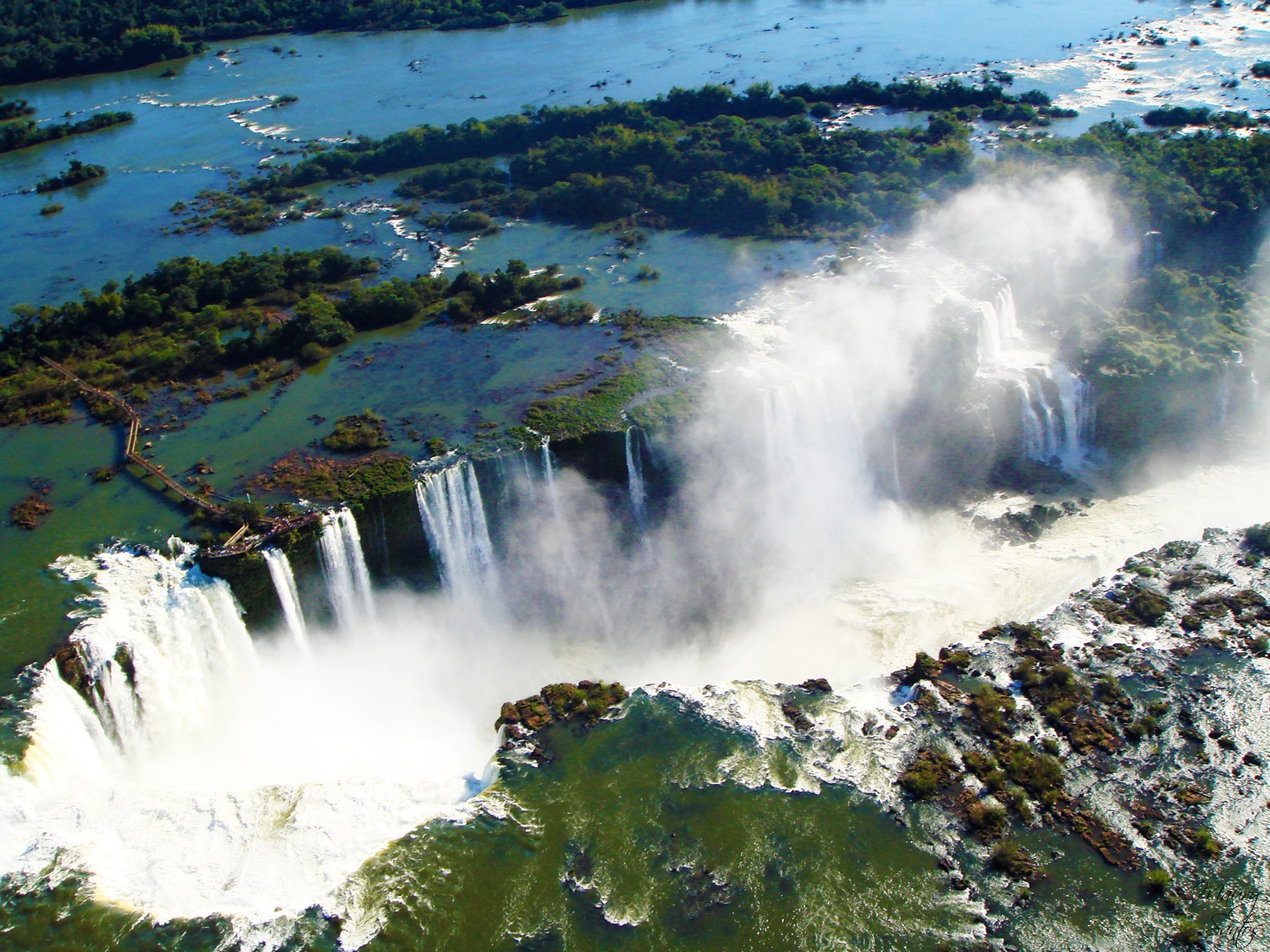
On the Brazilian side of Iguaçu Falls, the first reward is perspective. Cascades extend across the opposite bank, drawing the eye from one curtain of water to another before the path brings you closer to the spray. The visit moves from a broad landscape to an immediate, noisy encounter with the river.
Parque Nacional do Iguaçu lies outside Foz do Iguaçu in Paraná. It is one of two separate national parks protecting the falls and surrounding forest; the other is in Argentina. This guide focuses on Brazil, so start with the Brazilian park’s official visitor site when choosing tickets and checking conditions.
What the Brazilian visit includes
The standard visit combines internal park transport with the Falls Trail, viewpoints, the walkway and lifts. The park’s general information describes roughly a kilometre of walking on the main trail and suggests about two hours for the traditional circuit. Allow more if you like to stop frequently, take photographs or have a meal.
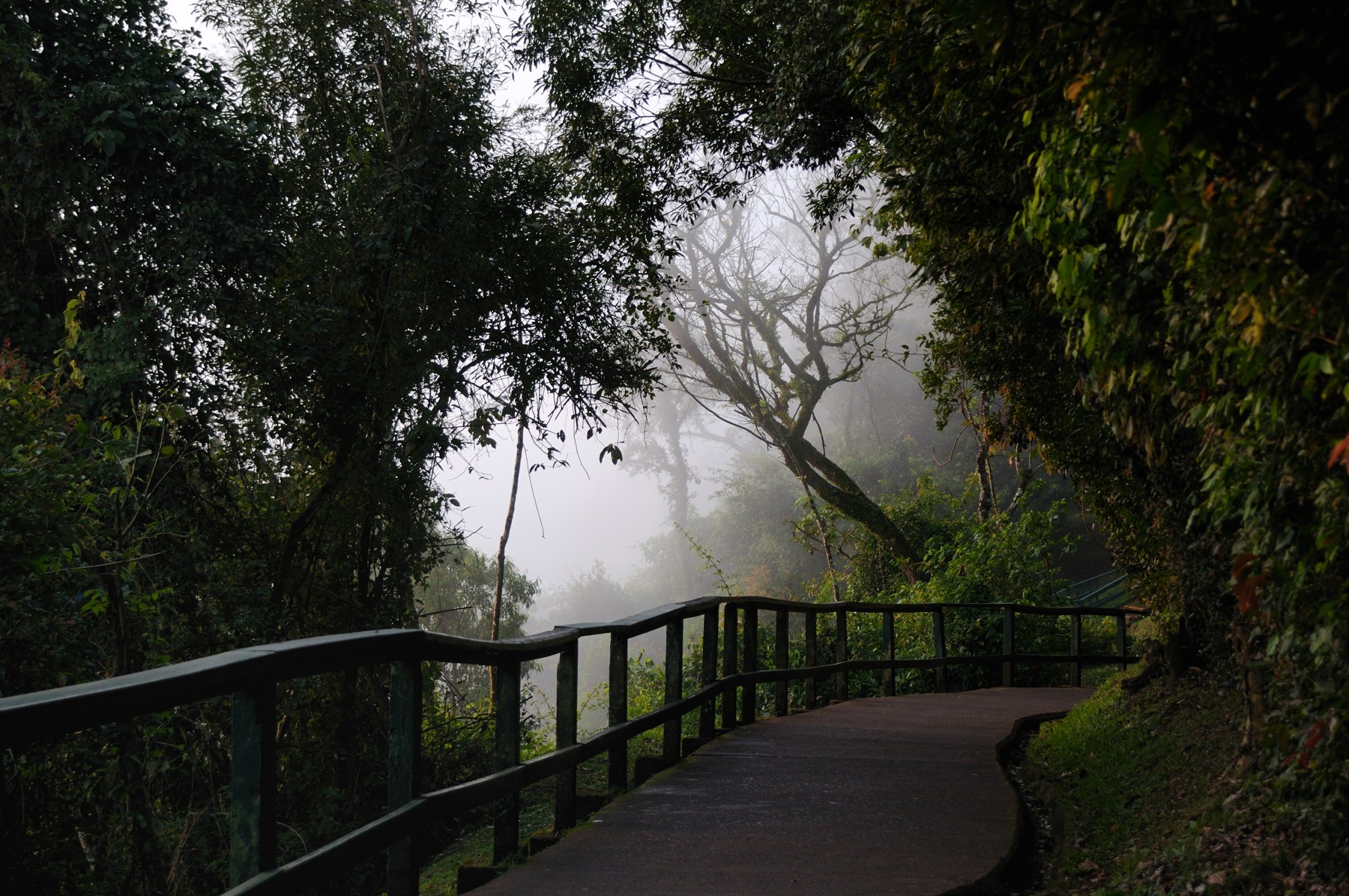

The internal transport matters. The visitor centre is separated from the main falls area by a substantial journey through the park, so arriving at the entrance is not the same as arriving at the first panorama. Use the designated service and follow staff directions about stops and the return journey. Ordinary private vehicles are not admitted along the visitor road.
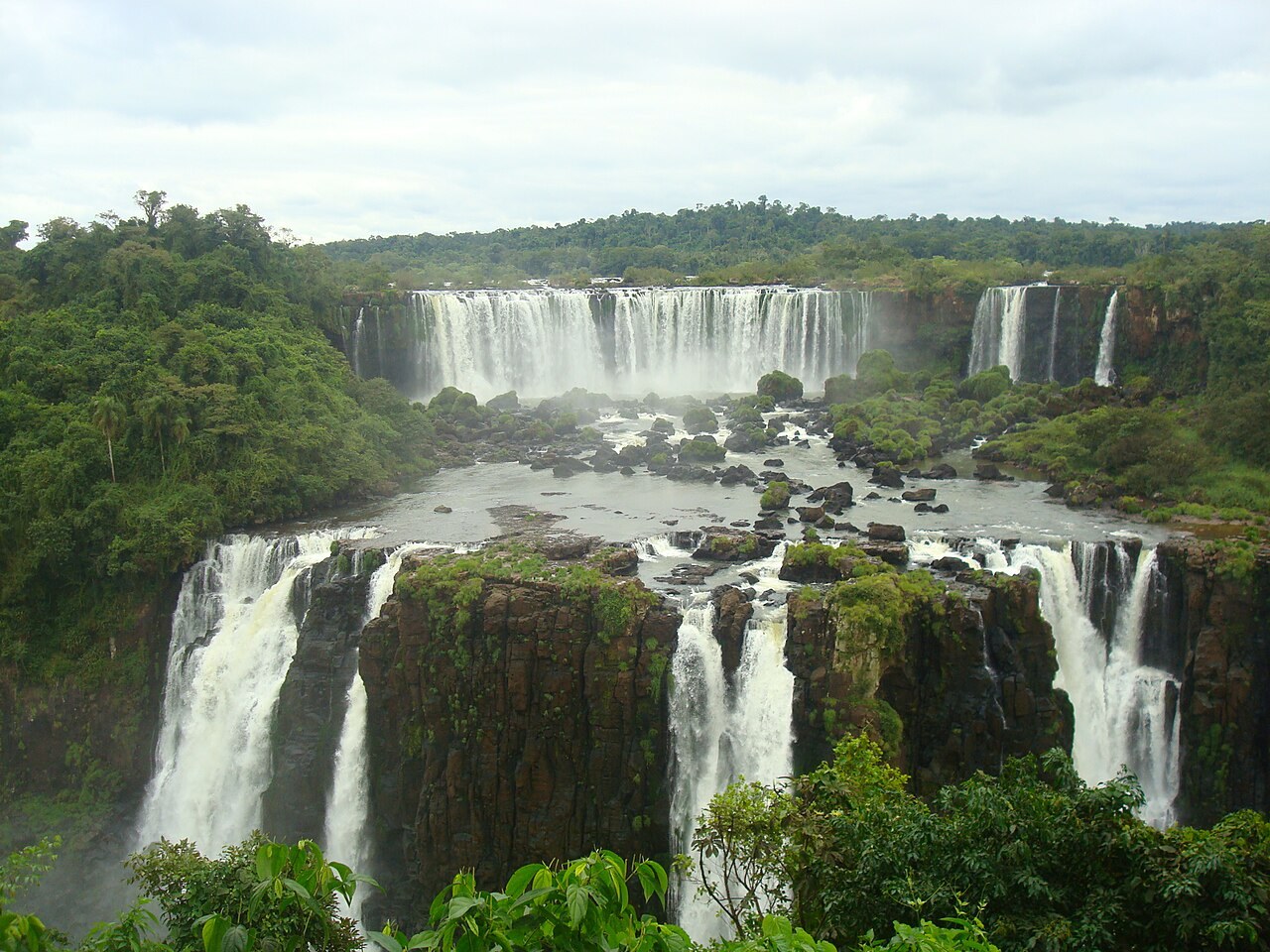
Begin with the wider views instead of hurrying towards the final walkway. They help you understand the shape of the falls, while the nearer viewpoints emphasise power and spray. Neither replaces the other. A brief stop with the camera put away can make the difference between collecting photographs and actually noticing the sound and movement.

Tickets, timing and a flexible plan
Book for the appropriate admission category and entry time using the official site. Prices, holiday schedules and special experiences vary, so avoid budgeting from an undated screenshot. The regular ticket includes the internal transport and main visitor route; separate experiences should be checked for their own inclusions before purchase.
Give the park a generous half-day in your itinerary. That allows for the trip from your accommodation, entry arrangements and a slower circuit than the minimum visit. If you want forest walks or another paid activity, consider a fuller day. Trying to attach an international flight to the end of a tightly timed falls visit leaves little room for delays.
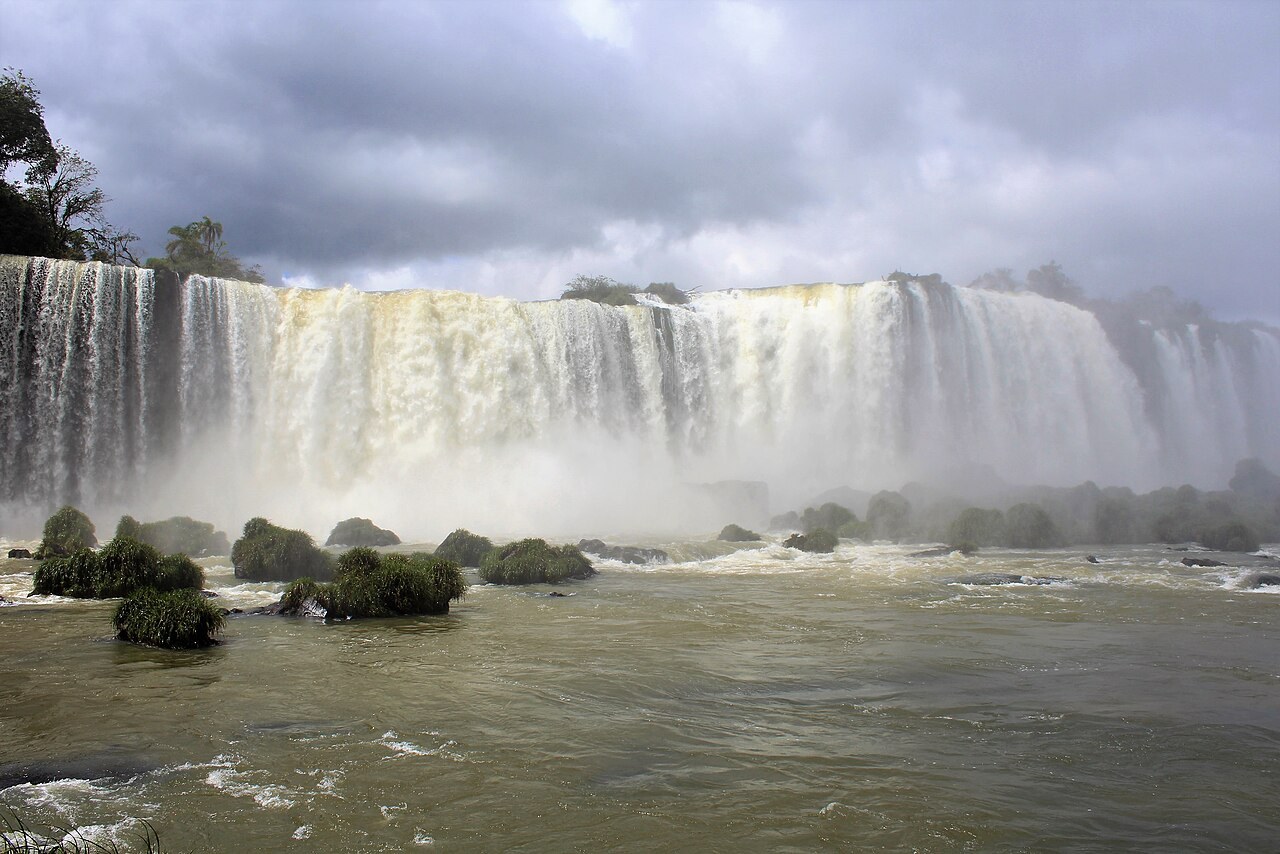

River levels and weather can affect access to individual walkways. Check notices close to your visit and accept a changed route if staff close an area. The falls remain a natural environment even where paths, lifts and transport make them straightforward to reach. No photograph is a reason to cross a barrier.

Dress for spray and protect what you carry
Wear shoes with a secure grip and expect damp surfaces. A light rain layer can be useful near the water, and a waterproof pouch protects a phone or small camera. Keep loose items secure and avoid spreading equipment across a narrow viewpoint where other people need to pass.
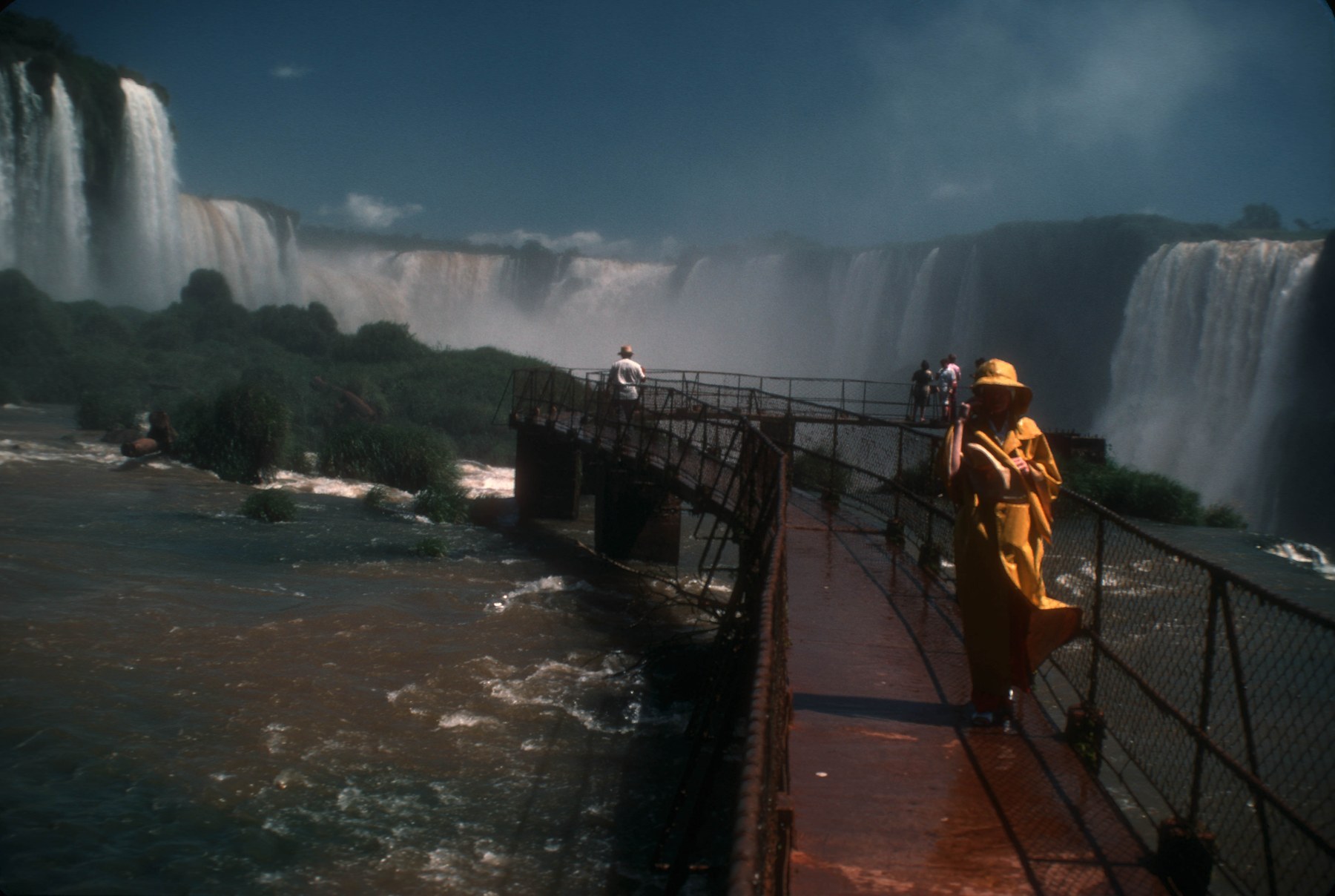

Bring drinking water and suitable sun protection. Conditions can change between shaded forest and exposed platforms, so a small, practical bag is more useful than carrying everything from your suitcase. If a member of the group tires easily, plan rests before the final part of the route rather than waiting until the return becomes difficult.
The park’s accessibility information describes support for visitors, including adapted transport and access at key viewpoints. Ask about the specific route you need. The existence of lifts does not mean every stretch of every trail has the same surface, gradient or access.
The forest belongs in the story
The falls are the headline, but the protected forest is part of what makes this place significant. UNESCO’s account of Iguaçu National Park places it alongside Argentina’s adjoining park as an important remaining area of the interior Atlantic Forest. The journey through vegetation is more than a transfer between the gate and the water.
Watch wildlife from a distance and keep food packed away. Follow the park’s rules, stay on authorised routes and never feed animals for a photograph. An animal that approaches visitors is still wild, and food can turn a close encounter into a problem for both people and wildlife.


Should you also visit Argentina?
If the falls are a major purpose of your trip, allowing another day for the Argentine side gives the experience more depth. Iguazú National Park in Argentina is a separate protected area with its own access and visitor arrangements. A Brazilian ticket is not a combined admission to both parks.

Cross-border travel also means checking entry requirements for your passport, transport and the return journey. Do not assume that a short excursion removes normal border formalities. Keep the two park days distinct rather than promising yourself both sides between breakfast and an evening flight.
For a wider itinerary, the falls can complement the urban days in our Rio de Janeiro guide or a stay in Buenos Aires. Choose connections before fixing hotel nights. Travellers planning a more extensive journey can compare the pace with our Peru destination guide, while giving each country sufficient time rather than turning the holiday into a chain of airports.

Iguaçu rewards a simple plan done well: the right ticket, a comfortable arrival, time along the trail and respect for changing conditions. The broad views are easy to remember. Staying long enough to notice the forest and hear the water without distraction makes them richer.
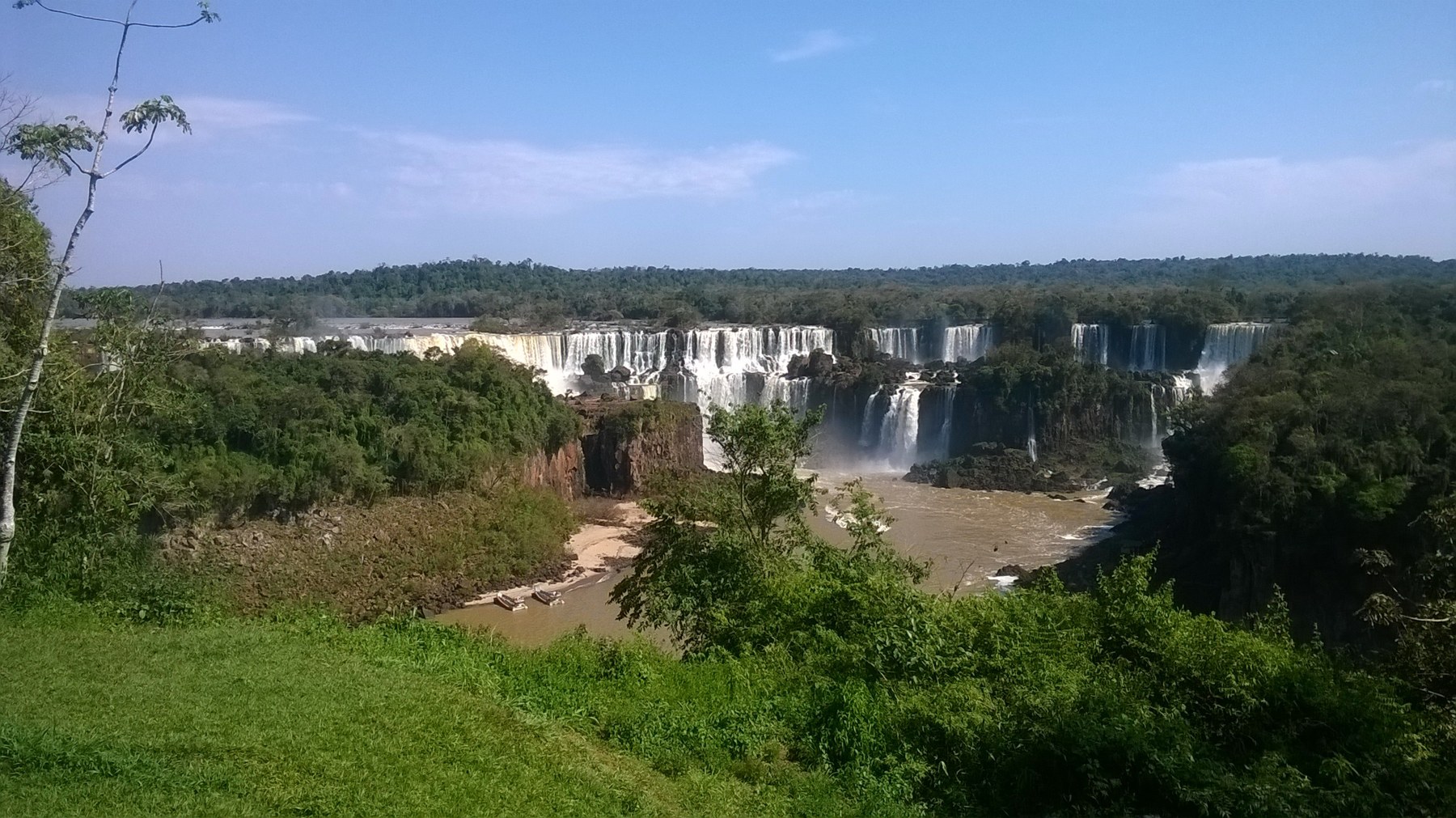

Featured photograph: Charles J. Sharp, CC BY-SA 3.0. Resized and JPEG recompressed; uncropped.
